


Vani
Members
-
Joined
-
Last visited
Everything posted by Vani
-
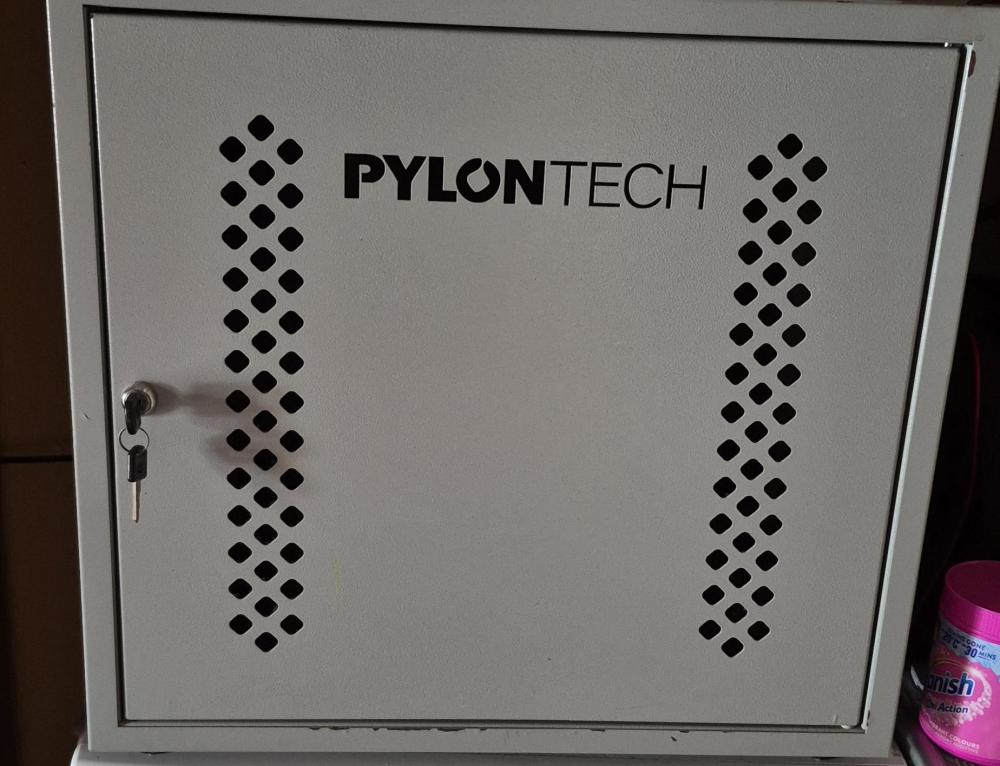
Item: Pylontech cabinet for 3 x US3000C batteries Age: 3 years old Price: R1500 Payment Method Accepted: EFT or cash Warranty: NONE - (Voetstoets) Packaging: I will endeavour to wrap with cardboard and bubble wrap for shipping. (As best as possible) Condition: The cabinet is in good overall condition and the lock works perfectly Location: Port Shepstone - (KZN South Coast) Reason: Upgraded to 4 battery cabinet Shipping: Can ship through courier guy (Aprox R300 to R400 - For the buyers cost) (If buyer resides in Durban, i can deliver) Collection: Can collect from my residence in Port Shepstone. URL: https://onlineshop.gcsolar.co.za/product/pylontech-3000-3g/?gad_source=1&gad_campaignid=20348453218&gbraid=0AAAAAppUQB3hGX_FNEl8Zbj2kMzow8vL7&gclid=Cj0KCQjwof_QBhCgARIsADaMzOfKfCSkbL1xWXycQRO7vVuOFi0g_F6S9POLzqKFORlO4yd65lyl7WsaAp31EALw_wcB (Example Purposes) Cell/Whatsapp: 082 573 7910

-
Hi. In Durbs. I would be interested to know how you get the fan speed to vary based on temp as the 12V power supply i have cannot vary current. I assume you are connecting to a jumper on the inverter board. Is it also a sunsynk 5kw. Will really appreciate a step by step on this or a link to similar. I also have a 4 pin pwm 120mm fans
-
Hi. I know this is an old thread. I never really tracked temps before this year. We have some really hot days mixed with humidity in Jan/Feb/March. I recently checked the reporting from the inverter and my DC was sitting at 88 degrees celcius and the AC was in the mid sixties. Battery temp on my pylontech 4 X us3000c had reached 35.8 I was producing about 5Kw of solar on my sunsynk 5KW, and it was feeding both the batteries and the AC load as well as backfeeding. So i assume system was working at almost max capacity. Inverter is in well ventilated area and no direct sun. Are these temperatures common under these conditions? I have installed three 120mm fans which comes daisy chainable. Installed an external 12V supply and i am using a sonoff temp sensor placed on the inverter case to trigger the fans to come on when a certain temp on the case is reached. Fans are placed on the top of the heat sink to assist the natural convection process. Now, max DC is 68, max AC is about 45-48 and battery temp is around 34.5 Are these new temps reasonable based on the assisted cooling?
-
Thanks for the info. Going to have to get new brackets for this set anyway and being installed separately on another roof surface. Voltex in Durban - Briadene has plenty stock.
-
Hi The 455W CS6L is a really good price. I was also concerned about the 13A of this panel against the 11A of my inverter. But intaller said it would probably only deliver the amps and voltage of the smallest capacity panel. I see you something similar in your response. I know you said 4 more panels on top of the 10x420w to stay within the 6500W PV input. What are your thoughts on adding 5 more panels? But that would mean that 8 on one string and 7 on the other. Are unbalanced solar strings a problem for a sunsynk inverter? The 455W CS6L specs below

-
Thanks very much for the information.
-
Hi guys. I need a little assistance please. Thinking of adding a few panels to my system if possibel I have 10 x Canadian solar panels (420W) on a 5KW Sunsynk inverter. I have attached pics with specs of the panels and the inverter. I remember reading that there is either a voltage limit or amperage limit or both????? How many more panels can i attach without stressing or risking the normal operation of the system? What is the effect of mixing the capacity of panels where watts, amps and voltage are different?? Will the new panels only give a max of the lowest capacity panel in the system??


-
According to your datasheet, it seems 100A will work but it is listed as a Max and not a recommended. Personally i would go on a lower discharge at around 50 or 60A. But that's just my cautious outlook. At Max output and if your load is also drawing the Max, the battery will be depleted in under an hour. Even though it seems possible to discharge at 100A, you also need to consider what are the essential loads to supply during a power outage. Geyser, electric stove, aircon, etc. are usually excluded and inverter is wired accordingly through the DB. Bottom line, it is not ideal to discharge at max current but for this particular battery, it seems possible. Although expensive, it is advised to scale your batteries in such way to discharge at 0.5C and still deliver the max output of the inverter. In your case it would mean 2 X 5Kw batteries.
-
I am pretty sure the BMS would not allow a steady and prolonged discharge at 120A. And your 5.5KW battery cannot produce 120A anyway. Some manufacturers claim 1C discharge. In your case, its probably a 100/105Ah battery and 1C means that it can discharge at max amp of 100/105A I think it may be safer to go with 0.5C which means charge at 50A or slightly below. My Pylontech batteries are rated at 0.5C. Also note that if you drop down to 50A discharge, the system can only produce about 2.4Kw during load shedding. It is possible that the BMS may allow discharge of 1C at the full 100/105A (about 5KW) which is the capacity of the inverter I must mention that i am no expert and my advice is based on my own reading on the subject and i tend to err on the side of caution So my advice would be to drop down 50A discharge. But if a knowledgeable installer or manufacturer says to leave it then that may be fine for your particular battery.
-
My cursory research on lithium exercising, shows that holding lithium at 100% for too long periods of time does degrade the battery faster. In addition to exercising one has to consider max amp discharge and max amp charge. While the batteries can handle very high amperage in terms of charge and discharge, this can create heat and batteries tend to deteriorate faster when going beyond their "threshold" heat specs. Generally battery manuals have some specs on max charge and discharge and i prefer to set my sunsynk a little below the charge/discharge values. https://batteryuniversity.com/article/bu-808-how-to-prolong-lithium-based-batteries
-
Apologies. I assumed you were going to add panels soon. You can still work out your own preference for exercising. In your case, without panels, i assume the primary and only purpose of your batteries is backup. You can probably allow the battery to discharge down to about 50 or 40% during the day and from about 3pm charge backup up to 100% before the evening as most people would want 100%, going into night time. In my case the panels charge my batteries during the day and this extra energy is discharged in the night. Indirectly, I am able to use solar power in the night as well. So the purpose of my system is backup and reduction of Eskom bill. You should consider panels at some stage and allow the system to pay for itself albeit over a period of time.
-
I think it really depends on your electricity demand through the day and what SOC (Personal Preference) you would like your battery to have at different parts of the day. Another consideration is how long your battery takes to charge on an average day in your area. Personally i prefer the above for now. I look at my daily cycle starting at 6:30am because at the moment i am generating about 600W at 6:30am. So from 6:30 to 14:15 the focus is to get the battery charged. Any extra energy will feed whatever is drawing during that time. With load shedding and cloudy days, my battery my not get to 100% SOC, so grid/eskom makes sure that i get to at least 90% by 17:30 to enter into the evening. I then have two 25% discharges from 17:30 to midnight. The last period from midnight to 6:30am i allow the battery to go down to 30% if the load/draw is sufficient during that time. How low you allow your battery to discharge to, is dependent on what kind of buffer you would like for that unforeseen power outage or load shedding. My times may change a bit as we get into the winter months with shorter days. Remember non-essential loads can also draw from the battery when the grid is still active. It only islands to essential load when there is no eskom/grid detected. This means that the battery can be discharged very quickly if you not thoughtful about your stepping down increments during the evening. Daytime is better as the panels also assist to meet the load demand. My system is : 2 X 3.5KW Pylontech AND 10 X 420 W Canadian solar panels and 5KW Sunsynk.

-
Personally, i am going down to 30% I have a time of use from 12am to 6am where i drop from about 45% to 30%. From dusk i have a couple of stepped periods that drop down to 45% by midnight. I want to maximise the solar use and hence drop the Eskom bill. The 30% to 15% is my buffer for the unforeseen load shedding or general power outage.
-
Hi Did not experience the problem again after unticking the BMS_err_stop feature. I assume it shuts off even for the slightest error. Inverter been working fine ever since. But still not sure what caused the BMS error.
-
Interesting cooling technique. I have done similar. i have an air purifier which blows upwards. Set it under the inverter so that air passes the heat sink in the back. The air purifier is connected to a SONOFF switch which is wifi enabled and has an app to set timer schedules for on and off. Not sure if cooling the inverter will have an effect on the battery temp or if thats what you were saying. But i am in the process of testing my theory on reducing charging amps. Solar assistant would be better to monitor this experiment as it graphs battery temp throughout the day. However reducing charging amps may be shooting myself in the foot on days where is frequent change from cloudy to sunny.
-
I have also set my 7KW pylontech pair to about the same. Need the 35-40% reserve if load shedding sneaks up. I think one more 3.5Kw battery to my setup will still keep within the ROI period. Its always good to track grid usage and then weigh that against the purchase cost of another battery and ROI period. In line with battery tips above, my battery never goes beyond 31 degrees. But will monitor over the very hot days still to come. How does one control battery temp other than cool room and possibly aircon in the room? I have also thought of reducing the charge current. Pylontech recommends 0.5C which is half of battery capacity. So this means my 3.5Kw/74AH battery should be charged with a max of 37A from inverter. So perhaps reducing this even further could amount to less heat in the battery. One question. The screenshot showing times above. Where did you get that from. Are you using solar assistant with a raspberry pi?
-
I have two Pylontech 3.5Kw batteries on a Sunsynk 5Kw inverter with 10X420W solar panels. During load shedding today, the battery was not even being used as solar was sufficient. It was working fine until it threw an F58 error and shut off power. I switched the batteries off and then on again and then pressed the "SW" button on the batteries to start up. It eventually clicked on and started working again. Upon checking fault codes, it listed "F58 - BMS communication fault". I then unticked the setting under battery "BMS_Err_Stop" as i assume this is what made it shut off power. Any ideas on this error and how to avoid in the future.
-
Another interesting question if anyone is in the know. Also related to "exercising". We all can agree that excessive heat hinders battery longevity. I was noticing that battery temps were higher the more amps I used for charging, albeit anecdotal evidence. My two 3.5KW batteries can be charged at a max of 74A. Even though CAN is enabled on my Sunsynk 5KW and the BMS is in charge, it still obeys when i set a max charge and discharge below the 74A maximums. So i set it to 50A charge and 50A discharge. It does not breach these user settings even when solar is in excess. Excess solar simply supplies the load or is lost. It does take longer to charge the batteries and there is no downside on a very dull day because solar does not produce 50A on such a day. Are there any benefits to charging at a lower than max charging amperage? Specifically with regard to heat generation from charging??
-
I found this info on prolonging battery life. It seems to suggest that multiple small discharges and charges are not bad for a lithium battery and if anything can aid longevity. https://batteryuniversity.com/article/bu-808-how-to-prolong-lithium-based-batteries and this one with a snippet below: https://www.solacity.com/how-to-keep-lifepo4-lithium-ion-batteries-happy/

-
With Tariq's 98% SOH after 14 months, its not that bad. But i am also pretty sure that the deterioration will not be linear with time. I think Pylontech talk about having at least 60% capacity (SOH) after 10 years. So Tariq's deterioration does not seem that bad at all My system is only a month old on the batteries so it will be interesting to see the rate of deterioration based on my "ONE cycle per day" theory. The idea that a full cycle is accumulated based on percentage discharge and charge reaching a certain point seems to concur with the logic from manufacturers that claim you get more cycles if the DOD is not too low. Theoretically there could be many small discharge and charge cycles depending on the settings, amount of sun and load demand on any given day. While lithium is resilient, i still "think" the chemistry has certain thresholds that will affect stamina long term. To what extent, only somebody with some long term data can support. My gut feel is based on the anecdotal evidence of my experience with smartphones.
-
I posted the below message on another related thread but thought i would ask here as well since there are different people conversing here and wanted different perspectives on the topic. My 5kw Sunsynk unit is basically set to 100% from 8am to 6pm. So the batteries only charge during the day when there is sufficient sun. Then discharge in stages from 6pm to the following 8am all the way down to 30% SOC. I have ticked the load priority checkbox so when load is high during the day, it stops charging the batteries for a period of time to attend to the load and blend with grid if necessary. So on a good sunny day my 7kw of batteries are usually charged by 1pm. Thereafter the PV attends to the load for the rest of the day. Not really concerned whether these settings are good or bad based on a user's circumstances, i am more interested about the way the batteries work. So in a setup, theoretically, the battery could be charged and partially discharged multiple times in the day. If the load at any point in the day demands more than what PV can supply and if the the battery has the required SOC for that time of day, the system could engage the use of the battery to power the load in tandem with PV and maybe even grid. When load demand drops, PV may get back to charging the battery. Just for context, I have 2 X 3.5KW Pylontechs (US3000C). MY QUESTIONS ARE: 1. Is it good practice to regularly charge the batteries all the way up to 100%?? Read some conflicting theories that Lithium prefers charges up to 85-90% for longevity. 2. (During the day) When the battery charges up to maybe 80% then allowed to discharge to perhaps 65% and then charge up again, is this not using up a charging cycle of the battery??? If this is true, then does it mean that multiple charge cycles are used up each day, and therefore reducing the lifespan of the battery??? With lithium batteries quoting in excess of 6000 cycles (based on DOD), the above scenario, if true, could mean that the batteries state of health (SOH) could deteriorate well before the claimed 10 years that most lithium vendors make. Any comments on the above???!!! Not sure if this has been discussed in another thread before.
-
Hello all. Late to the party on this conversation but having a Sunsynk 5KW and some lithium batteries means that we often discover things as we go along. @bernardf posted his time of use settings. My unit is basically set to 100% from 8am to 6pm. So the batteries only charge during the day when there is sufficient sun. Then discharge in stages from 6pm to the following 8am all the way down to 30% SOC. I have ticked the load priority checkbox so when load is high during the day, it stops charging the batteries for a period of time to attend to the load and blend with grid if necessary. So on a good sunny day my 7kw of batteries are usually charged by 1pm. Thereafter the PV attends to the load for the rest of the day. Not really concerned whether @Bernardf's settings are good or bad, i am more interested about the way the batteries work. So in his setup, theoretically, the battery could be charged and partially discharged multiple times in the day. If the load at any point in the day demands more than what PV can supply and if the the battery has the required SOC for that time of day, the system could engage the use of the battery to power the load in tandem with PV and maybe even grid. When load demand drops, PV may get back to charging the battery. MY QUESTION IS: When the battery charges up to maybe 80% then allowed to discharge to perhaps 65% and then charge up again, is this not using up a charging cycle of the battery??? If this is true, then does it mean that multiple charge cycles are used up each day, and therefore reducing the lifespan of the battery??? With lithium batteries quoting in excess of 6000 cycles (based on DOD), the above scenario, if true, could mean that the batteries state of health (SOH) could deteriorate well before the claimed 10 years that most lithium vendors make. Any comments on the above???!!! Not sure if this has been discussed in another thread before.
-
Any ideas on the "Activate" checkbox below all the battery types. As i said, mine is off but the batteries work and behave as expected.
-
Just wanted to find out. When connecting the Pyontechs US3000c to the Sunsynk 5KW. I selected the lithium option under battery settings as well as CAN option and BMS_Err setting. All seems to work fine and also noticed the perceived pause at 89% when charging. 1. On the page where lithium is selected, at the bottom left what is the Activate checkbox for? mine is unchecked but still works fine. 2. Does it matter what the Float, absorption and equalisation are set to? Or does the BMS handle everything . Even though i suspect it is not being used, mine is set to : Float: 51.8V absorption: 52.5V equalisation: 53V (I also understand that equalisation is more for lead acid type batteries)
-
Hi Please refer me to a retailer where i can get this solar assistant Pi system. Sunsynk is also talking about a new logger due to come that will also allow settings changes in addition to monitoring. Not sure whether to wait for that to hit the market.


