Wimmas
Members
-
Joined
-
Last visited
Everything posted by Wimmas
-
Hi All, We are in the process of purchasing a property and the sale is close to being finalized. An electrical COC has already been issued, but to me it is questionable. I want to find out whether or not this COC is valid, or should I push back with the attorneys/current owners/electrician with the COC. The property comes with a solar system and a solar geyser setup: Solar system summary: 3000VA Victron inverter 2x2.4kw Pylontech batteries 8x solar panels Geyser system: 200L geyser Geyserwise Max system Collector tubes on the roof 12v solar pump to circulate the water On the COC there is a section stating "Comments on parts of the installation not covered in this report", and his comments were "Stove, geyser, solar inverter, solar panels, solar batteries and all electrical appliances". There is no separate AC box, and no AC surge arrestor installed. I have also not seen any earth spikes for the panels. I will share photos of the DB and inverter installation. Should he not be checking the solar system as part of the COC? Is it not a legal requirement to issue a COC in a home where a solar system has been installed? Is it a legal requirement to have an AC surge arrestor and earth spikes for the solar panels? Should he have checked the geyser system? What is the point of this COC if the solar system was not checked. If something is not compliant with and something goes wrong, the insurance will not cover us? Herewith images of the install and DB:


-
Thanks for the responses, appreciate it! Gives me a bit more clarity. The property is in Roodepoort, Johannesburg. Electricity is provided by City Power. Only my partner and I will be living there. The previous family consisted of two adults and two small children. Forgot to mention there is also a gas hob, so cooking will mostly be via gas. I think we will need to adjust certain habits which will help, like starting the dishwasher in the morning as opposed to the evening. Luckily solar equipment has become significantly more affordable. We are moving in on 28 September, whereafter I will try and figure out the system for a while and determine if we need to upgrade or if we can live with the system as is.
-
We bought a property with a solar system already installed. Still waiting for the property to register so do not have much detail, but the two times we viewed the property I saw there was a Victron solar system installed. On the second viewing I had a better look at the system and took some pictures. In general I have a fairly decent comprehension on solar equipment, but Victron has always been confusing to me due to the inverter system not being AIO and needing separate charge controllers and monitoring hardware etc., and a brand I have not paid much attention to as a result. I have read and heard good things about Victron. I will attach the pictures that I took on this thread. The agent said that the previous owners used very little electricity (Around R400 per month - prepaid). There is a solar geyser installed and the pool is solar heated. From the research I have done, the system seems quite small and I question the low electricity consumption claimed by the agent, and I would like to know what my upgrade options are, and how good the currently installed system is. I think this is a grid tied system, and not true hybrid. From what I have gathered, below the equipment: Victron Multiplus-II | 48 | 3000VA | 35 Batteries: 2x Pylontech US 2000 48v 2.4kw 8x solar panels (Unsure about the brand and wattage) MPPT 250/60 charge controller Venus GX I did not see an AC protection box, nor do I know what is wired as "essential" and "non-essential" on the DB. For starters, I will download the monitoring apps, see how the system performs and monitor our electricity consumption. If it comes to a point where I feel we need to upgrade the system, I would like to understand what my options are. Do I upgrade the current system, or do I replace it with a Deye/Sunsynk 5kw/8kw inverter and 1x or 2x5kw batteries + 8x better panels? Hopefully someone can provide some insight here, would really appreciate it!


-
You can get a Luxpower SNA with a 5.12kw Dyness/Volta/Shoto/Hina Ess and all accessories required for the install at around R39k-R40k. Then add cost of labour/coc. Mirua technology has a Luxpower SNA 5kw + battery backup system incl installation at R42,450. Not bashing any other supplier/installer nor am I trying to advertise them, just giving a heads up that pricing has come down significantly and you can get a 5kw backup system installed with good components for cheaper than R54k.
-
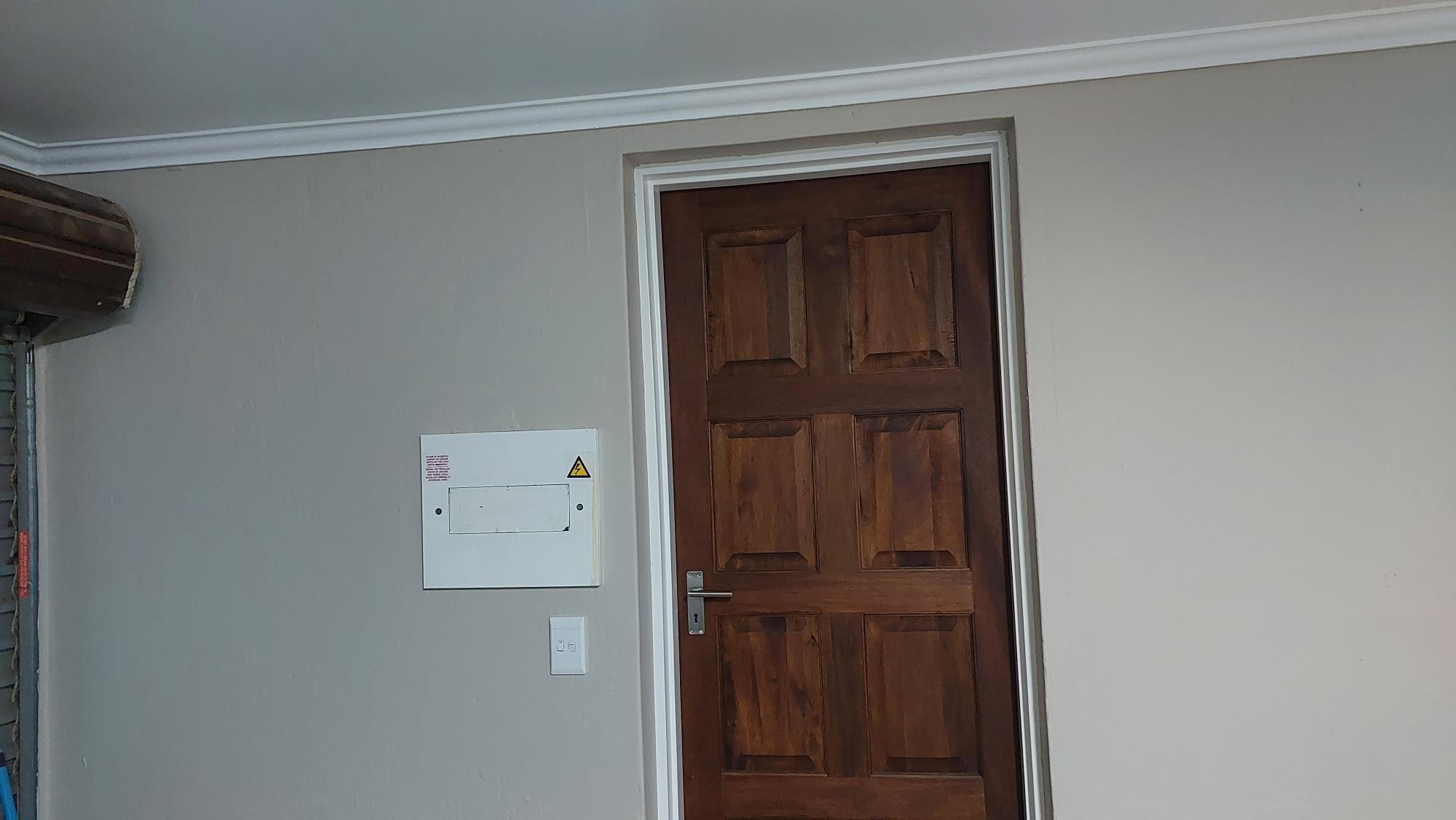
The attached picture refers. My DB is located close to the garage door. The garage door gets direct sunlight the majority of the day and left of the door where the DB is, is generally a lot warmer than on the right hand side of the door. It would obviously be a lot easier mounting the inverter and battery on the left hand side requiring less trunking, cabling etc, but it is a few degrees warmer. Mounting it on the right hand side of the door will have the benefit of a few degrees cooler, but also more trunking, wiring, and going through the ceiling/cornices. Will the heat/temp on the left hand side have a significant impact on the longevity or performance of the battery and inverter? Is it worth saving a few degrees and mounting it on the right hand side of the door?

-
Not an electrician nor claim to be an electrical expert. Just a diy'er who would like some insight as I am considering mounting my inverter setup to the DB. Very small household, work from home full time, need internet, laptop, screen, maybe a light or fan in the evenings during load shedding. Equipment: 3kw 24v Must 60A/MPPT inverter https://www.solarwaysuppliers.co.za/product/must-3kw-60amp-mppt-solar-hybrid-inverter/ 2.56kw Must 24v LifePO4 https://www.solarwaysuppliers.co.za/product/must-2-56kwh-lithium-ion-battery/ Requirements: 2x socket CB's and 1x Lights CB to run on inverter/backup system connected to DB Notes: There is the neutral bar connected straight to Eskom which feeds stove, geyser and lights. (Lights run off neutral bar 1 - Eskom) I am planning to run lights on my inverter, so I guess I will have to get an electrician to trace the neutral wires to the lights and run them from neutral bar 2 running from E/L? AC box out will feed to neutral bar 2 on main DB. Will this be an issue as there are then 2x E/L running on neutral bar 2? If so, how do I mitigate this? I do not want to run all plugs and lights as essentials as the inverter is only 3kw. Concerned that I accidently switch on the dishwasher and the kettle, then damaging the inverter 32A AC CB as that is what is recommended on inverter manual 13A AC CB on output as the inverter is only 3,000w I do have 125A DC fuse disconnectors for the battery The inverter and battery will both be grounded by earth coming from Eskom Please let me know your thoughts. Am I on the right path here?

-
I have attached a picture of my main DB as well as what I think the wiring of it looks like. How it is currently wired is E/L feeds into plugs only. I am guessing neutral bar 1 is connected directly from Eskom supply and feeds into the stove, geyser and lights and neutral bar 2 is connected after E/L and feeds into plugs. Where should the SPD be wired if not after the AC IN CB that feeds into the inverter? I thought the whole idea of the SPD is to protect the inverter from surges.
.thumb.jpg.76b30a9e0c3598e2576bca22fd210e20.jpg)

-
Thanks for the comment. Please advise with what you do not agree? Understood, E/L will be installed as recommended. I am a handy individual whom has not got problem with compensating for someone's knowledge. I have a problem paying or a fly by night who'd like to charge for something simple like mounting an inverter and battery.
-
In two minds at the moment about wiring myself. I feel there are so many "solar experts" that have popped up in recent months and every other guy is now an installer. I would like to do my due diligence and understand the wiring so that some "expert" does not take my money and do a half job. The reason I posted this thread is to ask whether or not an ATS is required. My whole objective is to have uninterrupted power supply when Eskom goes off. I have seen many installations without any sort of changeover switch. I do not want to walk to my DB and flip a switch when Eskom goes off. I still do not have the answer to this. Can I split the essentials on the main DB? My wiring diagram will provide a better idea of what I mean My essentials will only be lights and plugs. Inverter is 3000w so it cannot push more than 13A. I thought a 10A breaker would suffice as one cannot easily find a 13A breaker. The idea is to trip/switch off the inverter if it reaches 10A/13A output. Understood I have seen many installations without an earth leakage, only a CB. There are mixed opinions on this. I am still unsure. What amperage EL would I require? Understood I have a Must 24v 3kw 60A inverter I have read a few threads where people are complaining that their ATS is not activated on 3kw inverters. I would like to avoid buying multiple ATS to find the correct one. Main feed of 32A is recommended on the inverter manual. 16A on output will push the inverter beyond its capabilities. I want it to cut/switch off at 10A. I have a very small household and will likely not reach 10A during loadshedding. I have looked at a few wiring diagrams online as well as the one in the Microcare inverter manual, and the below picture is where I am currently at. Please let me know if this makes sense.

-
I have a mobile trolley 3kw inverter setup which I am considering connecting to the DB. Currently my TV, laptop and fridge is connected to the setup. Once load shedding starts, the inverter setup automatically powers these items without any delay. Once load shedding ends and Eskom returns, these items are powered by Eskom and the battery charged by Eskom. I want the same when the inverter is connected to the DB. Once load shedding starts, my essentials need to remain on without cutting power or me needing to go flip a switch. The idea is to connect lights and plugs as essentials on the output of the inverter. Here is where I am confused - do I need an automatic changeover switch for this? I have seen many installs without a changeover switch, or that have manual changeover switches. Many of the threads out there also suggest a changeover switch is only required to disconnect the inverter for maintenance etc. I spoke to a mate that said a changeover is not required because the inverter acts as a UPS. However, I am not sure how the wiring of this will work? How I envision the setup is: Main DB: 32A CB as a main switch to inverter Sub DB: 32A AC in CB 20KA SPD 10A AC out CB which links to plugs / lights (Will serve as overload protection on the inverter) Not sure if I require earth leakage as well? If so, what amperage on the 3kw inverter? However, I think the ATS is required because if it is absent there will be two live power sources running to the plugs/lights simultaneously which does not seem right. Lastly, I see most ATS are rated 63A. Will a 3kw inverter activate an ATS rated at 63A? I have read on a few threads that the 3kw inverters do not activate the ATS at 63A, so what is the alternative as all ATS seems to be 63A or above?
-
@Terence0424, the diagram is exactly how I wired my system, except for the SPD. I asked on the original thread but did not get a reply. As far as I have read, the SPD also required a ground connection. From the socket I took the ground straight to the earth bar, and from the earth bar to the SPD ground connection. The rest is wired as per the diagram. In terms of fuse and CB sizing: For a mobile trolley solution connected to a wall socket, the recommended AC In CB was 16A because that is what the wall socket rating is. 125A DC fuses or breakers as that is what my inverter manual recommends. 25A RCB is a recommendation received on this forum. SPD @ 20KA should be fine. I am really not sure about the CB on the output side. Currently mine is still wired with the 25A earth leakage, but as mentioned another guy recommended a 2P 10A CB for overload. I have not received any more responses when asking about it.
-
Hi @Terence0424, I bought the DC disconnectors and fuses at Lite Glo in Randburg, Gauteng: https://www.liteglo.co.za/ Just a note - on another forum someone suggested that I add a 2P circuit breaker of around 10A on the output side. He reckons that the earth leakage on its own does not provide overload protection. I am not sure if I need to remove the earth leakage and replace it with the said circuit breaker, or just add it before/after earth leakage. I asked but he has not responded. None the less, my system has been running for a while now without any issues. I only run small loads on it though. As for the grounding, I am not sure. Hopefully someone on here with the required knowledge will answer you.
-
Kindly advise how the earth works in this diagram? From what I have read the SPD needs to be grounded to function correctly. Would I need to wire as follow: Connect the ground on the wall socket, but bypass the AC breaker and AC input on the inverter. Ground from wall socket goes straight to my ground bar in my mini ready DB. Then from the ground bar to the SPD, and from the ground bar to the outlet socket?
-
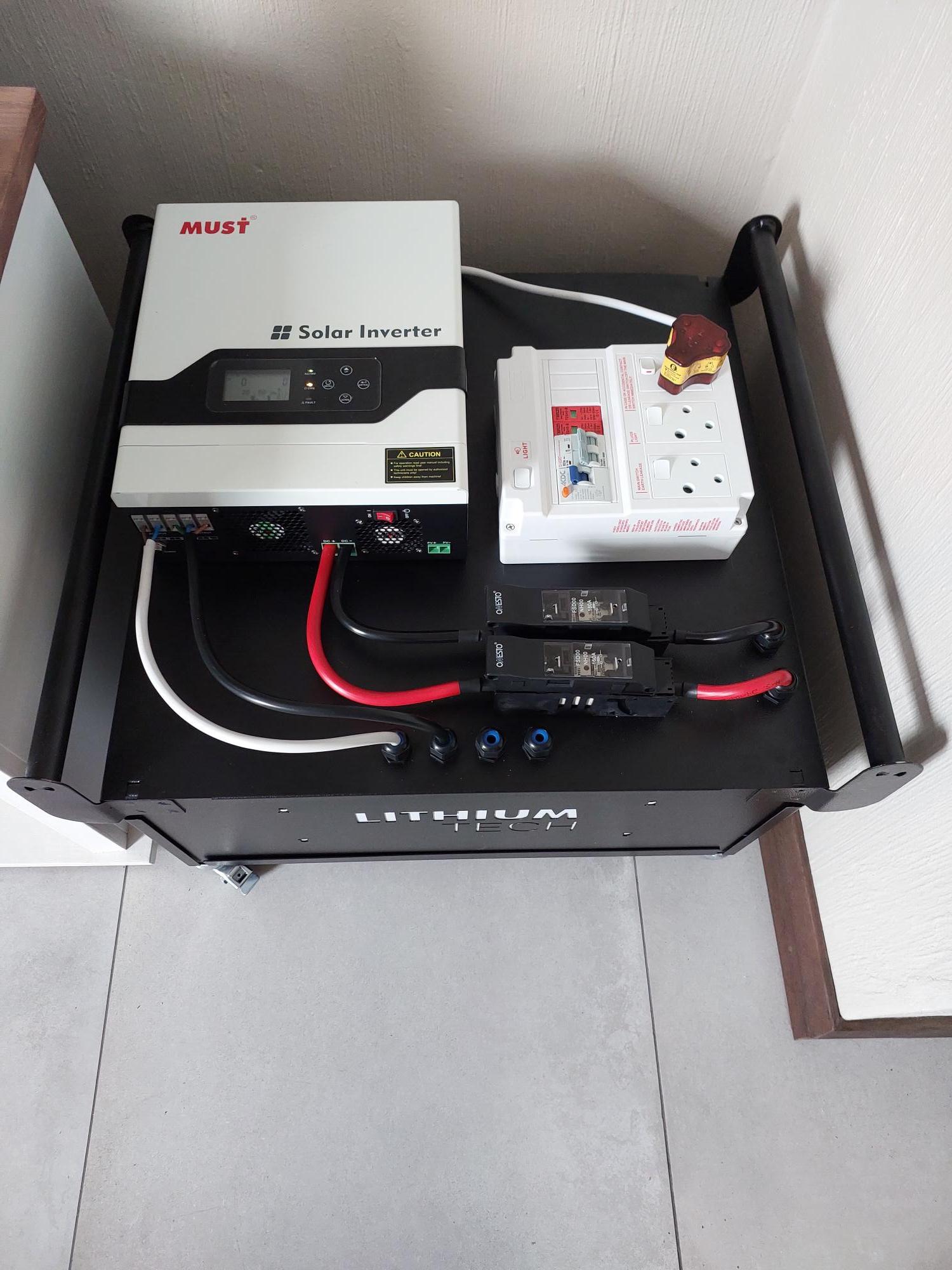
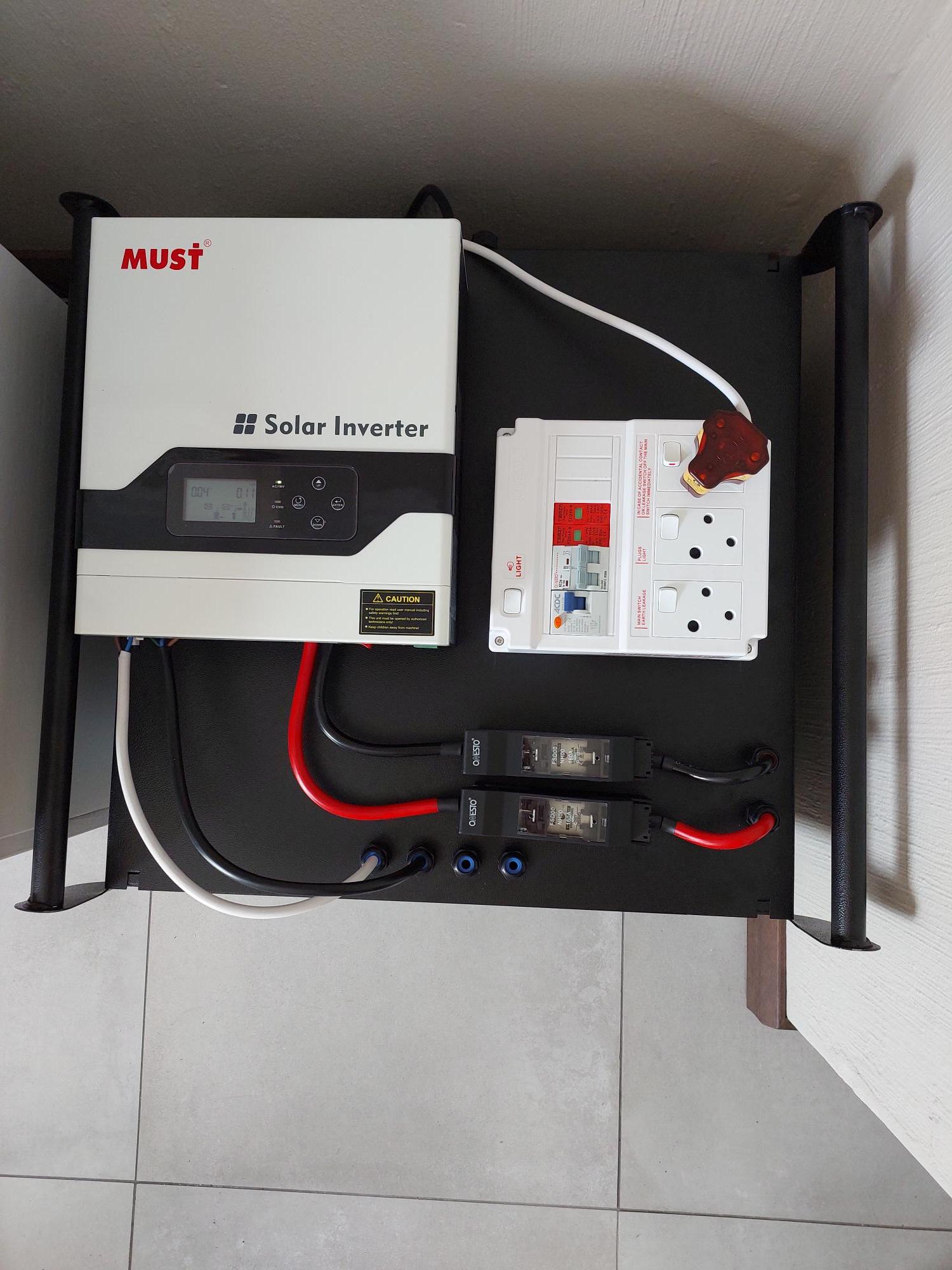
I completed the build today and am very pleased with how it came out. I now need to figure out all of the correct settings for the battery and inverter. One annoying thing is the inverter fans come on every few seconds. Herewith some images of the completed build:


-
Just an update: My existing battery cabinet was too small, so I ordered a new one which I will be receiving tomorrow. All other parts already received. I have started wiring my ready DB and would just like to confirm one last time that I have everything correct in terms of wiring. Below a diagram which hopefully makes sense. Please let me know if I am correct: I should be done with the build tomorrow and will definitely post some pics. Thanks for everyone's input, I really appreciate it!

-
I see they have a 30KA and upwards. From this video it seems I need 20KA: Will the 30KA work?
-
I am battling to find a 20KA 2p surge arrestor - sold out all over and ETA is only end May. Will a surge protector plug on the AC side suffice or will I be taking too much of a risk on the inverter without the 20KA 2p surge arrestor? Going to buy a Onesto ready board like this: https://diyshop.co.za/products/db-ready-board-mini it comes standard with a 63A earth leakage. Must I get a 25A RCD or can I use the standard 63A that comes with the board?
-
Thanks for the info! Just a few questions on your diagram: What is the surge protection before the inverter? Between the inverter and battery I plan on putting the DC breaker instead of a fuse, is that fine? Seems like your diagram has a fuse. Do you then run a ground wire at the AC output? Was thinking I should get a small DB to house the breakers as well.
-
Thank you! Another question - due to this being a backup system and no solar panels - if we have a prolonged outage and I need to charge the battery via a generator, will I be able to just connect the 3-way plug which I normally plug into the wall socket, to the generator to charge the battery?
-
Thanks - I realized that I messed up the wiring through the earth leakage and fixed it So I will then use 2-core (L & N) and a separate ground cable running outside the 2-core cable? I am just concerned for safety with the ground cable not having dual insulation and the insulation on it might not be adequately protected if a sharp object or something catches it and exposes it?
-
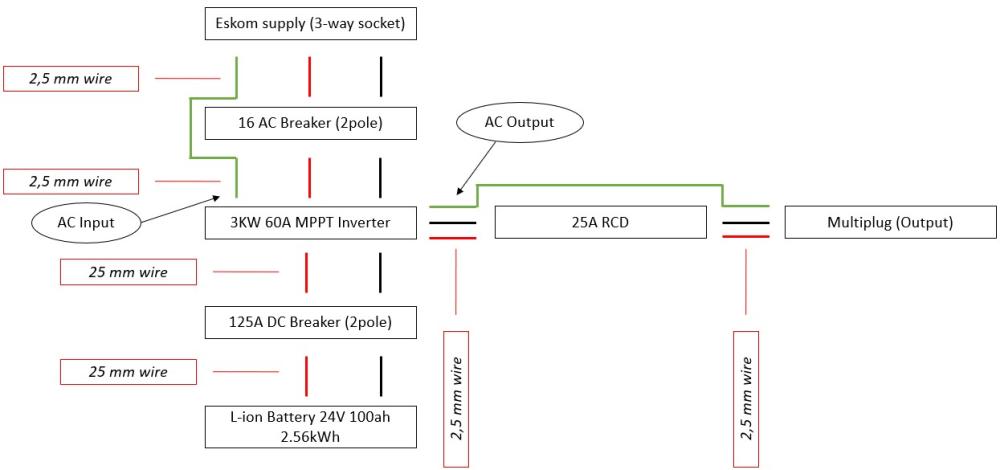
I am very confused at the moment as the more I am thinking of it the more questions pop up. Do I use a normal 3 pin plug or a surge protector plug for the plug connecting the the wall socket? A plug like this is what I am referring to:https://www.takealot.com/united-electrical-16a-high-surge-protection-3-pin-plug-top/PLID72796115 How will the grounding work? The cable coming from the wall socket will be 3-core (L,N,G) going into the 16A 2 pole breaker, but only L & N goes through the breaker. Will G then go straight to the inverter and same with the output side through the 25A earth leakage protector? Based on various suggestions if I revised the cable sizes and kept AC input and output to 2.5mm Does the above make sense? If I buy a 2.5mm 3 core cable it means I will have to split the cable and hopefully not damage the G cable, or cut the cable and reconnect G through soldering/lugs and an insulation sleeve. On another note, I have seen a few systems like the one I am planning on building that do not have any breakers or earth leakage protection like the suggestions on this forum for my setup. I have attached a few pics. It looks like there might be a battery fuse but I am not sure. Selling for R28.5k.
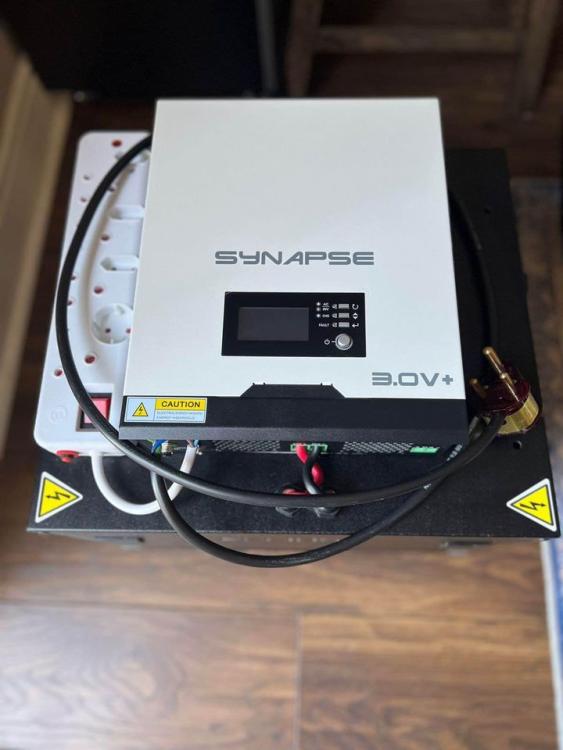

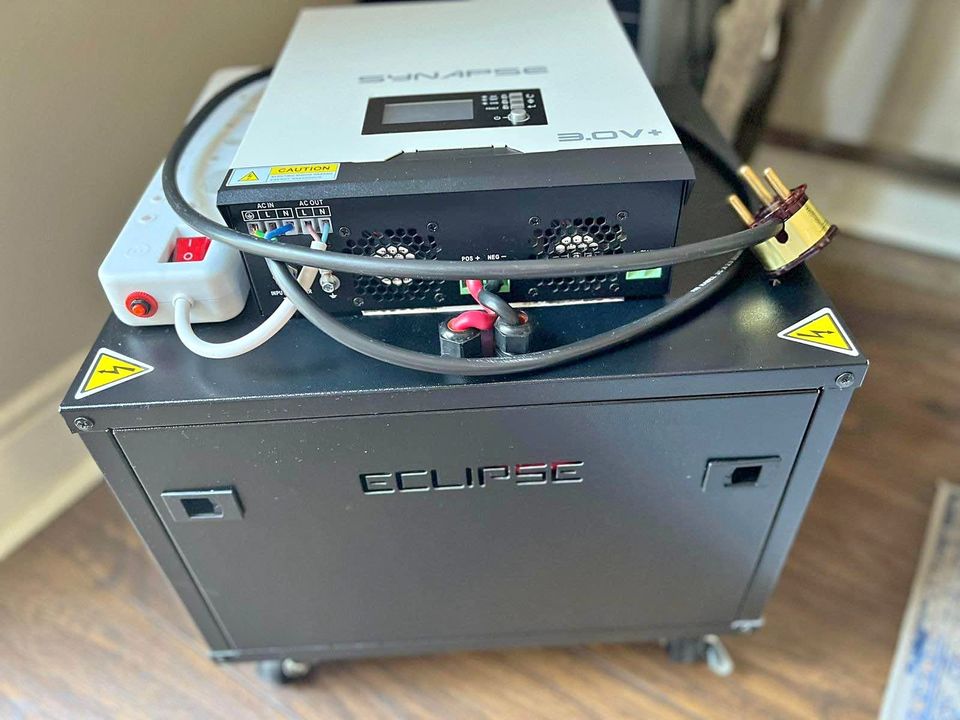
-
👍 Will report back once build is done!
-
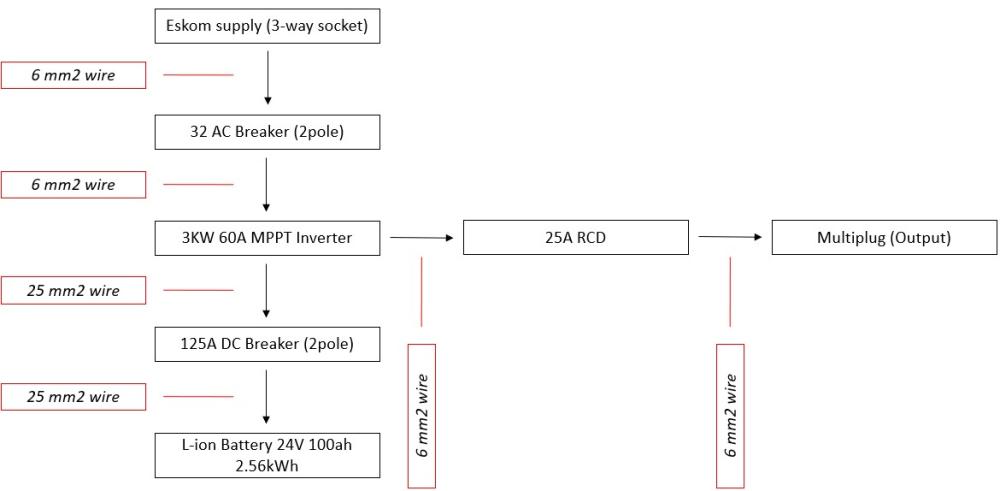
Herewith on the metric sizes:
-
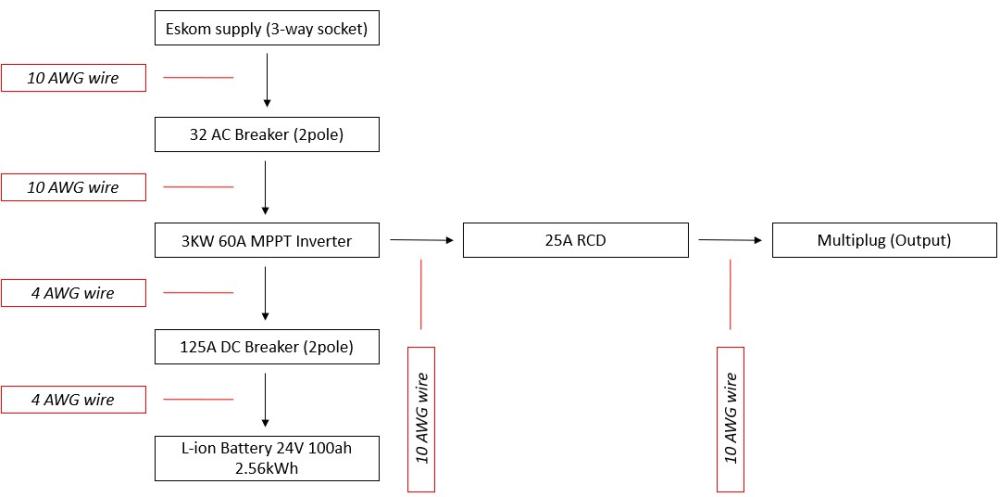
Herewith a new diagram based on recommendations and manufacturers' specs with wire sizes. Please advise if I am on the right path:
-
If I run the 32A AC breaker, would I still need RCD between inverter output and multiplug? On both breakers, do I go single or dual pole?



.jpg.8116cef11717d205b07b1794eb9d9dd4.jpg)