MGN
Members
-
Joined
-
Last visited
Everything posted by MGN
-
Hi All, As per the heading, I have a geyserwise Delta-T system which circulates water from a solar plate back to my geyser once the Temp differential (Delta T) hits 7 degrees. I'm going on holiday and am wondering if its safe to turn my mains water off. A little pump is responsible for the circulation between the plate and geyser and obviously it's not great for the pump to run dry or have air passing through it, but since nobody would actually be using any water, I can't imagine this being a problem. My understanding is that the pump just runs as a closed system between the geyser and the plate. If nothing is drawn out of the system (and provided I don't have any leaks) it should all be fine. So I'm just writing this to sense-check myself - is there any reason turning the water off would be a bad idea? Thanks in advance
-
Thanks for all the input, much appreciated. I have some ideas to follow up now.
-
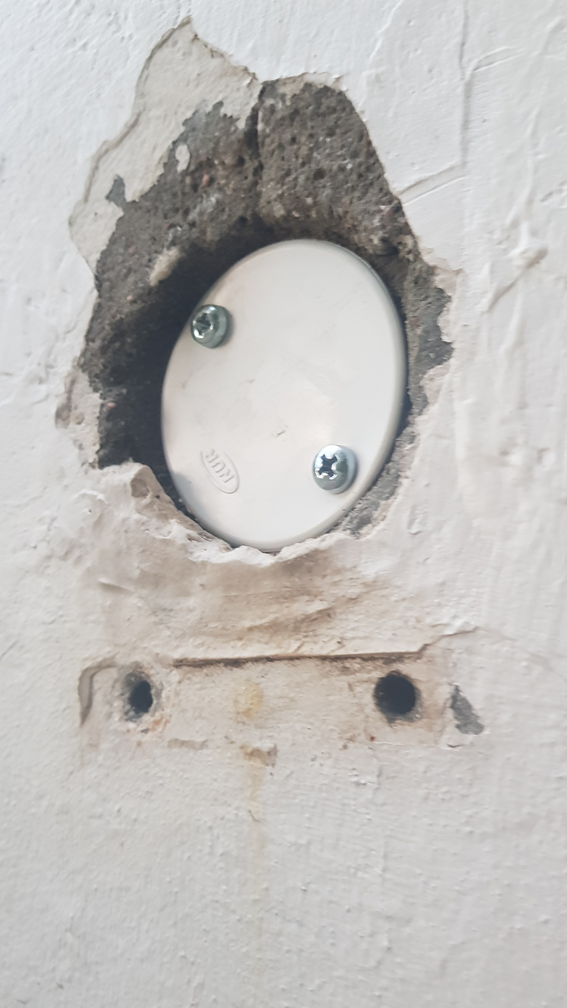
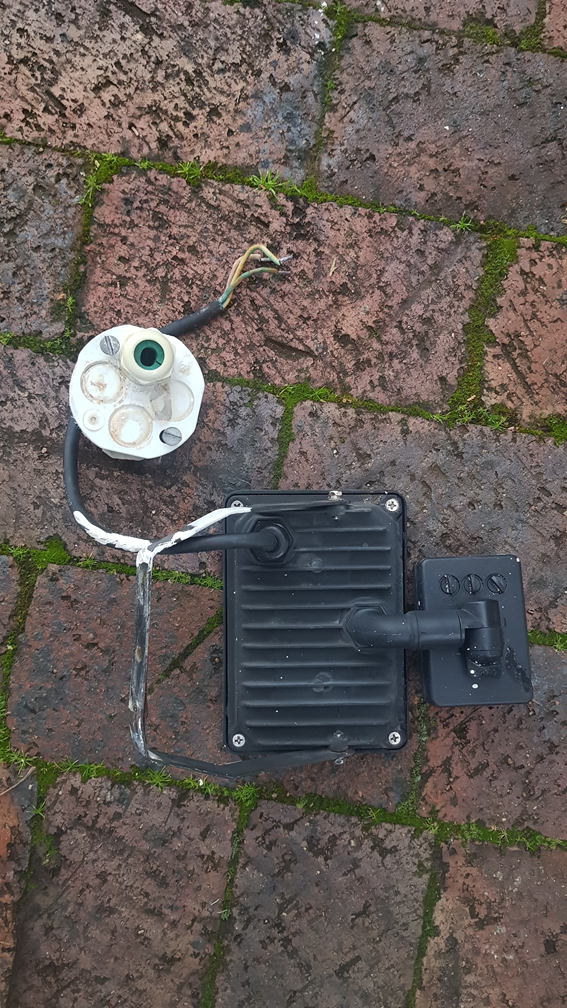
Hopefully this is the right place for this post, please redirect me if not! I have basic 20W outdoor LED floodlight that needs replacing. Historically it has been powered by a recessed circular PVC junction box. By recessed I mean it is set back into the brickwork/plaster about about 5-10mm. Previously I screwed one of these into the top and glued shut the "knockout" holes to create a relatively weatherproof housing and route for the cable coming from the the light: https://www.builders.co.za/Electrical-and-Electronics/Cable-Organising/PVC-Conduit/PVC-Loop-In-Box-1-Spout-20-mm/p/000000000000036555 I've attached pictures to illustrate what I mean. This was a temporary solution that ended up lasting several years. I now need to replace the LED Floodlight and want to do it with a much safer, weatherproof connection. I looking for suggestions on how to do this properly. Thanks.


-
Hi All, I have a geyserwise delta-T system that circulates water from a roof mounted collector plate back to my geysers (2 x 150L in series) via a pump. 2 years ago I got a 5kVA hybrid inverter system installed and asked the installer if it was possible to keep the geyserwise system on the inverter so that when there is load shedding, the circulating pump on the geyserwise keeps running to (a) ensure that the plate doesn't overheat and (b) we keep getting cheap/free hot water when the sun is out. The geyserwise system obviously also needs to turn on the geyser element on overcast days when the collector plate would be ineffective. However the geyserwise system is supplied by the inverter (essential network) and the power to the element is on the eskom mains. So the solar installer used some sort of solenoid actuator (not sure) so that the geyserwise unit can control mains power to the geyser element even though they are on different networks. Well done if you've read this far. However I find the whole system to be a bit complex and not exactly robust or user friendly. For example, occasionally, the geyserwise will "try" to switch on the geyser element when there is load shedding. But the geyser never heats up and the geyserwise unit reports an element fault because the temp sensor notices no increase in geyser temp despite it sending power to the element. Trying to explain any of this to a potential tenant is a mission. I'd like to try and simplify everything and have a few questions: Having the geyserwise on the inverter and the geyser element on mains has resulted in some untidy eletronics, as explained above. It might be better to just put everything geyser related back onto mains and live with the fact that occasional load shedding will prevent me from maximizing my collector plate's potential. However I'm still left with the issue that temps in the plate get incredibly high if the circulating pump doesn't work. Does anyone know how likely I am to damage this plate it its just sitting in direct sun for 4 hour load shedding stretches? I've battled to find any literature. If anyone knows of any other smart ways for a geyserwise system (on an inverter) and a geyser element (on eskom mains and therefore subject to load shedding) to work in tandem, I'd appreciate suggestions. Maybe my current setup is the only option. Thanks in advance...
-
Thanks Jay, I suspected it had something to do with the inverter taking it's queues on how to "behave" from the grid.
-
HI All, Hopefully someone can explain the following (hopefully) fairly minor issue: I have a Sunsynk 5kVA inverter at home with 2.5kW worth of solar pannels. I've set the timer ("System mode settings") on the inverter so that it will maintain certain minimum battery levels via the grid, but otherwise everything must be supplied via solar or battery. ie: from about 7pm I'm generally running off of battery but if the battery level gets to 50% by 5am the grid will start to help out. However I've noticed that when I'm sitting near a ceiling fan and can hear it clearly, the fan seems to make a slight drone when there is no grid power. As soon as the grid kicks back in again, this stops and the fan spins a bit quieter and possibly at a slightly faster speed (although this last part is barely discernible - if at all). But this is what I don't understand: in either case, the fan is being supplied purely by the battery, via the inverter. The fan doesn't "know" that there is loadshedding, for all intents and purposes that fan is off grid, whether eskom is providing power or not. So why does the presence or absence of mains supply affect the way my inverter supplies power to my fan (and house), given that the battery is providing the power either way? Thanks in advance Nick
-
Thanks for the input everyone. Some good ideas and I'll investigate a bit more. I'll keep an eye on it and try to narrow down exactly when it happens. I've also noticed a UPS that we still have connected occasionally beeps (just once) on changeover. I'd imagine these are quite sensitive to any drop in power as that is their whole reason for being.
-
Hi All, I'm sure this has come up multiple times so if people are getting tired of answering this one, please point me to the best thread. I'm currently running a sunsynk hybrid inverter with battery and solar pannels. I've noticed a slight flickering in the lights (it lasts fractions of a second) when the grid power goes on or off. I think this flicker only happens when we have some dependency on grid power. ie: when when we are running entirely off of solar during the day, the system doesn't "care" that the grid is back on. But when running in the evening off battery and the grid comes back on and the inverter makes the decision to switch back to grid power, then it will be noticeable. My assumption is that this happens because it's not possible to easily synchronize the phase of the AC wave coming from the inverter with that coming from the grid and so one sees a micro-fluctuation in power when switching over. Out of interest, does anyone know if that is the reason? My more important question though, is how do I protect my home appliances from this? I have a friend who's fridge recently packed up and insurance are claiming that it is the above issue that has caused it. Is there anything that i can fit at the plugpoint (or elsewhere) of my more expensive home appliances to protect them? Thanks
-
Thanks All for the feedback. I'm going with the Sunsync inverter and Freedom Won option, although incidentally I am now being offered the option of the Sunsynk battery too (alternative to Freedom Won) for an extra 5 years on inverter Warranty (from 5 to 10). I think I may still go with the Freedom Won though. Cheers
-
Hi All, I'm sure questions like this come up on a daily basis, but I'm just looking for a bit of advice regarding which battery and inverter brands have a decent reputation. I'm looking to have a 5kva inverter, 5kva battery and small number of solar panels installed, with a view to expanding later on (when I can afford it). I got 3 quotes that ended up much along the following lines: Option A ($): Synapse inverter, Pylontech battery Option B ($$): Sunsynk inverter, Hubble AM2 battery Option C ($$$): Sunsynk inverter, Freedom Won eTower battery In terms of solar pannels, all parties came out within a few R100 of one another and all quoted the same brand. Labour and installation was thankfully also similar. So to help make a decision, I'm just looking for user experience/opinions on the different inverter and battery brands. I've heard people say good things about Pylontech batteries on this forum. Do we like Hubble? Do we like Freedom Won? Regarding the inverters, I'm happy with the more expensive Sunsynk option but would be interested to hear opinions on the Synapse inverter. Thanks
-
Hi All, The battery for my home alarm system is taking a bit of a hammering during this latest round of loadshedding, to the point now where it starts making warning noises toward the end to a 2.5 hour session. Not ideal at 4am. I tested its voltage and it showed 9.2v halfway through a recent outage, which I initially thought was great until I realised it was a 12v battery and not 9v. So I'm looking for a recommendation on a good replacement battery - or are they all much the same in terms of quality? I've attached a photo of my current battery and system. All it really does is supply the pannel, 4 PIRs, 2 LEDs and I'd guess some sort of transmitter that sends signal to our security provider. Any recommendations would be appreciated. Thanks


-
Pump is now sold.
-
And more than a year later with no takers... The new price is R2K.
-
Stellenbosch. Should have added that from the start! Will amend my profile.
-
Pressure switch. Which would be included in the price, just not shown in the photo. The float shown in the photo is a run-dry protection. Full details of what is included is in the hyperlink in the original post.
-
OK, well there were no takers at R3K. Anyone for R2.5K? I've attached a photo of the actual pump this time.

-
I don't use it, but the plan was to have a silent booster pump (in a RWH tank) for non-potable domestic applications. If you look at the hyperlink in the original post I think it describes its typical uses.
-
Hi, I bought this pump from these people about a year ago (the NKm3/4 version): http://www.water-booster-pumps.co.za/booster-pumps/auto-ms-submersible-booster-pumps/ I've taken it out of the box once or twice to look at it, that's pretty much it! So it's unused and just about as closed to original condition as is possible. I'm not going to install it, so may as well sell it on. I'd let it go for R3K. I'm happy to provide pictures and other details should you want them. I've used a slightly smaller version of this pump and it is fantastically quiet when submerged in a RWH tank. I can't speak for this one (again, its unused) but apparently very quiet too. Thanks Nick
-
Thanks Oli4, If I were to go the route I described, there would be a part of my domestic pipe network (2 toilets and a washing machine) that could be supplied by either rainwater or municipal - but it would be entirely isolated from the rest of the network via non return valves. So there would be no chance of rainwater ever making its way into drinking water, unless I decided to drink water out of the cistern. So far it's just my dog that likes to do that (OK technically the bowl). Basically the last few meters of the supply to 2 toilets and a washing machine would use the existing copper pipe, in an effort to avoid having an entirely parallel system. It would just be less work and be much neater... if it is possible. Good to know about the PVC and Cobra pipes. I've actually connected the pump up with PVC, but I'm still not supplying anything inside yet. So far so good. Cheers Nick
-
HI All, I'm not sure if this is the right place to ask, but I've read some really useful forum threads here about rainwater harvesting, so here's my question: I've got a rainwater harvesting tank and small pressure-controlled pump which is currently totally independent from my municipal supply. However I'd like to put a couple of toilets and washing machine onto rainwater, but obviously can't guarantee a year-round supply. I should be able to isolate those 3 supply points onto one line such that they can be fed by rainwater, and then switched over to municipal if I don't have any rainwater in the tank. The switch would just be at one location - I don't want to have to drill new holes into the water at all 3 places and have some kind of switch (eg: below the toilet) to manually switch over each one - that would be madness. What this means though, is that these fittings (2 toilets and washing machine) would be supplied via their existing copper piping downstream of the "switch over" point. I've heard a few people say that you should not use copper pipe with rainwater as it tends to be acidic and may corrode the pipe. I'll wont be drinking this water, but I don't want to have to replace the pipes after a couple of years. Does anybody have any experience with this/know much more about it? Is just a bad idea if you plan to drink the water, or will the acidity of the rainwater destroy the pipes pretty quickly? Thanks in advance Nick
-
Yeah I have. When it first happened I went to look at the display panel and was wondering why the controller felt the need to dump 5 degree water into the tank and send 50 degree water out to the collector (where it would dissipate off to the atmosphere rapidly!). But the more I think about it (and the more I read the manual!) the more it makes sense that it was protection against freezing. Luckily we don't get too many of those nights in the Boland.
-
There's a sensor in the plate and one in the geyser. As far as I can tell they are still in tact and in their general day-to-day functions, the system works exactly as it should. What I mean by that is, I'll watch it in operation using the geyserwise display panel and everything seems to make sense from a numbers point of view. eg: geyser at 51, plate at 51..53..54..55..56..57..58 (pump goes on, temp in plate drops down to 51, geyser maybe goes up 1 degree). It just the coming on at night that was a surprise. Chris Louw's explanation makes sense though. Will look that up.
-
Ahh.. OK, this could be a possibility. It has only started to happen now during some very cold nights.
-
A geyserwise system. Mine is set to activate the pump when when the differential between plate and geyser is 7 degrees.
-
Hi Folks, About 4 months I got a solar collector plate installed with a 220v (mains) pump to circulate. For the most part it has worked well and at the tail end of summer when it was first installed my geyser didn't do any work for weeks at a time. However in the last few weeks I've noticed the pump coming on in the middle of the night. I'm pretty sure this has only just started to happen (as opposed this being a problem from day 1 and I've just slept through it). But as you can imagine, sending lovely warm water from the geyser out to the plate at 2am, and dumping 5 degree water from the plate into the geyser at the same time is not an ideal scenario. I've spoken to the guy that installed it and he suspects it's a faulty non-return valve. I'm not sure how this would trigger the pump though. Has anyone had any similar experiences and know what the solution is? Thanks