The_Scrutineer
Members
-
Joined
-
Last visited
-
-
 87 Dream reacted to a post in a topic:
Blown Inverter (Mecer IVR-1200LBKS 1200VA + Mecer LiFePO4 200AH)
87 Dream reacted to a post in a topic:
Blown Inverter (Mecer IVR-1200LBKS 1200VA + Mecer LiFePO4 200AH)
-
No I haven't. Looking from above and around everything is "pristine". No hints of scorching or anything else and can't smell anything burnt either. After learning a little about BMS I figure the BMS and the inverter charge circuit had a bun fight and the inverter lost Running the same battery on the IVR1200 MPPT everything seems to work 100%, especially around the bulk charge cut off and not trickle charging the LiFEPO4
-
I have an IVR-1200MPPT and the fans also run constantly. After giving it some thought, the inverter - is either grid connected (and maybe charging) - running in inverter mode - or solar charging which implies the inverter will be doing some sort of work most of the time. Therefore, the fans might as well be on. I have banished my inverter to the laundry room and run an extension cable because the noise was driving me crazy.
-
All four fuses look fine

-
 The_Scrutineer reacted to a post in a topic:
Blown Inverter (Mecer IVR-1200LBKS 1200VA + Mecer LiFePO4 200AH)
The_Scrutineer reacted to a post in a topic:
Blown Inverter (Mecer IVR-1200LBKS 1200VA + Mecer LiFePO4 200AH)
-
Back in the day I had a workshop made 1000W inverter that was very heavy and robust with no fan cooling. No issues with that one. Never blew, never overloaded. Lacked info. It was either on or off 😂 The Mecer is decent enough. I wasn't in the room when things went wrong so until an electrician takes a look that will be a mystery. Will have it repaired at some point and use as a backup. Pros - It has a range of alarms which appear to work - I am super impressed that it did not damage anything on the input or output leg when it blew - During operation battery charge and % Load is displayed in 25% increments. I have mixed feelings about this because readings would change depending on load. So a given higher load may reflect 25%. Reduce the load and the battery capacity would increase to 50% so its more of a hybird percentage of fully charged running time available sort of thing. In some ways this is handy. At the same time its difficult to judge depth of discharge or battery condition - It seems to handle device start up power draw quite well. I suspect that it can handle 1000W - 1500W. In my experience when a high load is added to a running inverter there is a momentary change in the buzzing sound. This inverter didn't seem to have it - Grid to Inverter change over is as fast as it needs to be - It displays AC in and AC out digitally in volts. This is handy in terms of measuring the state of the grid connection. There will be times when its running 240V+ and others where its running below 230V which is usually a good sign that our substation is about to trip - It charged the Lithium battery to what based on voltage looks like 90% which is decent enough considering the 1.2V? difference in voltage between LA and LiFEPO4. Cons - The fan runs in inverter mode. Fan noise is an irritation - When charging the fan runs faster. Bigger irritation - Fan is loudest when charging at 20A. This is preferable to what can be long charging periods at 10A - The on/off function is a button and not a switch. For me this is a big irritation and design flaw when working on the cables. Its very easy to bump it and I still have PTSD from the spark when I reconnected the battery! Overall? I dunno, I would give it a 7.5/10. Downsides being the noise and the lack of indicators for battery health. Overall I am starting to think Mecer is a little underrated. Have used a variety of Mecer devices over the years. They may not be best of breed, however from a value (utility vs cost) perspective I have no issue and say we should look to buy "local" more often. The sticker says "made in China" which is a bit disappointing. There is a decent review video on YouTube (not by me)
-
Thank you for this. No stress on the lesson, its good to pick things up as I go along. So basically from the above, the flow rate for 1 x 200AH battery versus 2 x 100AH batteries is practically identical?
-
Combination of the tight component packaging and unable to remove the plastic shield means I couldn't get to the fuses. Also unable to see any signs of scorching. There is a DC current of about 1.16V across the inverter DC terminals which would imply that not all the fuses are blown (I think)
-
A conceptual question So far every manual I have looked at does not say "do not connect more than x AH battery to this inverter" 1.2KVA divided by 12 volts = 100amps. Does this therefore mean the max battery that can be attached is 100AH? If multiple batteries are attached in parallel would you not then have 200AH to consume, with only 100AH of ... I dont know the correct term... so will say electrical pressure So as a thought experiment, if you have 2 x 100 liter JoJo tanks raised 2m off the ground. Each has a pipe and the two pipes run to ground level and are joined and fed into a tap Alternatively you have 1 x 200 litre JoJo tank, raised 2m off the ground. It also has a pipe running to a tap at ground level Would the 200 litre tank not create twice gravity fed pressure vs the 2 x 100 litre tanks? (logic being if F= ma where Mass is the water and acceleration is gravity, with the 2 x 100 litre tanks its 100kg x 1G whereas a single tank is 200kgs x 1G. Replace water with batteries and the tap with an inverter and conceptually an inverter has to hold back twice the electrical pressure with a 200AH battery than with 2x 100AH batteries)?
-
The multimeter arrived 13.29 volts on the LiFEPO4 battery. Tried to measure amps and there was sparkles so I assume I am not supposed to do that.
-
@87Dream - I'm based in PTA East - the multimeter arrives tomorrow - will check the fuses this evening and look for scorching on the board/components @tetrasection - thank you for the input. I will take closer look tonight. Starting to wonder if 200AH batteries in general work particularly well with smaller inverter/chargers.
-
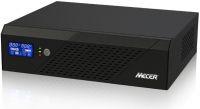
This is the inverter that blew up. No real signs of damage but something went wrong.

.thumb.jpg.1cc4c0162abca94f5ab52c8a9dbd079a.jpg)
-
The Mecer Inverter with the MPPT Solar Input would appear to support lithium, yes.

-
By "that inverter" I take it you mean the standard 12V Mecer inverter
-
Inverter link https://www.comx-computers.co.za/IVR-1200LBKS-specifications-126908.htm Battery link https://www.communica.co.za/products/batt-12-8v200-li-mcr The short version of this story is 2 year old inverter switched from a single 120AH AGM a single LiFePO4 and the inverter went bang bang and tripped the DV within 10 hours. I have 2 questions: 1. Why? 2. Any suggestions on a replacement inverter? This Mecer https://mhn.co.za/shop/mecer-1200va-1000w-12v-w-mppt-inverter/ has "lithium" in the manual https://mhn.co.za/wp-content/uploads/2021/01/Mecer-IVR-1200-2400-MPPTinverter-only.pdf compared to 90% of inverter manuals which dont say anything specfic about lithium. ========================= The Details - Mercer IVR-1200 purchased together with a SoSolar 120AH battery in Jan 2019. - Setup was Mains plug into Ellies surge protector into the inverter. Load usually 150W flatscreen plus 180W laptop plus sundry (cellphone charger, LTE modem etc). - Run time went from 2 hours to less than 30 minutes and the decision was to upgrade to more AH. Initial choice was an AGM but the higher cycle life of a Lithium battery was too tempting to pass on. Given the heat/fire issues with the LiFE battery I was super paranoid about it catching fire. - Hooked up the LiFe battery. - No issues (as in the various components were tested for heating via touch ie cables, battery terminals, the sides and top of the battery). - Charged it up. No issues - Switched off mains to test discharge and duration. After 4 hours the inverter was indicating remaining charge as somewhere above 75%. - Switched mains back on. Battery recharged in about 1 1/2 hours. Happy days. - Roughly 30 minutes after recharging completed, there was a bang and the plug phase tripped on the DV board. - On return and inspection there was a burning smell in the room. - Checked the battery, cable, terminals, 240V AC running into and away from the inverter. - Everything in order. - Eventually touched the top of the inverter. It was very warm. Sniff sniff at fan exit vent. Very strong burning smell. - Reconnected the inverter to mains and switched on. No drama. Plug phase on DV board trips. - Conclusion? RIP inverter - No idea if the battery was affected as I do not have a tester (or 2 wires and a 12V lightbulb) Worth noting that - despite the inverter having a variety of alarms, none of them triggered - the surge protector on the mains didn't blow and is working - nothing on the load side of the inverter blew (flat screen TV, laptop, hard drive, cellphone chargers etc) - The battery comes with screw in bolts and washers. The washers were placed between the cable lug and the bolt and not between the cable lugs and the battery terminals Other Details There is some "minor" stuff including: The inverter is supplied with cables. The lugs on the cables are asymmetrical so I think its M5 for the inverter end and M8 for the battery end. This was not noticed until yesterday when the battery bolt was too big for the lug on the live terminal. I elected to get around this by screwing on the bolt and using the washer and battery terminal to grip the cable lug on the assumption that any issues with flow of current would result in heating. Later on when measuring the lugs and bolts to order a replacement cable I noticed the lug on the negative terminal was big enough for the bolt and then realised its small lugs for the inverter and big lugs for the battery. I switched everything around, reconnected and later everything went bang bang. Washers. For reasons I dont recall and possibly ignorance on purchase I placed the washers on the inverter end of the cable between the lug and the terminal. This is incorrect but doesn't seem to have been a problem. When switching around the battery cables yesterday, I switched the order to bolt, washer, lug, inverter. Cable connection from inverter to battery was both cables running down from the inverter. After swapping around the lugs for the live cable I switched to have both cables running up, over and down to the battery



.jpg.88373ee29f5813b6dd35bce44b2e0345.jpg)