selenium
Members
-
Joined
-
Last visited
Everything posted by selenium
-
Unfortunately not - good luck with your search.
-
A quick update for those following the thread: I eventually got the Esener. I installed it, fiddled a bit to get the float voltage happy and have now basically forgotten it exists. No hiccups, no weirdness from the inverter, it just works. Battery is f'ing heavy and feels like it could withstand a nuclear bomb, fit and finish is excellent and everything feels like it's a quality product. I'm of course itching to get inside and see which BMS and cells it uses, but I will respect the warranty period under threat of severe violence from she-who-must-be-obeyed before I start unscrewing stuff... Next step is to get it wired into the house wiring (lights, a few designated plugs) and then some solar panels.
-
@Nimitz Sorry for slow response, lots of hectic here currently. Battery replacement is still in limbo but I've finally managed to get a return/refund organised for the blasted gels. Just waiting to complete that. Esener is currently front-runner because price and also local company. They offer a very good price if you're willing to take 3 units, otherwise you need to go through a reseller. Only caveat: the Esener battery doesn't seem to have a way to talk to inverters (via CAN/RS435/whatever), but I bought a Victron SmartShunt recently, so I don't really care about that. The battery will deal with max. discharge protection itself and the SmartShunt can tell me where the battery state is at, and also remotely. I have an RCT 2kW (genuine Voltronic), and aside from it's inability to deal with lead gel batteries, it's a nice little unit. I imagine the 3kW variant will do equally well. FYI: both your inverter options seem to be Voltronic units, but be aware that Voltronic clones also exist. @Coulomb did an EXCELLENT write-up about how to tell real from clone - do a forum search, you find it. So to recap: I've pretty much decided on Esener, but don't have any experience yet, so will only be able to report back in a few months.
-
Update: I've decided to bite the bullet and start looking at non-moneywaster options. Thread below - please chime in!
-
Tl;dr version: I need (a) new battery (or 2). (If you've missed the backstory, the thread is linked at the bottom of this post.) As my inverter is 24V, there aren't that many options in SA, so I've made a spreadsheet (can you tell I'm in IT? 😆 ) And I've come to an interesting conclusion: Buying a 24V battery is considerably cheaper per rated cycle than the 12V drop-in replacements like the Hubble S-series (spoiler alert: by more than 50%). Considering mainly price per cycle, the SunX battery slightly edges the Esener and PylonTech but it has a screen and looks like it might be able to give detailed battery state feedback (which I consider very important, seeing as pretty much no battery is guaranteed to talk to my little Axpert, so I'm leaning towards giving it the nod. Warranty and other important specs also look reasonable, so what do you think? From other threads (https://powerforum.co.za/topic/5009-hubble-into-batteries/ and https://powerforum.co.za/topic/14587-esener-lithium-battery), it seems the Sunx, Hubble and Esener all have the same Chinese parentage (Chang Hong). I know that just because the OEM is the same, it doesn't mean the batteries are the same (e.g. Voltronic firmware customized for larger brands) but I feel there's a difference between a physical product (where you get economy of scale with larger raw material orders) and software/firmware (which is a virtual product - please note, I'm using virtual here as something you cannot touch physically). Also: binning (putting "better" parts in more expensive SKU's and "lesser" in cheaper items) is a thing, I know. Intel is famous for doing it and our friends in the East have learnt that lesson long ago as well. However, given how established the processes and manufacturing methods are, is that really something to be concerned about? I'd wager that for most manufacturers of the raw cells, they will have little variance in quality because it's simply not economically efficient. And I'm also of the opinion that the manufacturing process itself is probably quite mature by now, so there shouldn't be large differences in the end product. Given all the ramblings above, please chime in. I need your recommendations please, for manufacturers as well as suppliers. If you disagree with my conclusions, please tell me and more importantly, tell me why. I would really like to get this monkey off my back now and go back to pottering around in my tech shed 😉 PS: If you're interested in seeing the actual spreadsheet and links within, please drop me a DM and I'll share a Google Docs link with you. Backstory here:

-
Hi @MiG, did you get one of these or did you go with something else? I'm considering their 24V option and a first-hand opinion would be very useful.
-
Damnit! Thank you @Coulomb and @Kalahari Meerkat and everyone else who answered - I will try charging with a car charger and hopefully rescue what little capacity remains. My cut-off voltage was set at 24V until very recently, so I'm hopeful that the money-wasters aren't completely fsck'd. Just my rotten luck. *sigh* Live and learn, live and learn.

-
No worries, most days I don't know my arse from my elbow🤣🤪
-
It certainly seems to be the case with mine - it just switched off again after about 30mins. 🤬 Checked the battery voltages: 12.9V/12.88V respectively. WTaF. The previous round they shut off at 12.75V each. And this is after I changed the cut-off and back to charge voltage settings as recommended by @WannabeSolarSparky and @Kalahari Meerkat Obviously can't check exact settings right now, but if I recall the cut-off is now 22.5V... Which is 11.25V per battery vs. the 12.9v I'm currently measuring. Surely a 300W-ish load cannot make the battery voltage sag that much? Is my unit's internal shunt possibly defective that the readings vs. settings are so vastly different? Do I need to send it back? Or would a complete reset help/be possible? @Coulomb, please chime in with your thoughts? Please also give recommendations on how long do I need to set the equalization to run? I'd like make sure the batteries get a decent charge without tipping over into overcharging? 60mins? 90mins? I'm guessing there's a magic formula to calculate it? Sorry for all the questions - if any of you are ever in the vicinity, I will happily buy you a drink in gratitude for all the help already given.
-
Thank you - every day a little more knowledge 😀
-
Thanks, will do. For interest's sake, what are those settings for? Are they more related to a system where you have PV input as well?
-
Cursing is about right - lots of adult language has been spoken in the proximity in the last few weeks... Thank you for your input too - I will update the cut-off voltage and report back.
-
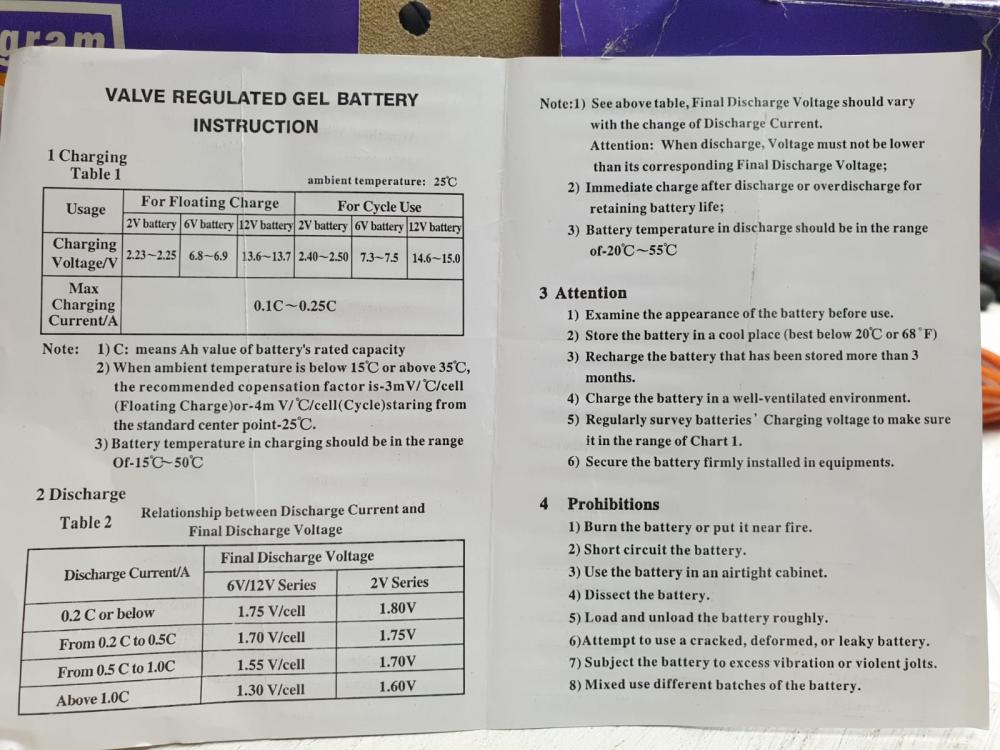
So THAT's what that table is for - thank you! Bloody hell. I will update the cut-off voltage and report back but it really helps to now know what that table is for and how to use it. Thanks again! I will also check the voltage at the inverter vs. the batteries to get a feeling for what impact the cables might have. As an aside: You have my complete agreement on the lead money wasting items - like I said, I got them very very cheap. The idea is to sell them once I have a better grip on the systems and terminology, and then move to LiFePO4. But you have to learn somehow, and this is a good, not too expensive school, with lots of very knowledgeable people willing to share their experience and know-how.
-
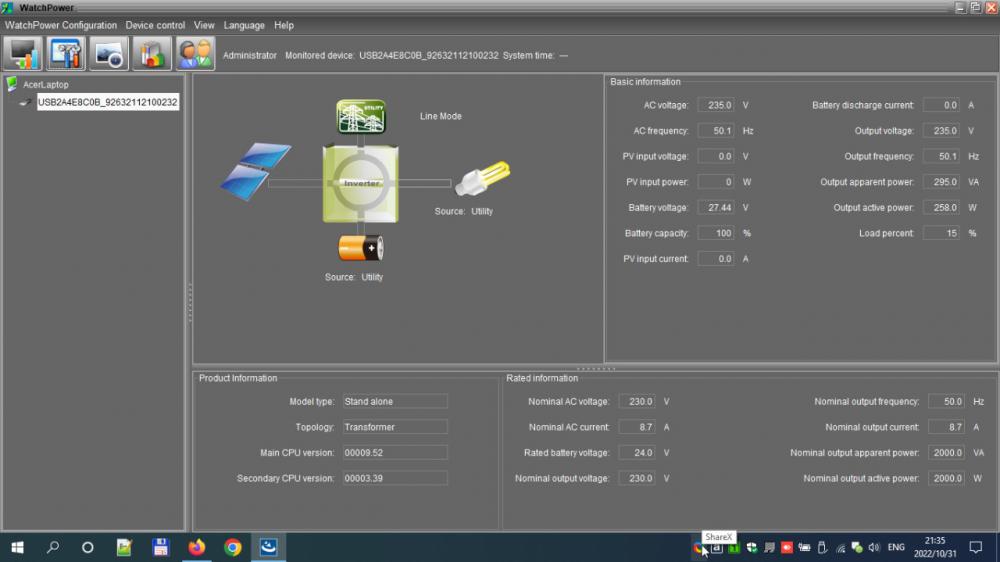
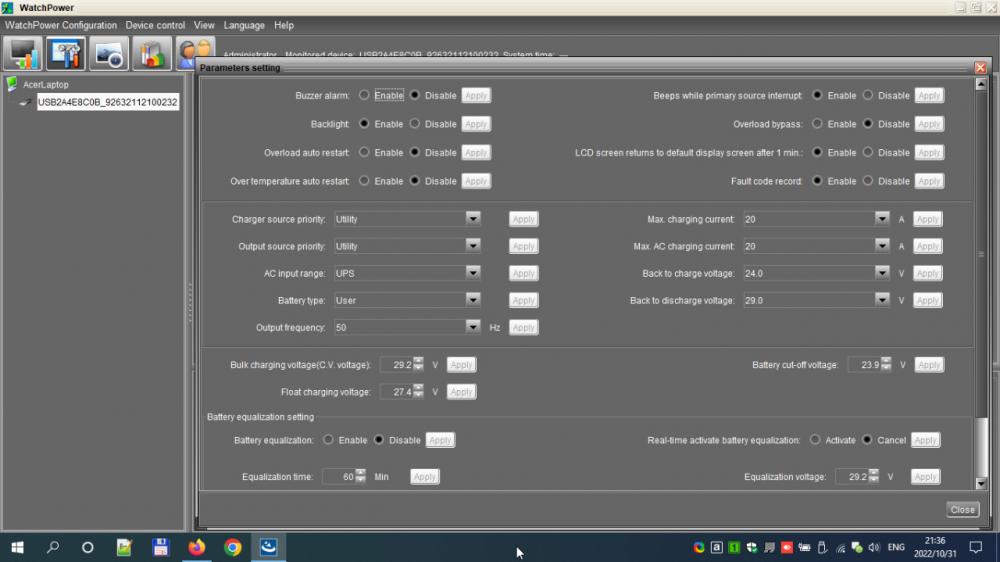
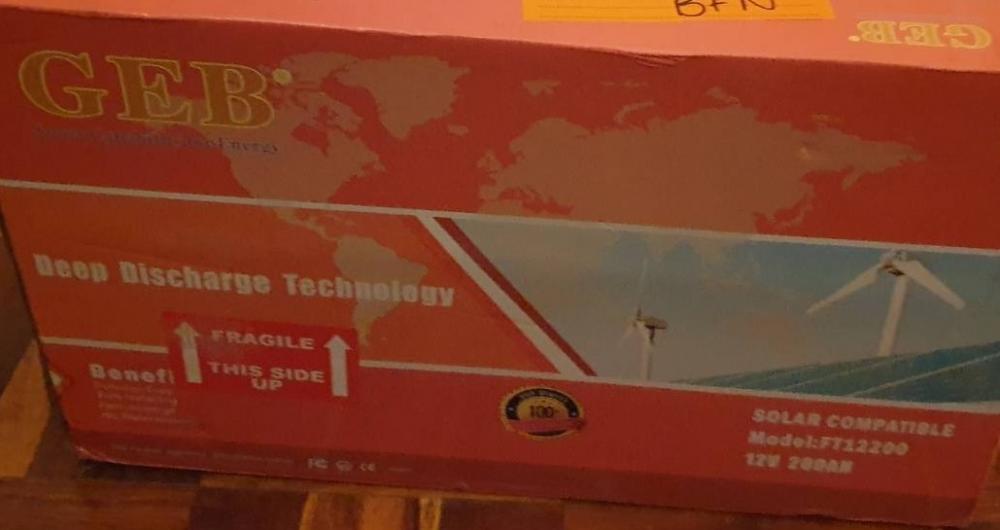
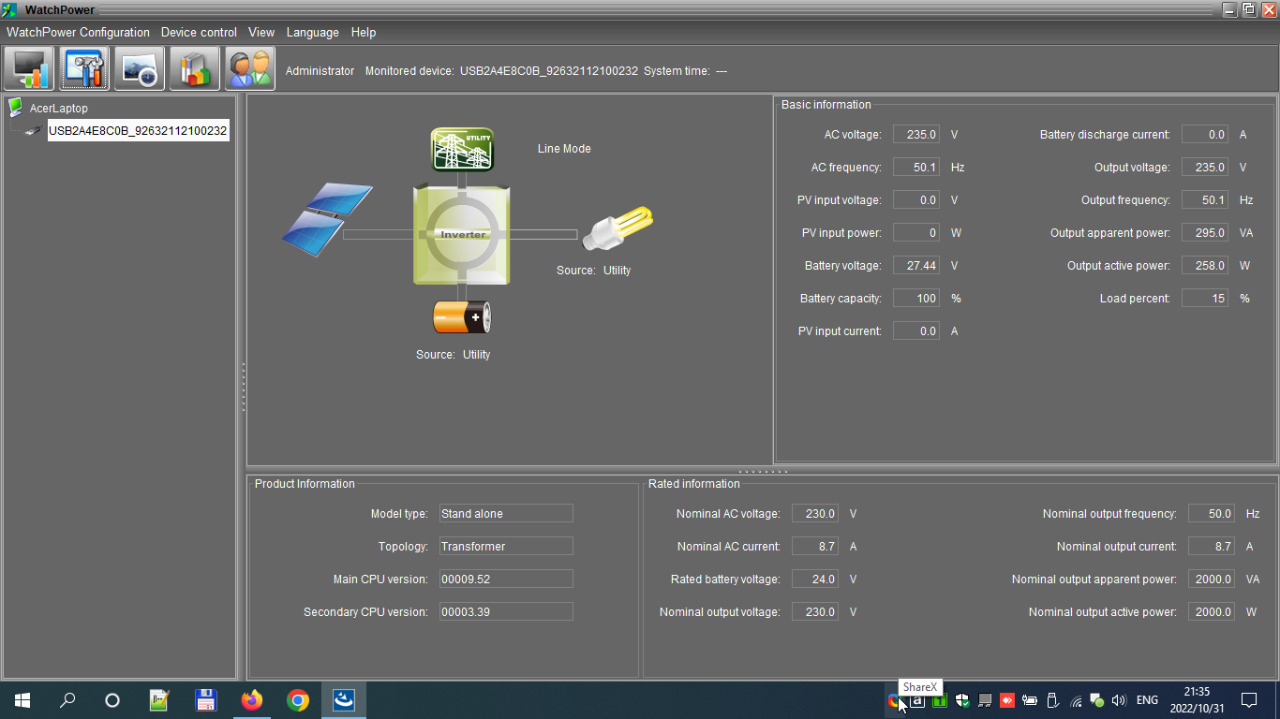
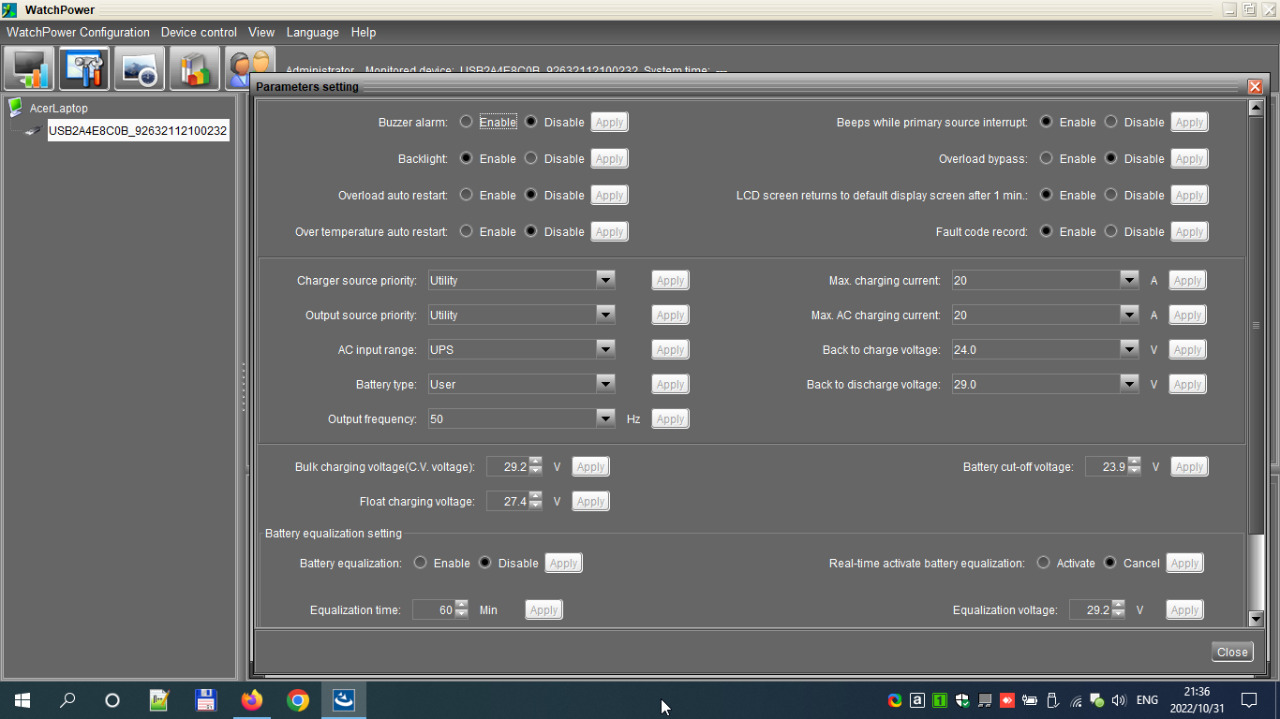
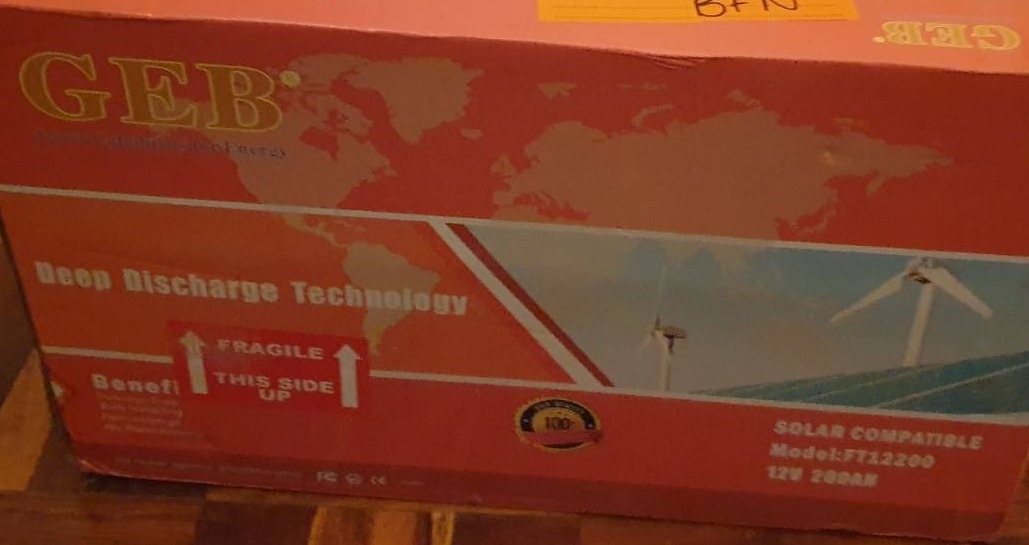
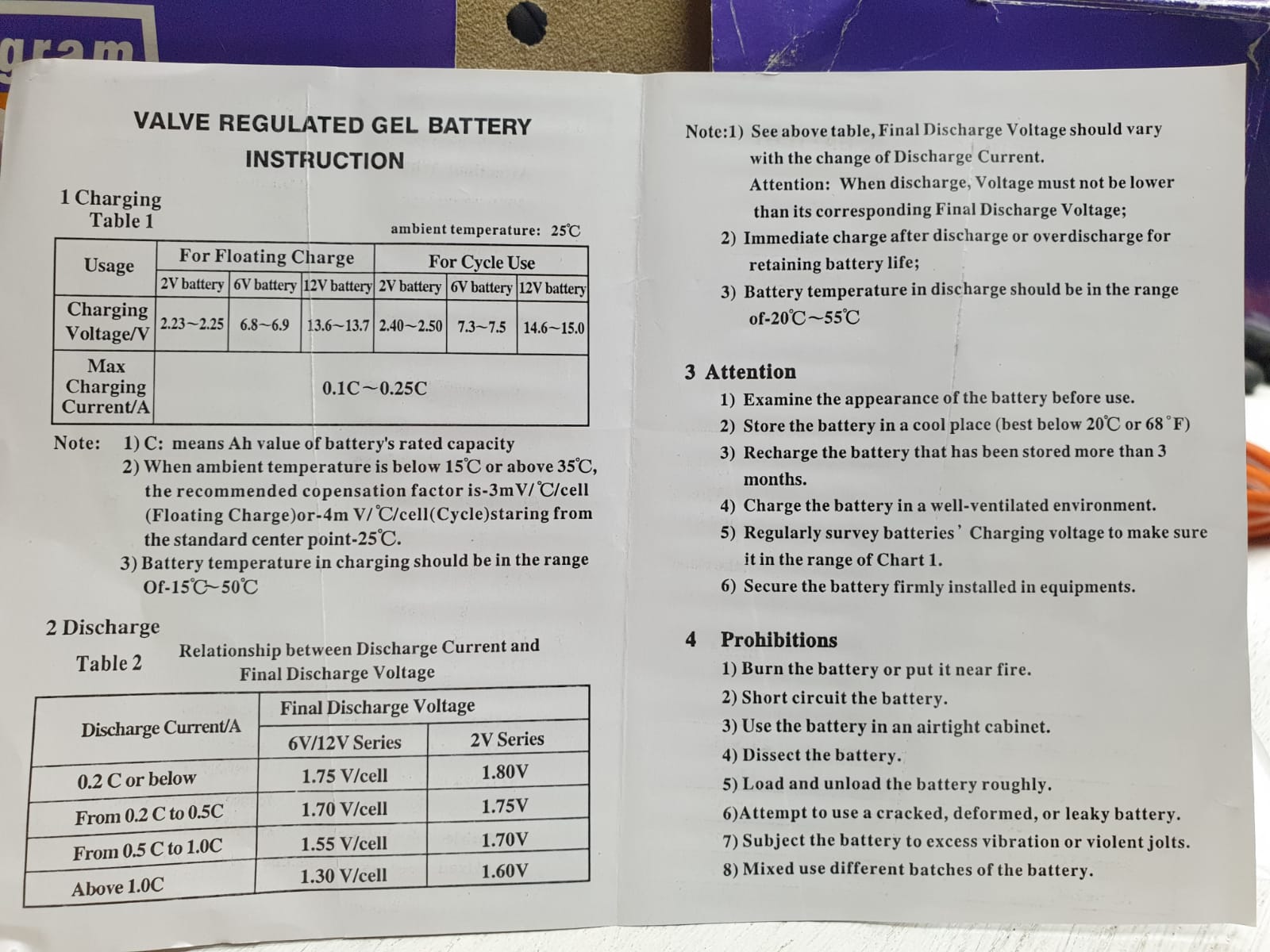
Barely 30mins. That's how long my 24V-2kW 200Ah system lasts with a 300W(ish) load before shutting down. System spec: RCT Axpert V-PF1 24V 2kW inverter (bought new, about 6 months old) (Firmware main v9.52, secondary v3.39) GEB FT12-200 12V 200Ah Gel batteries (bought new, about 6 months old - the only reason why I have these is because I got them very very cheap and a friend has had good experiences with them) Victron battery balancer Victron battery cut-off switch, fuse holder and 250A fuse 50mm2 cables Settings as per Watchpower (confirmed to be the same on inverter as well): Type User Bulk charge 29.2V (battery spec 14.6 - 15.0) Float charge 27.4V (battery spec 13.6 - 13.7) Back to discharge 29V Back to charge 24V Battery cut-off 23.9V Max charging current 20A No equalization Other observations: No loadshedding since last week Thursday, system was on the whole time and charging, so the batteries should have been full. We had just started shedding when I got home from work yesterday and the system had been off for maybe 15mins. I checked the battery voltages at that stage with the battery cut-off disengaged and inverter off: 12.75V per battery (so 25.5V combined?!? but cut-off voltage at that stage was set to 24V? (I've since changed it to 23.9V)) Just after the power came back, I checked the battery voltages again and they were 13.64V each. The 27.28V combined is close enough to the float charge voltage but shouldn't this be closer to 29.2V? Perfectly identical voltages between the batteries, in both instances of measurement, so I think they're both OK. Load was previously measured using a kill-a-watt clone from Geewiz, over a period of 24h, before I put the system together. It would probably have been useful to measure average load yesterday while shedding but I don't see it varying greatly from the previously measured value. I will however reinstate the kill-a-watt and check the measurements in a few days. I know the only way to truly know the state of the batteries is to invest in a BMV and monitor the situation properly, but the WAF of this project has already gone from somewhat good to very very bad in a hurry, so that is not an option for the moment. I've read this forum and others, and even made a spreadsheet comparing the various recommended settings I could find for the Axpert inverters, so I think those are OK? TL;DR: the system doesn't provide the expected capacity at all - according to my calculations, with our little 300W load on it and a 50% DoD limit on the batteries, we should have 2.4kWh, i.e. 7-8 hours of standby. At the moment it barely manages 200Wh... Any ideas or inputs on this from anyone would be very much appreciated!