


MarkZA79
Members
-
Joined
-
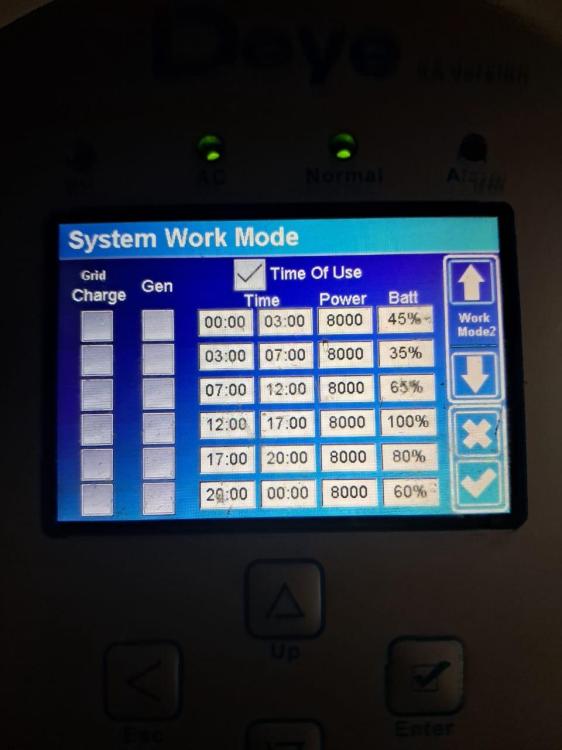
I think I finally understandy my issue In my mind SOC per timeslot was the maximum the inverter would charge per timeslot ( even though I have been talking about 100% by noon all along the penny did not drop) However that is wrong. SOC is the minimum the battery will discharge to in that timeslot. So argument sake if SOC is set 40% by noon and battery was at 30% from previous evening but solar production is enough it will charge to 100% ( even though SOC is 40% ). But the SOC of 40% will also allow the battery to discharge to meet the load spikes and then charge up again to 100% if solar is sufficient. The only other consideration is to have Grid Charge ticked to supplement charging the batteries to 100% by 5PM in case solar is not enough after perhaps a load spike at around 3PM
-
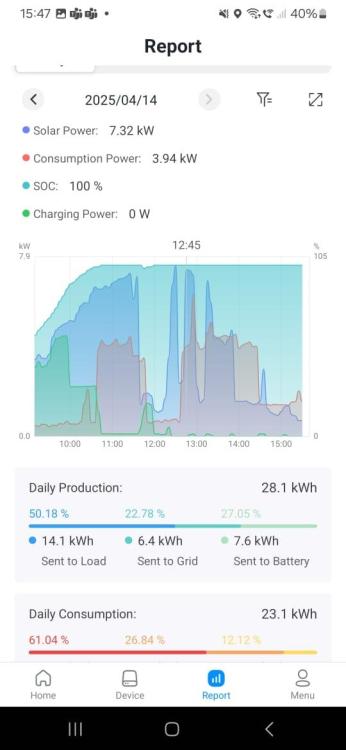
Hi All I have been doing a lot of research on the internet trying to find the best configuration for my Deye 8KW Inverter. I found the powerforum very helpful in my research and am hoping that some of you can answer the following question I have read alot about creating the perfect bell curve and re-arranging ones load throughout the day to run things like geyers and pool pumps when there is solar production and then using batteries at night to run the the essential less power hungry devices. I have tried my best to achive this but have noticed that currently my solar production seems to mimic my load consumption. So when load demand is high, solar production is high but when load demand is low solar production is low. This is not ideal. I want my Deye converter to be producing maximum power throughout the day regardless of what my load requirements are. I have setup my Deye Inverter so that priority is Load First ( not battery ) and have also set "Zero Export to Load" Ideally what I am trying to achieve is that from about 7:30-800 in the morning when solar starts to generate the lnverter will manage the load and charge the battery with any excess power. What I am expecting to see is that once the battery reaches 100% that the load is then powered by solar and any shortfall is taken from the battery. But what I am seeing is that once the battery reaches 100% is seems that the load is then powered by Eskom ( the inverter is not wanting to let the battery drop below 100% as this point) My System of Times is set that by 5pm my batteries are 100% and therafter they deplete to about 30% the next morning at 7am in a stepp down approach of each slot dropping about 20%. Then from 7AM to 5PM they climb to 100% with another few step up time slots. Even though I have set my system to have batteries at 100% by 5PM I find most days this is achied by 12 Noon Apart from when there is load shedding I have "Grid Charge" disabled So I guess my question is Why is my load pulling from the Grid instead of the battery even when the battery is 100%? My theory was that seeing as I set my SOC to 100% by 5PM ( starting at 12 noon) that once the battery reaches 100% any time during this period the system wants to keep the battery at 100% until 5PM thus any power the load needs in addition to what the solar is providing will come from the Grid. If this is the case then how do you set the inverter to charge to 100% by 5PM but to also use the battery instead of Eskom when the load exceeds solar prodution? So in essence battery is used when solar production is not enough for current load but thereafter solar will top up the battery assuming load requirments come down enough to allow this. I am suspsecting that the inverter wants to keep the battery at 100% once it reaches this value as it has no way of knowing that if it allows it to deplete below 100% if it will be able to get it back up to 100% by 5PM. My inital thought is to break up the 12 - 5 slot into shorter slots of 2 - 3 hours. So maybe a 12-2 with a soc of 80% and 2-5 slot with a soc of 100% It seems as if my batteries are getting to 100% to quickly ( even though my setting is load first ) so perhaps I must make the required SOC settings a lot lower per time slot thus allowing the load to be powered by the batteries more in the theory that the inverter will still be able to reach its 100% by 5PM but this time closer to 5PM than 12 Noon All advice appreciated Thanks
-
I am still confused I am have been experimenting with the "Zero Export to CT" and "Solar Sell" options Even with these ticked once my batteries are fully charged the PV production still throttles back to match the required load It does not produce as much as it can and then sell this back to the grid It seems the only way to keep the panels producing as much as they can is to get the houses load to stay high Am I correct in this understanding?
-
Just to add the image is not mine, I took it off the net just to show the options Does the 000 mean no limit?
-
-
-
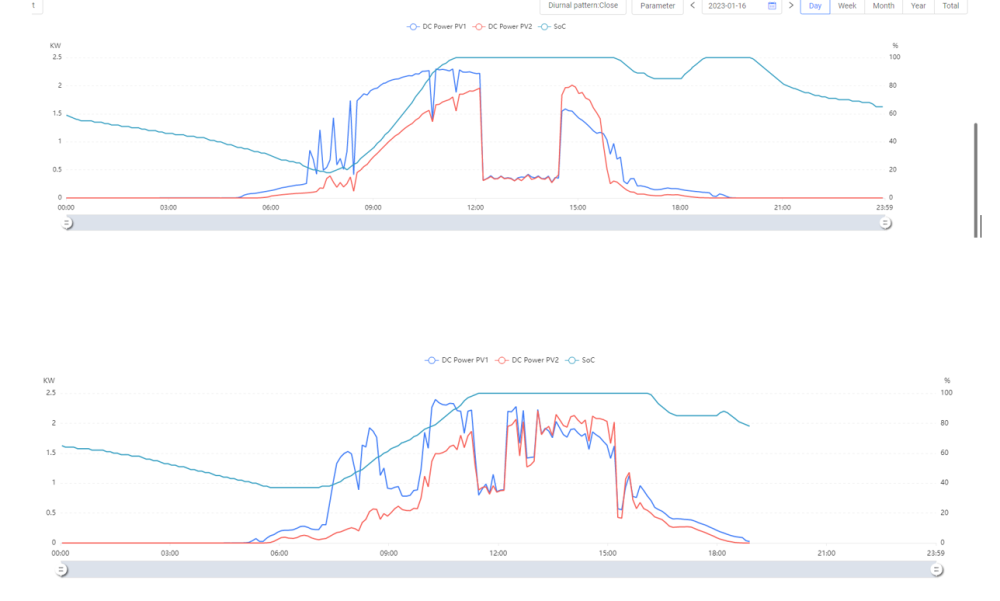
So I tried as suggested to shift my load around, still need to tweak it but already see a bit of an improvement The noon dip is not as drastic and not for as long
-
Definitely minimize purchase from Eskom so in which case I would assume choose "Load First" so all load requirement is supplied from Solar ( and not Eskom ) and then excess goes to the battery. May aim is to have the batteries at 100% by 4PM in the afternoon. Currently I get to this easily by 12 noon, will differ in winter and cloudy days.
-
I have not divided by house into essential and non essential, everything runs off the inverter apart from my tenant who opted not to share the Solar benefit If one was hypothetically able to sell power back to Eskom what power settings would one use on the Inverter You would have to tick "Solar Sell" Max Sell Power - I guess this is max Watts you would want to sell (every 24 hour) Zero Export Power - I have read that 20-100 does not supply the grid. What would be the maximum value to use here? Does 0 mean no limit or nothing at all?
-
Hello I have read through the Deye manual but find the information, or "English" used a bit confusing What is the point of the Battery First vs Load First option? If "Load First" is solar power used to power your house directly and then excess power used to charge the battery? Similarly if "Battery First" then solar power is used to charge the battery first then excess power used to supply the house load? I was under the impression that the house load is always supplied from the battery and the battery is just then charged by either solar or grid but I guess this is perhaps not true in the scenario where you don't have batteries? Thanks
-
-
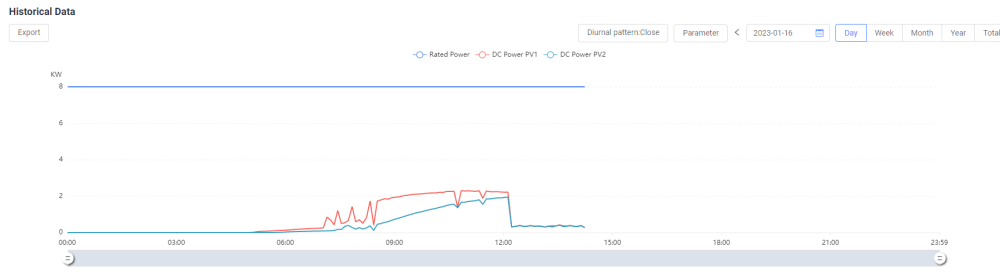
Thank you for the Solarman Info, exactly what I was looking for So based on what I am seeing is the drop at noon is like said likely due to reduction in load so reduction in power and not so much position of sun in relation to the different string sets as they appear to be pretty much working in sync
-
-
Hi I would need to confirm but yes I think you are right that by 12 the batteries are fully charged therefore there is no where else for the excess energy being produced to go. Cant really afford to add a 3rd battery at this stage. My geyser is currently set to heat from 7am to 3pm and am guessing is also at max temp by 12 noon. Looking at my graph for production and consumption I could maybe set the geyser to only heat from 9am onwards. Just need to get the entire family then to either shower at night or morning not both because at night it has no time to recover for the morning session. My pool pump is already running 7am to 3pm as well so in terms of load there is not much more I can have running at 12.
-
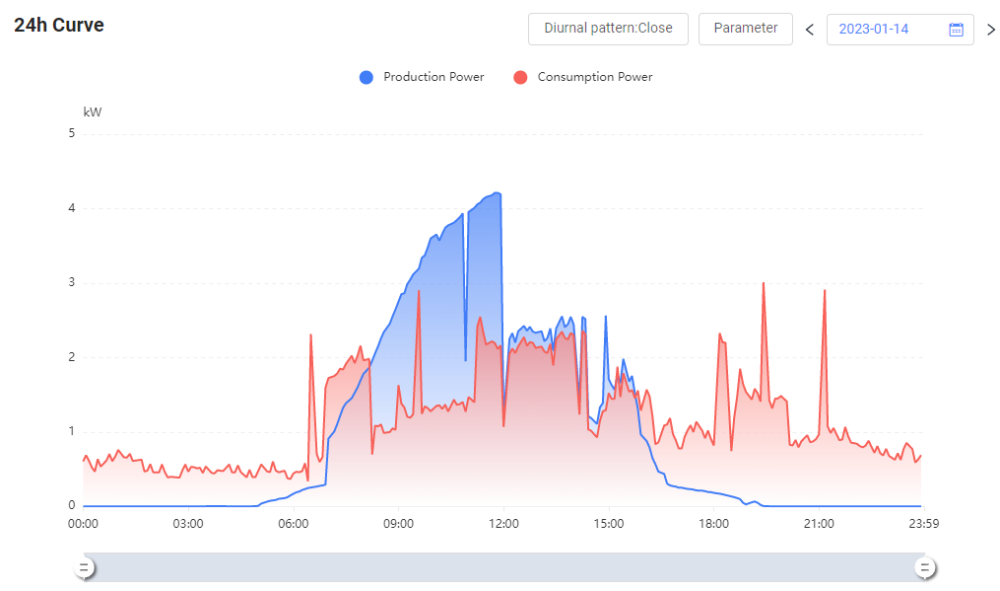
Hello All So I had solar panels installed about 5 years back. At the time Solar was quite new to me and I went on the advice of the installer as to the placement of the panels What I knew was the following In South Africa North facing panels would be the best If you could not have North then North West would be next best ( not entirely sure why ) I have recently upgraded my Inverter to a Hybrid 8kw Deye Inverter and very interested in analyzing my houses solar production during the day with the intention of seeing if I can perhaps optimize my current solar panel placement for better solar production without having to buy additional panels at this stage I currently have 20 X 300w Panels ( potential of 6kw, this was inline with my original 5kw inverter) I don't have any North facing roof fronts so I have a combination of 10 panels on one NW facing roof and 10 panels ( split 6 / 4 ) on two NE facing roofs What i have seen Maximum production at any point is about 4.5kw Round about 12 noon every day there is a substantial drop off, it recovers a little but never to pre noon levels What I am thinking is at noon my NE facing panels are probably not getting as much sun as they were pre-noon Also my other 10 NW facing panels have to compete with some tall trees and I know are not as effective as I would like especially after 3PM when the sun goes behind the trees I have also noticed that my production seems to mimic my consumption from noon onwards ( see graph below ). I recall reading somewhere that the panels will reduce production based on the load required. If so where can I configure it to not do that? Is there a way on the Deye inverter to see what each PV (PV1 an PV2 produces each day). I have looked but all I can see is either sum production or current production of the P1/P2 at that point but I would like to see that split over a 24 hour period to assess which panels collection is producing the best I am considering moving all my NW Panels to my SE roof thus maximizing production from 6AM to 12 Noon knowing that the current 10 on my NW roof are literally ineffective from about 3PM in the afternoon ( if not early based on the drop of seen in the graph below) Thanks
-
-
No The percentage specified in each time slot is the minimum % wanted. If PV is present it will charge all the way up to 100%. If Grid Charge is ticked and battery percentage drops below SOC% for that time slot then Grid is used to charge it back up to specified %
-
-
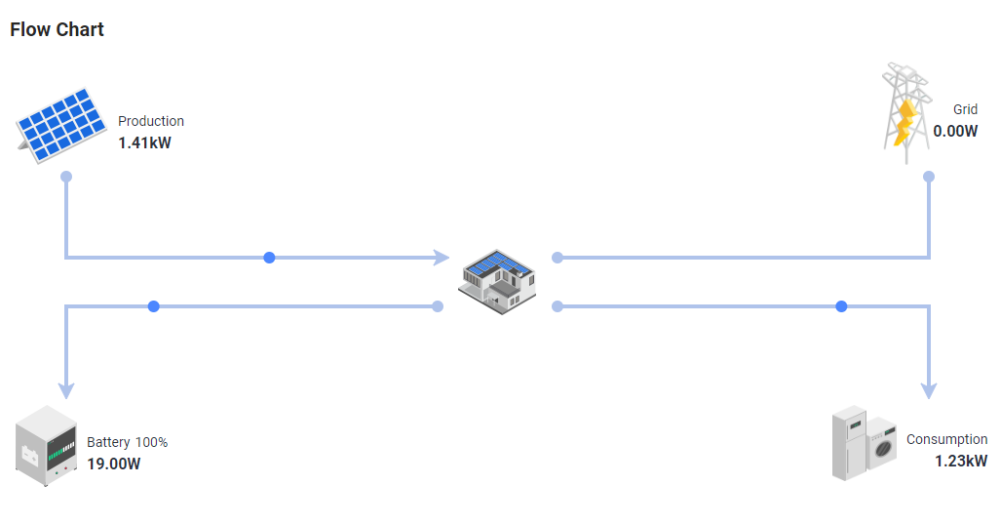
So I currently have loadshedding now ( so in essence no Eskom) My Panels are still producing power which is powering my load and little bit for the batteries (which are at 100%) There is is no reduction is the battery %
-
HI What are your settings here? Your load is using the batteries, there is no eskom, so only PV can replace what is consumed by the load. If there is a configuration setting for when PV starts to replenish the batteries I cant find it

-
Let me know what you find out Would be interesting to know what "grid" is considered to be. Initial thoughts is Eskom. I know with the Time of Use Slots that if you say set one slot to have a SOC requirement of 30% but there is PV it would continue to charge to 100%. The 30% is just the minimum the batteries must be at for that slot and when Grid Charge is ticked it will use Eskom to achieve this if necessary. Basically Grid Charge does not need to be ticked though for the batteries to charge to 100% for that Time Slot My batteries are set to be at 100% by 3PM. They normally get there long before that but if for whatever reason PV is not enough it uses Eskom to get it there. I then use Grid charge from 5PM to 9PM to keep it at 100% ( No solar present but busy with cooking etc so batteries discharge ) and then rely on the batteries carrying the house load from 9PM until 7AM the next morning when PV kicks in again. I do have a 3AM to 7AM slot though with Grid Charge ticked and minimum SOC of 30% I must be honest to date I have not seen my batteries go down to 90% and backup to 100% once they have reached the initial 100%. From the app I can see that there is constantly small amounts of power (100W) feeding in to the battery once at 100%. Again my only difference is I still have Eskom connected I think there are more advanced settings on the Discharge side of things, will have a look for you to see if I can find them There are probably more experienced people on these forums who will hopefully reply to you too


