FrancoisSnyman
Members
-
Joined
-
Last visited
Everything posted by FrancoisSnyman
-
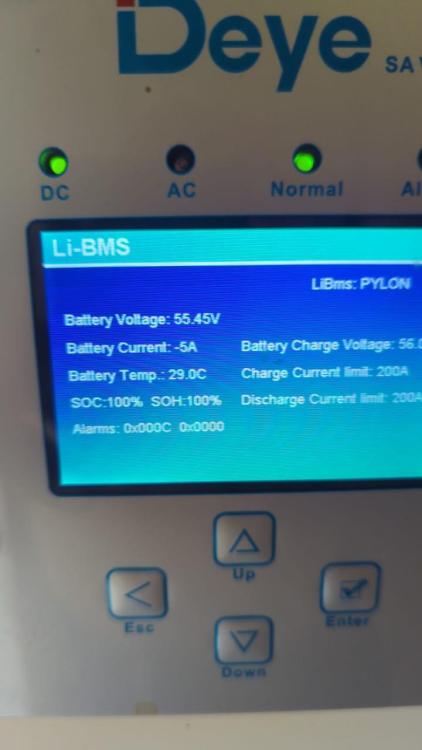
Hi guys, Have anyone noticed the first (0-25%) charge light of a Volta battery flash red when battery is fully charged? BMS comms working with 5kw Deye inverter, single battery, float charge disabled. Deye also reports 0x000C alarm code on BMS. Any help would be appreciated!

-
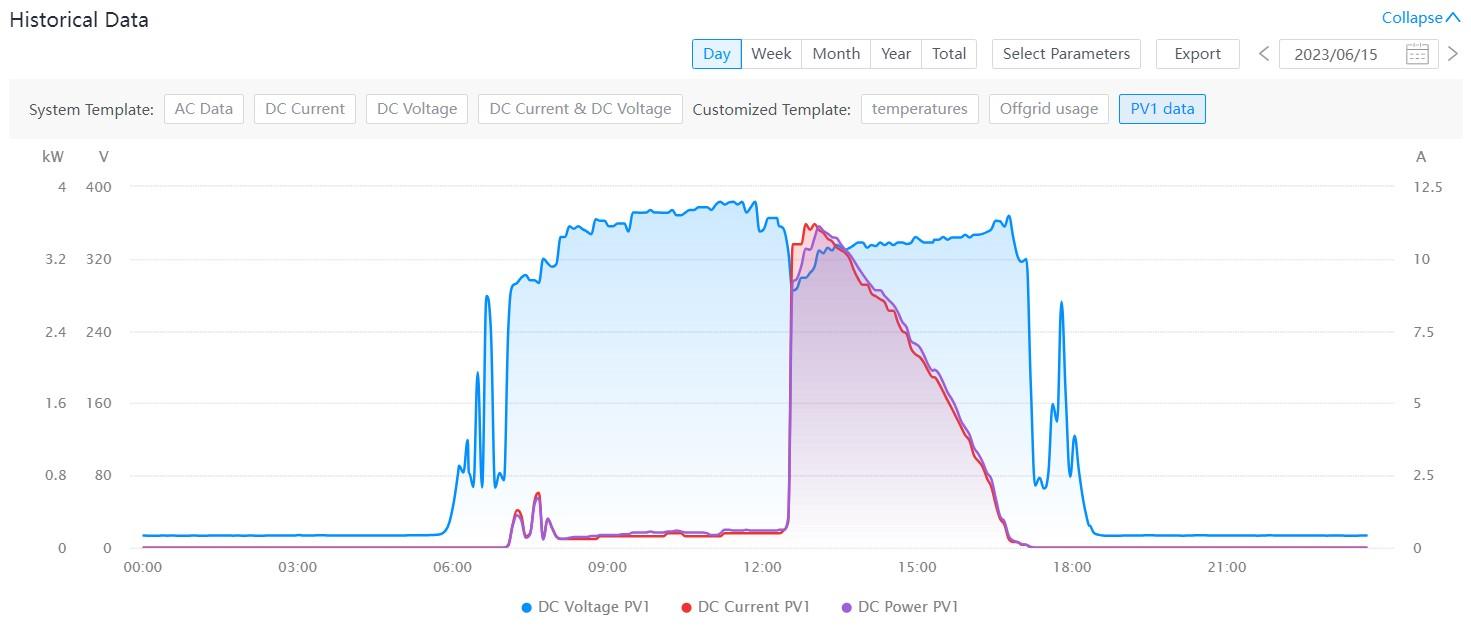
So as a test, I split the one string of 8 modules into two strings of 4 each. As a comparative measurement - I attach two screenshots showing the total DC Input Power (i.e. total power produced by both MPPT's). This one from 2023/06/15 is when all panels were connected in series on one MPPT: And then for 2023/06/17 when the panels were split into two strings, one on each MPPT: Production increased from 10.9kWh up to 12.9kWh... Same shading on panels, nothing changed as of yet here. Less voltage on each string. Anyway - thought I would post the update for anyone interested


-
So this is very interesting... I have always believed the logic of bypass diodes apply to "short" out the affected PV module, or portion of the PV module. I recently came across the same issue at a client's house. We have one PV string of 8 panels connected to MPPT1 of a 5kw Deye. MPPT2 was reserved for future panels. Early morning (around 7am) there is no shade on the PV panels, and the MPPT starts up. Production is on par for what I expect at 7-8am in the winter, with a north facing roof. Just after 8am, a shadow hits the first panel in the string. Output production gets "clipped" at 120W to 250W, from 8am when the shadow hits the first panel, all the way up to 12h30 when all panels are in full sun. Production then shoots up to 2.94kW, and climbs to a maximum of 3.5kw, gradually going down (as expected) for the rest of the day. Its as tho the MPPT tracking algorithm does not allow the power point to be tracked to a reasonable step size (i.e. 1 panel voltage drop ~= 50V). At other sites where panels start with shaded areas in the morning, and then get full sun as the day progresses, or start in full sun and only get shade late afternoon, it seems that the MPPT algorithm keeps up. BUT where there is a scenario of "full sun, shade, shade, full sun" it looks to me that the MPPT get stuck on the 1ste full sun voltage point, and can not adjust "far enough" to find the actual Max power point. Asked Deye for a firmware upgrade, and hoped that they might have addressed the problem. No change at all. I'm heading out to the specific client tomorrow morning to do some tests, and will post my findings here. It does seem that Deye / Sunsynk needs to address this problem - this cannot be "normal"?