Rautenk
Members
-
Joined
-
Last visited
Everything posted by Rautenk
-
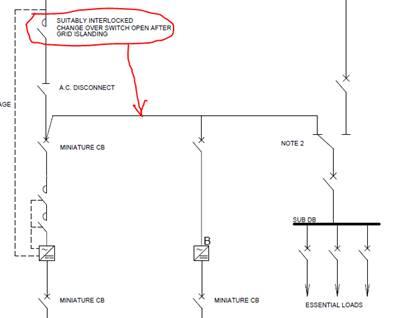
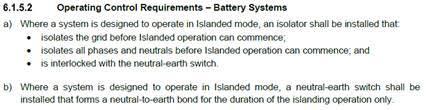
I had a response from CoCT on their interpretation and this will be VERY interesting to all on this Topic. Will post same on other topics as well: Good afternoon Karel 1.Grid-tied hybrid SSEG: The City’s drawings are schematics and site specific conditions might exist that must be provided by the applicant. The basis will be kept i.e. the separate suitably interlocked change-over switch for grid tied hybrid SSEG [as specified in Appendix 4 of the City’s ‘Requirements for SSEG’ document] for any hybrid grid-tied inverter must isolate an interconnected circuit from the grid before the storage system is used. For IN8 Sht3/6, the switch can also be in the sub-feeder circuit for the essential loads as indicated below for storage islanding mode. The inverter integrated network and system protection and two in series relays are dedicated for grid-tied functionality and may not be used for switching between grid-tied and storage modes. The registered person must sign off compliance of the switch in the CoC and test report. FYI, note the following in draft SANS 10142-1-2:20XX 2.SSEG generation capacity: NRS 097-2-3 defines the generation capacity guidelines for shared and dedicated feeders. The City requirements ito the ‘Requirements for SSEG’ for shared residential consumers are as follows: The maximum generation capacity is inter alia required as follows: · Ensure network stability: o during changing irradiation and solar eclipse o when grid-tied embedded generators systems malfunction and property owner immediate load is transferred to the grid o during loss of storage capacity when and property owner immediate load is transferred to the grid of hybrid grid-tied systems [except from NRS 097-2-1: 2017 below] · Fair and equity generation capacity allocation possible to all customers in feeder groups ito NRS 097-2-3

-
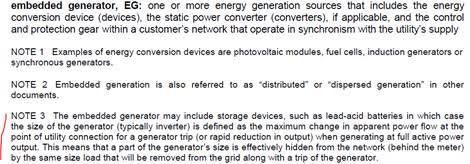
And there we have the reason behind the limitation, this is to protect the network. So, in conclusion: CoCT and NRS097-2-3 limitation shall remain in force regardless of export into the Grid. Only Inverter size (and limitations) will be looked at.
-
I Agree with Phil, if you read this with the specific note on Hybrid Inverters then one should look at the Type Test certification etc. for how they react in that regard you explained. That would be bad for your circuit breaker. NRS is more focussed on Grid: It is less to do with 1 inverter and more to do with the 25% limit on the Transformer, so looking at this it is if the Transformer is fully loaded with Embedded Generation and a fault condition on the grid causes all of the inverters to simultaneously disconnect it should not affect the grid. And Yes, that is 100% correct there. the Inverter will be limiting the generation possibility.
-
So I has a bit of a more in-depth read of NRS097-2-3 and I found the one thing we all love to read past.. the Definitions at the start... It is VERY clear that NRS097-2-3 states Generation size and not export limits: From NRS097-2-3: "generator size maximum change in active power flow at the point of utility connection for a generator trip (or rapid reduction in output) when generating at full active power output NOTE Some or all of the power generated may be consumed by the customers’ local loads. Where there is no local storage the generator size is the active power rating of the installed generation. In cases with local storage, the storage can be used to reduce the effective size of the generator by compensating for variations in generation output, hence the definition used above." From this it is clear that this is then to limit the trip currents in case of fault conditions. I hope this helps a few people
-
Thanks for the advertisement TTT, I am looking forward to seeing your system.
-
This I actually do not have experience with, however it is stated in the CoCT requirements document: "Note: The generation size limits in the table apply to normal residential connections on a shared low-voltage (LV) network. Customers who wish to apply for an installation with a generation capacity exceeding the limits in the above table should consult with EGD before commencing with their formal application." SO there is that option.... But how effective it is, that is a question on its own. And the CoCT guidelines are quite clear, it is Generator installed capacity regardless if you are feeding to the grid or blocking it. Best is to attempt and contact the CoCT's energy department, it may take a few weeks to get a good enough response.
-
If you want to export you will need to upgrade your metering. In CoCT it just isn't worth it to export, doesn't make financial sense as the Daily Connection charge for EGs with Net Metering is so high that you will need around 6kW system before you break even on the daily costs. Not to mention the additional metering install costs etc. I am sure a few people have made the calculations, feel like sharing? And back to the original topic, I can confirm. CoCT will not sign off if you are out of the range defined by NRS097-2-3, BUT you can ask special permission to exceed!
-
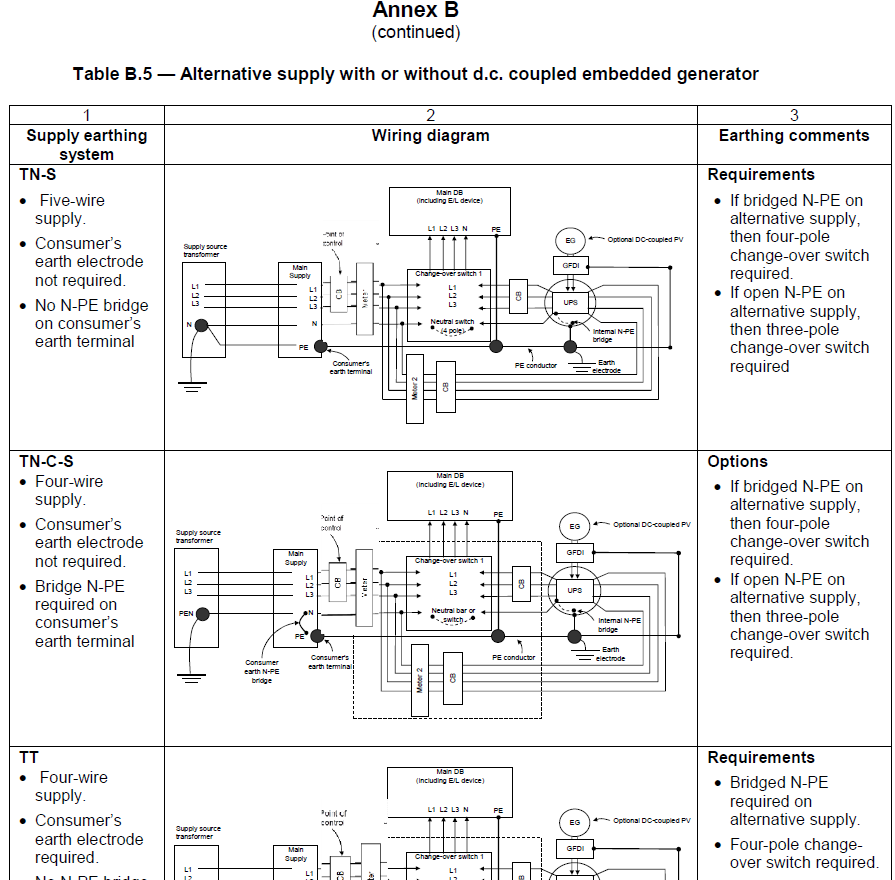
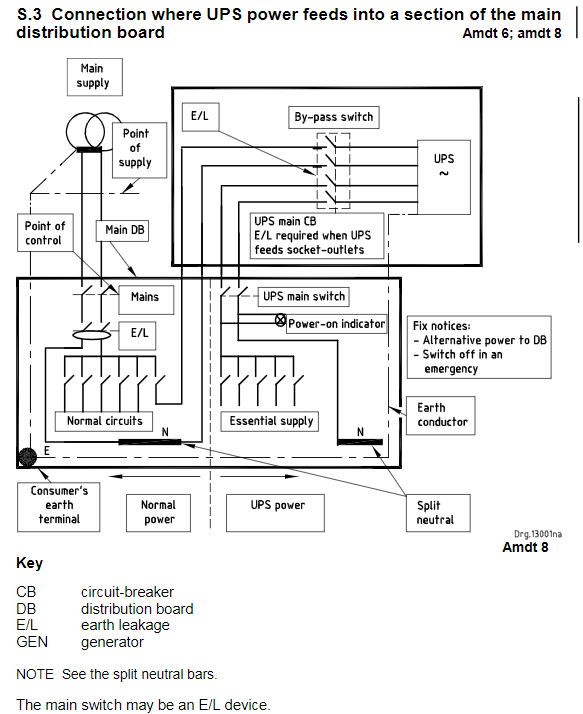
Some SANS10142 pictures on the earthing:

-
Very interesting topic change and then back again... I respectfully disagree with Marius on the NRS application. Yes, IEC might be for Parallel Connected inverters, NRS is for Embedded Generation. From NRS, 2017 version : Also, This little interesting bit of information. Axpert is not classified as UPS if PV panels are connected. It then becomes an Embedded Generator Then on why the Axpert would fail type testing (additional requirements might make it compliant): Why would a Pr E.ng not sign-off on a system that doesn't have the type tests? Liability... For Cape Town, they require NRS compliance even though it is not a national standard... If NRS097-2-2 comes out, then no more Pr.Eng sign off (probably).


-
I would assume that Single Phase would have the same requirements. Stating this though, if your Munic bonding is not good you might have to introduce a N-PE bonding, to actually have your earth leakage trip... I have been shown examples where an Axpert has been installed and earthing was done wrong (no N-PE bridge either) then when earthleakage tester was used no results. Always test and when you are still unsure test again... The next Einsteins life may depend on it...
-
And then you have a NRS097-2-1:2017 tested inverter and would be called a Hybrid system and you can use the Change Over device as you noted. There is a better drawing in the "new" version of SANS taking UPS and EG into consideration and showing how to connect the switch. Note that for CoCT this would need to be a NRS type tested inverter type. I wanted to mention that the Neutral Switching is determined by the type of earthing that you have.

-
Hmmm, Grey area. I'll have to check the regulations. If this is SANS approved. Mostly it request a specific SANS approved change-over. The City of Cape Town's Embedded Generation form actually does have a diagram (from SANS10142) that explains where and how to put in the automatic change-over.
-
@The Terrible Triplett I am in Cape Town (Northern Subs), and open to discussion. I would like to support the Residential market as much as possible, so will need to think about exactly how to do it efficiently as well. Send me a direct message and we can continue chatting there or best is to pop me an e-mail rautenk(at)gmail.com
-
Hi All, Pr. Eng here.... Started reading the thread and damn, i should get into this field! Seems that I can "skep 'n bietjie pap" while its raining hey? But in all seriousness, I am working in utility scale projects but will be willing to look into the Residential sign-offs as a side gig and at reasonable prices. I understand that those quoting the ECSA figures at the start of the post, however ECSA figures usually work for larger systems and not what the CoCT actually needs. Nou on the quoted part, the reason the inverters aren't on the list would simply be that they havn't certified themselves under NRS097-2-1, as was mentioned earlier in the thread. Note that there is no SANS standard for inverters at the moment as the IEC one has not been accepted(last time I checked). For any Company and/or Munic to allow the use of any equipment on their system a local standard is required and the equipment must comply, now NRS is NOT a local standard (SANS approved), thus CoCT is taking it further with the PR. Eng / Tech sign-off. This is how they interpret the OHS-Act. And yes, very interesting few suggestions on how the Axpert can be made "legal" as long is it is separated from the AC-Grid it falls under UPS regulations of SANS10142, so your change over switch (break-before-make) is the way to go here, but then there is a few problems that comes with that!
-
Mike, GoodWe has been tested as quite a good unit, the efficiency is amazing compared to most other brands. Didn't know about the software glitches. And yes, aftersales comes from China. Note that GoodWe can Export, which Eskom currently does not allow and it is not Type Tested to NRS097 standard in South Africa, which means that the Munics will not be allowing it any time soon. Just note that. [but it seems Swartland is more with it, in Cape Town no NRS097, no connection!] I just read through your other post and that is quite interesting, seems we all need to move to Swartland...
-
That I definitely understand! But then lets call the Axpert MKS a Bi-Directional with Hybrid tendencies I have installed it at home, as a UPS only, and I will say it is performing admirably. And you can Add Solar too it. You can set it to Solar,Utility,Battery preference. Which means it does not use the batteries unless the other 2 sources are not available. Check out the Axpert (same manufacturers as the infiniti) and let me know what you think. I am actually just looking for a second opinion before I start punting this unit for my friends and family! And at a cost of less than R10k for a 5kVA unit (with 60A MPPT), it is really an answer to most peoples requirements.
-
Wetkit, Have you looked at the Axpert MKS 5KVA (Bi-Directional)? I think it is slightly cheaper. The reason I recommend (apart from purchasing one recently) is that it is electronically incapable of exporting to the Grid... At this stage Hybrids aren't recommended as none has been type tested to NRS097, which is/will be required to allow Eskom to accept your electricity. NERSA is finalising the Guidelines for LV connected EGs (Embedded Generators). So if you purchase the infiniti you will still have to disable the Export to Grid feature, thus you can just as well stick to the Bi-Directional Inline type. The Axpert comes with an integrated 60Amp MPPT, basically the same as the Infiniti, just no export facility... Saying Axpert, my tests are showing some power discrepancies... I have a Efergy Engage V2 meter and it keeps on saying that I have a 500W draw from the Axpert! (This has been proven inaccurate and I am currently doing some further testing to confirm that the meter is crap and not the inverter...) Further, there is a SANS10142-3 standard coming that will dictate the Wiring of the EGs in the future, but looking at the draft and timelines that is still very far away. From an AC side you will need between the Inverter and the Grid a Emergency Disconnect (firemans switch) an AC isolator (lockable and accessible to utility) and a CB as well! With that it is prudent to install an Isolator switch on the DC incomers (PV) as well and fuses on batteries (which you have done). ps. You might want to add a note to those fuses (legal wise) : "DO NOT OPPERATE/REMOVE UNDER LOAD!", also to your DB you will need to add a note that " ON-SITE EMBEDDED GENERATION (EG) CONNECTED." Looking at your panel configuration and fact that they are not getting the same amount of sun... That definitely will cause some efficiency losses in regards to your MPPT, if those are on the same one! For the one side it would have a totally different Maximum Power Point than the other side. So much so that you might lose 5 to 10% in efficiency because of if... But if you do not have separate MPPTs, have you thought of looking at being creative with the roof mount there. Get all those panels facing north at the same angle!
-
Interesting Topic, What Hybrid did you eventually go for? Also, for the DC disconnect, did you only use fuses or do you actually have a DC isolator?