AgentMulders
Members
-
Joined
-
Last visited
-
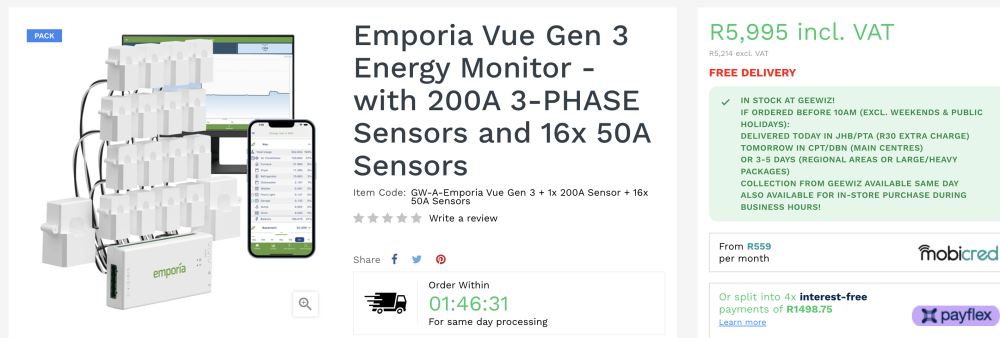
The Emporia Vue 3 is my top choice right now. I might start with one of the 2 channel tuya units that I can move around a bit to suspect circuits before I invest. There's 5 sub-db's that I need to check out
-
I still have to check the DB boards to see how it's set up but it's 3 phase because of the total current draw being higher than single phase can deliver, it's a plot after all
-
I looked at this a while back, doesn't seem to be something they sell anymore
-
Ja main supply is 3 phase but individual DBs are all single phase, so it's flexible where I put the sensors in
-
I've also found this in the mean time, fits 3 phase and has 16 CT's. It looks a little more permanent https://www.geewiz.co.za/home-electronics/223342-emporia-vue-gen-3-energy-monitor-with-200a-3-phase-sensors-and-16x-50a-sensors.html
-
Amazing, at that price I could set up a bunch of them and leave them monitoring for a few days at a time. Thanks
-
I'd have to see how DIY DIY really is, but I'd give it a try. The bills are high enough right now that I could spend R10k on an audit and easily make it back in a few months
-
So I've got a big hybrid solar system on my plot in Kyalami but I'm still using a lot of Eskom power. Has anyone got a recommendation for someone that can do an energy audit for me to find out where the wastage is? I know a few years back there were companies that could do it and they'd install some equipment onto the DB and let it collect data for a few days or weeks but I'm struggling to find anything now. Do you know of companies that do it or have you had one done yourself?
-
-
Depending on your monthly power usage and how much you can move your consumption to daytime you should be close to off grid. On sunny summer days I'm producing way more power than I can possibly use
-
-
-
Absolutely, it just works like an appliance, no input necessary from me. I've only had to supplement with power from the grid once, in March.
-
-
When last have you updated the software on your inverter? I heard from my installer that there was an update to specifically cater for startup times and loadshedding
-
-
It's a great setup, I can highly recommend it. 70kwh is quite a lot of power usage, do you know what time of day your peak is? We were using in the range of 30kwh a day, spread evenly over the day. What we changed was WHEN we use power, and that means we're able to run completely off grid now. And doing some smart changes to basic things made a big difference in our power consumption. For example I put in an Xtend 2kw element for the geyser and put it on CBI wifi controlled timer so it's on from 10am to 2pm. We swapped from a normal element to a Bosch induction stove top (best decision if you like cooking), and we installed an inverter aircon in the main bedroom and use that for both cooling in summer and heating in winter, the aircon is very very efficient. I also spent about a week in the roof putting in new think pink insulation to keep the heat both in and out of the house. Those cheap changes meant we were able to go for a slightly smaller battery and panel setup.
-
-
-
-
Update after 4+ months of operation is that the system works like an appliance, haven't had to change anything or even draw power from the grid. I've switched the grid on about once a month just so it registers that I still exist but at most it uses 1kwh when I do. The inverter stays cool, the batteries stay cool, and I'm able to spend a night cooking and baking and running my slow cooker and air conditioner and still have about 50% battery remaining in the morning when the sun comes out. I was worried a few times when it was raining and cloudy but that just meant the batteries charged up slower with the latest charge up to 99% being 4pm. I haven't even updated my geyser schedule on the CBI astute, it runs 10am to 2pm every day no matter the weather. I'm really impressed with how it's changed our lives, with my house becoming the unofficial Pretoria office for my loadshedding-afflicted colleagues that don't want to drive to the Joburg office 😂 Only negatives are that the app isn't as simple or fully featured as the Sunsynk, but honestly once I had it set up and trusted that everything is working as planned, I don't even open the app or the web monitoring console anymore.
-
-
-
I just wrote a long review of my FoxESS HV experience after 2 months:
-
-
-
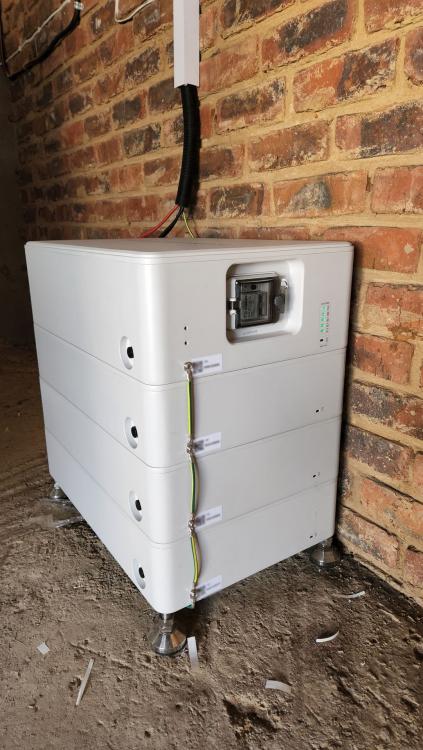
@Smiles@CasaV I had a great experience, and we've been off grid since about a week after the install, quite literally, our Eskom mains switch is flipped off. I started with the solar panels, looking specifically for glass-glass bifacial panels and I only found one supplier in South Africa that had content online (articles and YouTube videos). So I contacted M Solar Power in Cape Town and asked for a Gauteng installer recommendation. They referred me to Crown Technologies in Joburg. Crown then came out for a consult and quote, and mapped the panels in 3D space and did a simulation of the actual equipment using a tool called Helioscope - this is something that really set them apart from the other companies I spoke to, it resonated with me as a software engineer. They also made suggestions about how to reduce electrical loads and control them with some home automation. My final installed setup is a FoxESS K series 10.5kw single phase inverter (IP65 but mounted in the garage under roof), 12x JA Solar Deep Blue 3.0 P-Type Bifacial glass-glass panels for a total of 6.5kw over 2 MPPT channels (2 out of 4), FoxESS EnergyCube 4.1 with one BMS master and 3 slaves for a total of 16kwh battery storage. I had the installers leave space for another 3 battery modules and another 12 solar panels. In preparation I also painted my IBR roof white to maximize the bifacial ability of the panels, and it had a nice secondary effect of cooling the house down by 2 to 4 degrees in this crazy heat wave. So far it's been great, I can treat it like an appliance, it just works. I was watching the power graphs obsessively in the beginning but now I trust it to just work with zero intervention. We are fully electric: swapped our gas geyser for 150lt electric geyser with 2kw ceramic element and CBI astute DB switch running 10am to 2pm daily, installed a Bosch induction cook top that works better than a gas hob, and we can run the 18 000 BTU inverter aircon throughout the night set to 21 degrees. So far we've only gone down to 48% once (last night when we were cooking and baking till late and running the aircon all night) and usually only run down to 65%. We're fully charged by 9am on a sunny day and on a cloudy day last month I kept the geyser off till 12 to let the batteries recharge. As for the experience of the product, I can't recommend it enough, I'm sure my friends looking for solar advice are already sick of me telling them to get a FoxESS system. And I had a great experience with Crown Technologies. One of my 12 panels was damaged in transit so they had to wait for a replacement to arrive. In that time there was also a product recall on a 3rd party AC connector that had actually failed on my system as well. The same day that I sent them photos of my connector they already got notice of the recall and were awaiting shipment of replacement parts. Once the panel and the connector arrived they came out and installed the final panel and swapped out the faulty connector. As part of the service, Crown was also monitoring my system remotely to check for anomalies or alarms. They, along with M Solar Power have sent feedback to FoxESS South Africa and there was a software update specifically for SA clients to change how the system handles the return of power after loadshedding (for clients that are drawing power from the grid). Having now seen the product and experienced living with it, I believe high voltage is the way of the future for residential installs. It is after all technology trickled down from utility and commercial installations. Apparently what they've been seeing through their monitoring is as much as 15% more energy availability and also lower temperatures. The highest temperature recorded on my battery is about 2 to 3 degrees above ambient (39.9 at 14:20 on Monday 3 October). It's also much easier to add another module, I can fully DIY it without risking my life with high ampere DC cables as thick as my thumb. It's a simple process of switching off, lifting the top module off, placing the new module, attaching an earth cable, and putting the top module back on. Some stats: peak PV power: 6.7kw (Crown explained this as edge-of-cloud effect that happens on cloudy days) on normal days 6.48kw peak peak power usage: 6.57kw (I was running my Makita cut-off saw at the same time as the geyser being on, it has a huge start-up current spike) monthly usage before solar: 600 - 800kwh monthly usage after solar: 0kwh from Eskom, the only number that counts Some thoughts: It's silent - no fans anywhere! It's tidy - no exposed wires to touch It's IP65 - can be installed outside in the rain if it has to be I paid a bit more for something brand new and super cool and I'm happy with it, should also give me 5 to 10 years more service life than a generic solar install I initially only wanted 12kwh batteries but at the last minute upped it to 16kwh and I'm glad I did. Might add another module in 6 months, depending on how things run with the rainy season.