Phalanxer
Members
-
Joined
-
Last visited
Everything posted by Phalanxer
-
Reached out to the Voltronic Engineering department through Voltacon about this, they have come back and confirmed the EEPROM chips their licenced inverters use are guaranteed to one million erase/write cycles from the manufacturer. Obviously this wouldn't cover clone units.
-
If you have a setup already running with ESP32 then that's all good. I was just laying out some options with a Raspberry pi if you didn't. I think Meetyg's point is that good quality EEPROM is generally, as you say, in the range of 100,000 writes in a lifetime, but we don't know the quality of the EEPROM used in the machine. Some EEPROM can have as few as 10,000 or less writes in a lifecycle. EEPROM is writing when sending the commands for change of float voltage in Cagire's case with the automation using the ESP32.
-
Would it not be possible to de-solder some EEPROM chips from a dead inverter (If there are available units out there) and write to one in hundreds of writes per day using something like an Arduino with I2C? Averaging a few would probably give some confidence as to the lifetime, although components across all models aren't guaranteed to be the same!
-
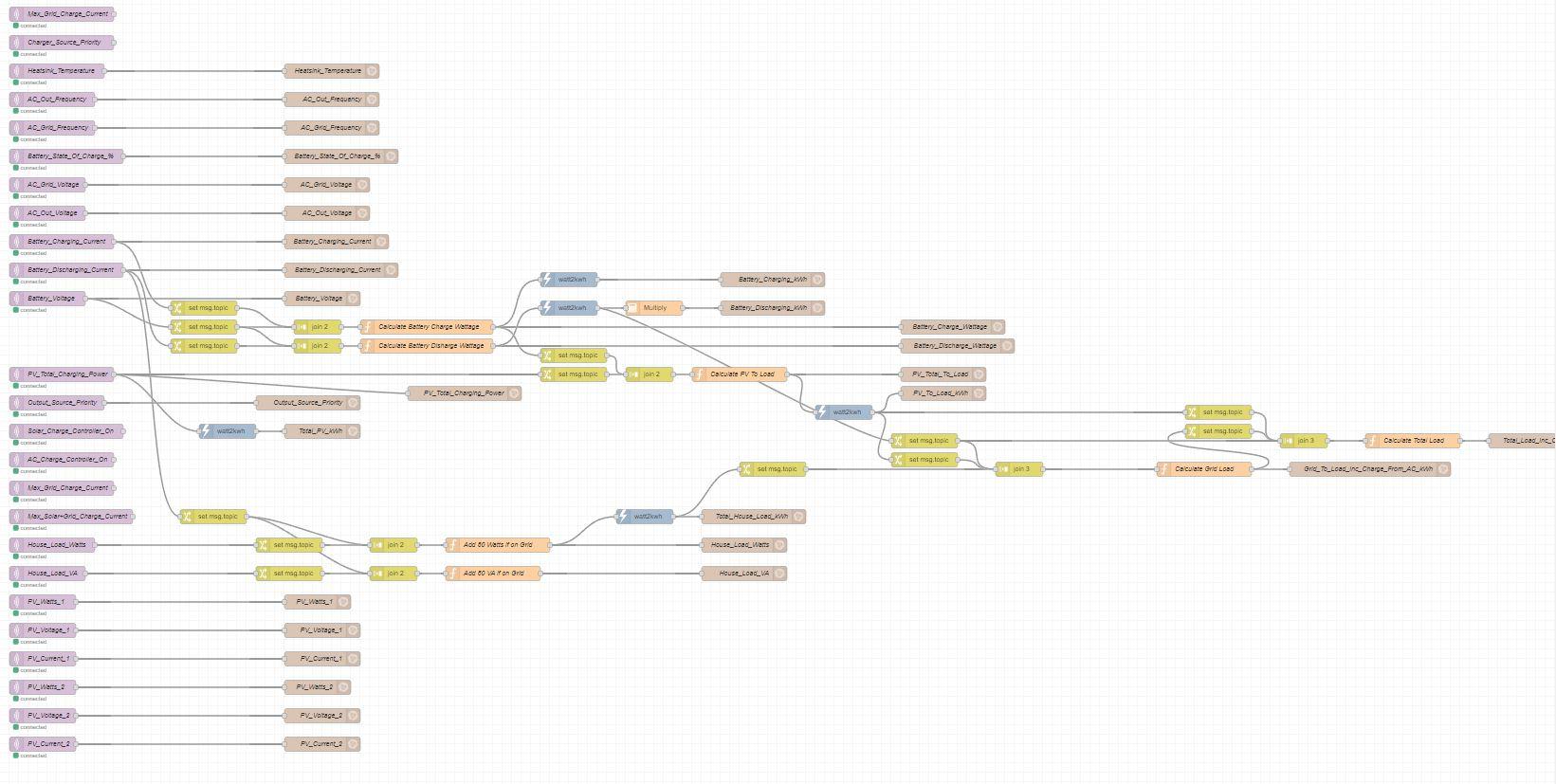
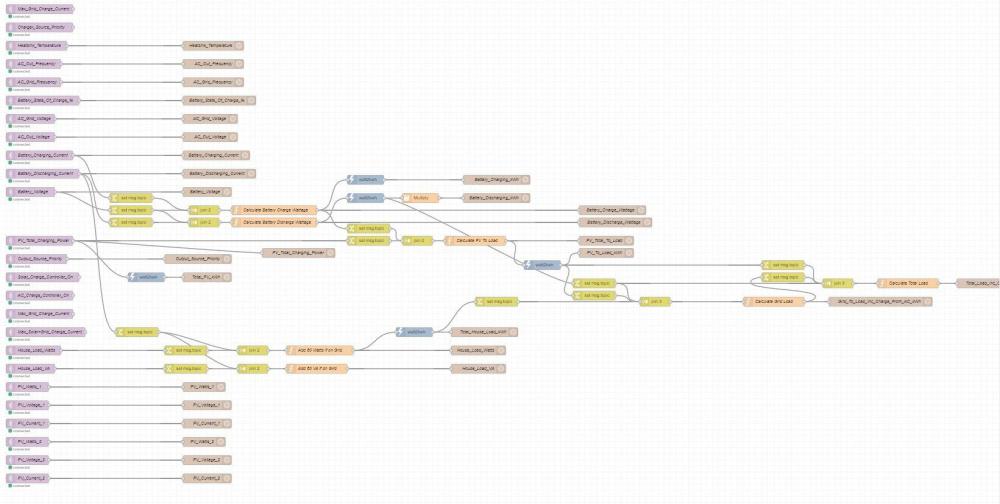
My inverter doesn't have the float bug issue (That I'm aware), but I have been using some docker images from Github to make an MQTT and Node Red server where I can automatically read parameters from the inverter from a raspberry pi and push commands to the inverter automatically using Node Red and Mosquitto. Using a fork of the following software: https://github.com/ned-kelly/docker-voltronic-homeassistant. I haven't used the equalisation voltage parameter, but it must be in there if Watchpower can see it. I'm guessing you could use Node Red to switch on the inverter equalisation for a time in the morning and evening or even integrate over time how long the battery has been at equalisation voltage and switch based on that. Just make sure to synchronise docker with system time on the pi to make sure you get daylight savings time for your region. Edit: Found the fork https://github.com/catalinbordan/docker-voltronic-homeassistant. Seems like no adaption I can find has found the equalisation parameter, but you could raise the float to the boost voltage for a time instead.
-
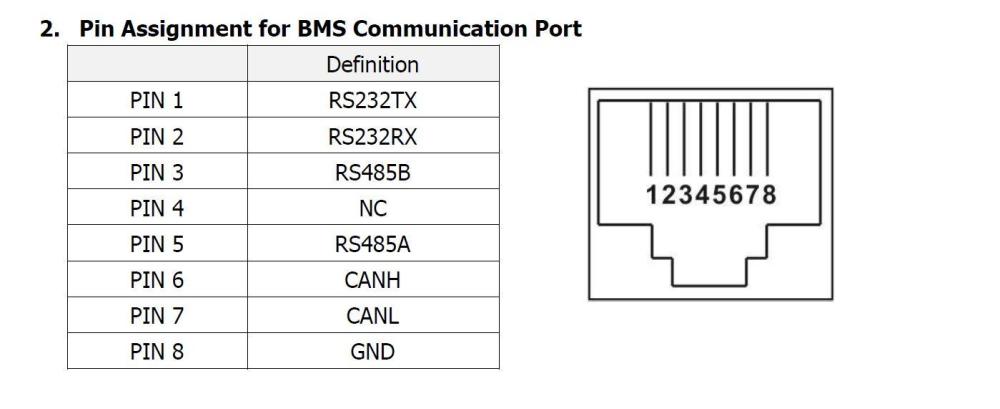
I'd start by looking at the RS485 connection at the inverter side. My Axpert uses a "non-standard" RS485 cable configuration. I'm guessing you've used the cable supplied by the battery manufacturer. I also have issues with an unbranded battery where I don't know the RS485 pins A&B on the battery side. I can tell you the RS485 pins on my Conversol (Branded Axpert) MAX 11kW are pins 3&5 from the diagram below. Look up your own Axpert manual to make sure the pins are the same. Most RS485 connections expect pins 3&4 not pins 3&5, although there is no "offical standard" on this. I encourage you to contact the battery manufacturer or look at the battery manual and match up the RS485A & RS485B pins. If the environment is noisy sometimes it's required to connect the ground pins also. Probably the most help I can give you unfortunately.
-
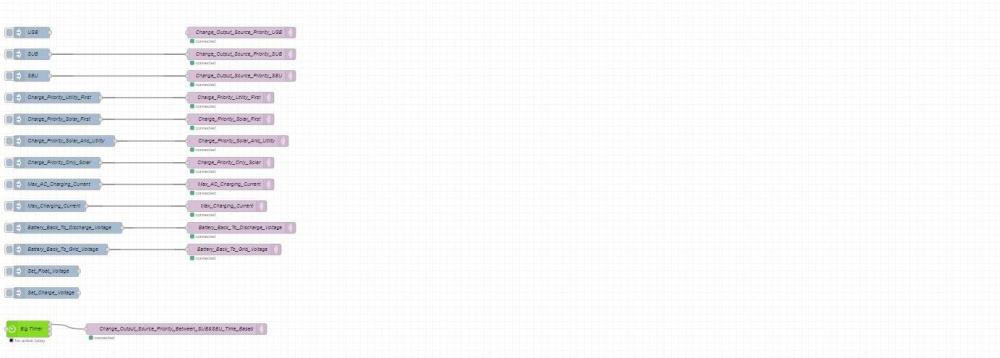
Just leaving a note in the event anyone ever needs any information on this, I got around the issue by changing the back to grid voltage to 51V instead of 49V to leave extra capacity. A little less practical, but I'm able to change the inverter settings using node red and MQTT for particular times of the year. When I get to October, when the batteries usually don't get a full charge every day, using "Big timer" I automatically change the back to grid voltage to 51V. When the time of year hits March, where the batteries get fully charged most days, the back to grid voltage will automatically be set to 49V again to enable maximum battery use.
-
Wondering if anyone has seen this before. I have a Conversol Max 11kW unit connected to 25kW of LiFePo batteries. The Low Voltage Cutoff is set to 48V and the Back to Grid Voltage is set to 49V. You can see from the graph attached that the unit stops taking current from the batteries at 49V as expected, but overnight and into today the voltage on the batteries has continued to sag. Any ideas why this is happening? The PV today isn't sufficient to cover house load and the battery charging, so it's running in solar/grid blend and sending it straight to the load. I would have expected the cutoff battery voltage to be stable while no charging/discharging is taking place.

-
I work in substations, where all panels are wired with either 220V, 110V or 48V DC and some with quite high loads with thousands of amps. We use regular armoured cable with no issue. Just make sure you don't exceed the manufacturer voltage/current rating of the cable. I've seen some substations running for 50 years with no issues, unless there's a pre-existing cable defect or someone chops into it. AC should not be run in the same cable as it can superimpose a waveform onto the DC. We normally ground the armour on one side only, but that's due to potential rise in the ground in substations due to HV ground faults.
-
Thanks, for the advice, I started changing out the panel today. I noticed the panel clamps had fairly obvious white oxidation when I started working on it. For sure there was current leakage happening. None of the other panels showed that characteristic. A good check to have on the panels during periodic inspection, look for any oxidation on the structure.
-
Anyone here have any recommendation on whether to open Axpert units and apply thermal grease or not? If so are there any recommended intervals? I'm thinking once every two years if necessary. I couldn't see any information in the manual about this topic. I haven't looked inside yet, but does anyone know if the heatsinks are fairly easy to access and unclamp? And is standard PC processor thermal grease suitable? Kit: Conversol Max 11kW
-
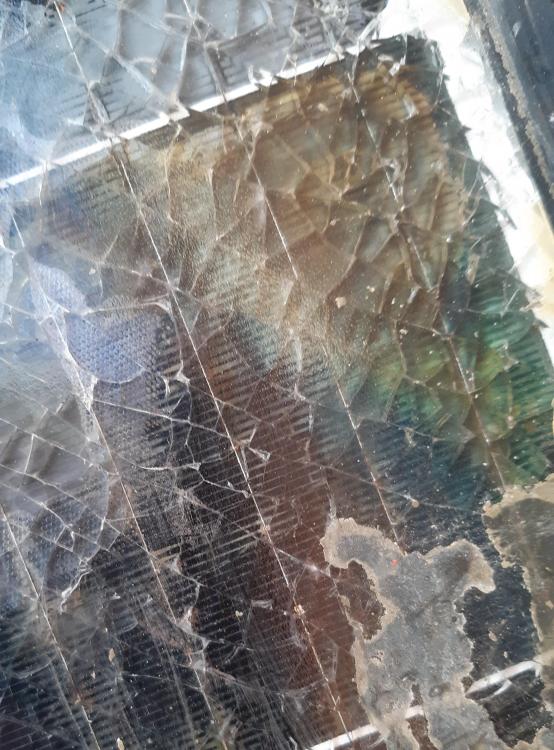
Long story short, a few months ago I dropped a bolt and cracked a panel that was below. Due to being away with work and the sealant taking a bit of time to arrive, it looks like some water maybe worked it's way into the panel. I'm concerned this is a hot spot rather than just corrosion, although there's no bubbling on the back. Any opinions on whether this panel might be salvageable if sealed or is the safer option just to buy a new panel somewhere?
-
Thanks Coulomb, that's good advice. I checked the local regulations and it's OK to continue to use the DNO (Distribution Network Operator) earth even when in island mode. However it did unveil a topic I hadn't considered before. When disconnecting from the DNO supply, it will mean the earth and neutral are no longer bonded at source, leaving a floating neutral. Do the internal mechanisms of the Axpert inverters bond the earth and neutral automatically when the DNO is disconnected?
-
Thanks for the clarification, I'll look at installing an earth to the equipment. I also can borrow an IR tester from work, I'll test the panels to make sure no leakage. Is it possible to bond the panels to the DNO earth or is it advisable to drive a spike for a local earth?
-
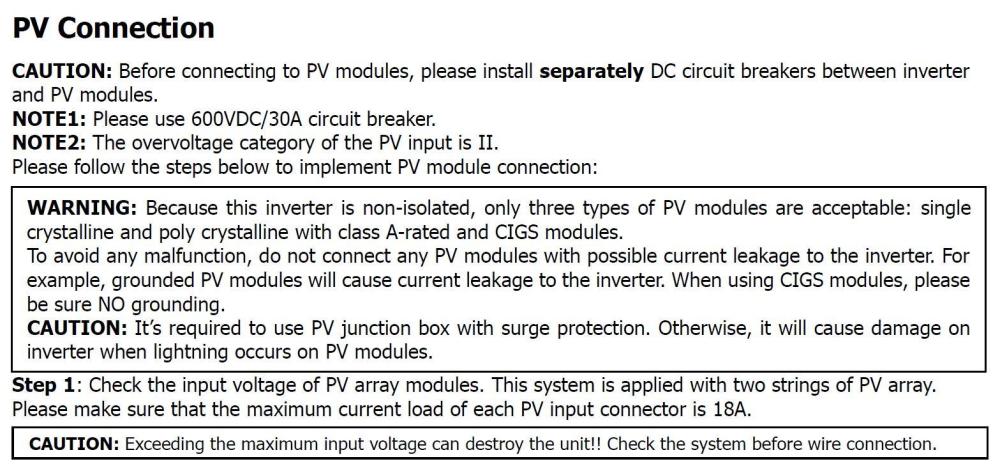
Roof type is slate tiles, supports are bolted into wooden rafters (So relatively well insulated). Inverter input and output terminals are earthed. The panel frames and the associated bars are floating, not earthed. From memory (I installed a couple of years ago now), what I inferred from the Axpert manual was that the panels should not be tied to earth because it's not a galvanically isolated inverter. Willing to be corrected if that's been misinterpreted though! Edit, found the manual text:
-
Hey everyone, looking to see if any other Axpert users are experiencing this. Hardware: Conversol 11kW Max Array of 6x 400W panel, array of 5 + 5 400W parallel panels with anti-reverse diodes 5 x 5kW LiFePo 51.2V batteries Unit operating on battery only, internal inverter mains contactor open. Recently I went to install some extra end mounts to my aluminium solar roof bars that the panels are connected to. When I touched the bars I got a continuous very uncomfortable buzzing feeling (I did it at night as I knew there could be capacitance when the panels were producing). Grabbed a fluke and checked and there appears to be 70V AC on the roof bars. Anyone have any theories why this would happen? I didn't ground the bars when I was installing as I knew the system was transformerless, but I'm questioning whether this was the correct move now. Any advice appreciated. PS I also seen another post elsewhere where someone got a jag from their metal roof, they were also using a 5kW axpert inverter: Link to post