Solarphile
Members
-
Joined
-
Last visited
Everything posted by Solarphile
-
I get onto my roof once a year and clean my panels using clean water and a squeegee. The gains are immediately noticeable. My last clean 7 months ago gave me about a 9% increase in solar production. I find it best to clean early in the morning when the panels are still cold and the water doesn’t evaporate too quickly.
-
This is making sense now. When the battery is disconnected the transient power spike hits the display board. This protection board is a voltage arrester of sort, smoothing out the voltage spike. It is quite possibly a linear power supply, looking at the size and simplicity.
-
I asked Wouter at Microcare how the high voltage protection works and here is his answer: It makes use of components that can handle the voltage spike and steps down the high voltage to display.
-
I was also looking into something similar from a supplier over in China, but then decided to rather find something local for guarantee purposes. Even though I have now installed these protection boards I still would like some added protection, something physical like a relay.
-
None of the older MPPT’s will have this protection board. They only started fitting them from late 2019. All the new controllers have them as standard with a lithium interface. That plug thing you saw in the video with Wouter is for the lithium communication cable. It allows charge/discharge on all the new Inverters and MPPT’s I am exactly the same. 🤭 I had this very same idea before these protection cards came along. My idea was to use a 48v relay that would open (cutting power from the PV to the MPPT) as soon as the battery disconnected. I went so far as to do it with a solid state relay. It worked for about 20 mins, it got so hot I couldn’t touch it and then burned out. 😩 I then learned that solid state relays are not designed for constant use. My next idea was to use a 48v golf cart relay. I found some, but when I heard that they were about R1500 each I hesitated.
-
Looks like I’ve awoken something in you... Funny how one discussion brings out all those old projects we abandoned. 😁
-
I bought three of these boards for my three MPPT’s while I was there for training last week. Wouter showed me how to install them. When I got home to install, I found that my 60A controller pictured above already had a protection board fitted. I fitted the other two into my two 40A controllers. It is a little cramped in the 40A controllers, but after some fighting I managed to squeeze them in. 😅 The loose boards are around R500. I suppose if they did the fitting (I guess) it would cost around R800
-
I am not exactly sure how it works, but here is what my 60A MPPT looks like with the board installed. This protection board is the older model, but the connection is the same. It plugs in between the green power board and the red display board. You then mount it onto the choke.

-
For all those using the Microcare MPPT’s. No need to worry about damaging your controller when your LFP battery suddenly turns off under full sunlight. Microcare have developed this high voltage protection board that fits inside the controller. It is quite simple to install and gives that extra peace of mind.

-
Hi Badhabit. I don’t think it is either. I think that with most of us having no income for the past two months, nobody has money....
-
Thank you tetrasection, I will consider this option too.
-
Hi Louisvdw. I had a look on that site (and some others) some time back and noticed that pretty much all new 305W panels are 60cell. For now the 315w I can get is the closest 72 cell panel I can find, and I will settle for it, if there is nothing closer. Thanks for your reply. 👍
-
Hi everyone. Does anyone have a solar panel like this for me? I already have one and need a second one to wire in series with his one. The closest I can get is a 315wp panel, which I can use, but I would rather try get a closer match to what I already have. It can be new or good second-hand. The specs are: 305W polycrystalline, 72cell, Voc 45.25, Vmp 38.42, Isc 8.93 & Imp 7.95. Thanks guys... and girls 😁
-
I looked inside and see several resistors of different kinds. There are round ones that have different colour rings on them right next to several mosfets on the DC side. Then there are the flat kind on the main board. which ones are likely to be faulty. Sorry my electronic knowledge is very limited. 😢


-
This could be a similar problem for me. The house where I was staying for the past 6 years was very damp. I’ve now just moved to a new place which is dry. Strangely enough the problem only started in this new place. Anyway I suppose that is just coincidence. I will tell whichever electrician I use what you said about the 1M resistor and 1M preset. By the way there is a preset on top which is numbered 0-9 what number should it point to as a standard setting? Thank you
-
Hi Coulomb Thank you for the quick reply. I’m still an amateur. 🤦🏻♂️ I know of a “friend of a friend” who could perhaps help. 😁 The funny thing is that sometimes the AC-in voltage shows a reading like 57v or 120v or any random number... However there is no AC fed in at all. It’s is an off grid system. Perhaps there are a few bad resistors... I think it will be best to take this inverter to the “friend of a friend” for assistance. 😔
-
I had a strange experience yesterday. I turned my Devel inverter on and it wouldn’t turn on, however the lcd display came on and said the battery is sitting at 19.4v (this is a 48v battery) I tested the battery with a multimeter and got 50.8v. I tried a couple things like disconnecting the inverter from the battery and connecting again, I also pressed the reset button on the inverter a few times, but the battery voltage (according to the inverter) stayed at 19v to 20v. Then I turned it on and left it on. After about 5 minutes I returned to find the display saying the battery is at 50v, but still not coming on, only the display was on. After switching off and on again it finally came on. Any ideas out there as to why it would do this? Is there maybe a capacitor that needs to be filled with power before it switches on? Regards Solaris
-
Special charge parameters need to be programmed and you cannot just use “any lead acid” charge controller. Depending on your controller you might need to send it to the manufacturer to specially load a lithium charge profile.Some time ago I made this list of addresses where 0 means down and 1 means up on the address switch.
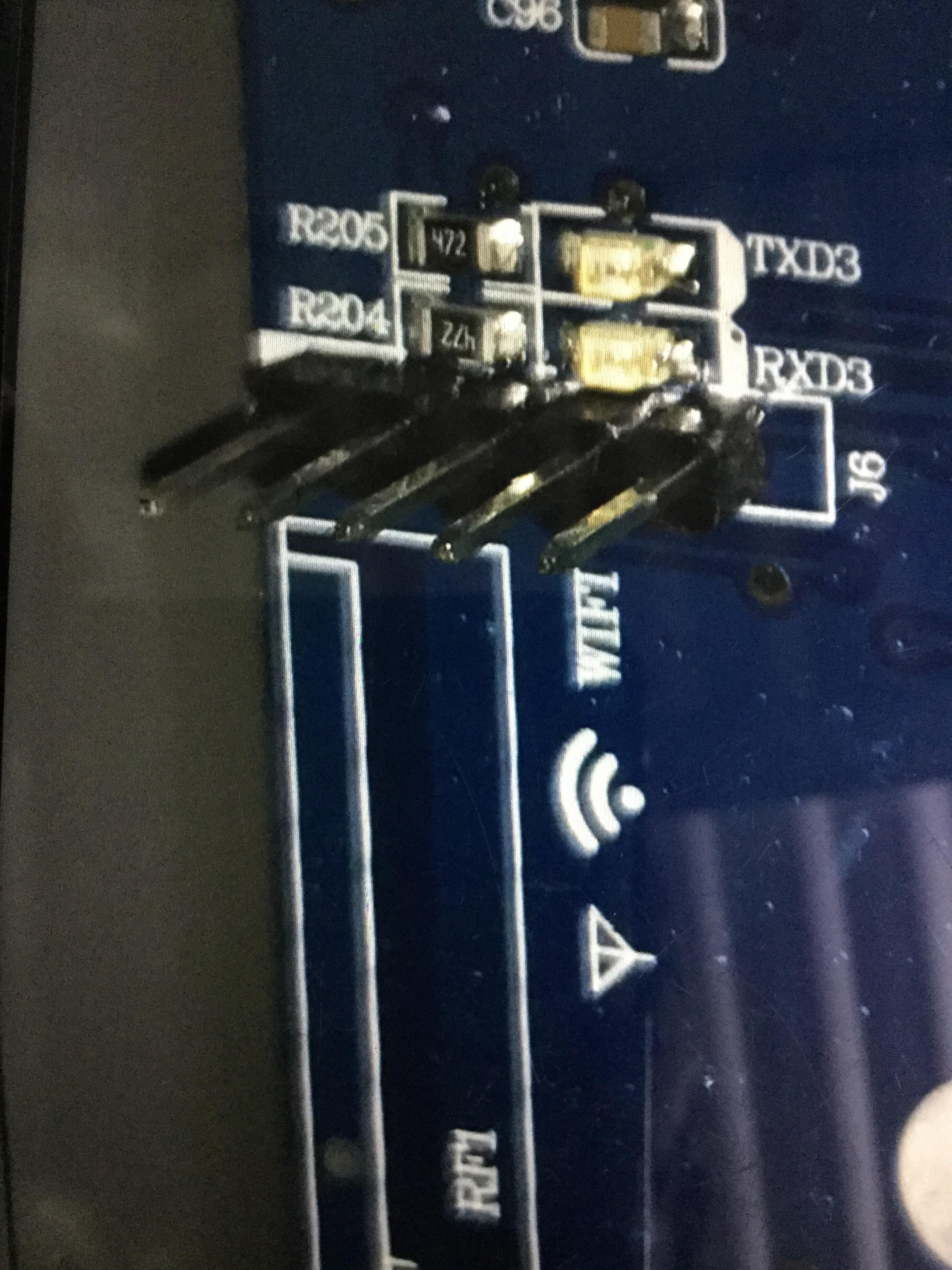
 The video describes it like this: Master battery is switch number 6 up, all others down. Second battery is switch number 5 up. Third battery is switch numbers 5 & 6 up. Fourth battery is switch number 4 up etc.... What you can do is literally switch your WiFi on and see the address of each module on your phone. It will say Cos-Link01, Cos-link02, etc.... Aos-link01, etc.. will mean that the address has not been set.Hi Jay I was in the same predicament for one of my clients. You can forget about getting any manual for these batteries. I even went so far as to email the manufacturer in India, but they are so reluctant to give any info on them. The best I could find was a Boobtube video. It is in some foreign language, but it does give a basic understanding of what to do. The difference with the 48100T is that you don’t open the front cover to put the SD card into the master battery, there is a slot in front above the “read port” Use this link: Regards SolarisHi Stok I tried them yesterday, the closest they keep, or can get is 120ah. I could use it, but that would not be ideal as the rest are all 100ah. ThanksDoes anyone know where to buy a loose 3.2V 100ah prismatic LFP cell? One of my clients is needing to replace just one that was damaged in his battery bank. Thanks SolarisI tried a “WiFi password cracking app” and got it to try crack the password. It came up with the password: 987654321. So I entered the password and it says the password is wrong. I can only assume that there is some sort of procedure I need to follow to get the WiFi working. I noticed on the WiFi part of the BMS board there are four pins. Perhaps these pins need to be bridged, something like programming a remote for your gate.. Any ideas?