JT1
Members
-
Joined
-
Last visited
-
I can confirm that a busbar for my installation of 20 x US2000b + US2000C is installed in the trunking as per initial pics provided and dispute that no bus bar is causing the batteries not to charge to the same voltages (They differ between 0..2v at most on the busbar but all 4 inverters charging to all 4 battery banks x5 US2000b/US2000C mixed as per recommended Pylontech Parallel setup). These batteries have bad cells on a lot of them. Please see my post of the 2 x US2000C installation and ONE of the TWO Batteries in Parallel swollen on a single inverter. The other US2000C on this installation runs flawless and no errors and no swollen cells and these only had 200 cycles and installed the same time. If overvoltage occurred I am sure both batteries would have been damaged, same as with my 20 x US2000b+US2000C mixed installation of which some of the batteries warranties was not honored and I had to fork out an additional R 60k for replacements. The 2 x US2000C in parallel installation were also set since date of installation to 52.2v Float and 52.4v Absorb after Pylontech recommended settings change from 2017-2021 from the initial 53.2v Float/Absorb recommendations to a lower voltage and charge state still indicates 100%. Hence a -1.1v offset to ensure if inverter overvolts there is no overvolt on batteries (Even though Pylontech market their products for overvolt protection). I have been waiting for more than 6 weeks for the 1 x Swollen US2000C to be replaced, apparently no stock of US2000b Plus or US2000C in the country. Still monitoring 2 x problematic US2000b's after firmware upgrade to send in for replacement. All log files on all swollen batteries indicated no overvoltage from inverters, just internal cell issues HV/OV/UV randomly. I opted to rather read the log files myself and send it to Pylontech CN and they have sent me firmware to run and check if issues improve. Obviously swollen cells/gasses already built-up will remain so will be sending in these for replacement after communicating with Pylontech international. I do not have trust that these batteries can do 3000 cycles and my DOD was always 40% max and rare cases 90% when power was off for more than 3 days due to major municipal issues.
-
-
@iMercury Wow those cells are heavy swollen when a case is starting to tear. I have checked the other 2 Pylontech installations I have running from a single inverter and downloaded log files. The US3000C x 2 Batteries installation on single inverter is fine, Cycles 450/459 between the 2 batteries and no errors. The US2000C Single Inverter Installation (EXACT Same inverter as on US3000C Installation) however is one battery attached. I can see it is swollen and logfiles indicate Cell HV, LV, UV and no power overvoltages. I.e Inverters did not overcharge and all PWR Counters on 0. Only 1 of the US2000C in parallel is going belly up. Sad thing about this US2000C it only had 202 Cycles. Pylontech will Replace this. I already had a great installer (well known on the forums) had a look at the logfiles and he also mentioned it is cell issues and not installation or charging/discharging issues. It seems there is definitely a problem on specific batches of US2000?? Cells. The other US2000C below, 191 Cycles is running normally (3 HV Cells Logged at a specific time will not bother me to send in for replacement though) Swollen US2000C: Bat OV Times : 23852 Bat HV Times : 401 Bat LV Times : 322 Bat UV Times : 127 Bat SLP Times : 0 Pwr OV Times : 0 Pwr HV Times : 0 Pwr LV Times : 0 Pwr UV Times : 0 Pwr SLP Times : 0 Good US2000C in Parallel with above battery since day of installation: Bat OV Times : 0 Bat HV Times : 3 Bat LV Times : 0 Bat UV Times : 0 Bat SLP Times : 0 Pwr OV Times : 0 Pwr HV Times : 0 Pwr LV Times : 0 Pwr UV Times : 0 Pwr SLP Times : 0

-
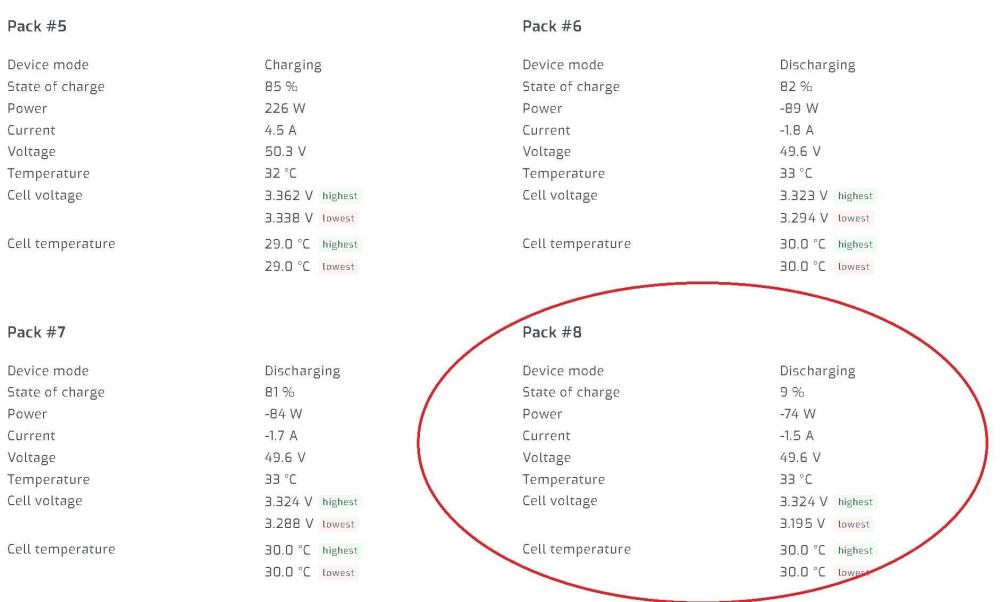
@Calvin, yes I know battery volts will be same per inverter in parallel but you pointed out the 0.6v difference per inverter battery set hence why I made it clear Pack#5 is on a different inverter as per screenshot. If e.g Inverter 1 batteries are at 100% and [email protected] and inverter 2 batteries is at 95%, Inverter 2 will still charge at it's own rate. I can see 0A going from Inverter 1 to batteries from monitoring logs when it's battery set at 100% since it has reached it's set float volts . But inverter 2,3 or 4 then charges each at different amps depending on their battery set SOC. Each inverter charges at it's own amps (which is ALWAYS different on real-time monitoring per inverter) if batteries not at 100% and I see x Amps going to batteries, but fully charged batteries 0 amps flowing to it. i.e per Inverter batteries does not get overcharged since the inverter will stop for it's set of batteries when reaching float. I cannot see how batteries can be overcharged/overvolted or has been overcharged from any logs or real-time monitoring. Parallel inverters share the load, but also according to battery SOC Levels and power delivered from each inverter when on batteries never the same Watts to ensure batteries drain at the same pace.
-
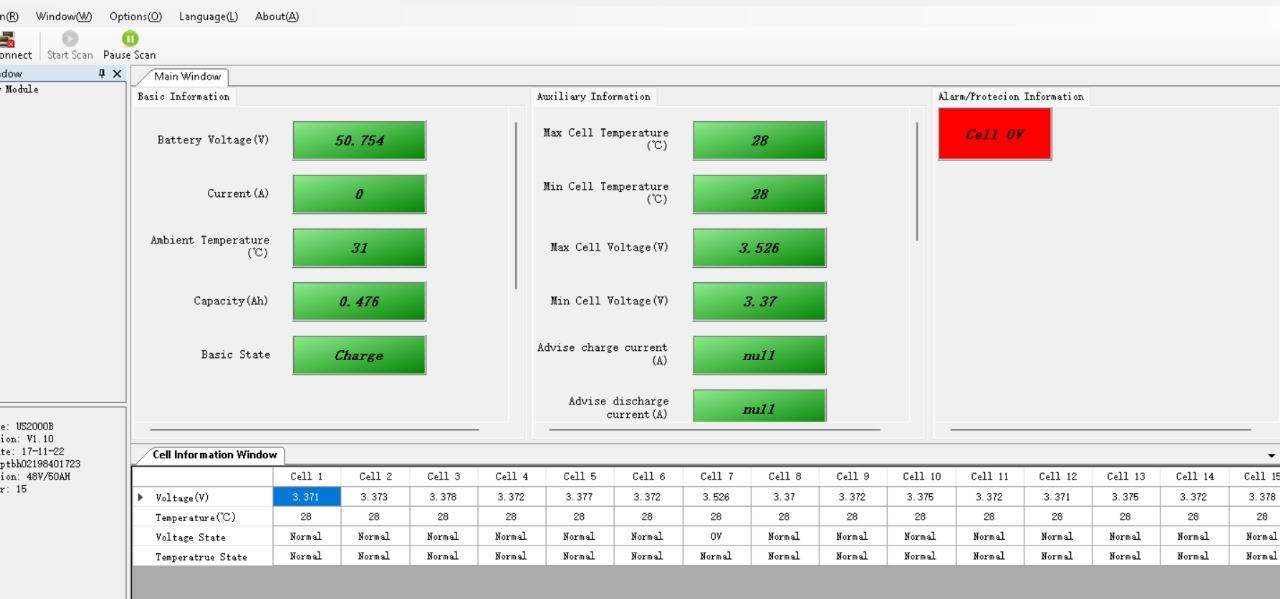
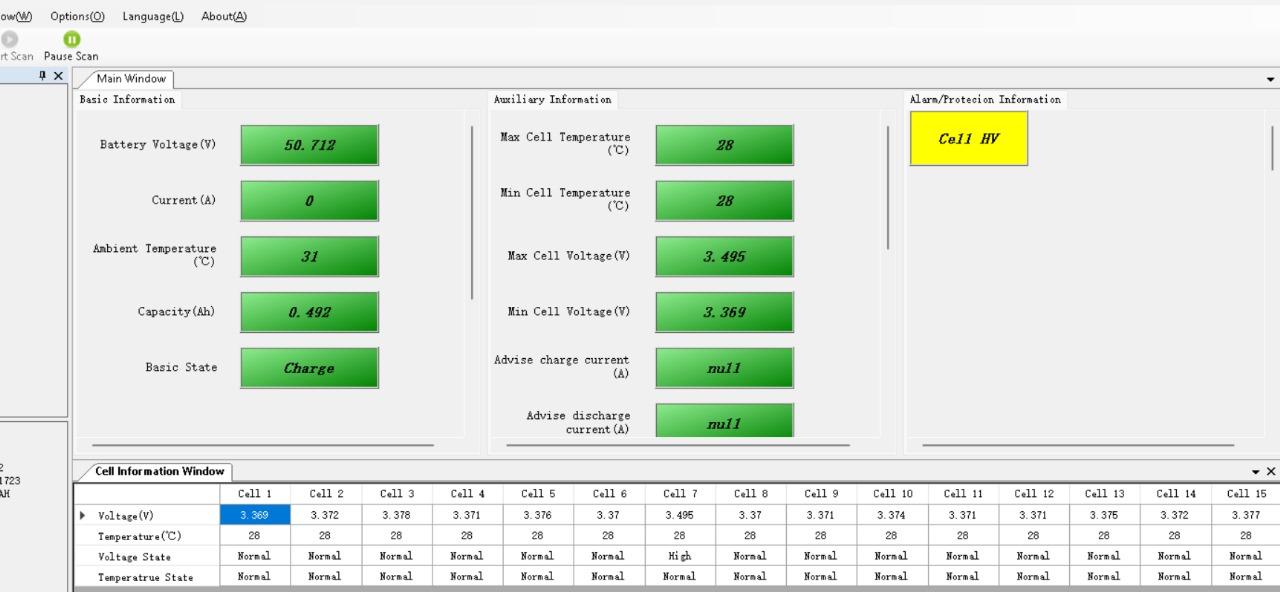
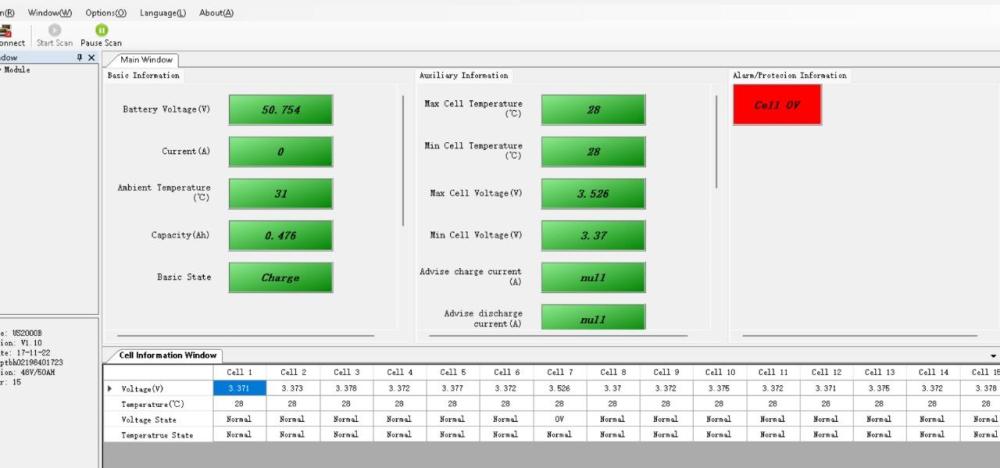
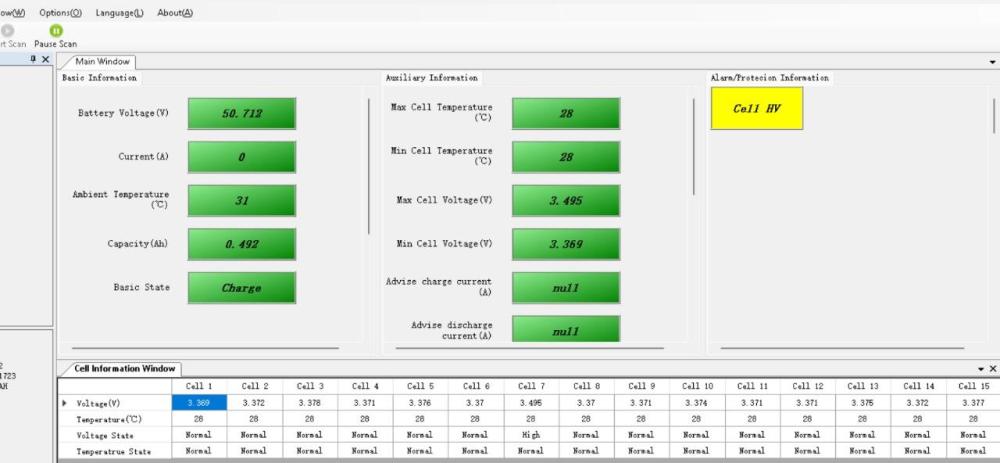
I went through the remaining 18 Batteries. A single US2000B+ out of the 18 has a single faulty cell (Cell 7 in attached overvoltage / 0v every 10 seconds) while all other batteries are fine. This could cause one of the 3 battery packs inside pylontech to get swollen over time. I.e 15 cells per battery * 18 US2000b+ which is 270 total cells on the installation and 1 cell has an issue on a random battery and it is attributed to a faulty installation ? All the log files exported from all US2000b+ overvoltage less than 10 times in 6 years, which can easily occur on any inverter in 6 years. Pylontech market their products for overvoltage protection and it should do the job, so a 3rd battery dead since charging is stuck at 1% charging due to one faulty cell. In total 7 batteries of 20 failed in 6 years. I am sure v1.1 Firmware is also a problem and has it's flaws since 6 years later we are on v3.4 (23?? firmware updates released to address issues?, or less perhaps) for US2000b+, but still it was/is not perfect on v1.1 on doing what it is supposed to for the built-in protection. I will contact Pylontech to get all updated since v1.1 was definitely not perfect on overvoltage and other functions described as a sales pitch to buy their batteries.
-
-
-
-
@Calvin, Remember on first image Pack #1 - #5 is connected to Inverter 1 and Pack 6-10 (of which only 6,7,8 in image due to 8 limit on monitoring) is connected to inverter 2 hence why the 3 batteries are at different charge states as opposed to Pack#5 (pack 1 to 5 is at same voltage levels managed by inverter 1 which is 0.1-0.2v apart on batteries). Monitoring cables are split across cabinets but that does not influence charge rates per inverter and balancing battery voltages per inverter. Charge rates differ from each inverter and it will charge as per set max absorp and max float. I will check to add a bus bar but from stats I see batteries are within 0.1-0.2v from each other per inverter 5 packs. I maintained these batteries well on temps & DOD but seems 1000-1200 Cycles max. Only time will tell Pylontechs quality or if Wiring issue since I have 2 x US3000C on a single Inverter for 2 years now at another property and 2 x US2000b plus for around 3 years at a 3rd location. I do not monitor these batteries daily as with my own home batteries. I will remove the US2000b Plus next week and check max and min cell voltages on full charge on a monitoring system or via BatteryView and drained charge since it was installed on a single inverter since purchased.
-
-
@Calvin A Certified Installler did the initial installation. I did the monitoring and home automation to take care of batteries minimum 60% SOC and still logged the return of batteries via the installer to Segensolar. I did not decide for whatever reason to do it differently, that was done by installer who communicated with Segensolar who he purchased the batteries from. Pylontech approved the battery warranty on the installation and I can attach the warranty certificates if needed. If installation was an issue why is random batteries failing now reaching ±1000-1200 Cycles. If installation was bad why only 6 out of 20 batteries failed. Other's SOH still above 92% after 6 years in same configuration.
-
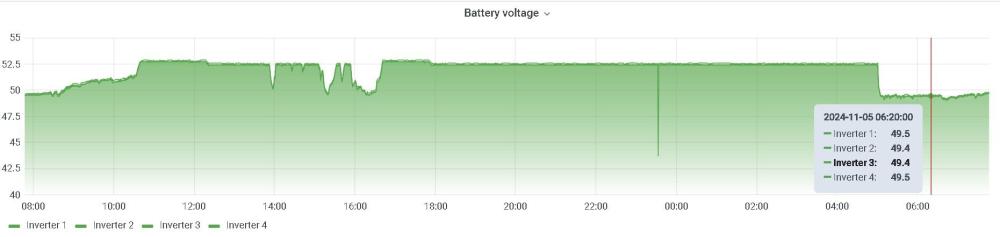
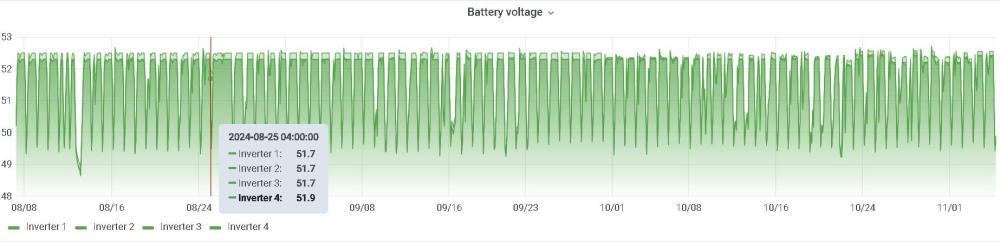
@Calvin Thanks for the feedback, but from my knowledge and testing the inverters handle charge rates of batteries (and draining of batteries) on their own even if in parallel and not from SOC on Master. E.g Currently due to 2 Bad batteries out of the 20 installed (4 Inverters x 5 Pack Batteries per Inverter, 2 Inverters only have 4 Batteries due to random 1 failing on random 2 inverters which I removed). The Max grid charge current and Max charge current (Total for PV + Utility) is set individually on each inverter (and does not populate like some other settings to other inverters in parallel). Max charge rate is currently set at 80A since if I remove a battery I do not want each battery to charge more than 20A per battery. Attached Screenshot shows Battery Pack Voltage for any inverter is within 0.1-0.2 volt from each other (When draining and when charging as attached) and each inverter battery voltage never exceeded the absorption voltages set currently of 52.7v (Float 52.4v). This Absorption still allows 0.5v over charge for max 53.2v if axpert charging rates spiking as some people claim the inverters does, but I have not seen it personally. The Highest Voltage Battery 5Pack per Inverter also drains more power from battery pack to get to equal voltages with other packs as per screenshot and is per inverter based. The same goes when charging, all battery packs per inverter stays within 0.1-0.2v from each other even if 4 batteries per 2 inverters at this stage and 5 batteries in other 2 cabinets for 2 inverters. i.e when battery amount is different the inverters still handle charge voltages each on their own to be same for each inverter. Report for past 3 months attached and a live screenshot. Victron recommends lower charge voltages compared to Pylontech 53.2v as at https://www.victronenergy.com/live/battery_compatibility:pylontech_phantom which I have set more than a year ago. But still Pylontech/SegenSolar attributes the damage to overvoltage and insurance attributes it to wear and tear (Which Pylontech should cover). I think these batteries are only good up to around 1000-1200 Cycles. During any of the batteries lifetime it has been drained to cut-off voltage less than 10 times I estimate, when we had a few days power outages and then raining the those days and pv panels not charging to float each day it went to cut-off voltage a few times. My DOD is set to 40% and if SOC on 60% I start charge from Solar + Utility Simultaneously via Home Automation (Home Assistant MQTT Rules). Other HA rules also regulates batteries during night or when PV Panels have a low charge rate and never drained more than 60Amps PER 5 Pack. For info I am also driving an EV as a daily driver and the battery has a 8 years warranty. Will XXX Motor Vehicle company do the same and attribute battery failure to overvoltage (from their own installed chargers) if the battery fails and get's swollen (And it is underneath the car installed...maybe the seat will rise in a year or 2 lol). Just wondering about these thumb suck battery lifespan issues, currently the distances I travel the battery should last between 50 - 60 years before reaching 3000 Cycles. But only time will tell how they will handle a failing battery and hopefully not the same as Pylontech does and not honoring their wear and tear warranty on a battery that has been well looked after.

-
-
-
-
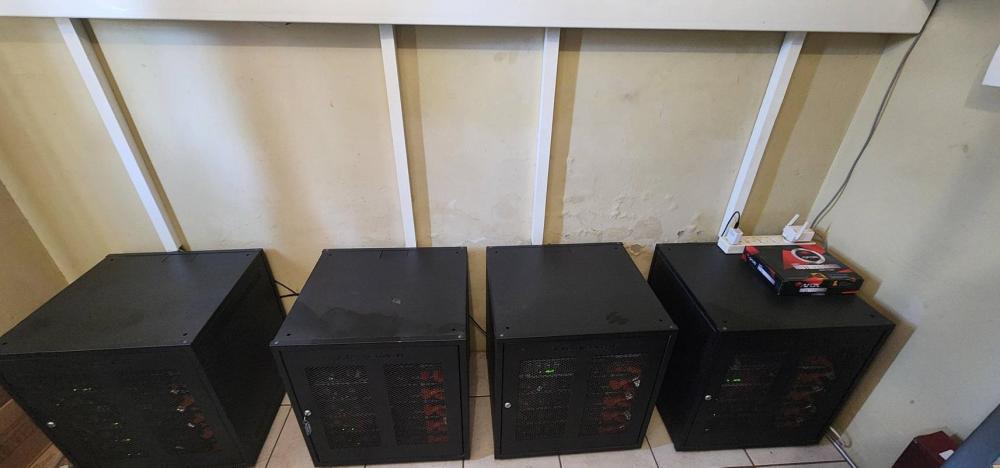
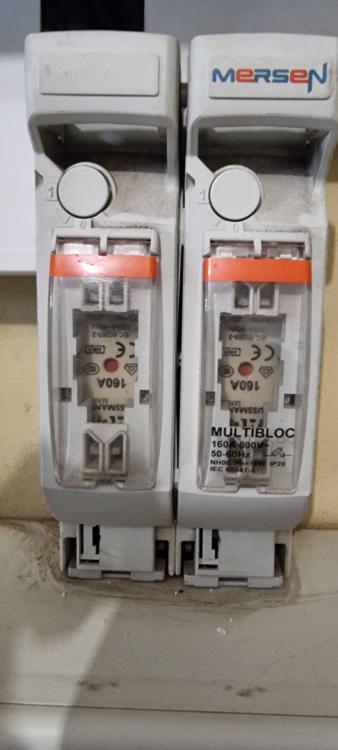
It is 5 x batteries per inverter and 4 inverters in parallel. All have the same kWh of batteries 12kwH per inverter (5 x 2.4kW). I am sure these cells are not that good if it has swollen on each failure even after voltages was dropped a year ago, why are some still failing after 1000-1200 cycles. Inverters never run past 60% (3kW) per inverter, I have added a breaker on DBBoard to ensure inverters utilisation 60-65%% is never exceeded. I think the 3000 cycles is just a thumb suck. So I opened the one discharging faster as well this morning and batteries also swollen, another R 30k down the drain for the 2 batteries since last week. It seems to happen to random batteries every 8 months now the past 2 years, total of 6 US2000 Plus lost now out of the 20. Replaced with US2000C but I am thinking of just living with the remaining ones until all of them die and then check another brand, but all battery brands probably same. Waste of an investment, ROI is only due in about 4 years since it was a large system to start with due to more than average home power usage, but in a loss with these battery failures.
-
-
-
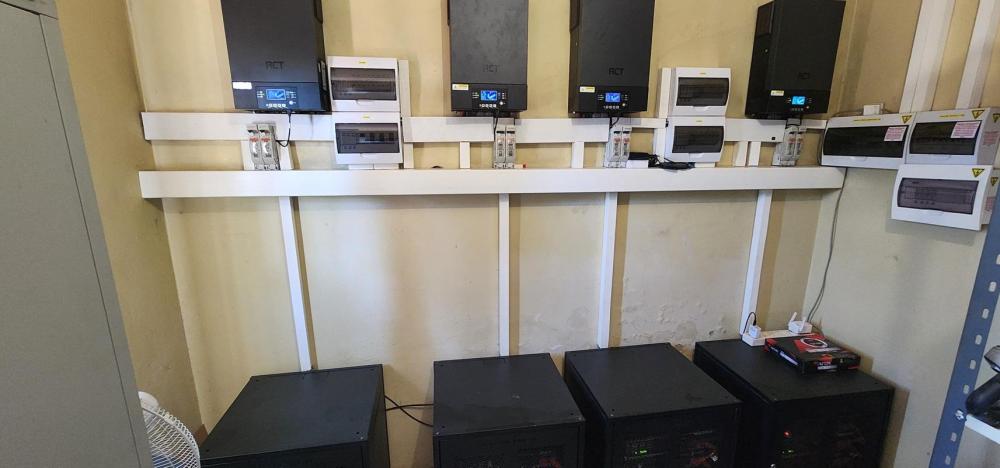
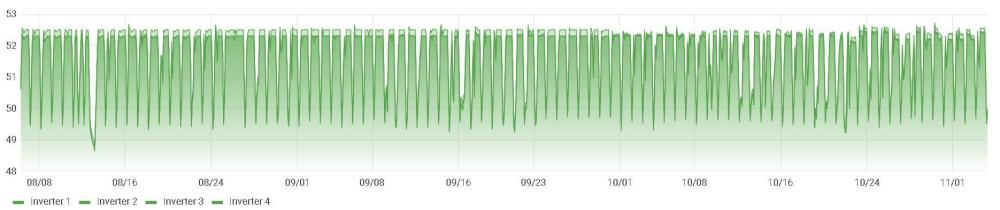
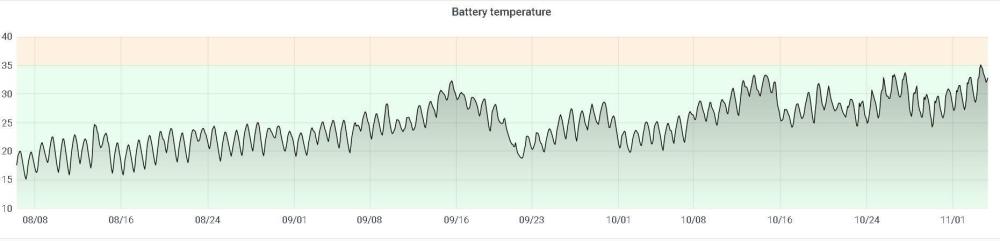
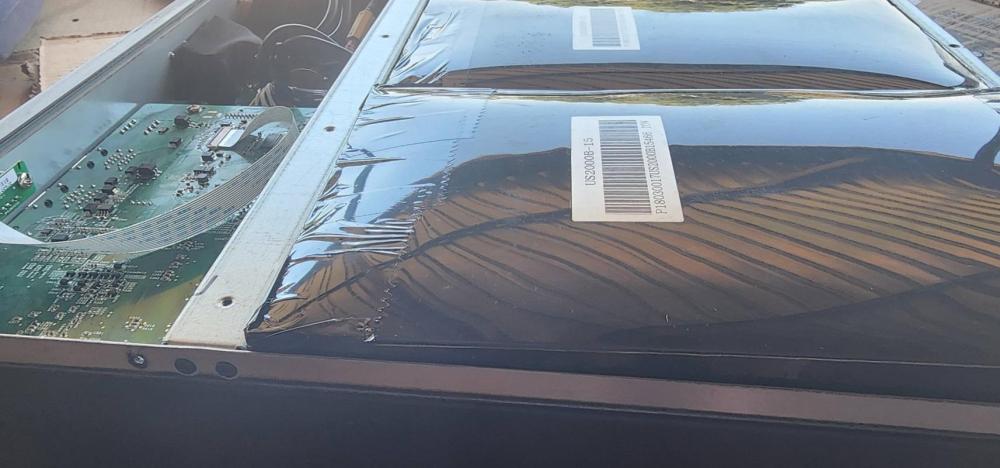
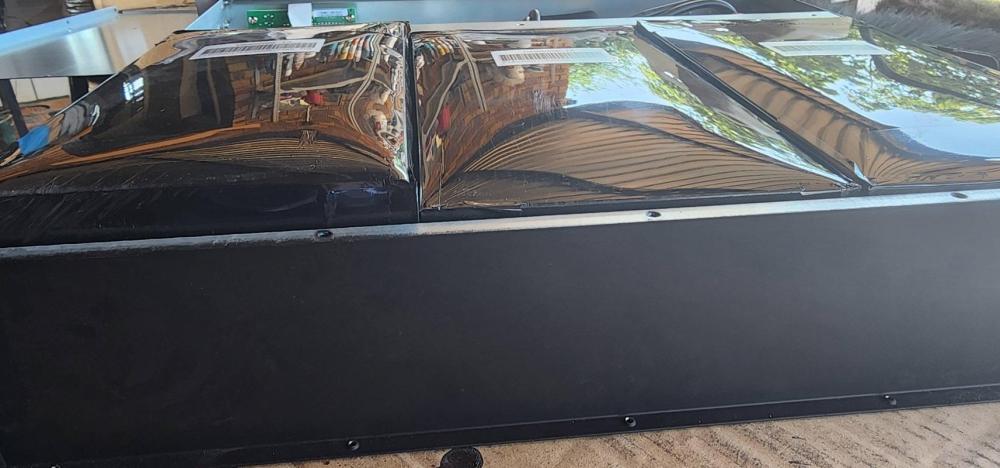
I have a 6 year old installation in a 4 x 5kW Axpert Inverter setup as attached with 20 x Pylontech US2000 Plus (And some new US2000C Top batteries in Cabinets for failed US2000C Plus Replacements). US2000 Plus Batteries started failing 1 or 2 at a time since 2 years ago with 900-1100 cycles on the batteries. Initially when installed in 2017 Pylontech approved the 53.2v Float/Absorption charge settings for the 10 year warranty and it was submitted to them by installer. 2 Years ago they replaced 2 batteries. The voltages on inverters was then adjusted by installer due to 2 batteries failing to a lower voltage 52.7v Absorption and 52.4v float, according to installer Pylontech's new recommendation is lower voltages to prevent overvoltage which still indicates the batteries are charged 100% full after the settings changed, so voltages seemed fine. Earlier this year another 2 batteries started to discharge faster than other's and Pylontech did not replace it and attributed it to overcharge voltages. How can 2 batteries in 2 cabinets fail out of 20 (4 x 5 Strings of batteries, 5 batteries per inverter) Insurance declined physical or electrical damage claim and attributed it to wear and tear. Pylontech should cover battery usage (Wear and Tear) for 10 years correct ? If warranty not covering these batteries and insurance not covering it under electrical/surge damage does anyone have a resolution here please ? Last week I noticed another battery discharging faster than other's and since Pylontech is not replacing I opened it to check if swollen. It was swollen as attached as the previous ones which they did not replace so I did not care I if voided the warranty by opening it. Today another US2000 Plus started discharging faster than other's. Some sample monitoring screenshots attached. The 10V Battery on the left side of image attached was swollen, on other 2 batteries the 30V right side was swollen. Totally random and different inverters on these batteries. All battery cycles since installed 6 years ago are less than 1200 Cycles. Since day 1 battery monitoring was done (1st ICC then then swopped to Solar Assistant), battery voltages never exceed 53.2v and the past year never exceeded 52.7v after lower voltages set on inverters. Cut-off voltage done before reaching minimum voltages around 20% battery remaining on cut-off but low voltage according to Pylontech warranty replacement was not the problem, overvoltage was. Battery temps as per 3 months graphs indicates battery temps are within suitable temp ranges. I can only monitor 8 batteries at a time due to US2000 Plus limitations but I swop the monitoring console cable to a different set of batteries every 3 or 4 months to check if batteries still good. So 6 Batteries failed out of 20 and Pylontech attributes this to overvoltage and only 2 replaced. 1 I opened so voided warranty and the one I checked today not opened yet. Any ideas since I will rather not recommend Pylontech for honoring their 10 years warranty at this stage. I also queried them dates of which overvoltages occured but they just ignored me.

-
Thanks, noted
-
Does anyone know if Axpert 5kw MK3 450VOC and Axpert 5KW 140VOC will run in parallel ? The panels will be wired in series of 6 panels for 450VOC model and series of 3 for 140VOC model. Settings 28 remains the same for both to configure Single/Parallel option. Please advise if this has been tested and working ?
-
I have seen on various threads on the forum where people have some confusion on Pylontech Battery Monitoring cables and how to construct them for the various versions of the Pylontech Batteries. I did tests on Pylontech US2000 Plus, US3000a and US3000c batteries and it worked 100% via ICC Pylontech Battery Monitoring Option. Attached is a picture of the cable construction for the RJ45 version (RJ11 Console port Version also available). The cable has been constructed and wired for flexibility and able to extend via normal network cable. I listed the cable from 2 Meter to to 20 meter for people that cannot make these cables themselves at https://www.hdcabling.co.za/product/pylontech-console-cable-for-battery-monitoring-us2000-us3000a-b-us3000c-up2500-up5000/ and think it is an affordable price. The link should be useful for people who are unsure which cable to buy. Please leave some comments on pricing / construction.
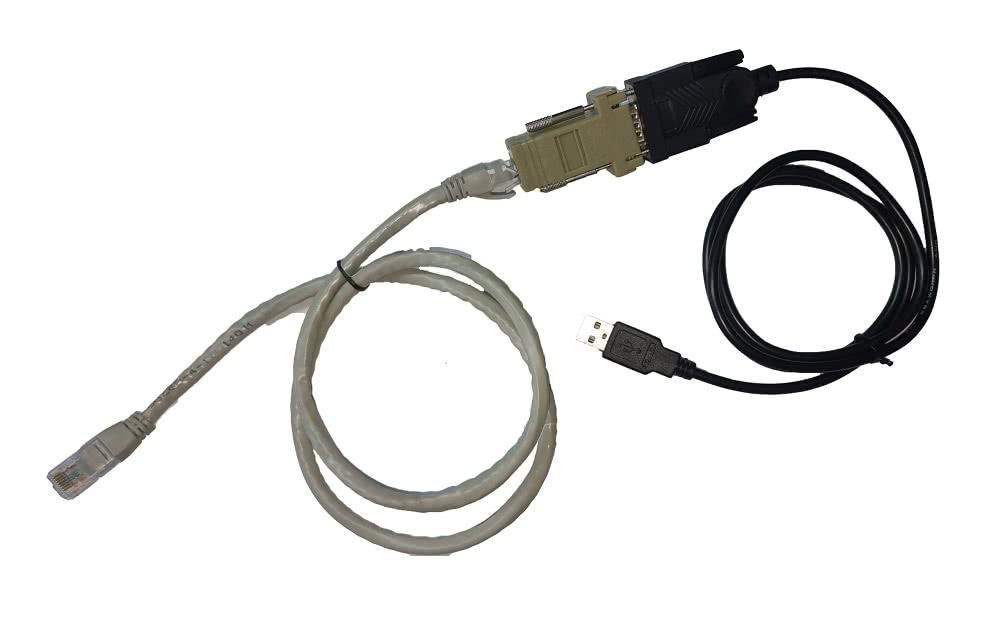
-
-
@dropkickWill use an old android 10" Tablet for sure and permanently on charge for a display with mqtt values. Will be a lot cheaper. Can also fit more counter values on a larger display than currently on my phone without scrolling. I Mostly check the phone if bad weather and then switch over to utility if batteries is low to charge from utility, especially before load shedding periods in the area. For remote switching between utility/solar I just configured a ddns record and forward mqtt on port 1883 to the pi via router. The mode switch button is Inverter/SetMode on ICC Variable, not a lot of people use ICC to max potential.

-
Thanks for the compliment. I use ICC on a pi and the screenshot is mqtt dash on android with the variables on each block just linking to ICC variables and inverter mode trigger. Still have to do some trunking on some cables on setup tomorrow but then sorted. I added thicker trunking to ensure on failure cables are easily rerouted in future. Attached was during my troubleshooting and replacement lol.

-
Thanks for the reply, it makes sense on the higher voltages. Yes I rewired DC Db's to have 6 pv panels in series where it was 3 before per breaker. Total 8 sets of 6 pv panels, 2 sets of 6 panels in parallel on each inverter. Took a while to figure it out lol. Solar Pv panel icon was just flashing on 3 pv panels in series. After I checked the manual it showed 120Vac min, 450vac max. Input around 205-220v now with 6 in series.