


Denns
Members
-
Joined
-
Last visited
Everything posted by Denns
-
Inverters have passthrough and if you check the manual, you can find out what the passthrough rating is. You might not need to do all of that. My Cheap 3.6kw 24V inverter has a passthrough of 40A or about 9.2kW.
-
Yeah, and I suspect that’s why it’s relatively efficient. From first light the geyser is already getting heated. Every watt goes into the geyser. And no management needed. Different to using an inverter as if Pv is low and battery is dead then the geyser gets nothing. The last 2 days had bad weather in JHB. The only thing I had to worry about was my battery charging. I didn’t have to choose between geyser and batteries. This is especially important for me being offgrid without a generator.
-
Oh I didnt see this. 450 includes the geyser yes. So my House uses about 250kWh which is on the 2 inverters and battery banks. The geyser averages 200kWh a month. To cover 450kWh isnt hard to be honest. My personal take though is aim for at least a 8kW inverter, About 6kWp of panels (10x600W or 10x590) and 10kWh of battery. If the geyser is on your Elon then you can drop the panels for the house to 4kWp, a 6kW inverter with good passthrough capabilities (A Solis or Lux power) and still keep the 10kWh of battery. I have seen solar ways sell packages like these for 50k or so . The 8kW systems typically go for 60k or so. Installation is typically around 15 to 25k. A quote a friend of mine sent recently was for 85k. It was a 8kW Deye inverter, 10kWh of batteries but can't remember the panels. My entire offgrid installation was 85k. This included the 3.6kW inverter, 5kW inverter, 12kWh of GEL batteries, 5kWh of Lithium battery, 8x650W panels, 4x340W panels, the Geysertech. All the extras like cabling, breakers, DB etc is included. Along with replacement of lights etc.
-
The controller uses a timer to determine whether to use AC or DC. Any timer of your choice will work. If its input sees AC it bypasses PV and uses AC only. When your timer goes off and its input doesn't see AC, It switches to PV. So during non PV times you can use AC if you manage to finish all the hot water at night. During the day, your timer will be off to let the PV be the only source to heat the geyser. That's basically how it works. The DC is not converted to AC. Its a high frequency pulse DC from the panels to allow it to work with your standard thermostat. Your thermostat controls the heating. If the geyser is up to temp and you have the thermostat set at 55 (should be 70 to maximise solar) then when the thermostat opens the controller idles until the thermostat opens again. Same as when your geyser is being supplied by the grid. Your next question, if you have a 2kW element the controller will feed whatever is available (whether its 200W or 1500W etc) to the element. The element doesnt care or know what its getting. A 2kW element operates at that power when it sees 230VAC. The resistance is fixed at 26.45 ohms. If you lower the voltage then the power it pushes into the geyser is lowered also. You cant go over 250 or so otherwise you burn out the element. That is why I have 1.34kW of panels and my geyser still gets heated. The element is running at half its rating pretty much. Because of the above that is why I said I will be able to get more out of a 3kW element than a 2kW because a 3kW element has a resistance of 17.6. So if your panels have a voltage of say 150V, your element can operate at a higher current than if it was at a higher resistance. So with a 2kW element like I have now I am only getting about 66% of the power that I would otherwise get from a 3kW at the same voltage. By that reason that is why Geysertech has 2 controllers, I have the cheaper one which is designed to a max of 3kW elements. The bigger brother goes as high as 4kW elements and takes more panels and have temperature monitoring etc. Hopefully this answers your questions.
-
Yeah, I figured that the panel arrangement would be okay and it didn't make sense that it wouldn't work from the technical point of view especially with the 250V they claim in the manual. Now you have it in writing also so if any goes wrong, they will honor their warranty. I am sure it just dumps the DC of the panels straight to the element as the unit replaces the thermostat if not mistaken. You can't dump DC straight onto the element through the normal thermostat without damaging the thermostat so that's why they are replacing it. Nothing really proprietary about that lol. Its contacts are rated for DC and AC switching and a micro controller that controls the relay and takes the measurements through a sensor. That's all. Guys have done this with DC contactors etc. Where the Elon differs from my unit is that my unit makes use of the thermostat and element of the geyser. That is you don't replace anything on the geyser itself. They were able to do that by pulsing the DC from the panels at a very high frequency. This way you don't damage the thermostat as there is a zero point for the voltage waveform like AC. As for your inverter vs controller internal debate. My rationale for using a controller is that I have all the AC capacity of the inverters available to the house and don't have to rob that capacity for a couple of hours a day for the geyser. Its also a zero management system, with your Elon since it reads the temp you can setup a nice automation system that automatically uses the grid to boost the temp up to whatever setpoint you choose. If you are using 11kWh from the grid (I assume you arent using a timer at the moment) then you will drop that to about 2 to 3 max. Thats a saving of 240kWh a month or about 720 rand plus a month. When you decide to get an inverter and do solar you now dont have to worry about getting a huge inverter. If you pick a 6kW then all the 6kW would be available for your house and you can do the morning heating for 1 hour around 5am when most are still in bed. I would still save up for an 8kW and up just to bulletproof your system and cover the oven, etc on demand. Goodluck with your Solar/Savings Journey!
-
The nice thing I saw about the Elon is you can see the water temp in the geyser. I can see him only needing 1 hour of heating in the morning the majority of days. If he determines that the geyser is getting up to temp fairly quickly off solar by around 1 or 2pm then I would push to add a second 150 litre geyser and use a contactor that is driven by the thermostat of the first one to start heating the second geyser. The second geyser being the input to the main geyser. The hot water would definitely be enough then for morning showers without grid usage as the main geyser will get warm to hot water from the second geyser, reducing the temperature drop inside of it. That is my plan for when my hot water needs go up. Replace the element with a 3kW and add a second 150 litre geyser. From experience I know with 2 to 3 people the geyser is fully heated by around 1pm in summer and 2:30/3 in winter so I should be able to dump the excess solar into the second geyser.
-
So its just a timer built into the unit then. My unit has the timer external to it. All the scheduling and automation etc is done in Tuya which is free. Its pretty sweet, my Jojo tank and almost everything is connected to a smart switch. I can remotely turn and switch off everything basically in the house. My AC breaker into the unit is off though as I haven't needed to use AC for the geyser. The panels are sufficient.

-
Good luck with the sale but at that price most would rather get it from SIW as it’s your word vs just getting a unboxed one from them. Are you unable to swap it out via SIW? I’m sure they will give you full value for it. Most shops do returns and charge a handling fee.
-
On my unit default is Grid. So you use a timer to tell it when to use the grid or not. If no grid it just pushes all the PV available into the geyser until the thermostat opens at which point it just idles. There is no fancy logic that decides whether to use grid or not. I am curious to know how the Elon does the decision making. Mine is stupid simple.
-
These are good comments @GreenFields but it’s concerning that they will void the warranty because of the type of panels and arrangement you use. As far as I’m concerned as long as you stay within that 250 volt limit with good margin it should be fine and any attempts to void warranty would be another case of the Pylontec battery issue many have here on this forum. As for the 11kWh issue that is also valid but there isn’t much he can do about that. 4 panels like the ones he specced should be able to cover at least 8kWh a day without issues. I averaged 7kWh a day on the geyser when grid connected. With 1.34kWp of panels (4x340) my geyser is heated up it half the day still remaining with the same shower usage. Their panel sizing is pretty large I must say. I don’t know if the Elon and Geysertech work similarly unfortunately but I can vouch that the Geysertech has been able to cover all our hot water requirements with zero bathing and showering changes like when we used about 7kWh from the grid. In my opinion if the Elon needs 3 to 4kWp of panels to heat the geyser as per manual and number of people then it’s not worth it. You mind as well get an inverter solution as the roof space would be used up just for the geyser. And to add my 4 panel on the Geysertech are not North facing. They face south with a 10 to 15 degree tilt so suboptimal mounting and yet I still get a geyser heated up by 1pm. His array should generate double mine especially if mounted true north and the right angle. I would contact Elon if I was him. I contacted the guys at Geysertech and they told me 2 high voltage panels would work fine or 3 normal panels. The main thing they told me is that the most important thing isn’t the current but the voltage of the array. You get more power into the geyser the higher your voltage is. An element is a resistor basically so to get more current through the element you need higher voltage. Also a larger element has lower resistance and therefore will push more current though it. I have the option of replacing my element with a 3kW as it currently is 2kW. So I can get an extra 20 to 30% more power into my geyser from the same array. I haven’t done it as there has been no need.
-
As @frivan said, ISC is not the parameter to look at but the Imp. Very few panels have an Imp over 15A. Highest I have seen is about 17.7A. Only concern I see is the VOC of the panels would get up to 210V which is fine but cutting it a bit too close. I would aim for total VOC from the 4 panels below 205V. Ideally 200V. Give it head room for cooler weather and cloud flares. To maximise heating set the geyser to 70 degrees. Use a thermo mixing valve if worried about people burning themselves in the shower but I have never had that issue, even with a 10-year-old that stayed with us for a month. I didn't use panels as big you but you would be better off with bigger panels definitely. I used 4x340W and they have been excellent for our geyser at the house. Its worked so well that I can easily add a second 150 litre geyser and use the thermostat of the main geyser to allow the controller to start heating the second geyser (which will feed the main geyser) when the first geyser is up to temp. Considering my first geyser hits 70 around 1pm, I am sure the second geyser should be able to hit around 50 degrees by sun set. I will have much more hot water available and use up all the solar from those 4 panels. But that's a project for when the hot water requirements go up. I don't know how the Elon works but to answer @frivan question regarding the output, my Geyser tech unit is a pulsed DC wave (contrary to what the manufacturer rep told me). It is not a modified sine wave. I know this because when I measure the output from the Controller on AC the meter reads 0 volts. Implying that the voltage waveform isn't crossing zero and stays positive. When I switch the meter to DC i measure about 135V whereas the DC from my panels is about 155V. This corresponds to a pulsed DC wave and not an AC wave. It's just high-speed switching of the solar panel.
-
And just to add, a lot of what I did is unnecessary in 2026. Don't buy GEL, Lithium is actually cheaper now and lasts much longer. Don't buy a cheap inverter like I did because brands like Solis and Luxpower are at most 1000 rand more than the Axpert clones and are NRS approved. NRS is required for grid connected inverters. Solar has gotten so much cheaper now that the gap between "fancy" brand and "cheap" is very low now. So just do it right the first time. I wont buy a Deye or Sunsync in the future whenever I need to replace my inverters as I do think they are overpriced. But I would look at Solis and Luxpower because they go for around 7k. An equivalent inverter from Eco or Must is 5.5k. But you get more features on the Solis and Luxpower. As for Geyser on inverter. I firmly believe don't add a geyser to any inverter less than 8kW. Also if you are grid connected then its also fine, you just pull from the grid when the clouds roll in. In my case I don't want to pull from batteries every time a cloud rolls over so that is why I used a Geysertech. 99% of the time the water is hot. The option to top up is there but I have never needed to. Do I waste generation when the thermostat opens? Yes. But my batteries get full around 12 so I already waste generation on the main system as it is. In summer they are full around 10am. I overspecced for cloudy days and have no interest in making use of all the PV.
-
Thanks for the mention @Yellow Measure. I did go about going off-grid on a budget and DIY installed my whole system. You are definitely right that it was not a one shot thing that I decided to do and it was a gradual progression that kept changing over months to get to where my system is now. I started off in 2024 December with a 24V 2kW inverter and bought myself 4 GEL batteries and 2 650W panels. The goal was basic load shedding protection. This was the cheapest route I could go without breaking the bank. In 2 months, my goals changed pretty quickly to wanting to cut my bills. I sold the 2kW to a family member at half the price and got myself a MUST 3.6kW 24V inverter which costed R3300. So very cheap. I then expanded my battery bank to 10 GEL batteries (I didnt have the money to outright spend 12k or so at the time for a LFP 5kWh battery). Each battery was 1100 rand so I spent 11k over 4 months on the battery bank. It took me 3 months to get the GEL batteries. I was also buying 1 extra panel at a time of the 650W panels until I got to 7 Panels. With this my GEL batteries were being drained on average only about 30% a day and have protection on them to ensure you cant pull more than 3kW from the bank. GEL batteries are a bit sensitive in that regard. By then almost the whole house except the Oven, Kitchen and Geyser was on Solar. I then took a leap of faith (after getting a bill of 16k from City Power) to put the whole house on my 3.6kW and GEL battery bank. I made sure to tell none of my colleagues at work as that would have brought me quite a bit of scorn for having all these big loads on a small inverter. I made it work though running one kitchen load at a time but the geyser was a big problem. Even with load scheduling etc the geyser had to run for about 4 hours a day which with a bit of clouds would start draining the GEL batteries. My kitchen has a dishwasher, washing machine, 2 Ovens, microwave, etc. And all that was on a 3.6kW and GEL batteries lol. I also have a pool and 2 fish pond pumps that run during the day. I investigated how to deal with the Geyser and settled on the Geysertech PI2R controller. This was around August last year. I got it for 3100 rand. Requires no batteries and works off panels. Because my goals had changed to not using any power from City power I bought 4 340W panels. I added so many to ensure the water would be heated to temp 99% of the days which it does get to. Geyser is set to 70 degrees and it was enough for myself and my wife pretty much every day. She would bath in the tub at night and we had enough hot water still for morning showers. It has the advantage that it accepts AC also so my inverter was wired to it but I never used that functionality as the geyser is always hot. In winter the thermostat opens around 3pm. In summer around 1pm. Cloudy days it still has very good performance. I then decided to get a Victron MPPT as I could not add another panel to the 3.6kW so In total I wound up with 8x650W panels to charge the GEL batteries and supply the house loads. I tested my system since August last year till around January and I never needed the grid. The only issue I had was overloading of the inverter in December last year as my wife and I where used to only running one high draw appliance in the kitchen but we had about 6 people in the house and they were not too familiar with house the inverter worked etc but after a week or so they adjusted. The hot water was fine during that period and we had no issues with batteries being overly drained or anything. In February this year I got disconnected by City power after I applied to go off-grid. Around March I got a recommendation from the guys over at MBB that builders was selling all in one inverter and battery systems so I managed to scoop up a brand new 5kW Omnivolt inverter with a 5kWh battery for 9500 rand. I since reconfigured the house now to make the 5kW the main inverter and it has solar. My 3.6kW still has its GEL batteries and gets charged from the 5kW inverter between 9am and 3pm. My DB is split so the 5kW supplies the kitchen and lounge. The 3.6kW supplies all the 3 bedroom plugs (3 bed house) and lights. I do not have a generator installed as the house is very efficient (lots of work to replace lights etc). My consumption is about 450kWh a month with a system that can supply double that so that is the main reason. So yes, with patience, and a budget you can reduce your bill. I averaged by the way about 750kWh to 1000kWh a month before I did all of this. We changed a lot of our habits to get the house to be what it is now. The cheapest installation is the one that supplies the least load. If you continue to use a lot of power then you cant do this for cheap. My solar panels were from a chinese shop called SunMagic. Fivestar panels. They are built very well so no issues there. My batteries are Navasolar. Got them from Takealot for cheap. They are almost 2 years old but have their original capacity so far as I looked after them and have balancers etc. Now with the 5kW and 5kWh battery they are barely working and only being drained about 10% a day. I foresee them lasting about 6 years easily. So @Yellow Measure is right, Get your objectives clear from the start and be prepared to do what you need to do to get your targets met. One last thing, solar had caused a lot of arguments in my marriage. My wife was quite resistant to a lot of what I was doing. She eventually so the light when I showed her that I dont have to pay the 1500 a month in fixed charges anymore (COJ Postpaid). And we have power 24/7. My system is going to be fully paid off next year in June. Average saving of 35000 rand a year. I went off grid with a 3.6kW inverter and GEL batteries. Where there is a will there is a way.
-
Lets just say its probably the BMS that limits it and not the cells. Good catch though lol
-
I get to see people doing "fancy" stuff on here and amazingly for not really much more than the price of the "cheap" inverters I got. Technology has come a long way and prices also have come down. I am closely following your updates so that I know what is available and possible for when I need to upgrade in the future especially as an EV will be in the mix there also.
-
That looks very nice and you have quite a bulletproof off grid system there. The Solis allows quite a bit of flexibility I see. This is my off-grid system at the moment. Slightly similar principle to yours. My 5kW supplies my whole house between 9am and 3pm. Every other time the 5kW and 3.6kW run independently and supply their own circuits. Whenever my energy demands go up, I will add about 4.5kWp of panels to the 24V inverter to have a real bullet proof system but for now this has been more than sufficient to keep me from buying a generator. Almost a year now being off grid. 7 months since I got completely disconnected from City Power (legally of course lol). Because my inverters are not as smart as the Solis, I had to add certain items such as Overload Relays to allow offloading of big loads between the 2 inverters between 9am and 3pm. So, if my 5kW goes is starting to supply a load over about 4.5kW my overload relay kicks in and lets the 3.6kW supply its own circuits again while the 5kW supplies the kitchen and lounge. There is a second overload relay on the 3.6kW to stop the 3.6 from overloading also (it has its own protection, but I would rather an external device take care of it). I also needed a contactor to take care of the neutral earth bonding for the secondary inverter when the 5kW gets disconnected from the 3.6kW. All this is not needed it seems when using smarter inverters like the Solis.

-
My concern is did he have electricity all this time before the meter was installed? Or was he postpaid and wanting to do prepaid conversion? If he was bridged and had electricity but was paying estimates then the city might have authority to request back pay on the fixed charges. If you had a connection even without the prepaid meter then the fixed charges need to be paid. if he was postpaid and paying his usage and fixed charges then they have no ground.
-
I agree with Gerhard. Just to add a bit. Your biggest issue with your current system is the geyser sitting on the inverter. You have a small 2kW element so for at least 4 hours during the day you only have less than 3kW of inverter capacity. On my side I have a 5kW that supplies the whole house between 9am and 3pm. My 3.6kW gets charged by the 5kW during that time. At which point my 3.6kW takes over its own circuits as my DB is split. So half the DB is supplied by 3.6kW and other high power circuits (kitchen and oven) are supplied by the 5kW. The reason I have no issues with overloading etc is because I have the full 5kW available for those 6 hours as my geyser is not on the inverter. It gets supplied by a Geyser controller on its own array. I had the same setup as you but I lasted a month keeping the geyser on the inverter as it just requires too much management. Especially as I’m offgrid. Geysers don’t belong on any inverter less than 8kW and array less than 6.5kW.
-
The main question is was it worse in summer than winter? And in winter does it happen early morning?
-
Can be anything really. Diagnosis of such a fault is almost impossible unless there is some tester I’m not aware of that can find it for you. I can be the light circuit, pool circuit, the DC side on the panels, it can be anything. Sometimes you just have to wait until it becomes really bad then you can easily identify which circuit is the problem. Until then you will be hunting for an intermittent ghost. If you are lucky the fault will stay on long enough so that when you attempt a reset of the EL it trips again then you need to quickly check which DB circuit it is.
-
And that could also explain the poor resale on Pylons. I would never get a Pylon unless it’s given to me for free. The warranty is worth less than the paper it’s printed on.
-
Completely agree. And the fact that solar adds little to no value on a home valuation. I still get surprised when I see people trying to sell their batteries and inverters for 1000 rand less than what a new one goes for. I understand trying to recoup money as you would have bought when batteries etc where 2 to 3x the price but it just won't get bought if the buyer just does the bare minimum in research. Perfect analogy you used btw, a used car that can still go another 300k km is still a used car and doesn't not warrant asking for almost new prices when being sold, a customer will just go and buy new.
-
You are gaining next to nothing except stressing your battery bank more by attempting to go lower than 47.5V. I would recommend getting an additional battery rather than killing your current bank squeezing the last 5% or so.
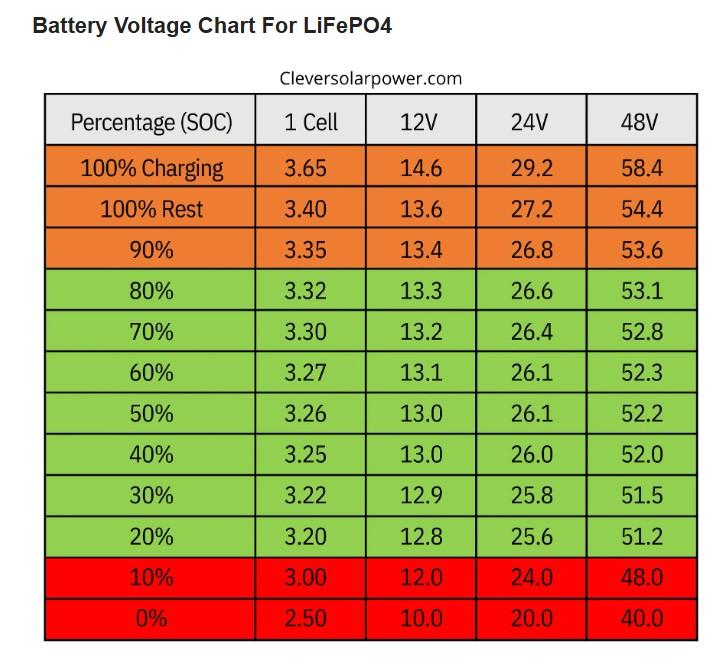
-
Good luck with sale as above. But I must say that is a high list price considering a brand new battery is retailing for under 13k now and comes with fire suppression built in.
-
I would personally max out the array if funds and space allow. Just cap the charge rate of the battery in the inverter settings. Its always better in my book to get it done right the first time. It will incur cost later on to add more panels and reconfigure the array. Otherwise just max out the one array and leave the other empty. If he wants to upgrade later on and cant find the same panels then they would need to move the other set to the one input and then get panels for the other side. You also get better cloud generation the more panels you can add so I see little benefit to limiting the array for the sake of the battery when it can be taken care off with a single setting. Having more panels also means the inverter will pull from the panels and not the battery even when loads exceed 5kW which is a plus.


