JaseZA
Members
-
Joined
-
Last visited
Everything posted by JaseZA
-
Oh, just to add - this tripping behaviour isn't present when in any other mode than SBU. SUB and USB are fine, which is my alternative if I know it's likely we'll be overloading the system a little. Home automation schedules this change on days our domestic worker is here for example.
-
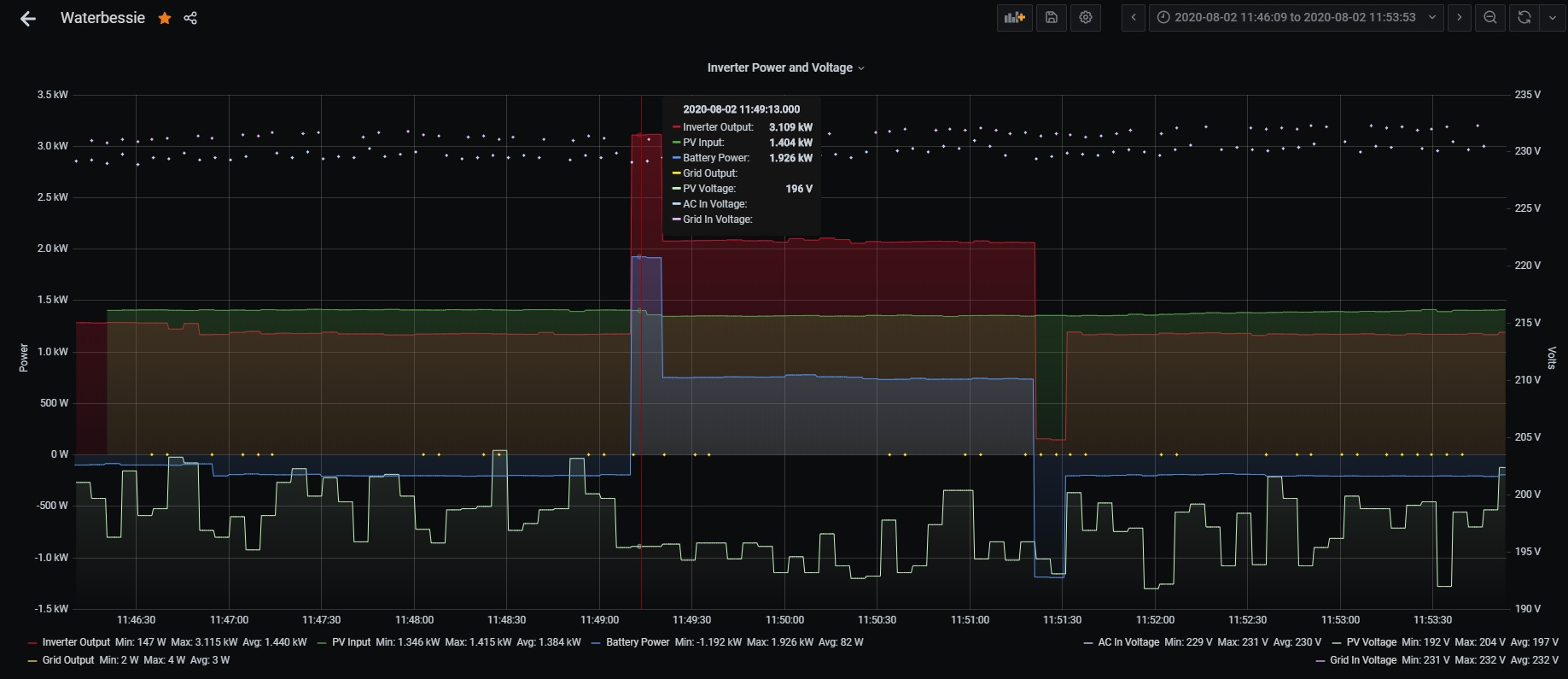
I've been running my Kodak VMiii for 5 months, and it's behaved perfectly except for one problem, which honestly appears to be a firmware glitch. Wondering if anyone else has the same problem? My settings for 23 is definitely bYE which should mean that if there is an overload while on SBU, it should bypass to grid. The problem I have is that under specific conditions it doesn't bypass and rather just shuts down completely... rather irritating... The manual splits the overload protection into three bands: up to 105% rating is fine, 10 seconds at 105-130% and 5s at >130%. On my system it won't bypass if below 105% (functioning correctly), will bypass if >130% but if the load is between 105% and 130% for 10s - system shuts down... To me, this can only be a faulty inverter or bad firmware? My firmware versions are: U1=4103 U2=0200 U3=0024. Anyone know of available firmware updates for the Kodak 3kw VMiii? Here are some recordings from my logs showing the three scenarios: 3.109kw - no trip or bypass (you can see the peak come down to 2kw after 15s as my home assistant turns the geyser off to reduce load) 3.284kw - completely trips the power - inverter displays error 07 for overload. Ignore the values getting held, this is just grafana carrying through previous value when none is saved because the rPi crashes when the power dies. 3.899kw - system bypasses correctly to grid. You can see the PV input goes to zero and then slowly ramps back up to charge the batteries, with the load supplied completely from the grid. Reverts back to normal when the load drops back to 2kw. While this problem is irritating, I have been living with it as it's not often we exceed 3kw and have this fault... But would be great to fix it!


-
My VMiii draws about 30-40W from the battery when in bypass mode, so i assume that is the self-consumption. Fan turns on when temp hits 42°C, solar power is great than ~500W or battery is charging/discharging around ~500W. So not always, but fairly often. It's definitely noticeable from the next room if there isn't too much ambient noise, but not enough that I've wanted to do something yet. Other than that, this inverter has behaved perfectly so far!
-
I have an Axpert VMiii - doesn't give me any info on available power unfortunately. Will keep testing my PV voltage program and see how it goes...
-
So I've been thinking about this for a while, as I have a 1kw geyser element on a Sonoff TH16 with temperature control. I think the best plan I've come up with for determining if there is extra PV available is to use PV voltage. It definitely seems like there is a relationship between PV voltage when the load is low, and how much "extra" I could be getting out of the system. I have 4 x 340W panels with a V(operating) of 37.74V, or around 151V total (panels are in series.) If I look at my history, I can see on sunny days with no load, the PV voltage is about 155V, whereas on rainy days, it never really goes above 130V. Under load is a different story, as the panels seem to operate at max power around 130V. I use Home Assistant on a Raspberry Pi to manage all of this so have setup a small routine to check the PV voltage during peak sun hours and low load. If above 150V, turn geyser on. I can then check how much I actually get and if it's terrible, turn the geyser off. If I get to 4pm and then geyser temp is still too low, I run it anyway to get to a minimum temp (55°C for us) to make sure I can have a warm shower at bedtime.
-
Is there any physical reason the MKSii can't blend with batteries attached? Looking at the schematic type view from earlier in this thread, I can't see why adding/removing batteries would change anything? You'd have just as much control over the available energy as with PV. Only difference is the higher voltage you'd have to bring the battery up to relative to the jump solar does...
-
Okay, definitely seems 6 panels in series is the way to go then. Thanks for the info!
-
Sorry, we have quite badly derailed this thread... I actually hooked up mine and my wife's car batteries last week as we were going to be experiencing no power while they were doing maintenance on the transformer for our street. I only wanted it for running the modem and TV for a couple of hours, so wasn't worried about killing my car batteries. I kept the batteries attached for a couple of days (mostly because we didn't need our vehicles and I was lazy...) and didn't notice any different behaviour from the inverter. I had it set to SUB mostly, as the batteries did not like high current draw (anything over 20A dropped the voltage to cut off) and it carried on blending PV and grid as per normal. To test I tried it on SBU a little, and that seemed to behave normally as well, running everything from solar and batteries. Problem I had was that it would need to meet the full load from the batteries first, then ramp up solar to contribute. This meant I could only run small loads as to not kill my batteries. One weird thing was that I could get it to charge the batteries with solar when in SUB. I managed to find a post on powerforum (Struggling to find the link now...) about someone having the same issue with their King and needing to set the inverter to UTI mode! It seems in this mode, it will blend solar and grid, and use solar for charging. Rather counter-intuitive... I think this really needs more testing to be sure of all of this - maybe I'll pull our car batteries again....
-
Nice setup - will be interesting to see if your 6 panels don't suffer the same as my 4 do (the possible low voltage problem from earlier...). Just to confirm, do you just want to run just the timer off another phase, or the geyser and timer? Because I'm not sure you can have them on separate phases. If you're worried about power output from the inverter, then it would make sense to have the geyser on another phase. But it means you lose out on powering the geyser via solar. I'm overall very happy with the blending - it works seamlessly without me thinking about it. Reduces my overall consumption nicely! As I've mentioned, I feel I could be getting slightly more out of the panels in total, hopefully adding a couple more panels will fix that (will have to wait till after lock down..). Obviously haven't been able to run it off batteries yet, but pretty convinced it will work well for me. These new VMiii and King units have certainly added a lot of value with the blending, means you can basically always get use out of your solar panels.
-
I have the 3kVA - would have bought the 5kVA except I had been given a 24V LiFePO4 battery at a great price... That being said, we've been able to manage quite easily so far with "just" 3kVA. Just two of us in the house though, and a bit of planning has been done.
-
Thanks for all the info @Coulomb and @pierre.. It could definitely be that my panel voltage is too low, because I have often seen it sitting on 120V which is the minimum MPPT voltage. Could you tell me what your array looks like @pierre. - just one string, or multiple? I generally don't produce any PV power until after 7h30, even though there is measured voltage above 120V at 6h30. @Tariq I replaced the original 3kw element in my 150l kwikot geyser with a 1kw element I managed to get from WireOhm in Durban. It was quite difficult to find a small element and I got lucky as it was the only one they had in stock and was quite old. But it was a perfect replacement for my 3kw. So far it's been fantastic! I run it with a TH16 Sonoff smart switch, which I use as the thermostat as well. I use timers and some logic in Home Assistant to control it, but you could easily do it with a normal geyser timer and thermostat. Here is my heating graph from yesterday. It makes such a difference to how much solar I can use as my loads during the day are generally very small (especially when my wife and I are both at work) and I don't have batteries yet and my bank will be quite small when I do get it. You can see from the graph the element was on from 9h30 to 13h30 (4 hours) and heated 150l from 36.88°C to 68.86°C (32°C). I heated it more than I would normally as the sun was good and the weather for today is rainy. Current temp (at 9h00) is 48°C and I'll use the grid to top it off to 55 later if the sun doesn't come out at all. For just two of us, this works perfectly. I imagine for a much bigger household you could get into a situation where it couldn't heat the water fast enough? Edit: You'll see the element turned off a couple of times while on - this is by design, I turn it off when my load increases above 1800W so as to reduce stress on the inverter and to maximise my small solar array. With geyser running, loads sit around 1200W, perfect for my 1.36kwp array. When I boil the kettle, suddenly that's 3400W, a bit rough for my 3kw inverter! It runs that (for over 2 minutes while the kettle boils) but I feel it would still be better to turn the geyser off. Takes 5 seconds for Home assistant to react and another 5 seconds for it to switch off, but I still think this is better.

-
A bit more info - I'm running 4 x 340W JA solar panels (1360W total). 20° incline facing 345° (just off N). Here is the PVoutput expected generation vs result for today (only records every 5 minutes). It really seems it's losing out in the middle of the day. Wondering if the panels are maybe getting too hot? The other big gaps in the below graph are when the load was low.

-
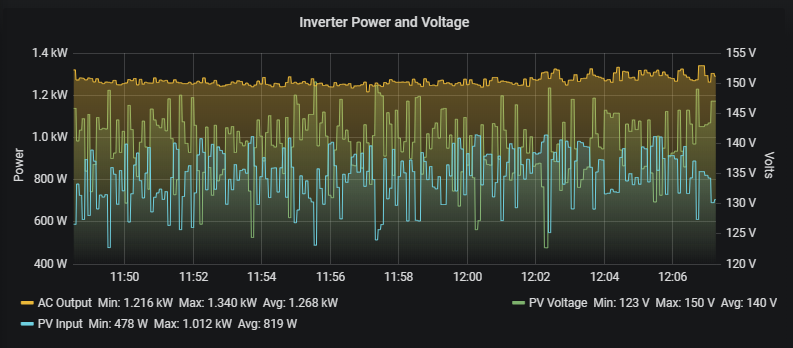
So I've been running my Kodak VMiii for about a month now - still no battery though (thanks Corona... 25.6V 120ah LiFePO4 waiting at the port...). I'm wondering about my PV input power and just how up and down the max power produced is during the day even with almost no change in load. Today, mid-morning to early afternoon, I was basically just powering my PC and the geyser element (and a few small loads like routers, rPi etc.) Here is the graph recorded by SolPipLog into Grafana, updated every 5 seconds: You can see the load is consistent but there is huge variation on the amount of solar being captured and used. Perfectly sunny today, not a cloud in the sky. Zooming in: Here is a string of 12 values in a row: 733W, 794W, 712W, 694W, 489W, 851W, 758W, 683W, 818W, 969W, 977W, 614W. PV voltage is also jumping up and down a whole bunch. So basically I'm just wondering if this is normal, is there something wrong, or are Kodak/Voltronic inverter MPPTs a bit lame or is it because I am blending PV without a battery? Anyone with experience on these units? Other than this, I have been really impressed with this unit!

-
Thanks for offering to test for us! Obviously Coulomb will be better equipped to devise the best test, but a simple one would just be to look and the display during the day, and force a load that's bigger than the available solar (run a kettle for example) - then see if it stops drawing power from solar and only uses the grid, or if it combines the two. Not having a unit in front of me, I'm not exactly sure which screen would be the easiest to see this on. Or if you'd need to plug in with a computer and use the power monitoring software to see. If you had a clamp meter you could also just check if there is a drop in solar current to the inverter, or a smaller increase in current from the grid.
-
I'm not sure I understand this - would the DC-AC converter not be required when converting the Solar DC to AC for the output to the kettle? Or is there a different inverter for the Solar vs battery? Or is this maybe to do with how the inverter blends these two sources - I read on the King inverter that it inverts grid AC to DC, then combines with Solar DC, and finally inverts this combo back to AC to drive the output load? I agree, I think that would be beyond the capabilities of this inverter. That's why I'm going to try and have as much as reasonable on the essential side of the inverter, and then just manage my loads well to stay within 3kw and not run the batteries down too quickly when Grid AC is off.
-
So the disadvantage of this over a "proper" grid tie system is that solar is only available for essential loads within the 3kw/5kw of the inverter. My plan to improve this is to basically have as much as possible on the essentials line and combine that with good family training and an inverter bypass switch when I have to use more than 3kw. Sorry to hijack a bit Pierre... but here is my proposed system: Axpert VMiii 3kw JAsolar 340w x 4 (One string in series) US2500 (2.4kwh) - Was basically given to me which is what started this whole crazy process... Mounting kit for the panels DC disconnect 125A battery disconnect 20A in-line DC fuse AC inverter change over and breaker I've got an electrician friend who is going to help me do all the DB side stuff. The PVWatts website indicates I could expect around 6.5kwh a day from the panels (1360W), so if I can use 2kwh to charge the batteries and 4.5kwh for day time loads I can theoretically pay back the system in 9 years... But I can avoid loadshedding (mostly) and upgrade latter and add more solar via grid tie if needed. If anyone has any comments on this system, feel free to leave them.
-
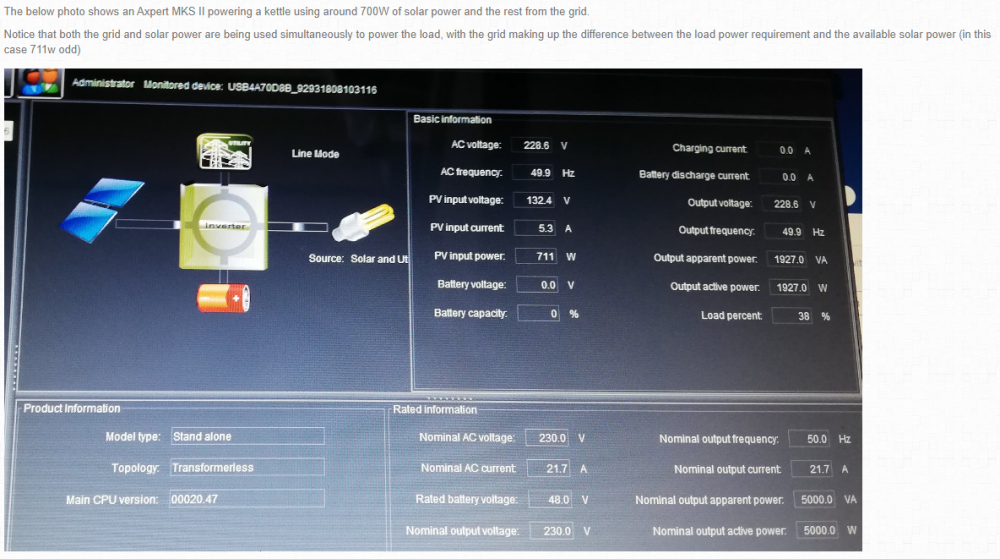
Okay, seems I can confirm this after a bit more googling: https://www.solar-shop.co.za/content/11-axpert-voltronics-power-use
-
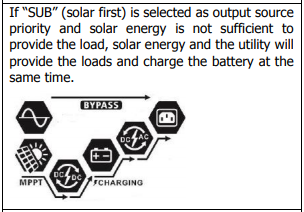
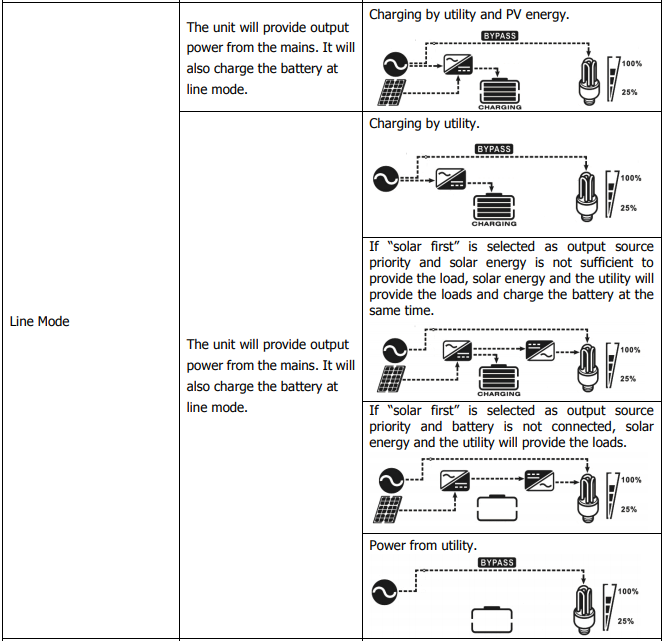
So I was about to post the same question as you Pierre - there has definitely been a change in the manuals for the Axpert type inverters since that famous Youtube video was made. I'm about to install my first solar/backup system and am looking at the VMiii axpert. I have spent weeks agonising if I should just bite the bullet and stretch quite a lot further for a "proper" grid tie system, but when looking at the manual found this in the operation mode section: VMiii Compared to the V series V And compare this with the King series which has been confirmed to combine AC and PV King I'd love it if anyone with a VMiii or MKS II could confirm the mix of PV and AC for powering the inverter output.


-
Just got an email back - no stock... And quite a short list of inverters that are in stock. Of course, none of them are suitable for me.
-
I'm just looking for an inverter - Axpert King. There pricing is R1000 cheaper than the next best option.
-
I've also seen their prices - too good to be true? Can't find much info on them and looking at the address on google maps, it doesn't look like there's much there.... Might be a new company though.