JaseZA
Members
-
Joined
-
Last visited
-
-
Grid-tied here means it doesn't have battery backup. Dealing with the municipality is in theory required for almost all inverter installations, although this is currently being litigated by OUTA.
-
-
When it comes to solar panels, being in Durban you should get a quote from ARTsolar - they manufacture in Pinetown and when I bought earlier in the year they were the cheapest option by a significant margin, especially because I could collect myself. Paid R8k for 6 x 600W panels. As Frivan mentioned, grid-tied is your cheapest start. Either look for an inverter that can run without batteries, or another option is to try and find a second hand solis grid-tie only inverter. The big disadvantage with grid-tie only is they don't work if there is no Eskom grid, but loadshedding has been much better lately and is forecast to remain better, so it's worth the risk in my opinion. I personally prefer having my geysers on my inverters (admittedly I have 10kw available) as it allows a lot of flexibility when weather is less than ideal. On good days, I heat the geysers extra, on bad days I rely on some extra heat from the day before and prioritize other loads. But there is definitely value in the simplicity of having your geyser on it's own system that you set and forget. The biggest thing is when making choices about what to buy now, is to think if these still have value in your future system, or is there enough value in them you can recover costs selling again later.
-
-
-
Those figures do seem a bit low. I'm consistently hitting 60% of installed capacity at midday on my three arrays. Admittedly I'm in Northern KZN so a fair bit further North than most but I'd expect at least 50% of installed.
-
You're increasing your array by 7.7/6.6=16.6%. Only you will know if the cost of adding two panels justifies an extra 16% production. You can look at your current generation, increase it by 16% and work out how much those extra units would be to buy from Eskom. Then look at your ROI and added resilience. That being said, I'm always a fan of adding more panels, especially if you can't fully charge your battery currently. Just make sure the new panels match the old panel specs. I ran the same size array for a few weeks on my home system (although arrays were 6x550W NE and 8x550W NW). Had no issues while it ran, although did get clipping midday at 6500W as it was summer. Soon afterwards I added a second 5kw in parallel so split the arrays and have since added another 6x600W. Out of interest, how many kWh are you generating on clear days?
-
-
Your system is slightly larger than ours and we are very close to off grid while averaging 30-40kwh per day, so I think you've got good head room in terms of system size. Most inverters will have a dry contact switch for starting/stopping an auto-start generator. From my experience this is normally set based on SOC. So when battery SOC drops below a set point, the gennie starts and when it goes above another set point it stops the gennie. Your house loads would be carried by the combo of the battery and gennie. Most inverters have an option to set the maximum power you can draw from the generator, so choosing the generator's size comes down to how long you want it to run to recharge to your ideal set point. An example: Charge from 30%-80% (16kwh) House loads of 1000W 10kw Gennie It would take roughly 2 hours of generator on time, assuming no solar helping. Personally I think a 10kw generator is plenty if your average consumption is around 25kwh. And the beauty of a hybrid inverter is if you do suddenly need to use 16kw from the inverter while running off the generator, the excess will be pulled from the battery. And it's highly unlikely that you'd see sustained 16kw loads at home. We have 10kw of inverter capacity with a household of 4 and a flatlet and I can count on my hand the number of times we've been above 10kw. We have no gas appliances and two geysers (admittedly with smaller 2kw elements fitted).
-
-
-
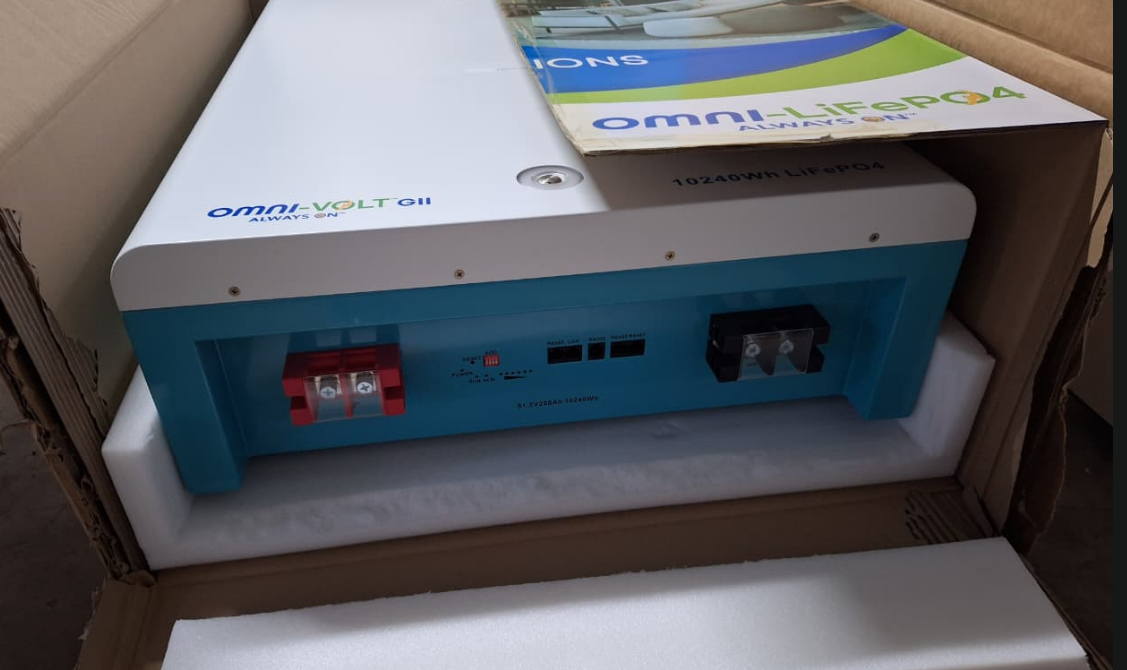
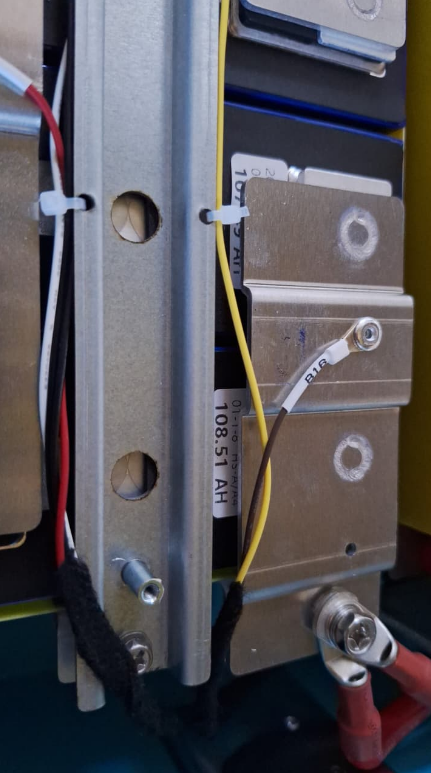
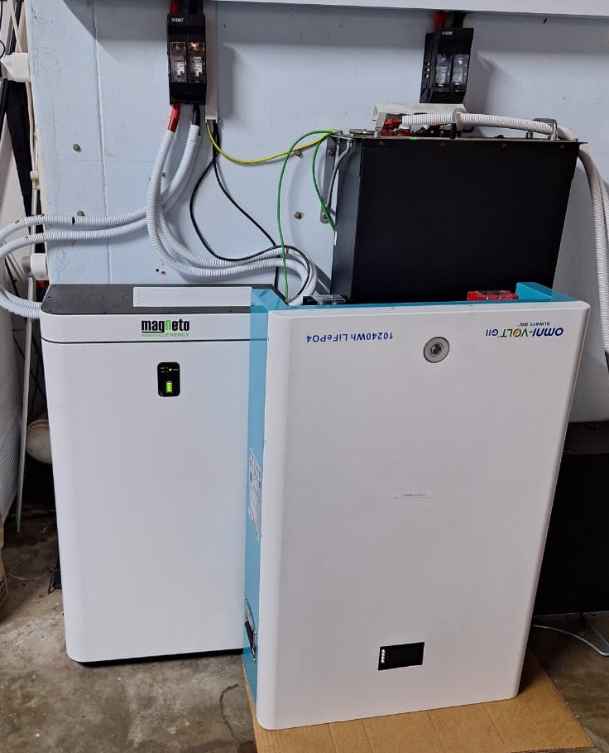
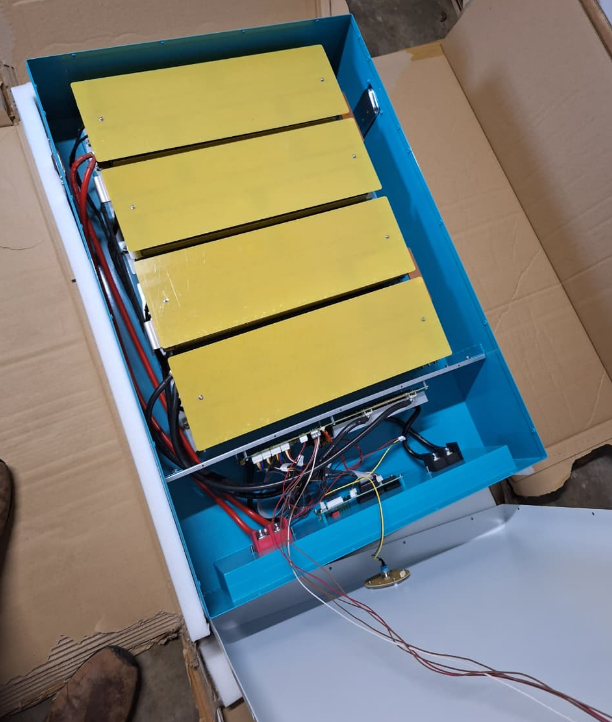
Received my 10kwh battery yesterday. It is indeed big! I was surprised to find all the connections are underneath the battery, if I mount it on the floor as planned! That obviously provides a logistical headache, so I decided to open it up to see if there was any reason I couldn't just have it sit with the "top" of the battery on the floor. So if anyone is interested, here are some pictures of it. Also can confirm it is a Pace BMS. I was silly and didn't get the actual model number of the BMS. Spec sheet says it's 100A though. The 200Ah is made up of two 100Ah cells in parallel. Seems they've all been tested with most having values around 108Ah. Looks very nicely made though, even if it's not particularly compact. For size comparison, it's standing next to my 14kwh Magneto battery... which is admittedly heavier!
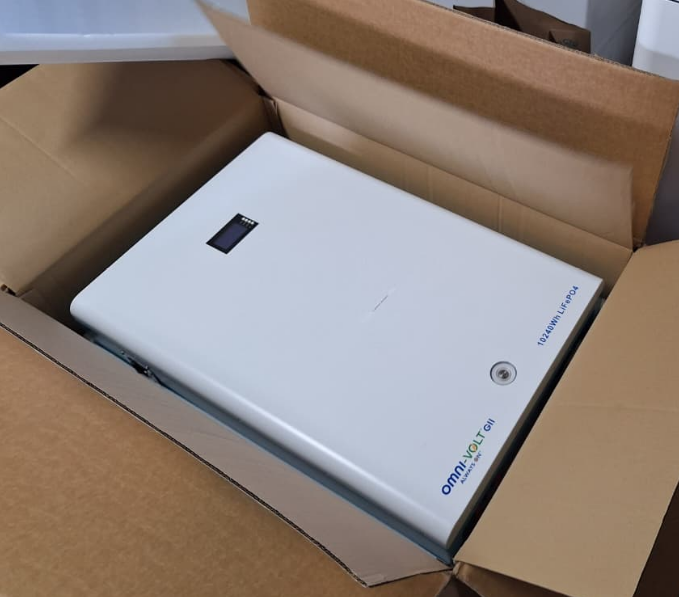



-
-
-
Correct - all the estate agents and buyers were informed when coming to view that the solar system wasn't included but could be negotiated over. I knew that I'd have enough time to get it off between the signed OTP and us moving out if the new buyer did not want the solar system. Didn't want to sit with no backup while waiting for the house to sell. And it ended up taking 6 months during peak load shedding so we were very grateful to have it still available!
-
Best option is to sell it to the buyer and leave it in place. Moving will cost more than what you paid for installation in all likelihood. We managed to negotiate with our buyer 3 years ago that he would buy the system at a discount to what he would pay for it to be installed himself. In the end it worked out that what we paid for it originally, minus the electricity savings and minus what we got for the system, came to zero. So effectively we got to be free of loadshedding for 3 years for free. We also negotiated this separately to the house sale. He paid me in cash over 3 months. The biggest advantage of this is you can tailor the new system at your new house to suit that house. We moved from a small flat to a big home so the old system wasn't really suitable to the new house. I know I would have accepted less than what I got just to allow me to get new at the new house. You also start with new equipment and new warranties etc. All of this is assuming you have an inverter, batteries and solar panels all currently wired in and approved.
-
-
-
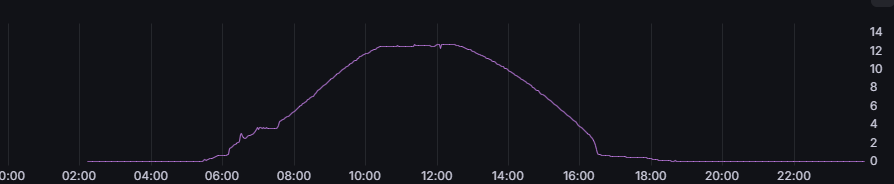
Have you got graphs of the PV voltage and current - might reveal a more obvious clipping. But that change in the graph at 12h15 definitely looks like clipping. Below shows my PV current and you can clearly see the clipping - I have 5kw Sunsynks with a max PV current of 13A and panels that can do 13.5A. The mesured clipped current here is 12.8 so slightly below 13A but close enough that I live with it.
-
Yes, the 8kw has two MPPTs. They don't specify max current anywhere I have seen but max power is 5500W per MPPT.
-
I see all the pages have been taken down again 😂
-
I think the newer Luxpower SNA6000 comes with a CT coil and is available around R10k. I don't think any of the Voltronic inverters have the option of a CT coil, but I haven't researched this much recently.
-
Correct - that feature was added around 2018 if I recall. My Voltronic VMiii had it in 2020. I believe some very budget models don't have it still but most do, so I'm hopeful it can blend. It's not the end of the world to not have though - just means you cycle your battery a bit more. I can all but guaranty it won't be able to push back to non-essential loads.
-
 Bernard du Toit reacted to a post in a topic:
Power4Less Omnivolt G2 Hybrid Inverter (Details and Review)
Bernard du Toit reacted to a post in a topic:
Power4Less Omnivolt G2 Hybrid Inverter (Details and Review)
-
Convinced my brother to buy the 8kw/8kwh as well. This is a serious bargain, provided the inverter isn't total garbage. But sold be builders so I imagine warranty will be honored. But basically add another R15k for panels mounting etc and you have 8kw/8kwh/3.6kwp for R30k! It cost me that to install just one Sunsynk 5kw without battery 3 years ago!! You can't even buy 16x150ah lifepo4 cells for much less than R15k.