


DMAC
Members
-
Joined
-
Last visited
Everything posted by DMAC
-
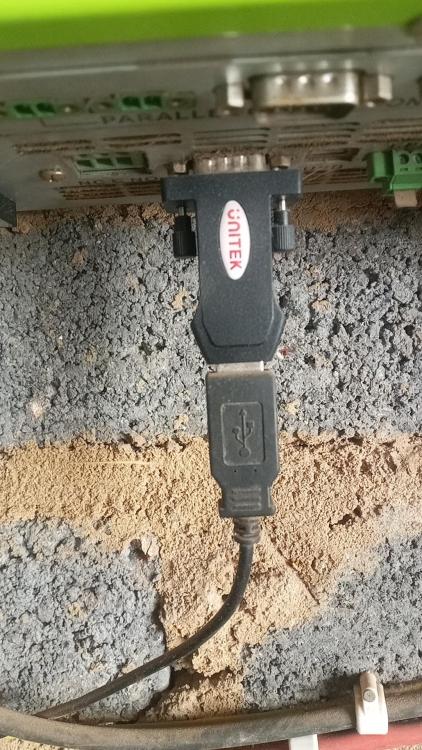
Greetings, Did you win with the setup? if not, please use the following method that I have been using for the past 3 years, it works on both my 8kw single phase and 12kw 3 phase. You’ll need the 485-USB converter, see picture attached (less than R100) You’ll have to cut your network cable and use pin 1,2 and 3. Note that you can have a separate cable running from the 485 port in your inverter or use the first 3 pins going to your battery BMS port (BMS uses pin 4 and 5) The other side of the converter uses your normal printer cable to usb which will go to your Solar assistant. Let me know if you need more clarity or if you are around Joburg south I can come help, I can even bring mine to test before you continue buying more stuff. Thanks.


-
Hi, I’m interested, need to fit in Dyness BX51100 batteries. Can you please give internal dimensions. My battery has the following dimensions standing upright. Width:560mm Depth:150mm Height:550mm (including terminals)
-
Hi Bean, If you had followed all the instruction on the SA site I can only ask if you allocated a static IP address for your solar assistant in your Router?
-
Thanks, if no one collect the remaining 6 by Friday, I'll come wipe them off.
-
Hi, nice idea. I'm using the RS232 to access solarpower and solar assistant. Need to buy rs232-USB. See my setup here
-
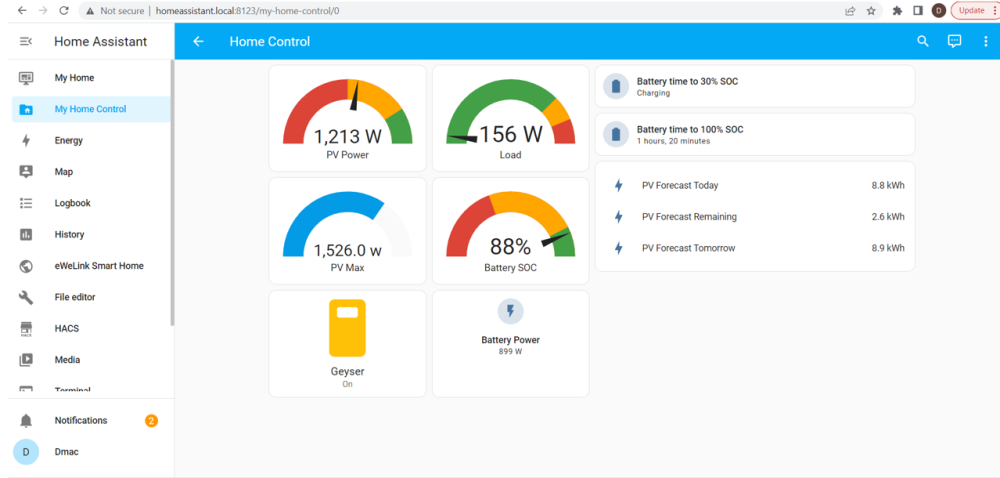
Hi Everyone, thanks for this post, I was able to use the code to do both time to 30% and time to 100% SOC, now I'm interested in modifying it to use an average consumption rather than the instant current power.
-
Update: Scrapped the whole arduino setup and moved to Home Assistant. got a smart switch which I control based on PV Power, Battery State of Charge. 1. Geyser switch on when PV Power is above 1.3kw and battery above 80% 2. If PV Power drops below 1kw due to cloud coverage, switch turns off until recovery to 1.3kw. Home assistant 1. added time to 100% and time to 30%. 2. added tracker for maximum PV achieved for the day. will be adding more automations in the near future, so far HA is the best. so far, this is the method.

-
Hi GreenMan, based in Pretoria, but midweek Johannesburg. +-R7000
-
Greetings, a colleague of mine has a Pylontech US2000 48V that is swollen due to incorrect charging settings on his older inverter, as a result the charging current gets throttled at 85% and takes the whole day to reach 100%. He is looking for offers if someone will be interested in taking it over so he can offset the cost of replacing it. see current stats pulled from Solar Assistant. based in Johannesburg, collection weekdays at Parktown


-
Greetings all, So with months of research, trial and error and a bit of luck, I finally found a method to heat my water without putting too much strain on my batteries. Ok, firstly let's discuss the upgrades: 1. Finally upgraded my batteries to 2xDyness BX51000 batteries 2. Switch from Solar Management hub to Solar Assistant Since my inverter doesn't have a battery coms functionality or remote monitoring I have to rely on a third party for this. I switched to Solar Assistant as my monitoring system, although I miss the notification function, time to x%, maximum solar power for the day that the SMH was offering, I was disappointed that it was not pulling all the battery stats, such as min, av, max temperatures and battery cell min, av and max. So went with Solar assistant to get all this. Now let's get to business I have now connect a 25l geyser with a 1.5kw element that I can heat up during the day with my excess solar, but as we nkow the excess power is limited to the clouds not interfering with the panels and the sun relationship. The clouds are always jealous when they see the sun and the panels doing wonders, so to limit the geyser from drawing too much power from the batteries during the cloud peace disturbance I had to ask a friend to program for me an arduino setup. Let's discuss the Setup Items needed. 1. Arduino, any arduino, I'm using Arduino Uno 2. Display, that can work with your arduino 3. Relay- although it's rated 10a I don't trust it 4. Solar panel, small size, mine is 3w, 12v 5. Depending on your solar panel size you will need an led light or any load that you can put on your panel. I'm using a 5w led light in my case. Procedure 1. After programming your arduino you need to connect your panel to your arduino and expose it to the sun (can also put in a multimeter to confirm your arduino display readings). 2. Connect your load- as you nkow temperature plays a big role on the voltage of your panel and secondly voc is fluctuate a lot, so you need a load on your panel to keep your voltage grounded ( I nkow its not the right term, well keep it stable), by the way this and the delays programmed on the arduino, they help in preventing quick on and off as smaller clouds pass through. 3. If you are doing this in a cloudy day, then you are lucky, watch the sun and take the voltage readings between cloud coverage and clear sunshine. This will give you the on and off voltage you need to program your arduino to. Mine is swich on relay at: 9v switch off relay at: 8.6v I wanted to add a timer to my system so that the geyser doesn't turn on as soon as the sun start shinning, but Interestingly the voltage doesn't reach 9v before 11 and it also drops below 8.6v by 14:30, lucky me.... Now I have been using this for almost 1.5 months and it works great. Anyone who is interested in joining this armature DIY solution, hit me up will give you more details, the cost of all the items were less than R350 you can get them at Communica or micro robotics, or any electronic shop near you. Please note that this is not a plug and play system, depending on the size of your solar panel, load and direction of the panel, you will need to take readings of your own off and on voltage readings. Beacuse of my panels angle As you can see from the screenshot, in winter I'm pulling some power from my batteries, but not the case when it was summer. Next upgrades Will be to add more solar panels and a bigger geyser, but still keep my element less than 2kw. Thanks.
-
Hi TonyB, With the help of youtuber content creator: "Roland W" I ended up connecting the system as depicted above, except that I omitted the earthing of the Solar panel frames. 1. Yes my inverter has the capability of N-E built in, but I disabled it and opted for the DB one. 2. I've only connected the earth of the battery chassis, not the terminal themselves. 3. I didn't earth my panels yet, or won't until I'm certain of the standard and yes my SPD is connect to earth. 4. Noted 5. Noted Thanks.
-
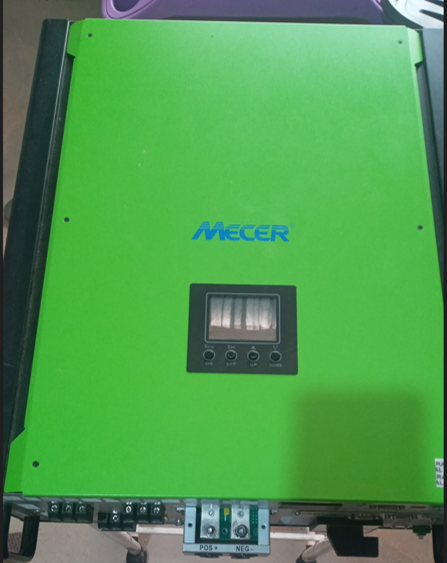
Item: Mecer branded infinisolar Hybrid single phase 48v Inverter with Total 10000W dual MPPTs Age: Bought it second hand in September 2022 and used it for for 3 months as a backup system Price: R11 000 or Nearest Offer or Swap for a 48v lithium battery. Payment Method Accepted: Cash or EFT Warranty: No Warrant - Will connect unit to demonstrate Packaging: No Condition: Good Used condition Location: Lenasia South (Johannesburg-Gauteng) Reason: got another Infinisolar super 4kw Shipping: Yes at buyer's cost (note Unit weight at 29kg) Collection: Yes Link:


-
Greetings All, This is my second post to the forum after joining 2 days back. I'm currently running a small off-grid DIY Solar System using an Infinisolar super 4 and I'm perplex on the safety and compliance of the system. I have drawn a schematic (see attached picture for illustration AND take note on the Question marks) on the following: 1. (?) - Is this how I must do my Neutral-Earth bonding - tap it on the input N of the Earth leakage? 2.(??) - is is the right way to Earth my PV array - tap it off from the SPD the run it to my PE on DB? 3. (???) - Is the inverter Chasses also connected to the same (PE in the DB) so effectively this means the PV array frame, inverter chassis, Output Neutral and Output earth are interconnected ALL go to the earth spike? advise before I procced further with the connections.please please note that I have omitted some components to simplify the drawing. Please advise before I procced further with the connections. Regards

-
Greetings, I've just moved to a township that doesn't have electricity, and this has prompted me to start my journey into solar system ("Off-grid). Current Setup is as follows: 1. 8x275 JA Solar panels (all connected in series) 2. 4kw infinisolar super inverter single MPPT (have a second spare 5kw dual MPPT Hybrid mecer infinisolar, might sell it to finance lithium batteries or hook it up if the need be) 3. 4x110ah lead acid batteries (will change to lithium later this year) 4. 5.5kw Gennie (for dark days - so far never needed it - even today with the wet weather I'm still able to keep my normal operation) Operation I'm currently running my fridge-freezer , lights- all LEDs, TV and 2 laptops now and then and cellphones and router. yes my batteries are not enough, so I simulate my own load shedding, I set the inverter to cut-off at 48v, which happens around 00:00 midnight every day, the next day freezer contents are still hard, sun shines and I'm running on solar, batteries full by 10:00 with loads of about 200w (except laundry days). I monitor my system with SMH (solar management Hub) through a raspberry pi which is so fascinating and impressive to say. now i need help with the following: having my small battery bank full by 10:00 and running loads of less than 200w all day with a PV Array of 2.2kw (theoretical) I want to divert this excess solar power to heating up water using a 1-2kw element. I have read about Diversion load controllers, but they seem to be outside south Africa (might be costly to import) and are most designed for on-Grid setup. Has anyone managed to find a reasonable priced solution locally OR DIY that can divert excess power when batteries are full for off-grid setup? TIA.


