


Korn
Members
-
Joined
-
Last visited
-
-
-
-
-
Renesola is a Tier 1 manufacturer just like JA Solar, Trina, Canadian, Jinko and a couple of others. Quality is of no concern as Renesola will never sell B-grade modules in the market, that will tarnish their reputation. Their solar modules have all the IEC certification just like any other manufacturer. They do sell other solar equipment that is rebranded in some instances, but their modules come out of their own factory. They produce 4MW of solar modules a day! Solaire use to make Renesola modules, but that agreement stopped a year ago, it is just to expensive to make modules locally.
-
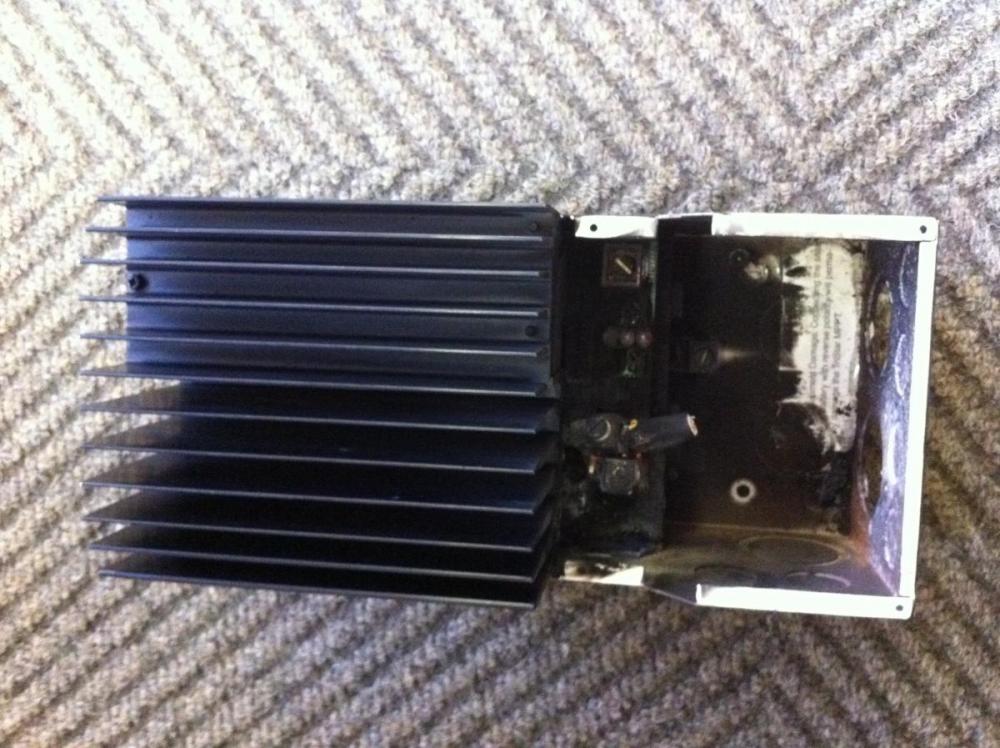
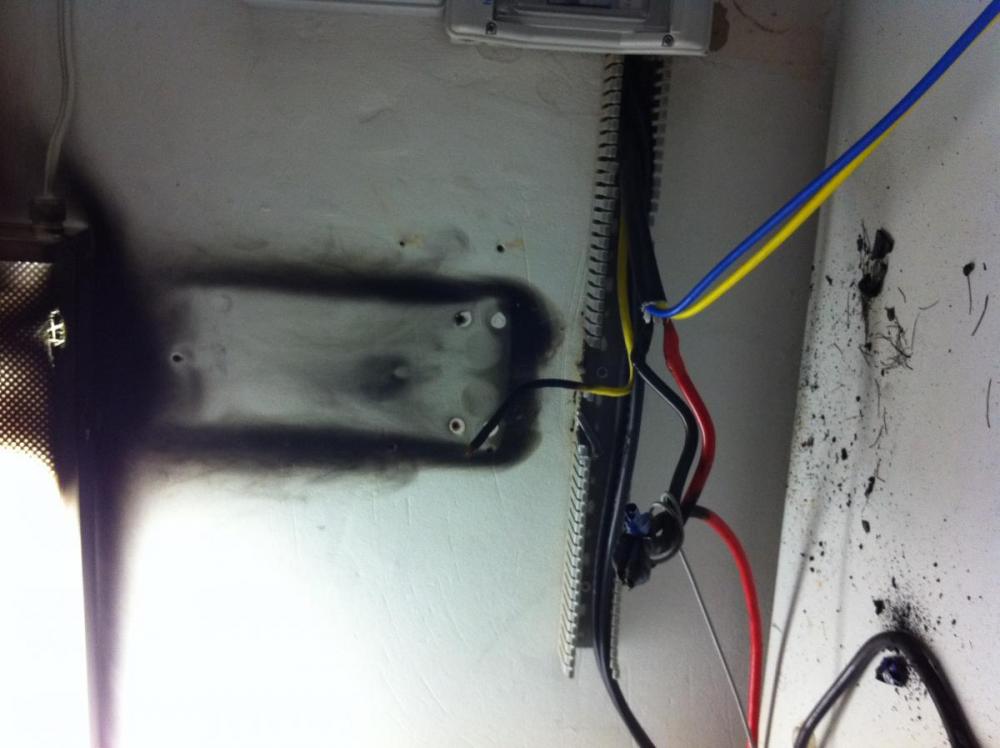
Just a word of warning, do not use a Victron Multiplus or Quattro with a Morningstar controller on the same system. It seems that the Victron pushes back current into the Morningstar controller at night when the Victron starts charging the batteries. Look at the attached pictures to see what happens when it does happen!!
-
Deep cycle batteries for big off grid PV systems: Maintenance batteries: OPzS - Tubular Flooded Maintenance free: OPzV - Tubular Gel Beware of the 12V 100Ah batteries, like the Delkor or Royal, these are good for small camping systems, but will only last for 2 to 3 years. Not good to run houses off!
-
High Cycle Typically a flat plate battery that needs to be used frequently but only a small amount of the capacity is removed from the battery but at high currents, ie. 5 to 15% capacity removed and replaced 10 to 20 times a day. Would typically be used in a hybrid vehicle where the motor starts stops frequently, or a hybrid application where you want your generator to run fewer hours in a day. Deep Cycle True deep cycle would be a tubular plate. This is a battery that gets discharged 60% to 80% over a period of a day or more. So it is a small amount of power that gets drawn out of a battery over a longer period of time.
-
-
-
This is something I find a lot of people get wring in the industry and thus their batteries don't last. The following needs to be know before starting to size: Voltage of the battery bank, 12, 24 or 48V are the common PV system voltages Autonomy on your battery bank (be it min, hours, days), taking into account the C rating you are working at, ie the number of hours Ah or Wh of your load If you have the Ah make sure it is with the correct voltage of your battery bank, if you have Wh divide it by your battery bank's voltage. Once you have worked out your Ah of your load, and the ampere hour is per day, multiply it by the days autonomy you want on your system. Now that you have that value, divide it by the % depth of discharge (%DOD) of the battery you want to use, remember the smaller the %DOD, the more number of cycles you will get out of your battery, the longer your battery life. Also take into account that if you sized for say 3 days autonomy your battery will only get to the %DOD after three days. Now go look on the battery datasheet for a battery that will give you the recommended Ah at the C rating that you selected above. Lets do a example: My system voltage is 12V My system consumes: 15000Wh per day I want 4 days autonomy (C96) I will use the Willard RT range of batteries, see attached brochure Thus my load is 15000Wh/12V = 1250Ah The batteries can take 80% DOD, thus 1250Ah/0.8= 1562.50Ah So I need 1562.50Ah battery bank at C96, 12V system voltage On the datasheet C100 is the closest range. There is no battery that can supply the Ah needed all at once, thus divide the Ah by 2, 1562.50Ah/2 = 781.25Ah. The RT 21 has 730Ah at C100 so that is to small The RT23 has 803Ah at C100 so that is to big and will cover the need of 781.25Ah Thus you have 2 banks of 12V in parallel on the system, giving a combined 1606Ah which will cover your need. And remember these are two volt cells, so you need six of them in series per bank. Thus 12 batteries in total. MT_and_RT.pdf
-
Battery Classification: SLI Batteries (Automotive Batteries) Starting, lighting and ignition (SLI) batteries are types of lead-acid batteries designed primarily for shallow cycle service, most often used to power automobile starters. These batteries have a number of thin positive and negative plates per cell designed to increase the total plate active surface area. The large number of plates per cell allows the battery to deliver high discharge currents for short periods. While they are not designed for long life under deep cycle service, SLI batteries are sometimes used for PV systems in developing countries where they are the only types of battery locally manufactured. Although not recommended for most PV applications, SLI batteries may provide up to two years of useful service in small stand-alone PV systems where the average daily depth of discharge is limited to 10-20%, and the maximum allowable depth of discharge is limited to 40-60%. Motive Power or Traction Batteries Motive power or traction batteries are a type of lead acid battery designed for deep discharge cycle service, typically used in electrically operated vehicles and equipment such as golf carts, fork lifts and floor sweepers. These batteries have a fewer number of plates per cell than SLI batteries, however the plates are much thicker and constructed more durably. High content lead-antimony grids are primarily used in motive power batteries to enhance deep cycle performance. Traction or motive power batteries are very popular for use in PV systems due to their deep cycle capability, long life and durability of design. Stationary Batteries Stationary batteries are commonly used in non-interruptible power supplies (UPS) to provide backup power to computers, telephone equipment and other critical loads or devices. Stationary batteries may have characteristics similar to both SLI and motive power batteries, but are generally designed for occasional deep discharge, limited cycle service. Low water loss lead-calcium battery designs are used for most stationary battery applications, as they are commonly float-charged continuously.
-
Thought I would start off with a bit of information on types of lead acid batteries, reason for lead acid batteries is because they are still the cheapest technology on the market that is reliable and available Lets first understand the different parts of a battery: Cell The cell is the basic electrochemical unit in a battery consisting of a set of positive and negative plates divided by separators, immersed in an electrolyte solution and enclosed in a case. In a typical lead-acid battery, each cell has a nominal voltage of about 2.1 volts, so there are 6 series cells in a nominal 12-volt battery. Active Material The active materials in a battery are the raw composition materials that form the positive and negative plates, and are reactants in the electrochemical cell. The amount of active material in a battery is proportional to the capacity a battery can deliver. In lead-acid batteries, the active materials are lead dioxide (PbO2) in the positive plates and metallic sponge lead (Pb) in the negative plates, which react with a sulfuric acid (H2SO4) solution during battery operation. Electrolyte The electrolyte is a conducting medium that allows the flow of current through ionic transfer or the transfer of electrons between the plates in a battery. In a lead-acid battery the electrolyte is a diluted sulfuric acid solution, either in liquid (flooded) form, gelled or absorbed in glass mats. In flooded nickel-cadmium cells, the electrolyte is an alkaline solution of potassium hydroxide and water. In most flooded battery types, periodic water additions are required to replenish the electrolyte lost through gassing. When adding water to batteries it is very important to use deionised water, as even the impurities in normal tap water can poison the battery and result in premature failure. Grid In a lead-acid battery the grid is typically a lead alloy framework that supports the active material on a battery plate, and which also conducts current. Alloying elements such as antimony and calcium are often used to strengthen the lead grids, and have characteristic effects on battery performance such as cycle performance and gassing. Some grids are made by expanding a thin lead alloy sheet into a flat plate web. Others are made of long spines of lead with the active material plated around them forming tubes, or what are referred to as tubular plates. Plate A plate is a basic battery component, consisting of a grid and active material, sometimes called an electrode. There are generally a number of positive and negative plates in each battery cell, typically connected in parallel at a bus bar or inter-cell connector at the top of the plates. A pasted plate is manufactured by applying a mixture of lead oxide, sulfuric acid, fibers and water on to the grid. The thickness of the grid and plate affect the deep cycle performance of a battery. In automotive starting or SLI type batteries many thin plates are used per cell. This results in maximum surface area for delivering high currents, but not much thickness and mechanical durability for deep and prolonged discharges. Thick plates are used for deep cycling applications such as for forklifts, golf carts and other electric vehicles. The thick plates permit deep discharges over long periods, while maintaining good adhesion of the active material to the grid, resulting in longer life. Separator A separator is a porous, insulating divider between the positive and negative plates in a battery, used to keep the plates from coming into electrical contact and shortcircuiting, and which also allows the flow of electrolyte and ions between the positive and negative plates. Separators are made from microporous rubber, plastic or glass-wool mats. In some cases, the separators may be like an envelope, enclosing the entire plate and preventing shed materials from creating short circuits at the bottom of the plates. Element An element is defined as a stack of positive and negative plate groups and separators, assembled together with plate straps interconnecting the positive and negative plates. Terminal Posts Terminal posts are the external positive and negative electrical connections to a battery. A battery is connected in a PV system and to electrical loads at the terminal posts. In a lead-acid battery the posts are generally lead or a lead alloy, or possibly stainless steel or copper-plated steel for greater corrosion resistance. Battery terminals may require periodic cleaning, particularly for flooded designs. It is also recommended that the clamps or connections to battery terminals be secured occasionally as they may loosen over time. Cell Vents During battery charging, gasses are produced within a battery that may be vented to the atmosphere. In flooded designs the loss of electrolyte through gas escape from the cell vents it a normal occurrence, and requires the periodic addition of water to maintain proper electrolyte levels. In sealed or valve-regulated batteries the vents are designed with a pressure relief mechanism, remaining closed under normal conditions, but opening during higher than normal battery pressures, often the result of overcharging or high temperature operation. Each cell of a complete battery unit has some type of cell vent. Flame arrestor vent caps are commonly supplied component on larger, industrial battery systems. The venting occurs through a charcoal filter, designed to contain a cell explosion to one cell, minimizing the potential for a catastrophic explosion of the entire battery bank. Case Commonly made from a hard rubber or plastic, the case contains the plates, separators and electrolyte in a battery. The case is typically enclosed, with the exception of inter-cell connectors which attach the plate assembly from one cell to the next, terminal posts, and vents or caps which allow gassing products to escape and to permit water additions if required. Clear battery cases or containers allow for easy monitoring of electrolyte levels and battery plate condition. For very large or tall batteries, plastic cases are often supported with an external metal or rigid plastic casing.
-
Hi Wetkit, Flooded or semi sealed batteries have to be orientated upright, otherwise the acid will run out. Gel and AGM batteries are not needed to stand upright as the acid is in a different form and will thus not run out. The batteries in all those pictures are OPzV batteries (gel). AGM and Gel should theoretically never vent gas but does have a pressure release valve should gas build up. Remember that if a gel battery gasses you can cheers to it, you can never recover the battery as that gas bubble gets formed on the plate and stays there, so that part of the plate will then never be in contact with the gel again. That is why it is extremely important to have temperature compensation with your batteries, especially the more expensive type of ones.
-
Hi all, Here's a couple of projects we have done for clients as of late: University of the North West Running a hydrogen generator from solar. Vodacom Emfhilweni Powering the school and the local Vodacom base station, with generator back-up Undisclosed Everything had to be flown up by helicopter Solar telecom sites - North Moz


-
-
-
Willard RT range is the FNB competitor for solar batteries, very nice vented tubular battery. Its a vented battery, so maintenance is required. Does about 1500 cycles to 80% DOD, not bad! MT_and_RT.pdf
-
Energy IN = Energy OUT Energy (kWh) = P (W) x h (hrs)
-
Usually your maximum volt drop will limit the maximum current carrying capability of the wire, thus if you size by volt drop your cable should be able to handle the current that will run in it. You need to look at the current carrying capability of copper and from there work out the correct size: You will need: The maximum voltage drop you want to allow, The system voltage, Maximum current that will be carried by the cable, The length of the wire, Equation for volt drop is: Volt drop = (0.0164 x current(A) x 2 x distance (m))/(wire size(mm2)) Thus if you rearrange the equation you can get the wire size that is needed. The higher you can push your voltage the smaller your volt drop will be.
-
Have a look at: Outback Flexmax - 60A or 80A units, Still the best on the market in my opinion Victron - Giving Outback a go, 70A and a 12/24V 15A unit Phocos - Nice 12/24V unit, 30A Morningstar - TS45MPPT and TS60MPPT, good value for money, up there with Outback Midnite Solar, they have a higher than 150VDC input voltage Studer has brought out a new 80A controller, very nice with loadshed, just to damn expensive Steca has a couple And then you get a lot of chinese ones, but the ones I mentioned here is the top of the range products.


