BTTB
Members
-
Joined
-
Last visited
-
I suspect that some of your breakers in the DB box were prepopulated with 63A 3Ka breakers? TaliaB has the solution. I only learnt the difference a few months ago when my Inverter Load Breaker had failed for the second time and an electrician friend told me to buy at least a 6Ka breaker for my setup which is feeding a 11KW Axpert inverter. Now, whenever I need to replace a breaker at work or the holiday home I do so with at least a 4.5Ka or preferably 6Ka breakers. Your average sparky when asked to replace a failed breaker will buy the cheapest 63A 3Ka breaker, only to fail again later when as TaliaB mentions you need higher inrush tolerance for the inverter. Obviously 6Ka or as TaliaB has suggested a 10Ka breaker, will cost more than the usual 3Ka variety.
-
-
-
-
-
-
Agreed, within a couple of years there'll be newer better technology that supersedes Lithium Ion. There is also the COCT's requirement that for a Standby SSEG System where your maximum allowed charging rate is 25% of your "service connection circuit breaker". Somebody that wires DB Boards and knows more can possibly explain better. Standby and Off Grid installations.pdf
-
-
Sorry can't help, other than state that my Axpert Inverter is charging my 3 AM2 at 30 Amps, 10 Amps each basically. If you have 2 batteries in your case, each battery is charging at 20Amps when set at 40Amps, maybe drop it to 30Amps, thus 15 Amps each. I'm under the impression that the lower the charge rate, the longer the battery life? When my Inverter was first setup I only had 2 AM2 batteries and the Electrician set it at 30A, when I added the 3rd battery we left it at 30Amps. Takes longer to charge but hopefully battery life will be extended. I suppose it all depends on the Loadshedding Levels, if we have continuous 4-hourly periods under Stage 6 or above, then you'd have to push it. What is the Max Amp Charge rate for the AM2?
-
-
BTTB changed their profile photo
-
Sorry, just spotted that you have the new battery set as Master. I think the BMS overrides all.
-
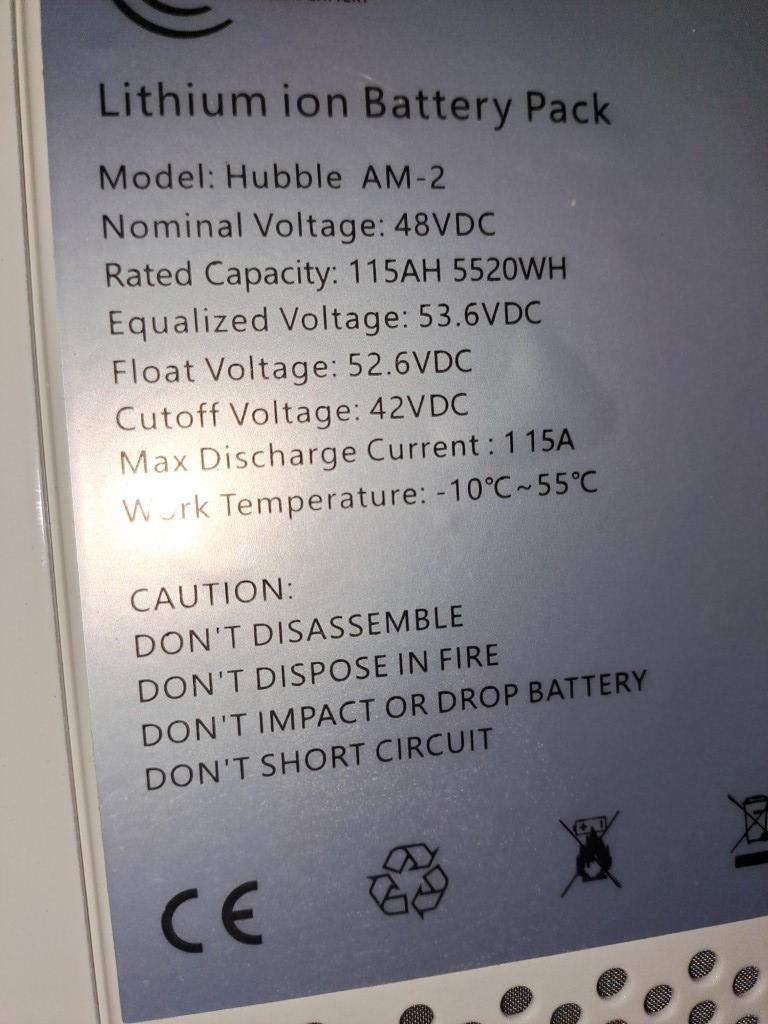
I have 3 x AM2s that I bought in February, rated capacity 115Ah. One of the online suppliers told me that while all these models are compatible, you should however make the newer model (Rev2) the Master battery in your setup.

-
-
On my 11KW Inverter with 3 x 5.5 AM2 which is slightly bigger than your system I can run 2 well point pumps at around 0.8KW each and one Booster Pump @ 1.5KW and everything else in the house. Bascially, all excluding the Geyser, Stove, Tumble Dryer and Jacuzzi., Pumps are for the extended garden. No solar as yet. This arrangement can run for 2 hours easily, if it's a 4-hour load shed, then I try not to use any of the pumps, just the house, plugs, kettle, washing machine and lights etc, otherwise it flattens the batteries to 20% and below.
-
-
-
I've also got an Axpert Inverter, living in CT, wanting to add some solar panels. COCT sent me 2 documents, the one Dieter linked to and the document attached here. They added this comment, "For a standby system the installation can be signed off by a qualified electrician and the installation must conform to SANS(specific to the application)" There was so much confusion around all these "off grid" inverters, which is nothing more than a glorified UPS. Check the diagram and note where it says the inverters don't have to be on the approved list. Standby and Off Grid installations.pdf
-
-
-
-
-
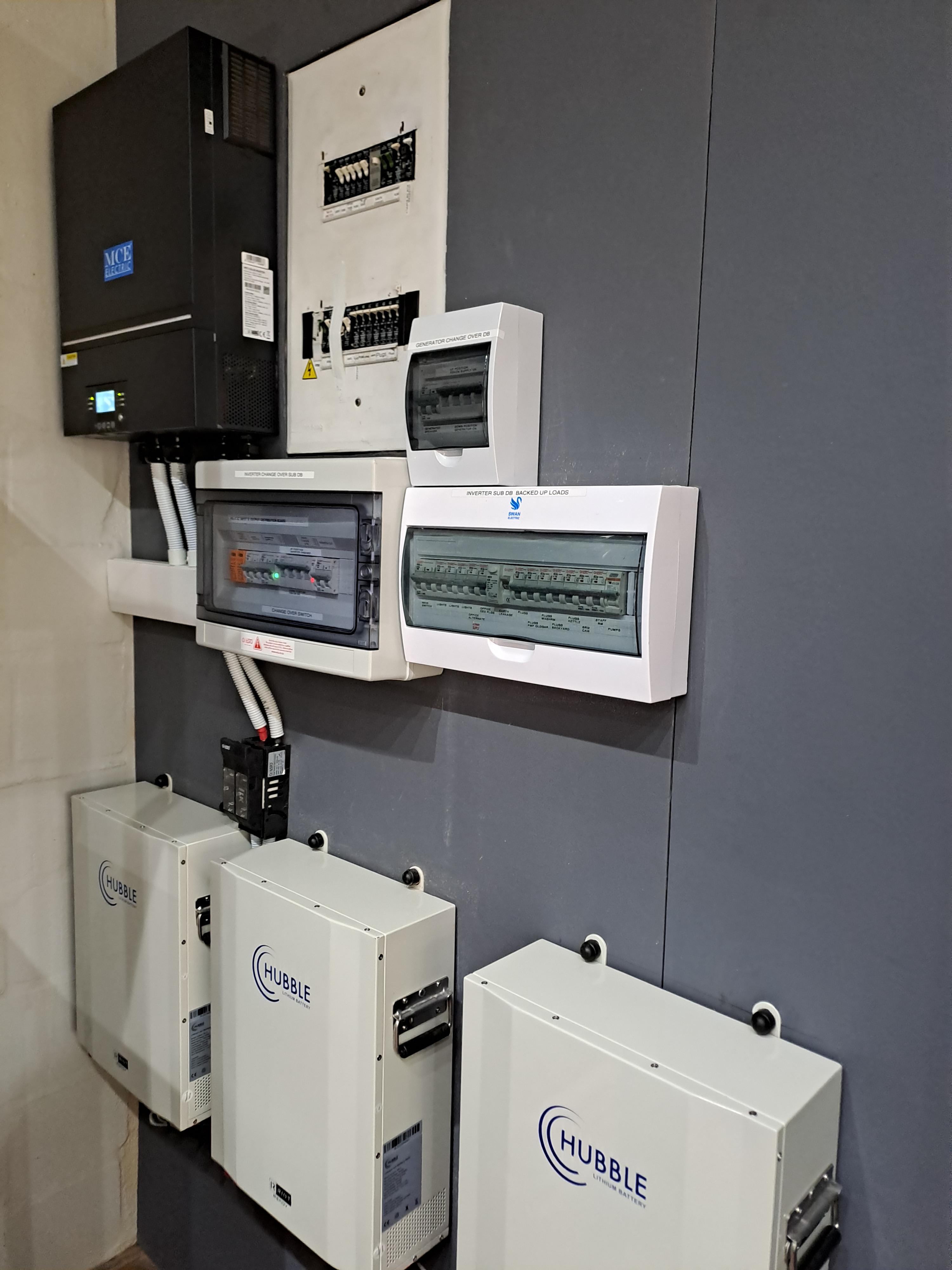
Some assistance please. So, my system is an Axpert Inverter with Batteries, a glorified UPS as you describe, see pics above. A chap from the COCT contacted me 2 weeks ago and said he'd send me some "line drawings". After another phone call and email I was emailed a link to a FAQ Brochure of irrelevant information, not helpful and he still didn't send the Line Drawings. Can you help, post a link, image or attachemnt, or describe what this "line drawing" should look like so I can give it to the electrician who would also be doing the COC. Got the quote for the panels and will hope to proceed once I have the approval.
-
I think you're right. Also, watchpower sits at 95% for a while and then jumps to 100% with the higher voltage, then the voltages drop to 53.5V or 53.6V as you describe and stays there. Every now and then watchpower says the battery is charging at 1% thereafter, otherwise 0% mostly. Looking at the lights of the AM2, all 6 are solid and not flashing when this happens, so they aren't taking in any amperage I'd assume, the BMS would ensure this. I edited my original post; the voltage settles at 53.5 or 53.6 (not 54.6). I'd have to check with the Electrician to answer you properly. Thanks for your input, much appreciated.
-
From my understanding Axpert/Voltronic Inverters can't communicate directly with Hubble Batteries without the use of the Hubble Cloudlink box and then it's the cloudlink information that you are looking at, not the inverter. Set the battery option to USE (User) on the inverter and apply the voltages recommended by Hubble here for your AM2. I have the Axpert 11KW Inverter, the electrician setup the voltages on the inverter by checking the label on the side of the battery. Ask your electrician for help. Stuffing up the inverter or batteries with incorrect voltages might be a costly exercise. The AM2 batteries have a built in BMS which protects the batteries from overvoltage, just be careful anyway. At first when I had my Axpert installed I was miffed about not being able to use the CAN port to communicate with my AM2 batteries. But a month later it doesn't bother me anymore. Every now and then I'll check the lights on the batteries and at what voltage they are charging on the inverter, after loadshedding. In my case the AM2 battery lights flash until the Inverter says 54.1V, then they are full and the last green light goes solid, at which point the inverter fan also stops and then voltages on the inverter fluctuate up to 56V or thereabouts for about 10 minutes and then it drops to 53.5 or 53.6 and sits there until the next loadshedding.
-
-
Thank you. 🙂 When the Solar is done, I'll get the COC from him or if required beforehand, that too. Solar guy has quoted for COC and the COCT Reg. We spoke at length about it being a prerequisite for this install. I'm also paranoid about the panels been earthed at both the DB and separately into the ground. We had lightning here last year at the Telkom Tower next to our property, it tripped the board, a surge of electricity flowed down the Telkom lines and fried the ISDN Box, the PABX, two Monitors and even a CCTV Camera. It was a massive strike. A roof with panels would present a nice target for an electric storm, althought the Telkom Tower should theoretically get the brunt of such a strike. Yep, Cape Town, lighting strikes do happen. I watched the Electrician do the work; he doesn't touch anything that isn't right. Had to wait a week for a 60A Changeover as he refused to install a 40A Changeover for the Generator and those 60A Changeovers were in quite short supply about a month ago. I'm confident my electrician did his work properly. A chap called Morgan called me today from the COCT, sounded like a pretty reasonable chap after I explained to him what I had done, see pics above. Said he would send line drawings, basically they didn't close the door on me is what made me feel a whole lot better. After spending between about R135 and R150K you seriously don't want to fork out another 50 to 60K for a 12 or 14KW Sunsynk or Dye. Notwithstanding the cost of 20 x 540W Solar Panels, cabling, labour, COC etc.
-
-
Well, Snap, here I am typing about all this stuff and the COCT calls me. Explained to them the system, said they'll email me with line drawings etc. Seems the door is open.
-
-
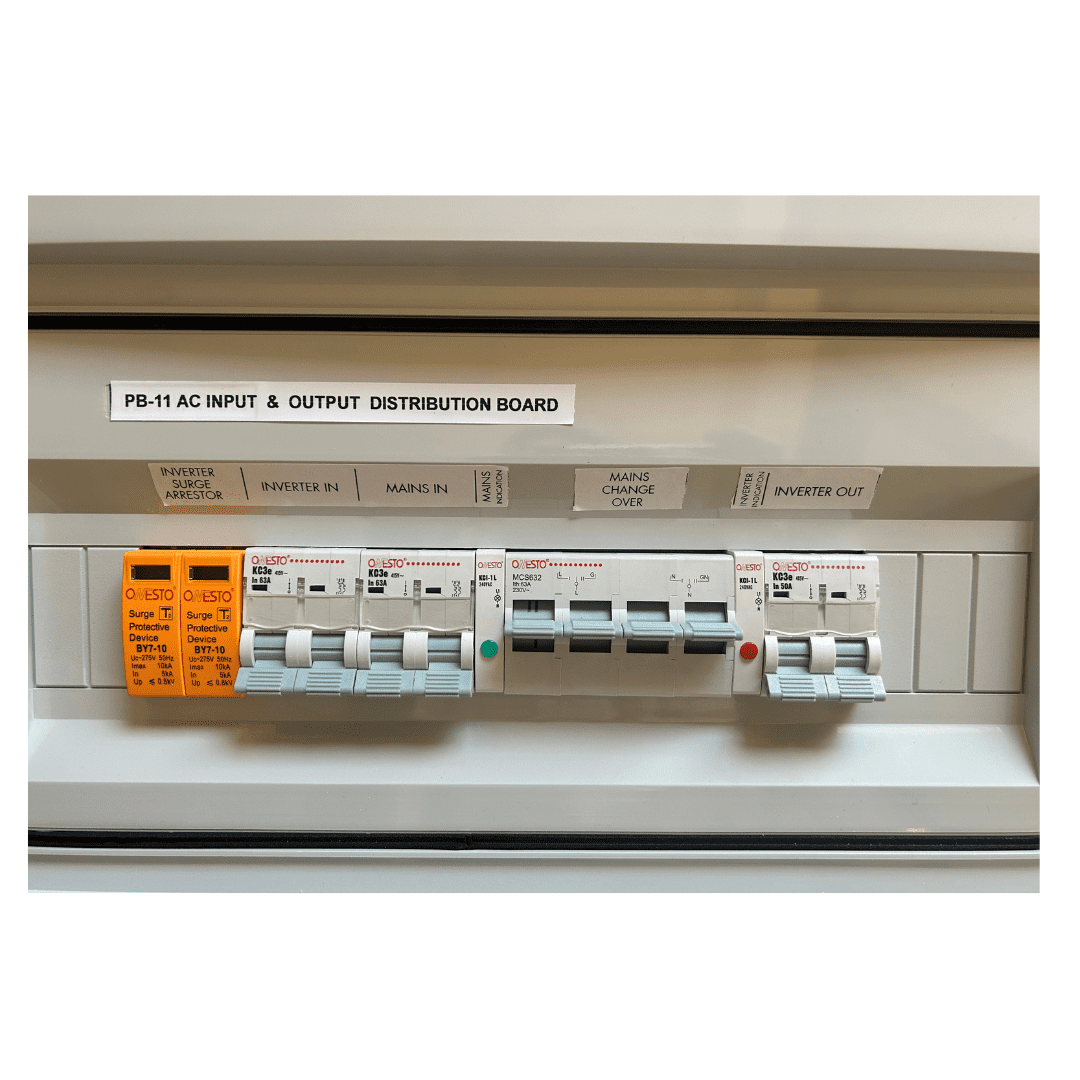
I'm so confused, plus the COCT don't answer phones or emails. I've attached a pic for easy reference. 11Kw Off-grid Axpert Inverter My original flush DB Board with non-critical loads (Stove, Geyser, Jacuzzi, Urn etc) Secondary DB Board with critical loads, Earth Leakage and Main Switch Small box is the Generator Input 32A with 60A Changeover. PB-11 AC Input and Output Distribution Board 3 x AM2 with 160A fuse All this installation needs is the PV input and its done. But I must chuck out a perfectly good inverter and buy something else, apparently?


-
Hi Steve Thanks for your input. I'm still a little confused here with COCT requirements. I understand that if your inverter is grid-tied you need to comply to certain codes and tests in order to be sure that the inverter knows when to stop grid interaction. What I am reading, the COCT will not accept any off-grid or non-interactive inverters with a solar panel installation, is this correct. You can have an Off Grid Inverter supplying power to a battery and a separate DB with critical loads, but if want to add solar panels, you are not allowed, even if the installation was done according to the rules and regulations and has a COC.
-
I'm also confused with the COCT. Just got a message from the Solar Panel Installer that my Off Grid Inverter is not on the COCT approved list. When you check the COCT approved list of Inverters recently updated on the 22nd of February 2023, there isn't any Off Grid Inverters listed there. By Off Grid Inverter, I don't mean Off the Grid. I mean an inverter that is not grid tied but requires either line, battery, solar or a combination to be able to work. The Inverter itself is unable to feed back into the grid. So, correct me, do I need to buy a grid-tied inverter to be able to install solar panels and that no off-grid inverters are allowed with a solar installation. This would entail me having to buy another inverter, when I already have a perfectly good working one, just be satisfy some weird requirement. I'm not interested in feeding power back into the grid, besides electricity can only flow one way and with an off-grid inverter even more so. Unless everyone is reading the whole thing wrong. I've phoned the COCT number and left a message on their number, nobody answers either.