


Elbow
Members
-
Joined
-
Last visited
Everything posted by Elbow
-
So I decided to try to do a proper job with an eye to the future. Left to right on the board: double pole isolator for the incoming mains power 32A circuit breaker for the mains power going to the inverter (install document says 30A; but in any event the dedicated cct into which I will plug it has a 20A breaker). I used the 32A because I will get the electrician to pull a suitable supply over from the main board and connect it up properly. 20A circuit breaker for the power coming out of the inverter Hager break before make changeover switch - up connects the output side to inverter out; down connects to input mains RCD for the power coming out of the changeover switch 1 x 20A and 2 x 10A for output from the inverter. For now I'm just going to put a dedicated power socket alongside and connect it to one of the 10A breakers. Much more than I need and well within the capacity of the inverter. Elbow

-
No, certainly not. I’m not feeding anything back to the board. I’m effectively making an ordinary plug in UPS setup with the output to a socket into which I will plug my switch, router, server.
-
Hi everyone, I have a Replus SineOn IH3KW-48-V inverter that I bought last year when Bonanza was clearing them. Its still unused. I also have two Pylontech US2000B batteries on the way. Eventually I'll put up panels, but in the meantime I'd like to install them temporarily (but safely) to provide an anti-load-shedding UPS for my computers and maybe to feed some lights depending on how long shedding goes on for. The load on the inverter will be well under 1kW - probably under 500W judging by data from my Openenergymonitor setup. So I'm looking for some advice. I have an existing dedicated power circuit running to my study, protected by a 20A C3 curve breaker on the board. This feeds two red plugs in my study where my gear is connected. 1) Would it be safe to:feed AC input into my inverter from that plug using suitable heavy cable with a red plug on the end? The inverter user manual says the inverter can draw 17A, the data plate calls for 20A, and the user manual says to protect with a 30A breaker. SA socket/plugs are officially rated 15A of course. But even when charging batteries (25A*53V=1325W) + feeding the load (500W), less some inefficiencies I don't see the load actually exceeding 10A - 2300W at mains voltage. At 15A I should be able to charge and also supply about 1500W which is far more than I require. There is a AC filter supplied with the inverter and the docs specifically says it is to dampen surge current. The main house DB is just a few steps away in the kitchen where there is a breaker to disconnect the supply in case of issues. Plus, or course, a switch on the socket into which the inverter input is plugged. I would set the inverter not to feed power back. 2) Can I connect the US2000Bs directly to the inverter? I ordered the cables. Do the batteries have adequate protection built in? Or are external fuses and/or breakers essential? 3) Lastly, can I take the AC output to my computers directly, or is a breaker essential? This is the area where I feel a bit uncomfortable to not have one since it is possible to have a fault on the supplied gear. So what advice? Thanks, Steve
-
Thanks to you both. I suppose the followup question is: US2000B or US3000B. More W per R for the bigger unit, but both are expensive and my inverter max charge rate is 25A which is less that the recommended for the US3000B ? Thanks, Steve
-
Hi, im considering a US3000B. the spec says voltage between 44.5V and 53.5V, with a maximum DOD of 80% But a document on Infinisolar setup says lower voltage cutoff of 48V I’m not sure how many cells are in there, and where to find the discharge curve for the 3000B? Thanks, Steve
-
Hi all, i’m In Cape Town and facing the challenging 87l/day target. We are 3 at home. i was looking at my Openenergymonitor data and I see that there is a side-effect - my geyser is only using 2 to 4 KWh per day - average of 2.2. My total consumption is about 25 so 10% of my total. (if you remember I moved - my new house has aircon in lounge and bedroom - hard to resist using them but that is costing - average of 3.6kW/h day) So this really changes the cost benefit for solar water heating - my spend on water heating with grid electricity is only say R150 per month or so. Looking at it another way, generating 3kW/h from solar PV isn’t too hard a task - with a say 1kW element this could be done easily most days. My big users are now plugs - 9.3/day, and pool pump - 6.8/day My computers aren’t on my plugs - I have a separate red-plug circuit for that which is measured separately. Elbow
-
Yep, it’s a shame it goes that way, but it was practical since the incoming supply wires were too short to reach to the top left. The space next to the main switch is there for the feed to the coming inverter board.
-
So I redid the board - turned out that almost every power socket and several lights ran off one circuit. so now I have 5 plug circuits, air cons on their own breakers, and proper e/l on all the plugs. and the board is so much neater. And I have a CoC worth something! Elbow


-
Well, in related news. Here is the DB in my new place. The house was built in 1973 - clearly you can see the original board, and then some additions made later. To my suprise this apparently qualifies for a COC. Earth-leakage wasn’t required until 1974. Looking at the old part, at the left is a main switch (double pole) and then a separate 60A trip. Next comes a 45A trip for the stove, Note the use of 3-phase cable with two conductors in parallel to carry the current. Next comes a 30A “mix” circuit for plugs and lights. Next is a geyser circuit (30A) and then 3 10A light circuits., In the new part is a circuit going to the pool sub-DB and two plug circuits - the kitchen and some additional plugs elsewhere. So for me I don’t feel happy with the lack of earth-leakage for some of the plugs in the house, and the jumble of what is fed from where.I suspect that downstream its probably going to be “interesting” figuring out how the spurs route to plugs and lights. So I would like to pull most or all of the old breakers and switch in the 18mm versions as at the right - much more trips can be accomodated, I can feed all the plug circuits from the earth leakage, get rid of the “mix” circuit and use more sensible tripping amperages for the stove and geyser. Which will also make room for the circuit feeding a solar sub-board. I’d be interested in comments from y’all!? Thanks Elbow

-
Hi guys, Sale of my new place has gone through and I’m starting some initial tidying up. We are going to smooth over all the stipple plaster :-o - so before doing that it makes sense to install additional power sockets etc. While I’m at it I thought I’d fit the DB(s) ready for a PV install to come. I’m going to end up with some loads on the output of the inverter, some staying on the grid. Looking at the pics it seems like people add a separate DB. My existing board is in a kitchen cupboard with the prepaid meter next to it. The other side of the wall is in a passage. So what I thought to do is to mount two new DB boxes in the passage, with access between them and the existing board. One will be the new “fed by the inverter” board, the other can maybe replace or supplement the old board. in the grid board I will need a breaker to feed to the inverter mains input, and another to feed the “bypass” side of the changeover switch in the “fed by the inverter” board. Then in the inverter board I’m going to need said changeover switch, a breaker and/or earth leakage, and the breakers going to the loads. Does this seem reasonable? I also sometime want to fit some “home control” stuff - I have a esp8266 controlled relay board etc - what are the rules for such things? Can I fit inside the DB or do I need another box adjacent? Appreciate your advice! Elbow
-
So.... Turns out that whilst the house has an old credit meter, it was just left there and there is also a prepayment meter and so I do have to deal with all the hassles of the SSEG stuff. So wish me luck with all that... Elbow
-
Thanks! Ordered three boards. Can anyone suggest how to make/buy "open" switch panels that can integrate with mqtt? thanks, Elbow
-
Hi, I’m a Capetonian needing to measure water consumption. Has anyone on the forum got experience with affordable flow meters that I can fit in my incoming water main and from my wellpoint. I’d want to get pulses or similar that I can grab with a little Arduino or ESP8266 and feed into my EmonCMS system. I saw some online - on robotics.org.za but they look kinda cheap. My water main is only a 1/2 inch pipe. Thanks, Elbow
-
Hey! I used to have one of those - with a beautiful big monitor (by the standards of the time). I left it behind in the UK when I came home. A modern PI 3 running Raspian is probably faster but at the time I had it it felt like something special!
-
HI, Is the Powerforum shop operational? I'm looking for panels and would like to support the forum. But I see you can't checkout on the shop. Otherwise - can the regulars point me at some reputable places where I could order panels? I also need mounting hardware - the aluminium rails, clips and the rest. And DC isolators, breakers, change-over switches and the like... Thanks! Elbow
-
Hi @plonkster, Perhaps I'm unrealistic - but what I did is took my actual load as logged by EmonCMS - 10 minutes by 10 minutes. So that was my starting point. I then manually "moved" dishwasher load to the daytime, and then added the pool pump for a few hours and then the heatpump - in my spreadsheet I ran the one after the other. So I end up with quite high daytime usage specifically since the proposed heatpump runs in the day. The actual implementation idea is to watch available power from the PV, plus the water temperature and try to make a program that runs the heatpump at the best generation time but uses grid if I can't get the water hot by some deadline time. My Infini will "supplement" my PV from the grid so it doesn't have to be exact. I'd look for a consistent excess ( PV watts - load watts > 600 ? ) from the PV for some minutes before turning the heat pump on. If the heatpump is on then turn it off as soon as shortfall is too great - perhaps 1000W so that the algorithm has hysteresis. Or, turn off if total load goes over some threshold that would stretch my inverter. That should mean when the kettle is turned on the heatpump goes off. If the water isn't warm enough by some deadline time we just turn on the heatpump and it will draw from the grid. It seems like a heatpump heats water to 60 degrees by design, so I wondered about a further electric element in the storage tank and if I still have spare power just to continue to heat the water up as high as 90 degrees. Its like a water battery except you can only draw out again in hot water. I'd of course need a tempering valve to keep delivered water at a safe temperature and the plumbers may tell me why the idea is nuts? Without the heatpump I guess the excess generation goes immediately to a traditional element in the geyser - I see that's been discussed (but that will use the power much less efficiently), or back to the grid on the SSEG tariff, or into batteries. SSEG tariff isn't that attractive. Batteries are expensive and a lot of work, especially for a lot of capacity. So this is the way my mind has been going. Regards, Elbow
-
Oops sorry - premature postage...
-
I wonder if this will be interesting to others. I installed an EmonCMS system with some current sensors to get a proper understanding of my load and here's what I found: We're three in the house with an ordinary 200L electric geyser. It's short showers since we are in Cape Town. I have an old Intel server system that draws 230W or so or 5.5 kWh per day. So that's pretty expensive to run. Total daily consumption averages 28.2 kWh/day, or about 850 kWh/month. The 250 that is at the high CTCC rate is obviously my first target. Daily usage: Existing geyser consumes an average of 10.5kWh per day - 320/month My NAS server consumes 5.5kWh per day - 167/month The main oven an average of 1.4 kWh/day, very variable of course. The balance of 10.8 kWh/day goes to our convection microwave (used a lot), kettle, dishwasher, washing machine, my son's gaming computer, TV, lights etc. Geyser takes 320 kWh/month - based on the proposed CTCC tariffs it costs me R753 / month. I modeled my usage with the replacement of my existing geyser with a heatpump, which would probably reduce usage from 320 to 106. Switching my NAS to a more efficient server could take that down to 70-ish. Those two changes would cut my CTCC bill like so: As-is cost based on new CTCC tariff Daily charge: 250.00 Consumption <=600: 600 907.20 Consumption >600 263 617.69 Total: 863 1,774.89 All consumption from the grid, after heatpump and other savings: Daily charge: 250.00 Consumption <=600: 600 907.20 Consumption >600 19 44.48 Saving: Total: 619 1,201.68 573.21 Saving from as-is 28% 32% So that's a substantial saving at a capital cost of say R25k for the heatpump and R10k spent on the NAS. Perhaps the same sort of benefit by using a Heatbox or similar at a lower cost than the heatpump. I then modelled the benefit of a 3kW PV system - with some effort to move demand to the daytime. I got generation predictions for a 3kW solar PV system here in Cape Town (stats from that US Department of Energy "pvwatts" site). On the demand side I took my detailed "instant" load figures for every 10 minute interval and figured out what shortfall would still have to be drawn from the grid. Here's how generation compares to load for the period 2017-08-17 to 2017-08-29, scaled up to a month. The consumption is after the efficiency changes described above. I also added pool pump running during the day: PV (kWh/month) Percentage PV kWh/day Consumption Percentage Usage kWh/day Excess/-Shortfall Breakfast 11 3.23% 0.36 41 6.56% 1.33 (30) Daytime 307 89.59% 10.07 318 51.45% 10.46 (12) Suppertime 25 7.18% 0.81 115 18.55% 3.77 (90) Evening 0 0.00% 0.00 67 10.84% 2.20 (67) Night 0 0.00% 0.00 78 12.61% 2.56 (78) 342 11.24 619 20.32 (276) "Breakfast" is 6am to 9am, "Suppertime" is 4pm-8pm, "Evening" is 8pm till 11pm. You can see the usual challenge of excess generation in the day even though the heatpump and pool pump do use some of it up. With all the shortfall bought from the grid it comes out like so: Add 3kWp PV, "gross" shortfall from grid: Daily charge: 250.00 Consumption: 346 522.66 Total: 346 772.66 Saving from as-is 60% 56% Further saving from adding PV: 44% 36% 429.02 So 619kWh drawn reduced to 346. This is for August. If you could grid-tie on this tariff then doing so would give this result: Feed excess generation back to grid, ie only buy nett requirement (not SSEG tariff): Daily charge: 250.00 Consumption: 277 418.56 Total: 277 668.56 Saving from as-is 68% 62% Further saving from back-feeding: 20% 13% 104.10 So that does make a further saving but not too much at this time of the year. Using the same load figures against predicted generation for January comes out like so: PV (kWh/month) Percentage PV kWh/day Consumption Percentage Usage kWh/day Excess/-Shortfall Breakfast 35 7.05% 1.14 41 6.56% 1.33 (6) Daytime 384 77.94% 12.62 318 51.45% 10.46 66 Suppertime 74 15.01% 2.43 115 18.55% 3.77 (41) Evening 0 0.00% 0.00 67 10.84% 2.20 (67) Night 0 0.00% 0.00 78 12.61% 2.56 (78) 493 16.19 619 20.32 (126) As-is cost based on new CTCC tariff Daily charge: 250.00 Consumption <=600: 600 907.20 Consumption >600 263 617.69 Total: 863 1,774.89 All consumption from the grid, after heatpump and other savings: Daily charge: 250.00 Consumption <=600: 600 907.20 Consumption >600 19 44.48 Saving: Total: 619 1,201.68 573.21 Saving from as-is 28% 32% Add 3kWp PV, "gross" shortfall from grid: Daily charge: 250.00 Consumption: 293 442.62 Total: 293 692.62 Saving from as-is 66% 61% Further saving from adding PV: 53% 42% 509.06 Feed excess generation back to grid, ie only buy nett requirement (not SSEG tariff): Daily charge: 250.00 Consumption: 126 190.95 Total: 126 440.95 Saving from as-is 85% 75% Further saving from back-feeding: 57% 36% 251.66 I also did some modelling of the benefit of a battery pack. I do see benefit but it doesn't seem like a good investment since it only helps to "move" daytime excess to evening. I know @plonkster says that often. Anyway - hope all that number crunching is interesting. My data, YMMV etc etc.
-
I wonder if this will be interesting to others. I installed an EmonCMS system with some current sensors to get a proper understanding of my load. I then compared it to generation predictions for a 3kW solar PV system here in Cape Town (stats from that US Department of Energy "pvwatts" site). We're three in the house with an ordinary 200L electric geyser. It's short showers since we in Cape Town. I have an old Intel server system that draws 230W or so or 5.5 kWh per day. So that's pretty expensive to run. My geyser consumes an average of 10.5kWh per day. My server consumes 5.5kWh per
-
Hi, For my new place I'm trying to decide how to do the hot water. Seems like I can do a traditional solar water panel - from which you can choose between various products (I'd be inclined to an EV tube panel; not sure about whether pumped or syphon). Or I can try to heat my hot water with "excess" power from my proposed PV system. Here's an article that claims its cheaper to do it with PV (though maybe this is a "temperate climate'" view?) http://www.greenbuildingadvisor.com/blogs/dept/musings/solar-thermal-really-really-dead The "winning formula" seems to be a nice efficient heat pump powered by power from the PV system. By the way - this article links to a nice site PVWatts which is a US Department of Energy predictor for generation. US developed but it works for us too. So - what say the gurus? Thanks, Elbow
-
Thanks for the hints. I'll measure the roof pitch properly when we move in and see what the actual angle is. Steve
-
Awesome - Thanks Plonkster for the data and the numbers.
-
Well, thanks! And score one post...
-
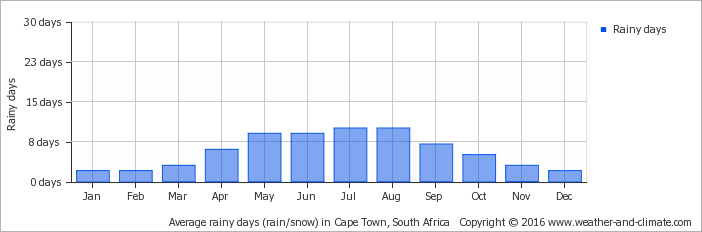
Hi - Hoping I can kick start my design and modelling with some real-life data from those who have systems up and running. (I have my consumption info from EmonCMS probes) I'm in Cape Town. I'm looking at a 12x300w-ish panels mounted facing north but a bit flatter than ideal (roof pitch around 20 degrees maybe) solarelectricityhandbook.com's insolation calculator has the following figures with panels at 71 degrees from the vertical (aka 19 degrees from the horizontal) Cape Town Average Solar Insolation figures Measured in kWh/m2/day onto a solar panel set at a 71° angle: (Optimal summer settings) Jan Feb Mar Apr May Jun 7.91 7.43 6.41 5.13 3.92 3.57 Jul Aug Sep Oct Nov Dec 3.75 4.36 5.49 6.62 7.53 7.83 My 12 panels are about 24m2 and 15% efficient so in "theory" in Jan 7.91x24x15% = 28kWh per day. July 13kWh. Now I'm sure that is just never going to happen. I'm not going to see the full efficiency of the panels, my inverter needs a minimum string voltage to work, and what have you. (I also looked at some local systems on pvoutput.org and I can see that the actual performance is lower) I found this chart of "rainy days" for Cape Town (be nice, Gautengers!) So from that I might guess that average generation might be about 1/2 the theoretical in the winter, and maybe 75% in the summer? Maybe someone has some figures I can work with? It would also be great to know "by the hour" figures for different months. I'm very happy to work from raw data. I've used some estimates and it's obvious that matching demand to available power is important and tricky. Thanks! Elbow
-
Hi, As a newbie here it seems weird that you must have 15 posts before you have access to the downloads. That seems like a great recipe to have people like me asking the same questions over and over when they are already answered in the available downloads...? Thanks!


