Peter Topp
Members
-
Joined
-
Last visited
Everything posted by Peter Topp
-
Hi I want add some more input to this topic. I recently found a question in my mailbox from a member with the same problem, and would like to sort it out. The generator link does not work when it is tied to the inverter. This was my reply. Hi xxxxxxx I see your problem. The biggest problem with a small generator is this. Firstly, the generator needs to be adjusted to just under 50Hz under load. The biggest problem is that when the load changes, the frequency also changes. This effect stops the generator connection and is not ideal. The problem is also that you will charge the batteries and run the house. My best suggestion is that you have a changeover switch that runs the house only from the generator and allows the batteries to charge for the PV panels at the same time. The way to stop the problem is to put the changeover switch in series with the output of inverter. Now you can switch the changeover to either run the house from the generator or inverter while still charging the batteries from the PV panels. This configuration does not have a frequency issue with the inverter. It is difficult if not impossible to set a small generator to have the correct frequency under different loads. I have both generator connections and only use the changeover that directly powers the house, as I suggested. I am most sure most installers do not understand this problem, or they would have tested the configuration or warned you. Lastly, any installer or electrician can do my suggested installation of the changeover switch. Just make sure the earth is connected correctly for the suggested configuration so that your earth leakage works. I hope this will help you overcome the problem. I did this modification for a family member with a small coffee shop with the same problem, and now they are happy. I am not an electrician or installer, just retired with 45 years of electronics, instrumentation experience.
-
Hi Oelof Going through this exercise myself, I agree with James 1 to wait before getting your water tested, and that you will need at least one big blue filter and other filters. I wasted a lot of filter material because my water ph had changed after some time. I would like to know what area you are from. I use mainly Clinobrite media, as it removes iron and other substances in a FRP vessel. It is better than sand or glass. You can read my posts and see what I have done to get acceptable drinking water under Sustainable Landscaping. It has been working well for about 8 years. The filtering depends on the test results showing the contaminants and the quantity of contamination. Replacing media in an FRP vessel is not as easy as it is heavy because it is filled with water and media, and the opening is small.
-
Hi Vish999 Is the bill only for electricity, or is it the whole bill? There is a way to check your electricity usage. You would need to install a CT (current transformer) on the live wire of the 60A isolation switch in your DB or a Meter fitted in your DB. Many devices come with a CT, and that can be connected to the web. With this, you can monitor your electricity usage. compared to your bill. Just remember, the bill might not cover the entire month from the 1st to the end. If you leave the element off for most of the day and at night, it can take up to 3 hours to heat a geyser in Winter to 65 degrees in the morning. The cost would be about 3KW X 3HR X 30 Days X R4/Unit = R1080.00 a month, including VAT, only for the geyser element if you only heat for 3 hours a day. It will cost you about R80.00 a month if you boil your kettle (5 minutes) 4 times a day. 0.083 X 4 X 30 X 2KW X R4/unit If you have an electric oven and use it, it will also contribute to the electricity usage. The 12VDC 60W solar pump. If on for 8 hours a day. 8 X .06Kw X 30 days X R4/unit=R57.60 a month.
-
Hi I had the same problems. The solution is in my post "Connecting a 5KW Generator to an 8KW Sunsynk inverter".
-
Hi Vish999 You asked if the solar pump could cause the high power usage. The 12VDC solar pump uses less than 100W of power, so it is not the culprit. I can tell you what the problem is with the high power usage. Three weeks ago, I had my 150L geyser with twenty brand-new retrofitted solar tubes replaced as my old geyser leaked, and some of my old tubes were cracked. I also replaced the 3KW element with a 2KW. I did this for four reasons. My house has a granny flat that also has a 150L geyser. With two geysers, the power usage at one time, with all the other appliances, can be a problem for me. I also have one geyser coupled to my inverter as my whole house (not the flat) is on the inverter. The Geyserwise controller uses a relay to switch the element on. Lower current will help the relay to last longer with constant switching. The most important reason is that I have the solar tubes. The 2KW element will take longer to heat the geyser, and it gives more time for the collector to heat up and to circulate the water when both the element and the solar pump are on. I always knew that my old solar tubes did not help at all in Winter. With your post, I had a closer look at my system efficiency. This is my conclusion. When I woke up this morning at 5:45 am, the geyser water was 50 degrees, and the collector was at 8 degrees, heated by the element. My wife had a long shower at 8:30 am. The readings before the shower were geyser 47 degrees and collector 9 degrees. After the shower, the geyser read 19 degrees, and the collector stayed at 9 degrees. I checked intermittently, and the solar pump never switched again the whole day as the delta was never above 7 degrees for the pump to switch on. The maximum the collector reached was 46 degrees, which is well below the set temperature of 50 degrees. If I had switched off my element, I would only have cool water at any time, never reaching the geyser's set point of 50 degrees. My conclusion is that in Winter, the solar tubes do not help much if you are using a fair amount of hot water during the day, as the element will always do most of the heating. I have seen the pump and collector keeping the geyser temperature at the set temperature, but not today. I know that in Summer the solar tubes work much better. I am sure this is the same problem I have. How the Solar geysers are advertised, and reality is quite different. Fortunately, I do have a gas geyser backup if all else fails. I also added an extra 4KW of solar panels so that I run my geyser on mains through the inverter. I hope this explanation gives you and others a better insight into why your power bill is high, even though you have a solar geyser.
-
Hi Vish999 The pump will start running if the collector falls below 5 degrees to stop the collector from freezing. It will run the hot water from the geyser to warm the collector. The heating of the geyser is done in small increments, as the collector is significantly smaller than the geyser. In winter, it also takes longer to heat the collector. If you are using the hot water all the time, the element will also switch on at the same time as the pump, which will heat the water faster, but at the same time also affect the collector's effectiveness. You could switch off the element, but it will take much longer to heat the water and not keep the set temperature if you are using a lot of hot water. I was looking at the same problem, and now I understand how it functions. I hope this will help.
-
Update to all faults on the 8 KW Sunsynk Inverter app. Sunsynk did contact me, and after a firmware update, all faults on the app were rectified. The Firmware update COMM:E440 - MCU:6027-0717
-
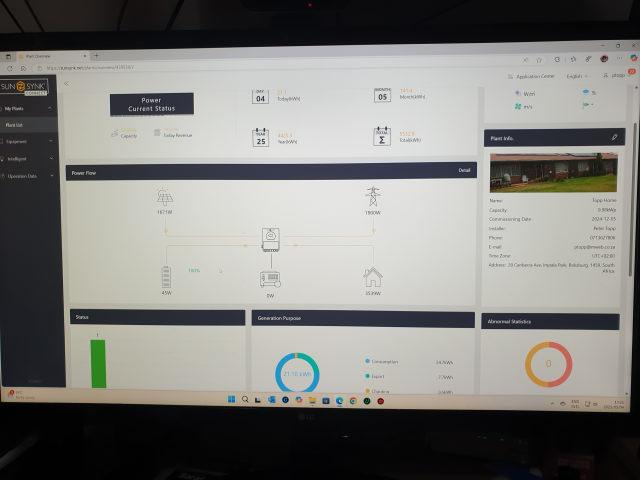
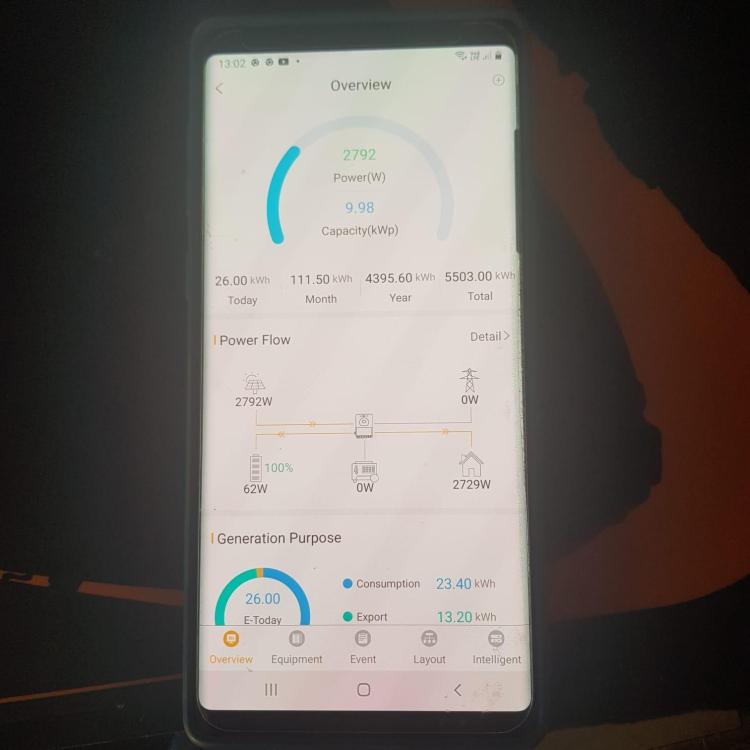
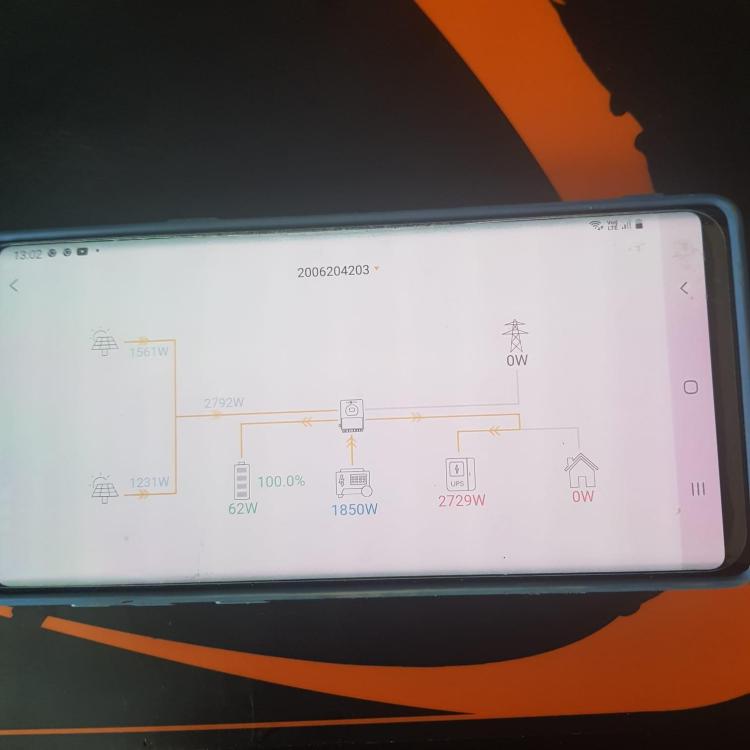
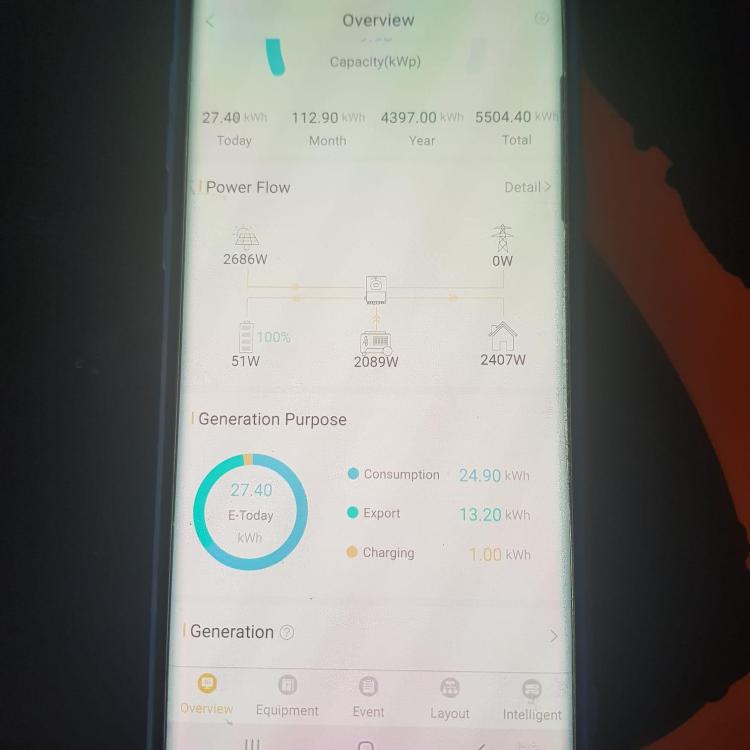
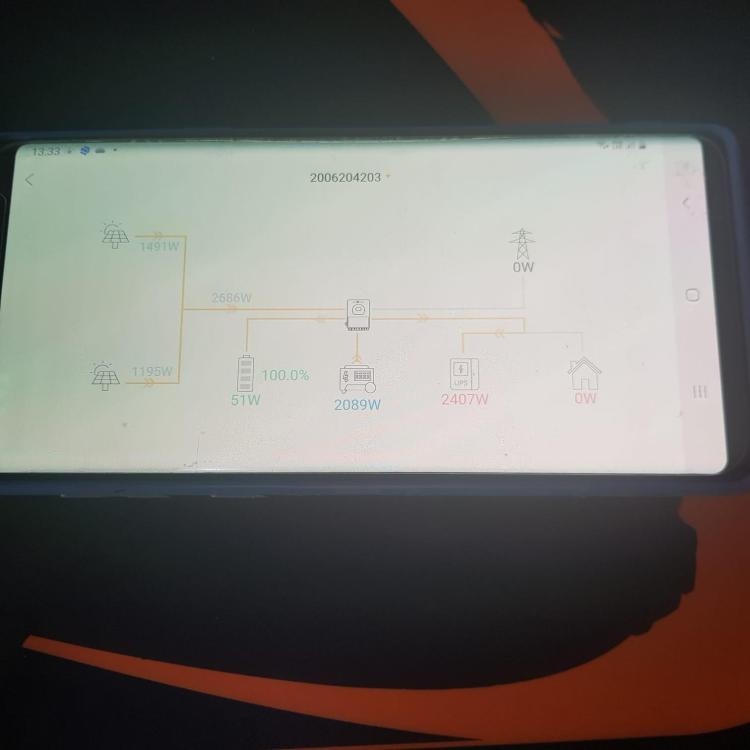
Update on faults on App when connecting a 5KW inverter to an 8KW Sunsynk inverter. Atter spending 3 weeks spelling out the faults and sending pictures of the errors on the Sunsynk app the only solution from Sunsynk was to update the firmware. Sunsynk has now stopped communicating with me without a solution to the app problem. I am disappointed in the way they have handled this error, as I have over 40 years of experience as an instrument technician and have expressed my disappointment to them. I will again show the faults, and if anyone has any suggestions on how to resolve the problems, it would be appreciated. The fault only lies in the app in the photos. The inverter works and is displayed correctly. "Hi After updating as suggested, the firmware was updated to COMM: E43D, but nothing has changed to resolve the problem. So, I will have to start from scratch again. When the generator is not used and the inverter is connected to the grid, PV, and batteries, the inverter works correctly and shows the correct readings on the inverter screen, as shown in photo A. When the generator is not used and the inverter is connected to the grid, PV, and batteries, the inverter works correctly, and the APP is in normal view; it shows correctly, as shown in photo B. When the generator is not used and the inverter is connected to the grid, PV, and batteries, the inverter works correctly. However, when the APP is in detail view, it shows incorrectly. It shows the generator producing 1850W of power when no power is generated by the generator, as shown in photo C. When the generator is used and connected to the AUX input, PV and batteries are used, and the inverter is not connected to the grid, the inverter works correctly and shows the correct readings on the inverter screen, as shown in photo D. When the generator is used and connected to the AUX input, PV and batteries are used, and the inverter is not connected to the grid, the inverter works correctly and shows the wrong readings on the APP in normal view. It shows 2019w generated from the generator when only about 200w is generated, and the totals do not match up, as shown in photo E. When the generator is used and connected to the AUX input, PV and batteries are used, and the inverter is not connected to the grid, the inverter works correctly and shows the wrong readings on the APP in detail. It shows 2019w generated from the generator when only about 200w is generated, and the totals do not match up, as shown in photo F. I hope you can see the problems now, as I have highlighted this all before. Please give me some meaningful feedback, as I am now frustrated at the way these problems have been handled. I am surprised at the response I was given previously, as it has achieved nothing fruitful. I am eagerly waiting for a meaningful response to the highlighted problems that persist. Regards Peter Topp" Photo B. Photo C. Photo E. Photo F. Photo D. Photo A.


-
Hi I see the pictures show only one with grid use at 5:21 in the afternoon, which I failed to see. I find it interesting about the lag of the MPPT response, which makes complete sense. The PV panel won't produce more than is needed. The excess power produced can't be stored anywhere other than the batteries, which show they are fully charged. The PV panels will give more power if fed back into the grid. There is most probably no problem at all, as KM has indicated. To get the most out of the PV panels installed (8880w) is to do all the heavy-duty work and use the power-hungry appliances (electric geyser, electric hotplates, electric kettle, iron, aircon, etc) during the day if you can't feed back to the grid. Be sure to switch a geyser and aircon off at night, as it will be expensive, or they will drain the battery quickly if not tied to the grid.
-
Hi Bachir To me, it looks like a PV panel problem, as you say, you do not produce enough PV power. According to the pictures shown for the time of day, except if it is overcast. I would check the setting that limits the PV power first, and then check the PV panels. How have you connected the 16 PV panels(serial, parallel), and are the panels facing South at about 35 degrees, as the pictures show in Lebanon? It could also be the MPPTs in the Dye.
-
Hi I suppose it depends how tall you are. I think eye level would be best with the specified clearances given in the manual.
-
Hi TaliaB I have checked all the settings and found one wrong setting. I had AC coupled on the load side in Aux, ticked. This correction fixed the current flow arrows on the unit to show correctly. The inverter readings and function all work correctly. The readings in the app are still all wrong. I first thought it was the CT, as when I test the generator, I switch off the mains power in the inverter DB, which isolates the CT. It was not the problem, as I changed this by switching off in the main Municipal DB box.
-
Hi, The arrows only point in the wrong direction only when the generator is on. The current flow arrows point correctly when there is no generator power, and the grid and solar are present. The arrows also show correctly when I export power to the grid. If the ct is wrong, the grid power would show in the wrong direction. The grid arrows show correctly, so I am relatively sure the ct is correct. The first picture shows generator power when there is none. If there is no ct, no current flow arrows are shown from the grid.


-
Hi I redid the tests and removed possible earth loops, but I got the same results. I have now put in a ticket with Sunsynk. I'm looking forward to their explanation.
-
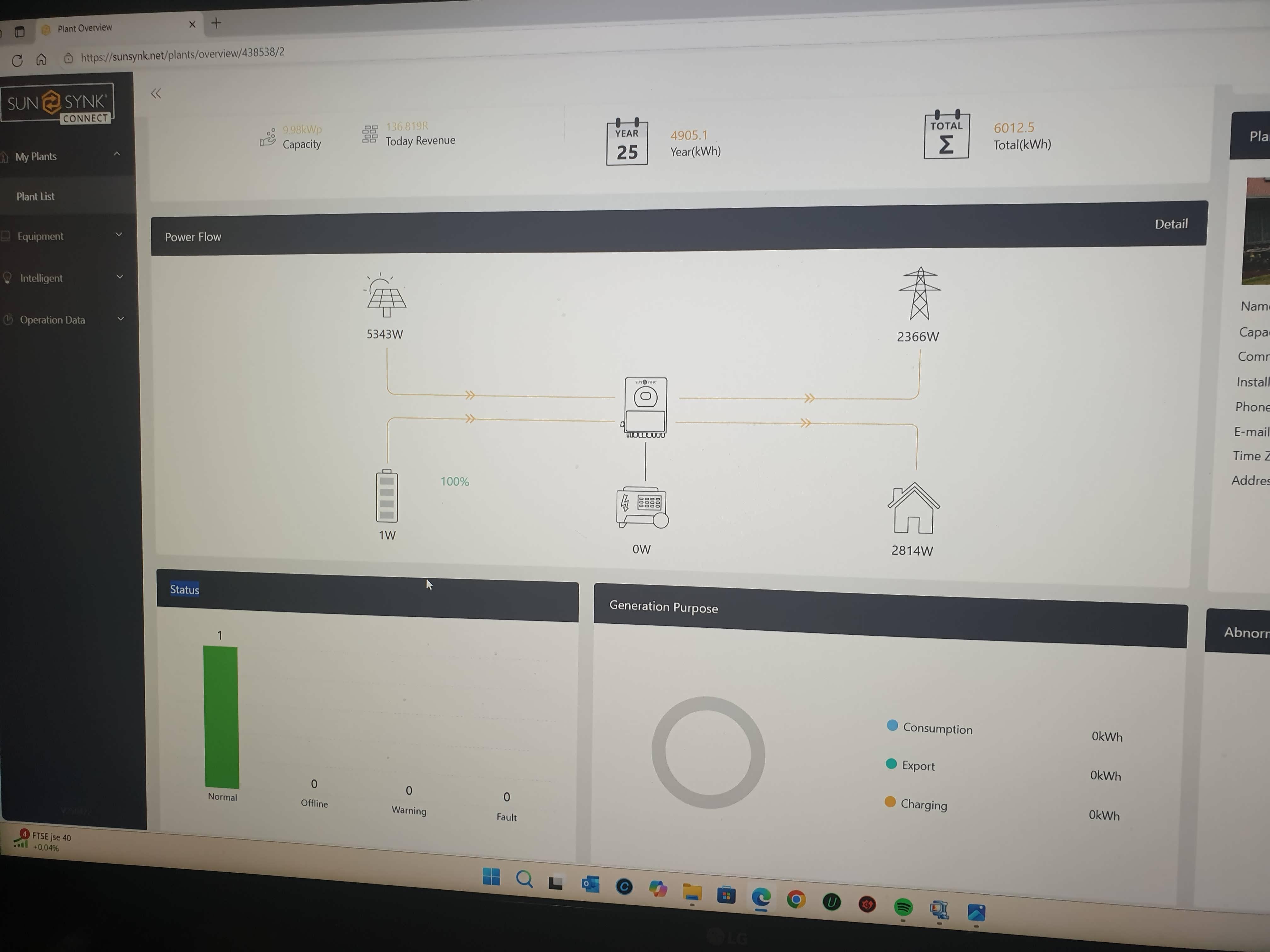
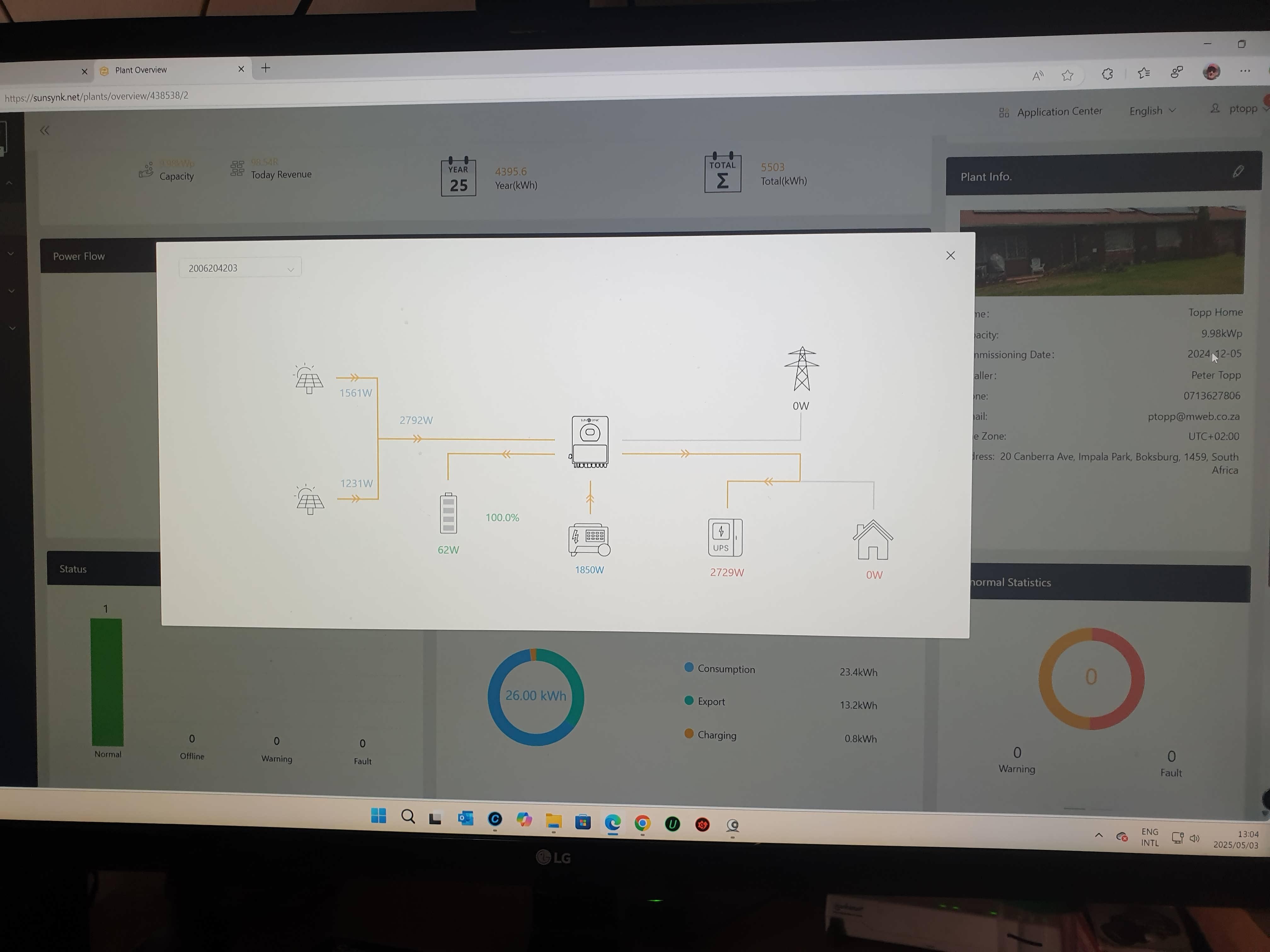
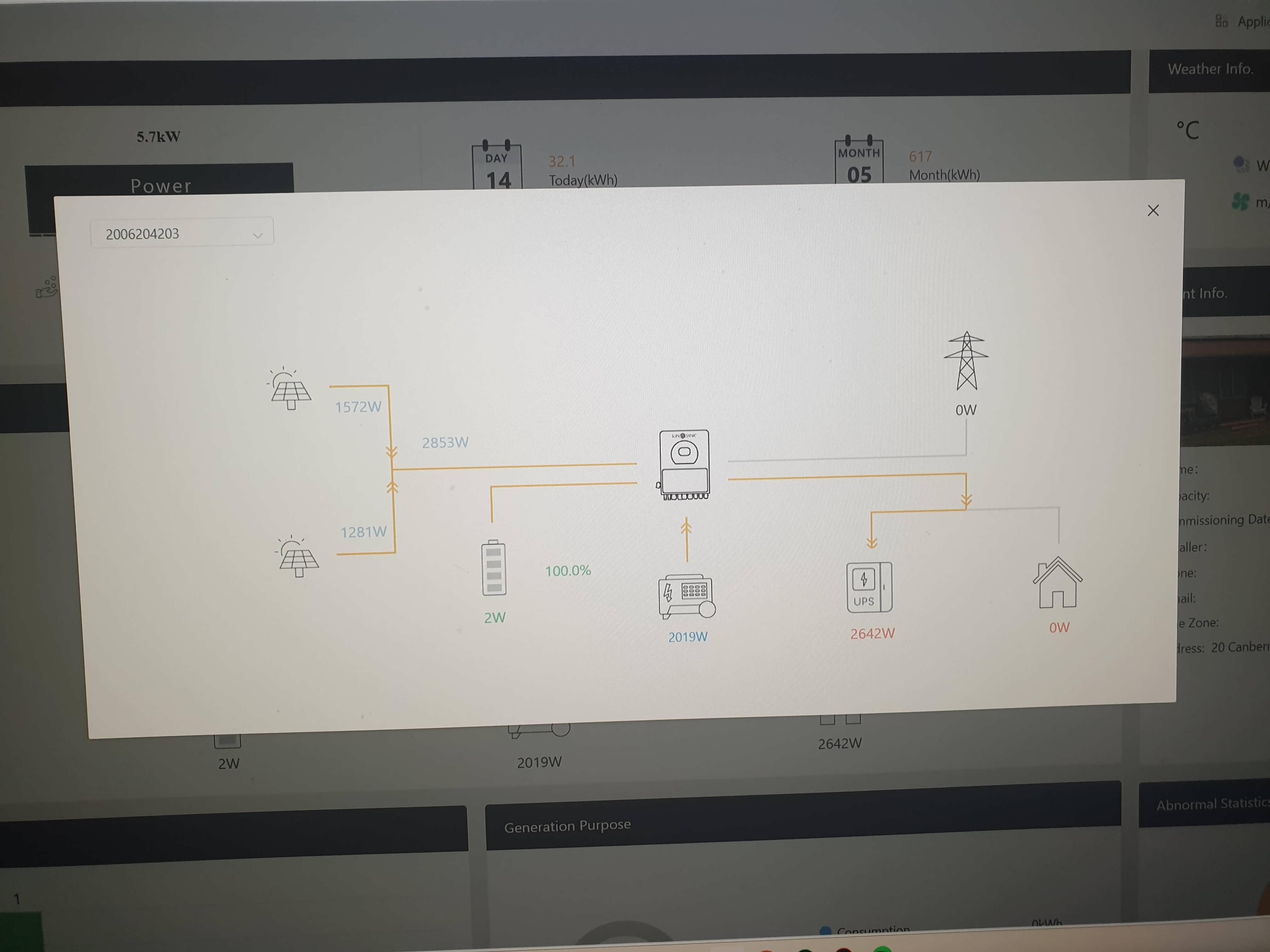
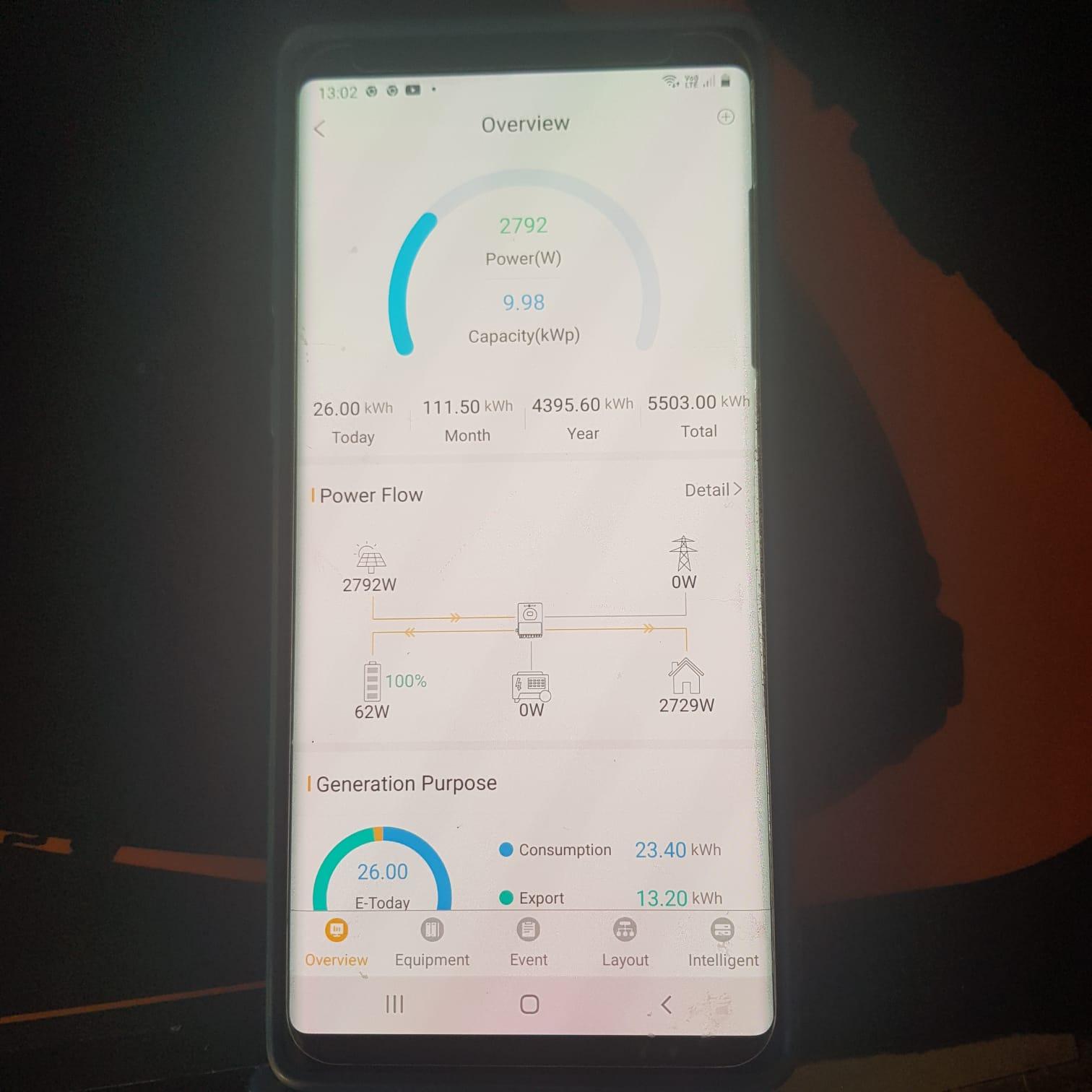
Hi After fixing my problems connecting a 5 KW generator to my 8 kW Sunsynk inverter, I was quite happy, it seemed to perform well. Today, I decided to do some load tests with the generator with solar. To my dismay, this is what I saw and experienced. The inverter and generator work well together, however, the readings are completely haywire. I have added the photos with an explanation. 1. 2. In pictures 1 & 2, the generator is off. The first photo shows power only from solar. The second photo from detail shows the solar and the generator, but as a total does not add up. When the grid is present and the generator is off, the same result. This is also the same on PC. 4. 5. Pictures 3,4 & 5 are with the generator running. The actual power from the generator is about 200W. The app and PC show the wrong generator power. This shows correctly on the unit only however, the UPS load shows it is exporting power. This is a puzzle to me. This is my unit update done on 14/11/2024. Model No: SUNSYNK-8K-SG01LP1 ID:2006204203F COMM:E439 - MCU:6026-0717 I do not know if it is a hardware or software fault. I would much appreciate some help to sort this out. Please Help!!!!!

-
.
-
Hi looks like I checked in March which I downloaded and not the updated list. It is good news for some. I was a bit unsure of the understanding of off-grid but now I understand that it is not a off grid inverter. Off grid meaning it is seperate from the grid. So certain approved hybrid inverters that are tied to the grid without feedback are approved. I see it reads grid tied hybrid (source with batteries) with no export.
-
Hi As far as I know and have checked, no off-grid inverters are now being approved. "The City of Cape Town was the first of the major metros to publish a list of approved inverters for grid-tied solar and backup systems. While the city initially allowed off-grid inverters like the customer's Must model and various brands of Axpert inverters, it changed to hybrid-only effective 1 October 2023.11 Mar 2025."
-
Hi I have had many electric fence problems since it was installed seven years ago. For Joe King's problem, I am almost sure that all the earth connections to the earth spikes are not there or have been eroded. This is why I am almost sure that when he connects the mains earth, the fault presents itself. There is definitely a short to earth somewhere in the system. After a system has run for many years, the connecting HV wires crack due to the UV exposure, and sometimes it can be tricky to find. Low or old batteries can be another problem. Low batteries can give intermittent faults, which can be very annoying. My experience was that after several years, I found my fence light was very dull. I went to purchase another one and found that it did not work at all. I took it back and asked for it to be checked or replaced, which they could not and would not do. I went home and checked the fence again, only to find all the earths to the earth spikes were eroded away. After repairing them all, the lights were both good. I went back to the shop and apologised for putting up a fuss. Insects and bird droppings are another annoyance. I clear these with a wet broom after switching off the system.
-
Hi Justin91 I see you have given the power consumption for a month. this is handy; however, the figure needed for an inverter installation is how much maximum power will be used at any one time for the inverter to be effective. A bigger inverter is always better if one can afford it, as when it is under load, if you are using it, it is better to see the power usage up to 75% or less. Seeing that you are going to connect the aircons, it would be better to go for the larger unit. As far as the make of the inverter, it is up to you, as there are many good brands on the market. As I read many posts, it is not difficult to pick out which ones have a good reputation. I can only recommend a Sunsynk or Deye as I have an 8KW Sunsynk and had no problems for six years. Deye, I believe, has better support. 12 panels seem a bit lite for the inverter chosen, as it looks like a total of about (12X550W) 6600W max. You could install about 11000W, even with an 8kW inverter. In Winter and Summer, if you install the aircons, you could save a lot during the day if more panels are installed. As far as make, again, it's up to you to check the posts. After reading a lot, I gained some valuable information. The best Panels are N-type panels. P-type panels are doped with Boron, and N-type panels are doped with Phosphorus. I am sure a lot of installers do not even know the difference. N-Type panels have a better output (about 2%) and last longer. The majority of panels sold are P-type, as they have been around longer. I did not know this before I bought my panels. As far as the batteries go, 10KW could last a fair time if you did not use the aircons and limit the geyser during a power outage. A better bet is 20 kW with the extra panels if you can afford it, to ensure power during overcast days. I suppose it's all up to the budget you have. It is a good time to install as the prices at the moment are still good, and I am sure loadshedding will be back and I see today it is.
-
Hi Frivan You are correct if you want an even spread of power throughout the day.
-
Hi You are correct, each string needs to be connected in series. For the north-facing panels, if you are connecting 450W panels, you can connect 2 strings of 7 panels each to make 10400W max. (450X5) + (450X5) + (450X7) +(450X7) = 10800w It would be preferable to put more panels on the north-facing side to get the most efficiency. You could also use larger panels ( 550W) and fewer panels. (550X4) +(550X4) + (550X6) + (550X6) = 11000W, which should be good as you never reach the rated max of the panels. You can play around as you have the idea, and the east-west panels will not be as efficient as they get less sun, so you can increase the total watts.
-
Hi Having a permanent bond at the inverter will always be a problem if it is connected to the grid at any time, even if you have a separate neutral bar. The reason is that when the grid is present and going through the inverter, it is joined by a relay, which will connect the two separate neutral bars. This is illegal, as now there are two earth neutral, earth bonds (one in the main DB and one at the inverter). When a generator is added at the generator input, it has a neutral earth bond at the inverter when the grid fails through the added connected neutral, earth bond relay. There should only be one Neutral, Earth bond in a complete circuit. I cannot see any reason why any inverter needs to have a permanent neutral earth bond if it is connected to the grid, as there should already be a neutral, earth bond for the earth leakage (RCD) to work. You do need a relay connecting the inverter output neutral to the earth when the grid fails, as this allows the series Earth Leakage(RCD) in the circuit to work, as now the two neutrals are disconnected when the relay( not the neutral, earth bond relay) in the inverter opens. If you connect the generator to the grid input, you need to have a neutral earth bond on the generator side for the earth leakage(RCD) to work properly. This is my understanding, as I have just connected a generator to an inverter after having some problems. I posted my generator problems under Inverters, Pitfalls when connecting a Generator to a Sunsynk or other Inverter.
-
Hi I do not know if this is the correct place to post this topic. I purchased a 6Kw generator many years ago before I installed an 8Kw inverter. I bought two 20l metal jerry cans and three 25l treated(red) plastic petrol storage cans. The metal jerry cans sometimes leak at the seal of the spout. I have since 3D printed thicker seals and have no more problems. The metal cans can also rust as there is a small amount of water in the petrol and can separate when stored. A bigger problem was with the treated plastic containers. I filled the containers and sealed them for when needed. I had stored them for quite a long time and when it came to using the fuel this is what I found. The plastic caps on all the containers were broken (cracked) and needed to be replaced. After some thought, I came to this conclusion. The full cans were sealed in the winter when it was cool and when the weather heated up the pressure from the petrol heating up broke the caps. I also lost a lot of fuel through evaporation. I now store the petrol in the treated plastic can and slightly loosen the small breather cap on the opposite side of the spout. I know that you should not store petrol for more than a year and now fill my vehicle with the stored fuel after 6 months and put fresh fuel in the cans. I also do not fill all the cans.
-
Hi Recently after having a power failure with being rainy and overcast the previous day, I woke up to find my house without power despite having an 8Kw Sunsynk inverter with 500ah batteries. It was 5:30 am so I took my torch and investigated only to find I had completely depleted my batteries. I had recently coupled my geyser to the grid from gas as I had added more PV panels and had ample power (9000w) to use. I also have to power a borehole pump and aux pump from the JoJo tank. I have a 6Kw petrol generator coupled to the inverter which can be switched to the grid or aux (gen) input without an auto-start. I proceeded to start the generator and switched the generator to the grid input, only to find that this did not work. I was very annoyed and then switched over to the aux (gen) input to find that this also did not work. I thought I had it all sorted when I installed my system and bragged about my installation, however to my regret, I got a wake-up call. After checking the generator voltage indicator, I saw it did not show any voltage. I was convinced that this was a generator fault and did not try to put the generator in the bypass mode. I proceeded to switch all the large loads off (borehole pump, switch the geyser to gas, and only use the gas hob). After taking my grandchildren to school the sun was up and my PV panels did power the house to my relief and not to get an earful from my wife. After getting help (4 guys) to remove the generator (100kg) from its bricked housing I started my fault-finding. To my surprise, only the mechanical voltmeter was broken. What now as it was not the generator? I took the time to clean the generator and put it back in place with help. I did all the switchovers again only to find it still did not work. Just to mention that I have spent more than 40 years working with electronics and instrumentation. One of the most important things I have learned over the years is to go back to read and follow the instructions. This is what I did. I also followed up with videos from Sunsynk and this was the result. 1. The biggest problem was the frequency which was 54.6 hz. I had to adjust the frequency on the generator under load as close to 50hz as possible. This can be done by adjusting the screw on the linkage arm of the carburetor which will correct the speed and frequency. 2. The frequency band on the inverter also needed to be adjusted for a larger band to accommodate the frequent load changes of the generator. 3. There are other settings as well that affect the inverter if the generator is grid-coupled or aux-coupled. It also matters if you use timed settings as this will override the start and stop charging settings of the battery. The grid-tied generator to the inverter is much less forgiving to frequency change. 4. The charging of the batteries from the generator needs to be set lower on a grid-tied generator. if you set it too high there will be no power for the household load. The best Installation is to have a generator twice the power of the inverter so that it can charge the batteries without affecting the load. This is always not possible so be sure you have adjusted the settings for the size of the generator. 5. If you have an electrician do the installation, make sure that he has done all the checks and has tested it before it is signed off. It will always be up to the owner to read the instructions so you can be sure the electrician has done all the tests and correct settings or else when the generator is needed it might fail and you might need to pay again to have it set correctly. 6. Finally, the earthing of the generator. A. If it is coupled in the grid mode, the neutral has to be coupled to the earth as there is no link to neutral for a series earth leakage (RCD) to work if the mains neutral is decoupled. B. When the generator is coupled to the aux (gen) input the inverter should already have an earth bond relay installed to protect the system with the earth leakage (RCD) in series when the neutral is decoupled from the mains in the inverter during a power failure. I use an automotive 12vdc relay which can handle 30a. In a complete circuit, there must only be one earth-neutral bond. I see many installers fitting a permanent bond between earth and neutral on the inverter. This is illegal as now there are two earth-neural bonds when the mains power is present. (one in the inverter and one in the DB. Box). I find it pure laziness that an electrician cannot use a relay to couple the neutral to earth even if the inverter does not provide a signal or voltage output as he can use the 220vac mains power input to the inverter as the signal to connect the bond. NB: THE earth-neural bond must be the bond of the neutral on the output of the inverter to earth and not the neutral input from the Mains Power input. The earth-neutral bond done on the Mains input is only done when the Mains Power is disconnected (live and neutral) and a Generator is used as the Mains Power input. All is now good and working as it should. I hope this will help someone who wants to couple a generator to an inverter and avoid the same problems and frustrations I have gone through.