jgdt
Members
-
Joined
-
Last visited
Everything posted by jgdt
-
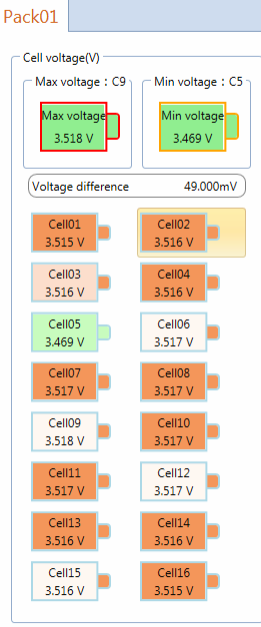
Battery Monitor screenshots attached. Shows param 8, 62 and 63 as 'Equalization opening voltage': 3.5V, 'Equalization opening pressure difference': 50mV and 'Equalization closing pressure difference': 30mV respectively. I've seen the cell balancing kick in with the lower 56.4V charge voltage, see last screenshot where the higher cells starts flickering. As Steve87 has pointed out its passive balancing.


-
Thanks. Not 100% sure where the original 57.8V comes from, or why its so high. Not sure if its send directly by the BMS (pack requested) to inverter or whether the inverter calculates it from other communications/parameters with the BMS? The Shoto batteries uses SeplosBMS. From another thread it would seem that the consensus is that if the inverter shows 57.8V charge voltage on LiBMS page then it receives it directly as is from the BMS. In which case it feels that if the BMS requested this 57.8V to begin with then just put it back and let it be. But, the batteries data specification sheet specifies 56.4V max. So which one is it? I've been trying to get hold of Shoto's technical support to clarify this out, but no success in getting support channel information. I guess I can try SeplosBMS support, but they'll probably just state that I should contact Shoto instead. Others, on the other hand, suggest to dial at back even further: Seplos BMS, and specifically my model/version, starts equalization if a cell voltage is over 3.5V and if there's a 50mV or higher difference and stops when difference has reached 30mV or less.
-
PS: Forgot to mention that my batteries is two months old. And this specific battery is the slave battery. DOD is typically +-50% in the morning. With the lowest being 31% only once.
-
On one of my Shoto SDC10-Box5 16s 5.12kWh batteries I have one cell (Cell 5) whose voltage is always lower than all the other cells when battery is reaching full charge. After battery has discharged for a while its voltage falls inline with the other cells and stays inline until the next day (or time) when charging nears full again. All the other cell voltages are +- the same all the time. This cell still holds a good charge, 3.4V, but not as a high as the other cells at charge end. Currently my charge voltage is set to 56.4V (asserted via a workaround, previously the charge voltage was 57.8V (still need to get to bottom of this high charge voltage)). Is this a bad cell? And is this a precursor to problems down the line? Please see graph showing cell voltages and SOC over a 10 hour period. Cell 5 is the blue line, all the other cells have there lines cluttered over each other as they are +- the same.

-
Would have been nice if Battery Monitor had graphs built in. But, at least one can save the 'Real-time' readings to a CSV/Excel file, when clicking the 'Real time' toggle on toolbar (saved to folder \RealTimeRecord). Has anybody pulled in these files successfully in some kind of graphing library? I tried a few online ones, but they are lacking functionality. Currently setting up a local Grafana stack with CSV plugin, but haven't had success yet.
-
Does anybody know of any Shoto technical support channels and/or contact information? By the life of me I'm not getting google hits.
-
Followup question relating to Battery Monitor software. Sometimes at the end of charge the cells start flashing different shades of orange and beige almost (see screenshot). What does this mean? This is typically after the monomer high voltage alarms has kicked in (after V3.5V). Is this perhaps an indication of cell balancing/equalization kicking in? What's the trigger points on Shoto/SeplosBMS for balancing to kick in?
-
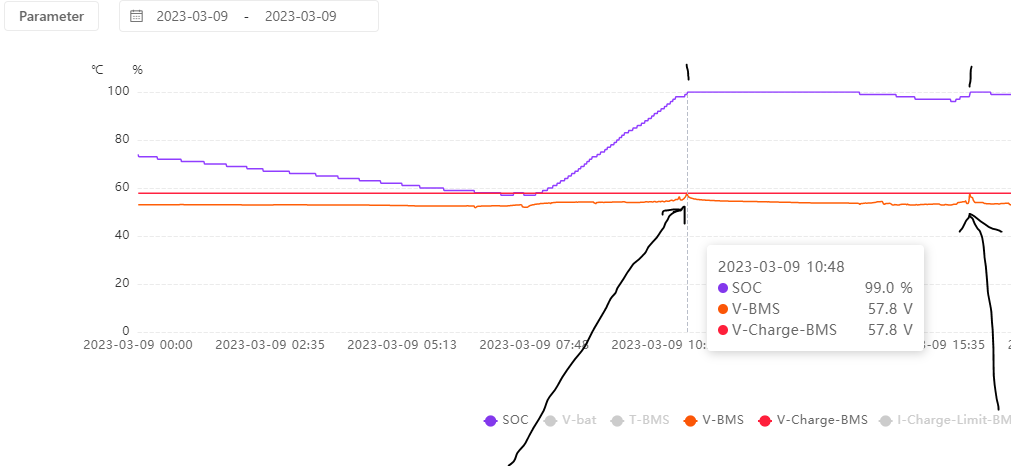
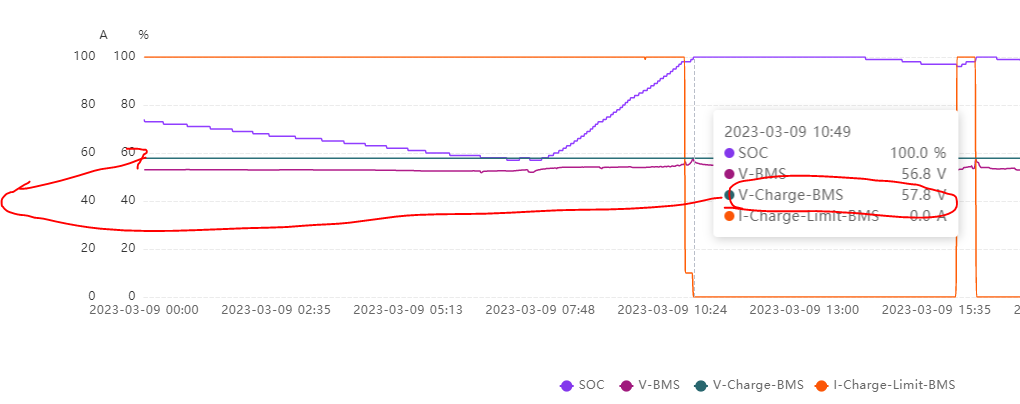
In my case the charge voltage remains 57.8V constant. Doesn't change at all, see attached screenshot from connect graph with the 'V-Charge-BMS' parameter in red (update rate here is every minute). According to the SeplosBMS documentation it doesn't seem like boost charge is applicable.

-
Interesting, thanks for sharing this. So by this token it means issue is on SeplosBMS. Is there a way to sniff and see these CAN broadcast messages, for interest sake and verification purposes when approaching Seplos about this?
-
CAN from master battery to inverter. So are you saying on CAN there's just one simple "charge voltage request" message (issued by inverter) and upon receiving this the BMS just has one simple "charge voltage response" message to reply on and its replying on its own with the incorrect value? I.o.w there's no subjective interpretation of all the BMS params on inverter side via CAN?
-
Yes that was my thinking as well to just set it to 56.4V on BMS. Thanks. It could be that SeplosBMS do not have a normal chare voltage parameter and then SunSynk uses this over voltage one in the absence of something sane? Would have been nice if the charge voltage could have been overridden on SunSynk inverter settings.
-
Could be, but I respectfully disagree somewhat. The theory is SunSynk is reading/interpreting the wrong BMS parameter. I've checked all the BMS parameters and the only value close to SunSynk's 57.8V is the BMS overvoltage protection of V57.75 (round this up and you get 57.8V). After updating this over voltage protection parameter in the BMS the inverter followed suit and then uses that changed value as its charge value. I've checked with about 4 different values and everytime the LiBMS page follows suit. So to me it seems that inverter is using the BMS' overvoltage value as the charge value., incorrectly. The 2nd screenshot is where I changed the BMS parameter from 57.75V to V56.9V, as a test, and it shows on the SS connect graphs as well under the 'V-charge-BMS' parameter. I'm not saying the BMS is entirely innocent here, but it seems neither is the inverter. Its gonna be tough to get to the bottom of this. SunSynk and Shoto/SeplosBMS are probably both gonna say its issue on the other side. I don't know how to get into contact with Shoto/SeplosBMS support, so all option I have for now is to drive it from SunSynk support side. PS: Cudos for the initial investigation and theory compilation goes to @jumper. I just tested the theory on my side.


-
Please note that the "overcharging" sub thread herein has been continued under : Thanks again for all the help in getting comms going between BMS and PC
-
In my case the batteries spec sheet says charge voltage should be 54-56.4V. Its a 16 cell battery so then max 3.525V per cell, right? Am I interpreting it wrong? Yet, SunSynk on the LiBMS page says charge voltage is 57.8V. This remains constant always throughout. Thus, for a 16 cell this equates to 3.6125V per cell vs the 3.525V max of the battery data sheet. The BMS voltage does reach this 57.8V at the end at which point the battery cuts out because the default over voltage protection on this battery is set at 57.75V. See attached screenshots. The last screenshot is of Battery Monitor after the total voltage protection kicked in, and at this point things has cooled down a bit already which is the reason why the total voltage is 57.4V (and not 57.75V) and the cells just below 3.6V each.


-
Posts from other threads seems to suggest that there's a possible issue w.r.t to SunSynk (possibly limited to just 8kw model) and certain lifepo4 battery makes where the charge voltage is to high effectively overcharging batteries. Instead of overloading those threads further perhaps we can track this here? ... So far its been reported for Pylontech and Shot, I think both uses Seplos BMS, so this might be the common denominator. I've also posted on the SunSynk forum: https://www.sunsynk.org/forum/techical-support/inverter-battery-charge-voltage-too-high about this. For pylontech refer to onwards: For Shoto refer to onwards:
-
I wonder if this is limited to SunSynk/PylonTech only or a more widespread problem. I have similar problem with 8kw inverter and Shoto SDC10-Box5 (16S) batteries. If I'm not mistaken both Shoto and PylonTech uses SeplosBMS? Perhaps issues is between SunSynk and SeplosBMS somewhere? Refer to another thread from this post onwards : I've also posted on the SunSynk forum: https://www.sunsynk.org/forum/techical-support/inverter-battery-charge-voltage-too-high about this. Will prompt Joel from SunSynk or some tech support tomorrow on it.
-
Looks to me like some kind of shoto as well. Most probably utilizes the Seplos BMS as well.
-
Adding to previous comment, if this "work-around" does not pan out or causes other issues then I'll have to follow @Antonio de Sa advice of falling back to voltage based settings and not rely Inverter/BMS interaction. At least until SunSynk has somehow resolved this.
-
I know this thread is drifting off topic, which was just about the cable and establishing comms, sorry. But, I've proved @jumpertheory on where my inverter is getting the high charge voltage from. I've dropped the overvoltage value in the BMS using Battery Monitor to 56.9V and the inverter followed this and is now showing 56.9V as the charge voltage on the LiBMS page. I'll see tomorrow what happens at charging end, but most hopefully it will charge with 56.9V, then cutout at 56.9V and still throw the error. If this is the case I'll drop it further down to 56.4V to stay in check with the battery's spec. Then my batteries will charge at a more reasonable voltage of 56.4V, but it will still throw errors at the end, but then at least we can ignore the error a bit. For further reference : https://www.sunsynk.org/forum/techical-support/inverter-battery-charge-voltage-too-high/dl-977cc6ff-2a89-4c5e-9c62-2ed7f4314e37?postId=640b073f6122ae00126b84a6 PS: I had to change the setting on both batteries before the inverter followed it. To get a hold of master battery I pulled the CAN cable and flipped the DIP switch from 5 to off. Battery Monitor then picked up this battery (but of course then it couldn't get hold of slave battery, but I updated the value there first). Afterwards I restored the dip switch and the CAN cable and all was okay again (at least seems that way).
-
FIY, I've opened this on the sunsynk forum so long (but its known that the tech support themselves don't comment too often there) : https://www.sunsynk.org/forum/techical-support/inverter-battery-charge-voltage-too-high To @jumper and @Antonio de Sa : a very big thank you for all your support and help here, appreciated it!
-
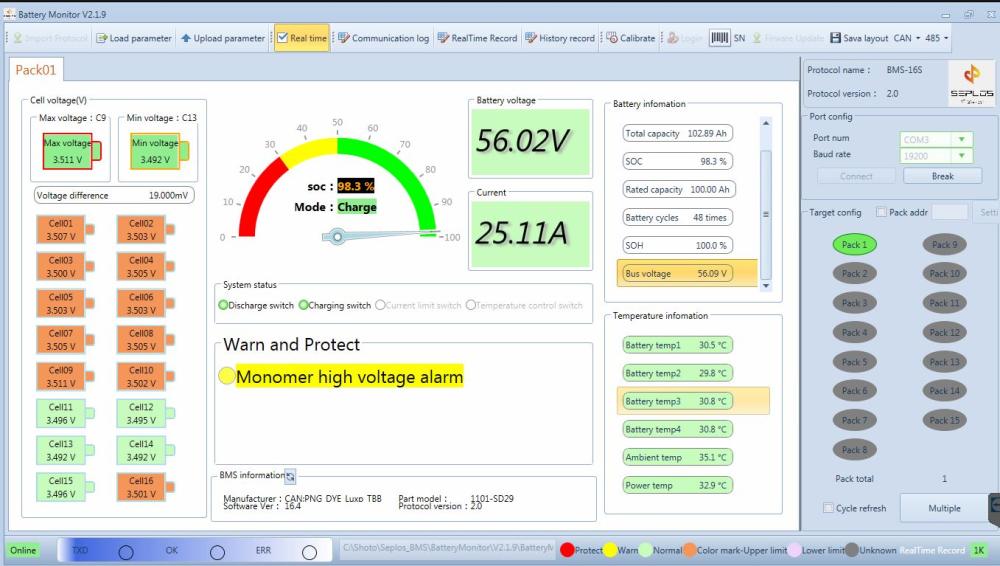
Now that I have Battery Monitor comms to my slave battery, thanks to you, I also see the 5 degree difference between cell temp and the ambient temp (battery box inside) reading. Note however that in my case the highest of the 4 cell readings are displayed on the inverter itself as the battery temp, it did not take the higher battery box ambient temp as I was hoping. And it was this temp that worried me in the first place. See screenshot. Garage ambient temp at this time was 26 degrees. So my cells themselves typically gets to +-31 degrees everyday after charging 😞 .
-
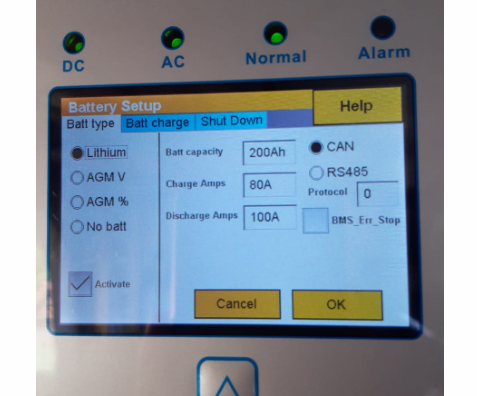
This is what the battery settings look like on inverter (on the app the voltage settings are not shown at all). There's three voltage settings: Float, Absorption, Equalization. I can set float to 54.0, but what does the other two voltage settings mean and what should they be set to to get a effective charge rate of 56.4V? Whether they will take affect is another question. Ofcourse the charge voltage indicated on inverter's LiBMS page is probably still gonna show 57.8V. Hopefully the inverter uses the manually set 56.4V and not the errournous 57.8V from BMS.

-
Ah man this sounds scary. Its gonna take a while if I indeed need to get SunSynk to do a firmware change. I doubt that this is fixed in their latest firmware. I'm running the 2nd latest one. And then if they change something what else are they gonna break? According to the inverter graphs the battery voltages reaches this 57.8V when it reaches 99% SOC just before it clicks over to 100%. I guess technically its 57.75 but gets rounded to 57.8V See screenshot the battery voltages peaks at 99% SOC, at which point I guess the BMS cutout kicks in. When I approach SunSynk should I ask them to make a change in line with the battery spec's charge voltage which is 54.0-56.4? So probably more like 56.4V.


-
Thanks. This did not work in my case, unfortunately. Thanks for explaining the risk (or rather no risk) involved with changing the dips.
-
I'll maybe try this over weekend, if I feel brave enough. Is this risky at all, especially if DIP1+DIP5 is an invalid combination on BMS? Has anyone caused themselves problems before based on odd dips? Mmmh, looking at the LiBMS page on inverter and the "V-Charge-BMS" parameter on my graphs, it seems that BMS always request a charge voltage of 57.8V. Not sure why and where it gets this from. Guess I need to load the parameters of Pack1 from Battery Monitor, as it should be coming from the BMS, right? On inverter the battery type is set to Lithium and then the voltage related settings don't apply, but even if it did I don't see a 57.8V on inverter's battery setup. Did not work in my case, unfortunately.