Denns
Members
-
Joined
-
Last visited
Everything posted by Denns
-
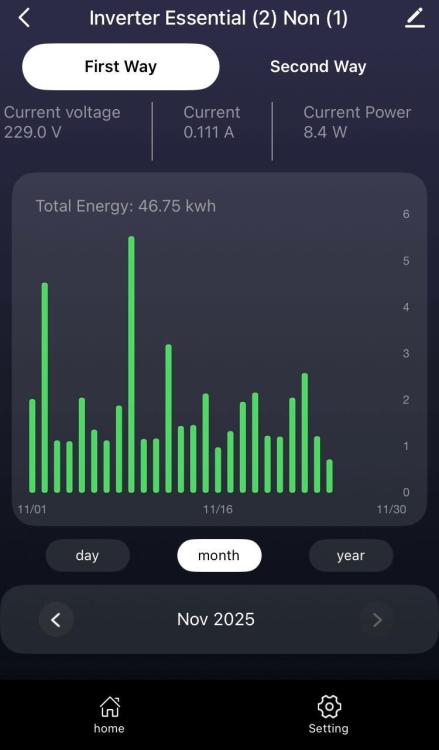
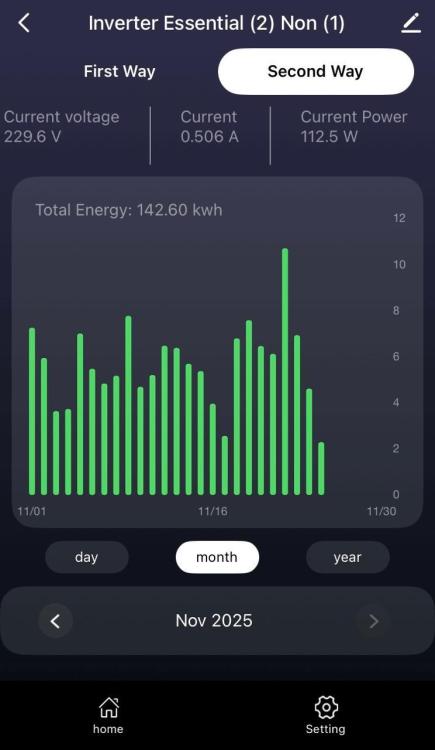
I don’t have PV generation figures but I managed to survive this weekend with just PV. Pool pump, fish pond pumps were all off. You can see how with killing non essential loads my kWh usage dropped quite a bit. Geyser I let the geyser controller take care of the water heating and amazingly the water was hot for the 4 of us this weekend. I am genuinely impressed with the controller. I didn’t expect it to keep the geyser hot enough.

-
How many kWp of panels do you have? Can’t see your bio for the system on the phone. Generation seems a bit low I must say.
-
Yeah I am heading to COJ next week. Already got a note from CP to tell COJ it is their responsibility to close my account and not CPs. Next year that 1.4 will be some 1.6. So definitely not worth it considering I have gone since May without needing the grid on the house. In the last 2 months the geyser was removed from the grid so I havent needed any bit of the grid since.
-
I dont have PV generation measurements but the generation has been enough to run off-grid. Not too bad for my small system and LA battery bank.

-
I dont think anyone really measures that. I think anything under 75W is ok which it most certainly should be. If the manufacturer claims 10W then at worst we could say 3x that so about 30W. It is not a make a break parameter for people when they want an inverter. They typically care about PV rating, AC out power rating, Passthrough, Surge handling, Battery charging/discharge etc.
-
7? Wow. I can see one for input to the house and indirectly the inverter. Then one for essential and non essential? I have 2, only on the outputs as I dont have a grid input cable to the inverter. 4DC? I can see one for each input to the inverter MPPT. Typically 2 for such inverters. I think the most I have seen is 3 MPPT Inputs. How do you have 4? DC I have 2, one for my inverter MPPT input and the other for the Geysercontroller MPPT input.
-
Ah yes, I used the table for clipped direct. Not in conduit. Makes quite a difference for heat dissipation. Mine is in a conduit clipped to the wall, not inside, so my cable ratings are a little higher.

-
Also look at the bright side of using 10mm2, You could potentially install a bigger inverter in the future. Would be limited by the 6mm2 on the output though.
-
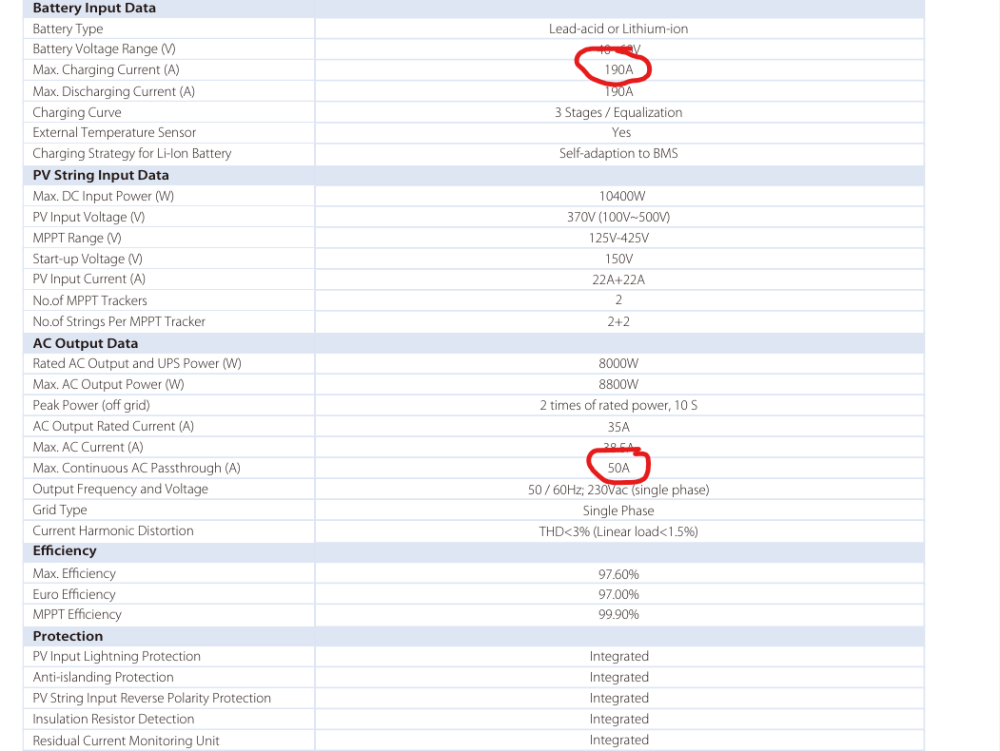
I found this for the Deye 8kW (Seems to be similar to your inverter). Max passthrough current is 50A. Does not state what the max AC charging current is for your inverter. Is the 190A i see with the solar I am not sure, unfortunately. But looking at the SANS current handling ratings, 6mm2 is good for 49A max. The passthrough current of 50A already exceeds that. It still looks like you need the 10 on the input because the passthrough current of 50A does not include the charging portion of the batteries also. 10mm2 can handle 67A which is about 15kW. So it leaves you with 7/8kW to charge the batteries while simultaneously supplying full load.
-
Input or output to inverter? Input would typically be sized larger than output. so the 6mm2 will work fine on the output but not the input to the inverter because it will pull current for both charging and supply of your house. That’s the max current that the cable will see. So you MUST use the 10 on the input and you can use the 6 on the output. 6 is good for 40A if I’m not mistaken. Maybe a little more but it’s not enough to supply at full load and charge the battery simultaneously. I don’t know if installing a current limiting breaker is enough for COC. That is use 6 on both input and output but have a 40/50A breaker to limit the current. I personally would do it the right way. Use 10 and 6. On the second point, yeah sure, less power means less heat so theoretically it could mean longer life for the semiconductors in the inverter. But then again, how often do people max their inverters? Rarely. So just use it normally in my opinion. If the cable is sized right there is no such thing as stressing the cable. The only thing that fails over time is the insulation due to age or if you using the wrong class of insulation for the voltage. Otherwise don’t worry about the cable.
-
How does one quantify a big difference? On my 2S5P arrangement for my 10 GEL batteries, when I check the battery balancer voltages, the difference is about 0.03V. That is the most I have seen. Last time I disconnected them to measure with a meter, they were all within 0.05V of each other. For lithium, when does one get worried? I am interested in knowing, as in the next 3 to 4 years, I would probably need to replace the batteries.
-
I feel every house should have an SPD installed. Plenty of people are blowing their inverters when power is returned after an outage. I dont understand why you would not have an SPD when it costs 300 rand in this day and age.
-
Thats how EVs work. They only operate between 20 and 80%. That battery SOC is what gives you the range stated by the manufacturer. As the battery degrades over time the BMS then allows you to use more and more of the battery, this is to meet the range warranty the car manufacturers claim. The battery is overspecced for the range.
-
Yeah @Demo is right. Lithium isnt like Lead acid so keeping it at 100% is one of the worst things you can do. If you kept it at 80% its way better for the battery long term.
-
The main thing I have seen this year is that the rains came earlier. Last year they started late but I do recall around feb 2024 to May it rained a lot. So if they are comparing same period to last year I can imagine generation will be lower.
-
I have managed okay till now. Its my first year with solar but went through winter and am going through the current JHB weather with no issues. If this is the worst year in Gauteng from your experience then it means my system is sized very well on the panel side. But I did add more panels than I needed. And I am installing another panel for my charge controller this weekend. I know solar equipment is pricy for some but panels these days are quite cheap replative to the cost of the batteries and inverters so if one can, they must install as many panels as they can like you say. I am installing a 660W panel I got for 1.5k. This is a good price for the size in my book. My 340W panels that power my geyser were 850 each brand new.
-
Wow, that must be quite a bit of hot water you use. Our geyser is also 150 litre. Currently experimenting with a 300W element placed inside a 2kl jojo tank. Excess PV from my inverter gets dumped in here. from some calculations and draining about 200 litres a day from it (valve set to supply water to bathrooms only) the temp in the Jojo tank will settle around 25 to 30 degrees celcius (implementing all the safeties to ensure i dont heat over 30 degrees). The idea is to use the water from the tank in the bathrooms only and for the geyser. The geyser then works less (average tap water temp is 15 degrees, so feeding 25 to 30 into a geyser means less heating is required). Also means when one uses a bath (my wife) or shower (myself) you actually use even less hot water from geyser since you will use more of the cold side of the shower tap. It will also help heat the geyser a ton in winter and during extended cloud cover since I will be feeding it luke warm water. 30 is also within the Jojo tank spec (40 to 45 degrees water temp) and the pump operating temp (70 degrees).
-
🤣 I meant he will save 70% on his water heating bill. Around 4/5pm he must just let it run off the grid. The grid use will be far less with the systems installed. Remember he is looking for something to do with the panels. 4k per Elon unit and the little wiring doesnt sound like a bad dead to save about 1k a month in water heating for the 2 geysers. I live with my wife only so when the geyser gets heated to 70, even when she takes her long baths, the water is still plenty hot for me in the morning.
-
Yeah, 3 per geyser might be an issue, but it depends on his goal. He will cut his geyser heating costs by at least 70% a month by doing 3 per geyser if, during the day, he lets it run off the panels and tops up at night. I have 4 340W panels on mine, and so far, it has done the job even during the cloudy weather. I have an automatic timer that boosts the temp every day for 30 minutes from the inverter, and it has been sufficient to heat to geyser to 70 degrees by around 2 every day. In winter, I suspect I might have to raise the heating time from the inverter to 1 hour a day, but then again, winters in JHB are mostly sunny, so the 30 minutes might work fine then also. As you say, it is application-specific.
-
I agree, but I am more concerned about what happens when it ages and the insulation begins to degrade. Obviously, your protection should take care of that scenario. I do agree, though it would be an overdesign of the system to use metal conduit.
-
Looks like an impressive unit. 4k in price doesn't seem too bad for what it offers. I like the temperature monitoring it allows for. I have the GeyserTech unit, and it's working very well with 4 panels. But it doesn't have the water temperature monitoring like the Elon (I would had to buy the more expensive unit, which is 5k and get the screen). I assume the Elon one only works with Kwikot geysers? It looks very good in my opinion.
-
I dont know about plastic conduit. I would be worried. I would go for the metal ones personally but I am a bit paranoid about thatched roofs. But yeah, if the wiring is sized correctly, breaker has the right ratings. One should theoretically be fine.
-
Why do you want a split phase inverter? I would go for this. MUST 4KW 24V INVERTER 100A MPPT INCL WIFI.MUST inverter 4KW 24V with 100A MPPT, WiFi, and dual outputs. Smart, battery-optional hybrid power for efficient energy control.I have the 3.6kW brother to it hooked up to 4.55kWp of panels. The 4kW one depending on the voltage spec of your panels can take about 5.2kWp of panels. 93% efficiency and some 10W idle power consumption if I recall correctly. 4kW is better than 3 as more headroom.
-
Inverter based fridges are a must these days. My fridges when running use about 70W of power each. Older ones are very inefficient. Alarm uses about 15W when I measured it. Most of the power is to float charge its own backup battery.
-
Believe it or not, I actually averaged about 900kWh a month before getting solar. With solar, not counting the geyser, I use about 200 to 250kWh a month (Monthly PV generation for this month is about 900kWh). Geyser when I had it on the grid was about 200kWh a month so in total now about 450kWh. Halved my consumption! As for the savings, its true it does look nice on a spreadsheet to have big savings by inflating the costs but I accepted it. Same way I accepted that 2/3 of my solar generation is wasted every day. But it saves me when the rain and clouds start. Here is my consumption for the month.