TaliaB
Members
-
Joined
-
Last visited
-
 Jacques Ester reacted to a post in a topic:
SANS Requirements for splitting AC and DC breakers in separate boxes
Jacques Ester reacted to a post in a topic:
SANS Requirements for splitting AC and DC breakers in separate boxes
-
-
-
-
-
-
Asked and answered by @hoohloc

-
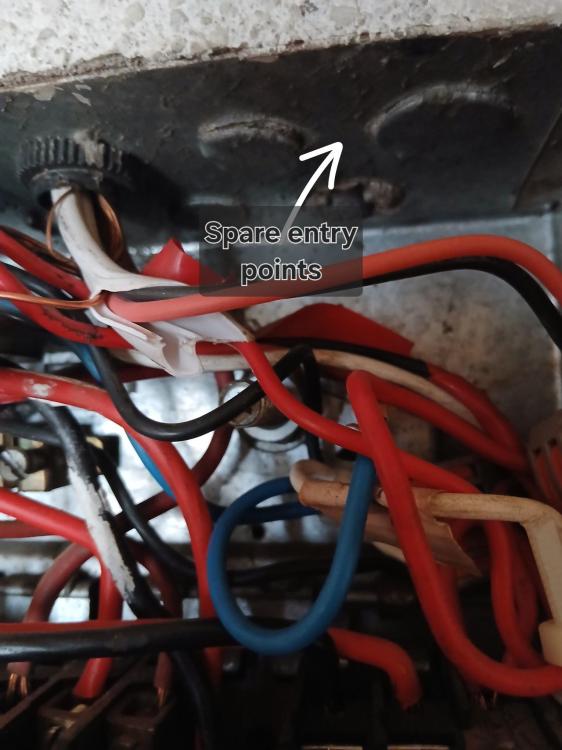
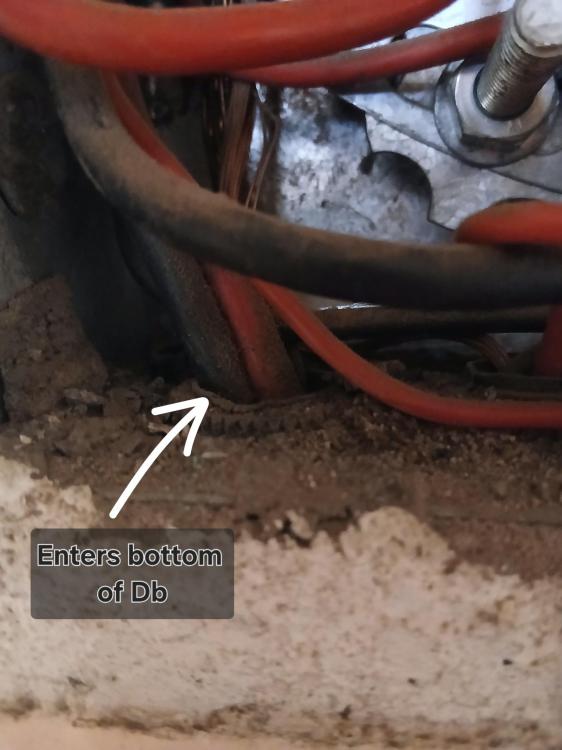
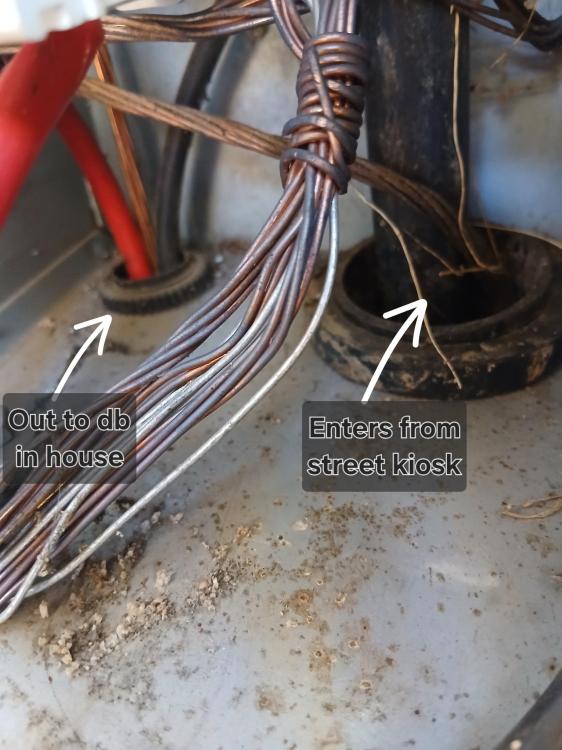
What is your inverter rating? 16mm² Swa can carry 100A. Running Swa from your roof cavity would ge best if there is a conduit from the top that enters the flush mount db. Otherwise chase the wall and bring it in from the bottom. This is how it is normally done from your point of supply.
-
Why do you want to use SWA cable for inverter input/ output? They are extremely difficult to work with especially 16mm² 3 core. Is there a reason you not considering 10~16mm² Norsk cable?
-
First of all i would like to know from @Koch903 are the Sungrow inverter quoted 48v system or Hv battery system. If you are looking at the Sungrow SH10RS class it uses Hv batteries. Which battery module where you quoted on the SBR or SBH. The SBH is Sungrow’s newer higher performance platform where each module is 5kwh. The SBR modules are 3.2kwh. Hv inverters are more effiecient ( if Sungrow Hv) handles high loads much more gracefully than the 48v counterparts. I agree with @frivan Sungrow are definitely inverter system to consider.
-
-
-
Being part of a BESS installation in La Réunion island no stone is unturned regarding safety. A company called Akuo Energy was tasked with the building of Lfp battery rooms and enclosures.. Primary focus was on the prevention of a thermal runaway catastrophic event within Lfp battery enclosures. When thermal runaway starts propagating the first line of defence is the detection of Hydrogen gas. The failure progression happens in distinct stages, moving from silent chemical breakdown to catastrophic fire or explosion. The Pre-Runaway Phase (Off-gassing): As the cell heats up and reaches roughly 150 to 180 deg due to an internal short or abuse the solid electrolyte interphase (SEI) begins to degrade. This breakdown releases Volatile Organic Compounds (VOCs) and hydrogen gas before the full runaway sequence takes over. To mitigate full blown fire or explosion Hydrogen sensors are used that triggers flame explosion proof extractor fans and AOV's( automatic opening vents)to ensure the Hydrogen and air mixture does not reach critical levels. For us with small scale lfp installations your best friend would be well ventilated battery areas with moderate charge and discharge curves. Hydrogen sensors could be fitted as a early warning but that would be an expensive exercise. I will do the research and see what i can find in South Africa in the form of pure diatomic hydrogen gas warning systems.
-
-
-
Incident closer to home. In all of the information gathered on this post what is or was the root cause of the thermal runaway events? Take for instance the sealed container, what was the temprature of the battery packs inside the non ventilated container or was it ventilated?? In all of the videos the exact cause of LFP failure is not disclosed or diffucult to pinpoint. What is the failure rate of LFP 1 out of 40 million ? How to prevent thermal runaway in our domestic setups. Basically do not stress abuse or damage the cells apart from that nothing in life is certain misfortune lurkes in every corner of our lives in diffrent shapes and forms. All that we can do is to endeavor to be safe as humanly possible. FIRE OPS SAFIRE OPS SA - Batteries catch fire at Standard Bank offic...“Fire Ops teams were dispatched at approximately 09:00, where they encountered an intense blaze inside a container housing two 300kWh lithium-ion battery racks,” said Koekemoer. “Despite nearly two ho
-
-
Some important information about LFP thermal runaway from Battery University. https://www.batteryuniversity.com/article/bu-304a-safety-concerns-with-li-ion/
-
Sorry for the late reply to your question but please embed the link so it shows up as@TaliaB . The price is site specific eg panel distance from geyser roof tipe.....ect. Ballpark figure between 17~ 18.5k. This installation is a dedicated system change to your electrical installation and as such needs a Supplementary Certificate of Compliance (CoC) to cover the new work.
-
You might want to have a look at the Elon Smart system from Kwikot . Below link for the system setup. I have installed a few and the work great. 3 x 550w panels in series will work quite well.
-
Solis Hybrid Inverter 5KW S6-EH1P5K-L-PRO does support generator integration and effectively has a configurable GEN/Smart Port capability automatic generator start/stop, generator mode peak shaving, smart port functionality. So in your earlier kettle example: 2 kW inverter generator connected to the Solis: kettle drawing 2.8–3 kW if you have PV available and/or battery …the Solis can supplement the shortfall from: battery, PV, or both simultaneously. It behaves much closer to a Sunsynk/Deye hybrid than to a traditional off-grid inverter. The generator does not need to carry the full kettle load alone. The inverter can “assist” using DC-side energy. PV production during daytime reduces generator loading automatically. The only caveat same as with Sunsynk is that tiny inverter generators can sometimes have voltage sag, frequency drift or react slowly to sudden step loads if that happens, the Solis may disconnect from the generator input temporarily. Victron systems are still generally considered the benchmark for weak-generator handling through "Power Assist and ESS, but the newer Solis S6 hybrids are much more capable than older hybrids in this regard. SANS compliance for the generator installation itself still needs to be considered separately. Generator output -dedicated breaker/isolator - inverter GEN input. Proper earthing conductor from generator frame to the installation earth system. Neutral-earth bonding handled in only ONE active location at a time. As soon as utility power( Eskom is interrupted) the inverter will create the earth/neutral bond on output so no need to bond the generator as GEN input is not seen as utility input to the inverter input.
-
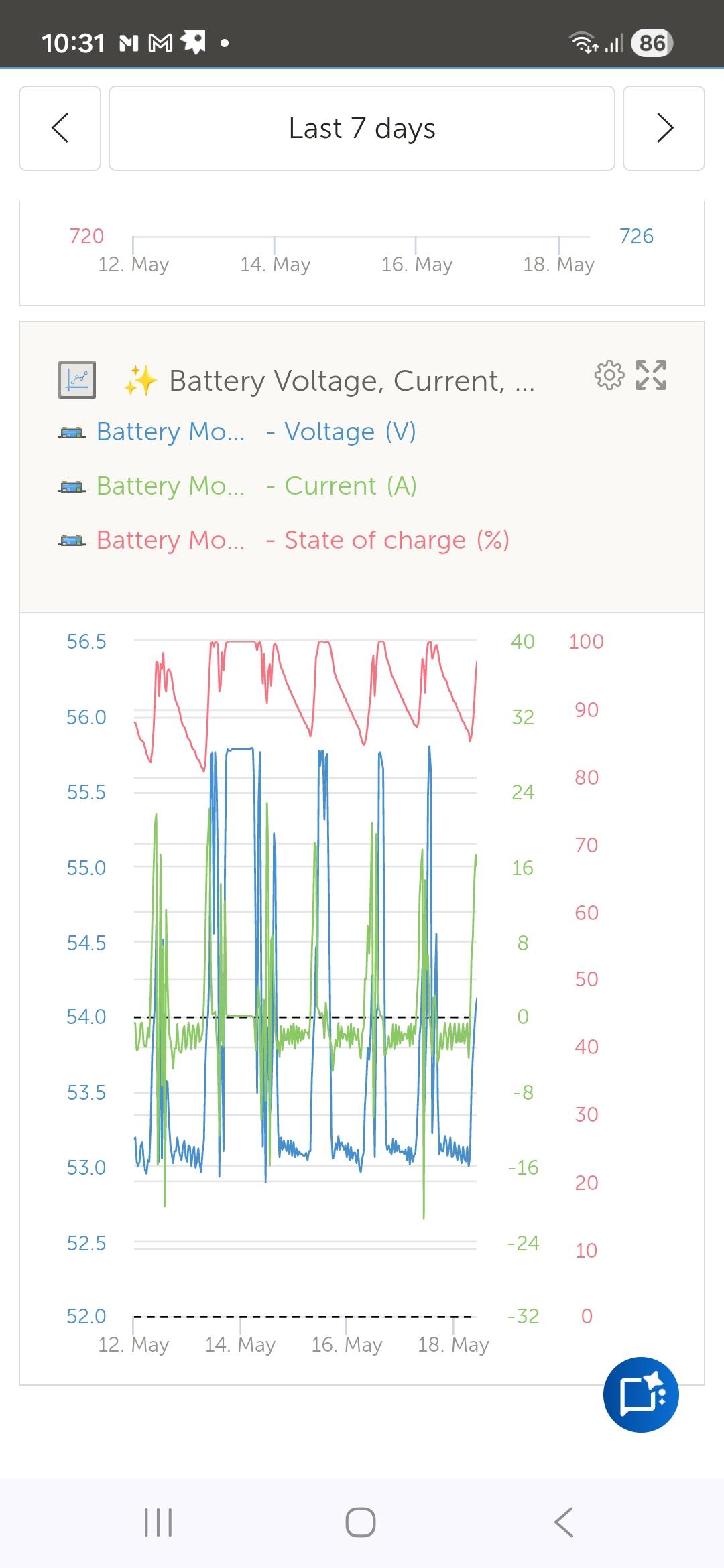
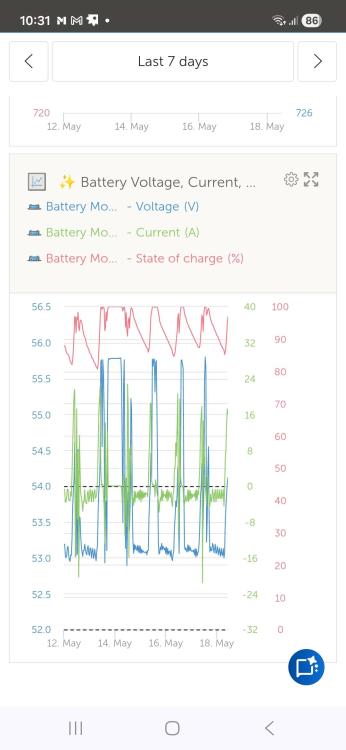
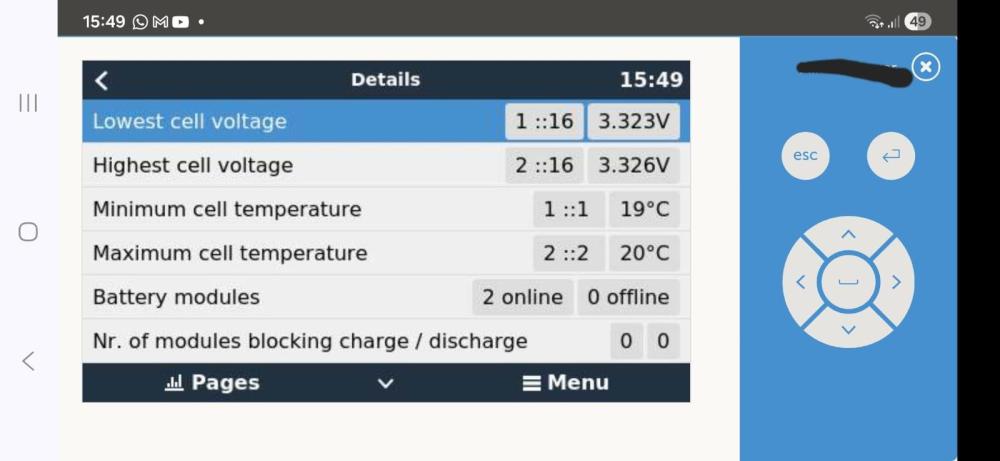
On VRM portal create a Widget to show you battery SOC vs Battery current vs Battery voltage. Also ensure your bms is communicating with the system. Then on VRM check under Battery details for the highest and lowest cell voltage.
-
You will have to upgrade your solar system, you have a 8kw inverter 40kwh battery capacity but you can only have 2760w of solar power available much less during winter. Your maximum yield in winter will be 12kwh if that spit between your loads and charging. So your load demand far outweigh your solar capacity.
-
-
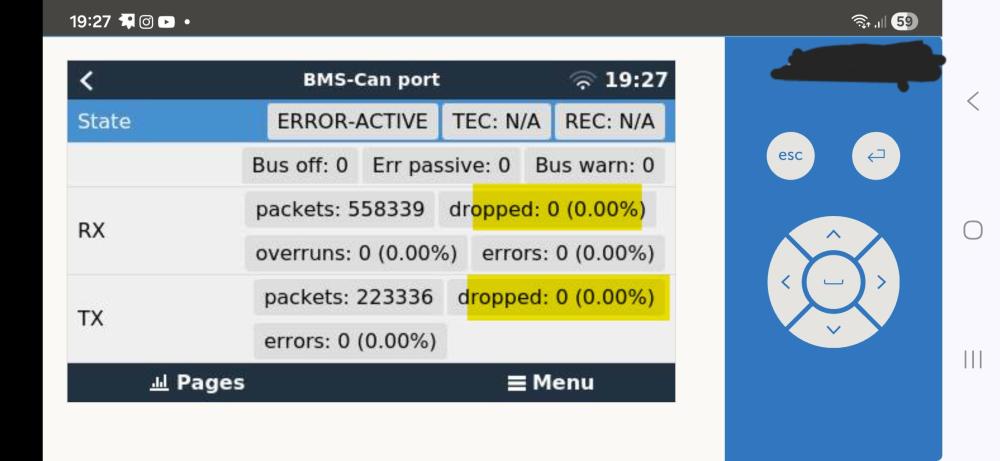
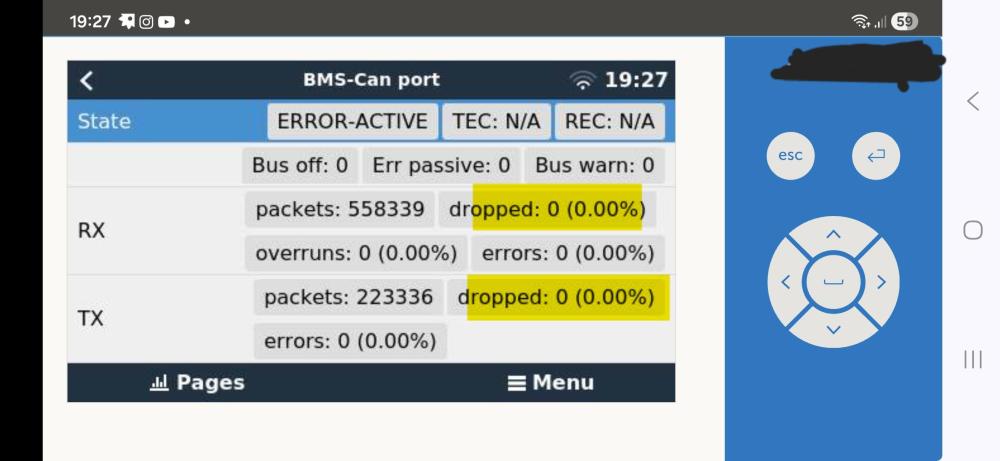
Yes I agree the 55.2v = 100% Soc. @jdido87 i will get the installer involved to get the batteries tested by the supplier. Insist on getting al 3 modules tested in parallel with communication enabled to ensure data packages are not dropped. Example of a healthy CAN network communication from a Victron System.
-
Yes, same principle applies. The trolley’s inverter has a maximum continuous output rating. Your Ellies unit is rated at 1440W, so when Eskom power is present and the trolley is switched on in bypass mode, the total load passing through it should still stay below ±1440W. The Navasolar 1kW trolley will likewise be limited to around 1000W continuous output/pass-through. If the load exceeds the inverter/bypass rating, the unit can overload, trip, or in some cases damage the internal transfer relay or inverter electronics. Always size the trolley according to the maximum load you intend running through it.
-
Switch OFF lithium/BMS communication and use “Lead Acid/User Defined”. Manually enter safe lithium voltages ONLY as a short test. If the battery immediately starts charging the problem is definitely BMS communications or permissions. This is one of the fastest ways to isolate the fault. Based on the symptoms, my suspicion order would now be battery BMS charge inhibit 1.CAN/RS485 comm issue after firmware update 2.Max charge current accidentally set to 0A 3.Corrupted TOU/force-charge state Less likely: actual PV issue The fact that PV instantly ramps when the pool pump starts is actually very good news the solar side itself appears healthy. Then Fully restart BOTH battery and inverter Not just the inverter. Proper sequence: Turn off PV isolator Turn off AC breaker/input Turn off inverter Turn off battery breaker/power Wait 5 minutes Then restart: Battery first Wait until battery fully boots Inverter second AC input PV last This often restores CAN/BMS comms.