Steve87
Members
-
Joined
-
Last visited
Everything posted by Steve87
-
By the looks of these they are the low voltage MPPTs that accept+-120V Max DC input volts can you confirm? The Higher voltage MPPT machines were usually much more valuable. My OG7.2 just went Pop recently and I managed to acquire a used OG10. These Axperts are really solid if installed properly and taken care of. I have an MKS2 that is 8 yrs old & still chirping away. Good luck with the sale, I fear you might have to give them away because the market dropped a lot & you probably better off keep these for a rainy day. Great machines I hope they find a good home.
-
@robkowa they do exist but they are probably busy and hence you might not find them maybe waiting around. The market did take a slump so some of the independent sparkles honest went for more secure work or the really good ones moved into doing commercial work and smaller work like this is no longer paying their bills. No clue where you are but call Gideon if you in Gauteng: 082 905 0773.
-
I don't think you will get solis to display these details on the Solis. The Orion JR BMS also has these messages displayed in its CANbus. In fact the Orion can be configured to display any host of information as can be configured on the CANbus and you can make your own CANbus frames to configure with any inverter or EMS to read. But this is what you have to understand: when a battery OEM decides to support an inverter they have no control over what the inverter integration team will want. Generally the bare bone basics will be battery temps, Charge and discharge limits & SoC. This is almost an industry standard of sorts. However, you can't force Solis nor FW to make or build features that only you want. They can see it as a suggestion but that's about it. The points 1,2,3 &4 are all readily available on the BMS and on the Orion ready for broadcast if configured.
-
Just glad you managed to get a favourable outcome in the end. Politics aside it's important where you buy equipment and people forget that post sales support and lifecycle and probably the 2 most important aspects of any piece of technical equipment purchase. Living in a remote cross border location can complicate life for you even further.
-
Further to my posts really what I'm trying to say here and we have already seen it in the automobile market: Are the Chinese starting to gain respect and market share and how do we try to still support & protect the local market. We talking about local content and jobs. Shein and Temu case in point. FW & others the honeymoon is over unfortunately....I don't have all the answers and don't even have relevant questions to analyse something like this but it's fascinating to watch unfold almost in front of our eyes.
-
@Moffat the Etower is a Chinese import and has a PACE BMS so it's considered in my book as any normal Chinese import. I have never had to log a support call for one and I honestly try not to promote it because it's cheaper to buy the exact same product cheaper in the market that doesn't have the FW badge. I hope that they offer you support and that is swift enough and not 3 weeks worth.
-
@Bernardf your point is well noted & I don't disagree with you. I followed the same steps as you but unfortunately being off-grid I could not wait for 4 weeks and lose 10kWh of capacity. The same prospect arises for their HV batteries and the lightest one is +-400kg. So the concept of remove and take to service centre is not so straightforward for a logistics perspective. They usually visit the site with technicians and service and sort out on site. In the past there was no issue with requiring assistance like this and they offered it willingly to all locations countrywide. Lately there has been the combination of refuting the warranty and wanting to get the customer to pay for travel and logistics to their site location as well boarding and lodging charges added in a quotation for such repair and evaluation. I have also seen on occasions that replacement of the LV & HV Orion BMSs be quoted prior to on site evaluation between R60k all the way up to R250k. Some have not been my installations but one of them was and the customer paid the R250k up front replacement costs before an onsite inspection was carried out on the equipment. The Orion is great and all the bells and whistles but is this not becoming an Achilles heal for the end user. The Typical HV topology of BAU/ BCU / BMU doesn't cost R250k, this in the case of a Chinese production battery imported. In contrast it's along the lines of R35K maximum. It also does the same job & it's components are serviceable and repairable component wise. It's also adopted from the Chinese EV market. I'm was a massive FW supporter and still am to a much lesser degree but unfortunately the market is shifting and in my humble opinion FW and other local OEMs will find it very hard to stay relevant in these modern times with the production Chinese equipment imported from the Motherland.
-
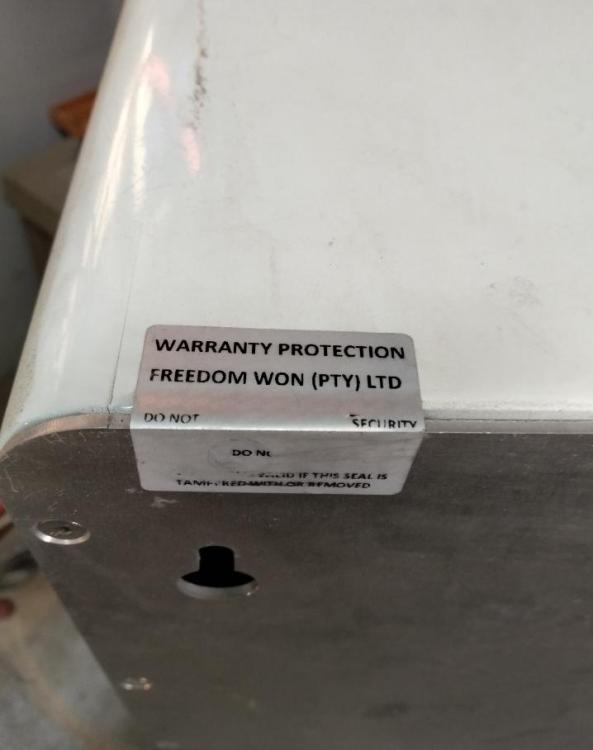
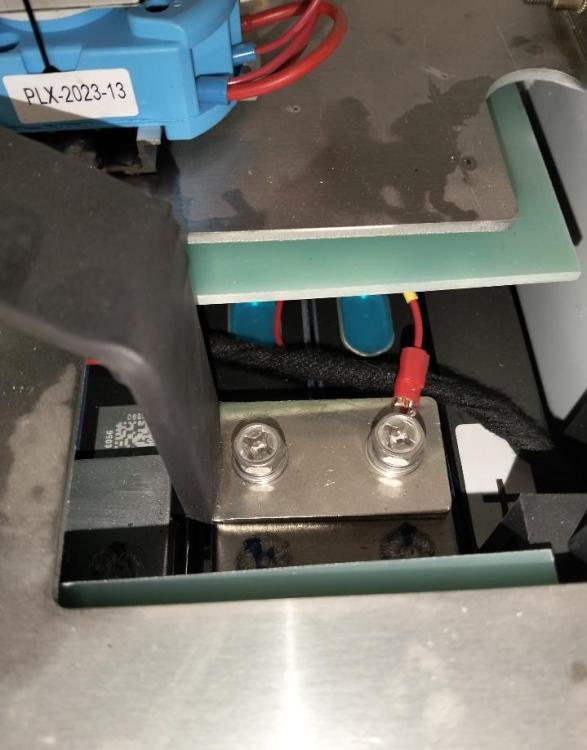
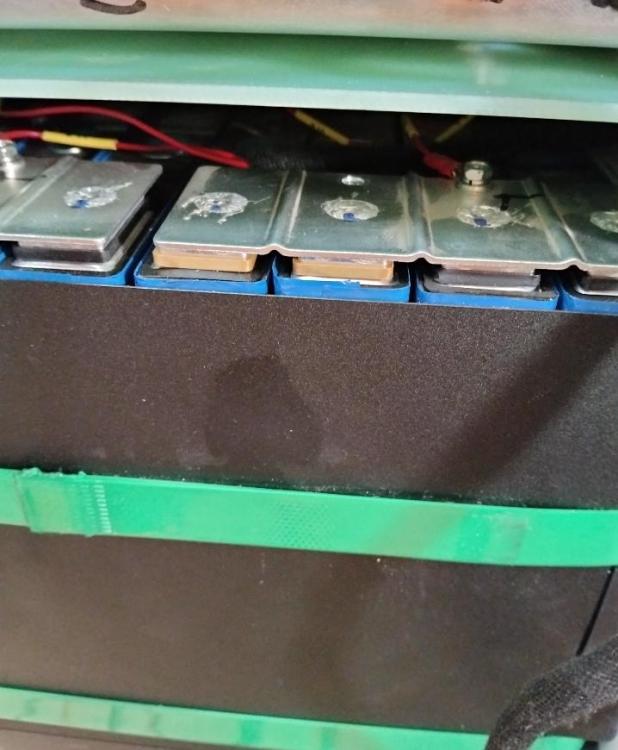
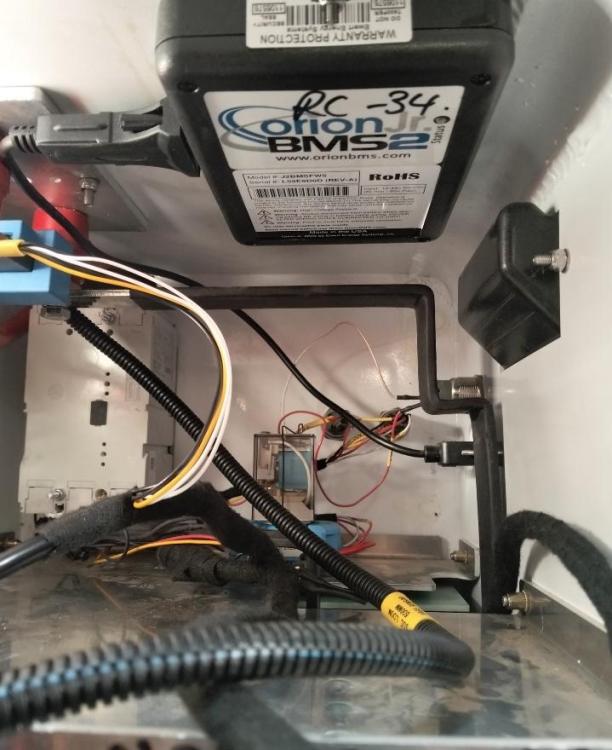
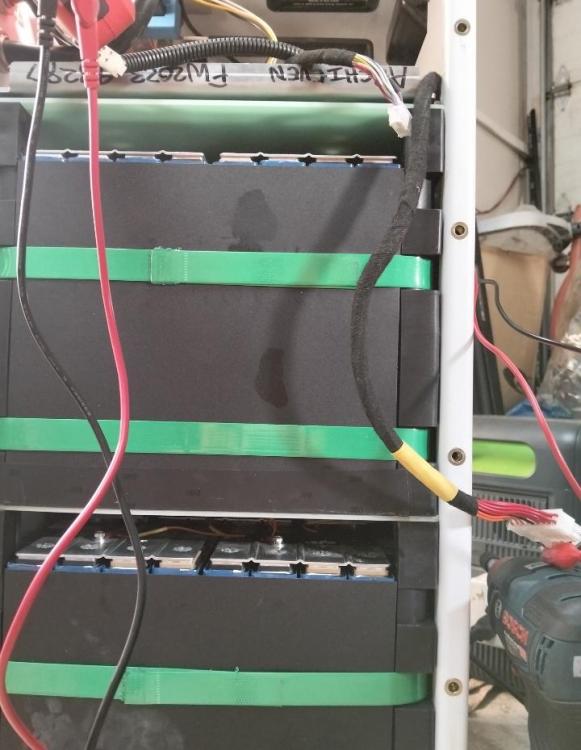
The Orion is in a different class to any other BMS out there. I have worked on multiple other BMSs. That BMS is made in the USA and it's a very polished specimen in terms of hardware and software. It's even used in the HV batteries to power up the Toyota Prius EV. Btw I'm not sure it's an OEM of the Prius but I do see documentation to supports it's applied use. My battery got very ill due to my home being completely off-grid and not reaching 100% regularly to float. The first issue that I had was that Cell 1 had a massively weird difference in internal resistance to the others. Then when you charge it the Cell would peak crazily fast and during the discharge the opposite would happen. I logged a ticket and got some remote support but the particular service tech was adjusting software to fix what was very likely to me a physical hardware fault. You can fix hardware problems with software. You can maybe mask the problem but you can't fix it. I then left it for a week or so & FW basically tried to close the ticket saying it was fixed. I knew the only issue that can arise as these symptoms are a loose cell sensing cable and the cell was not in balance. The hardware of the 10/8 is on another planet quality wise. FW package this battery to a high level of quality. It's in a powder coated high gloss 3mm metal enclosure and the cells are very well protected inside a plastic types of rigid case with insulation covers. I wanted to remove the entire unit to get at the offensive cell. It's probably possible but given the welded topology and the fact they actually use 2 X 100ah cells laser welded with aluminium studs made that proposition almost impossible to deassemble the entire unit. So all I had to play with was the Harness or 16 cells and a slow charger... Sorry will add more info later...
-
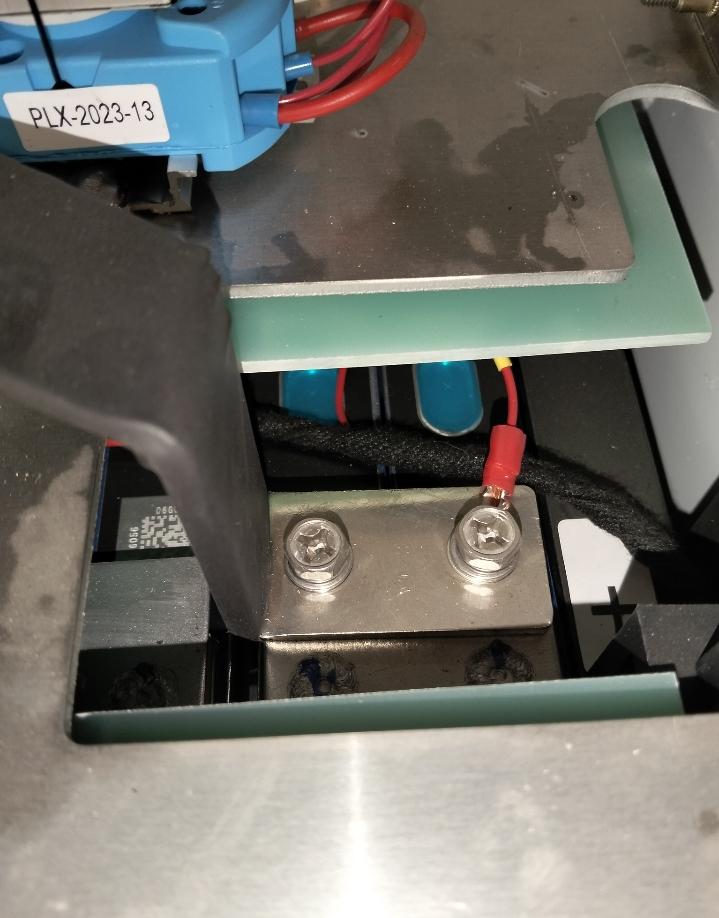
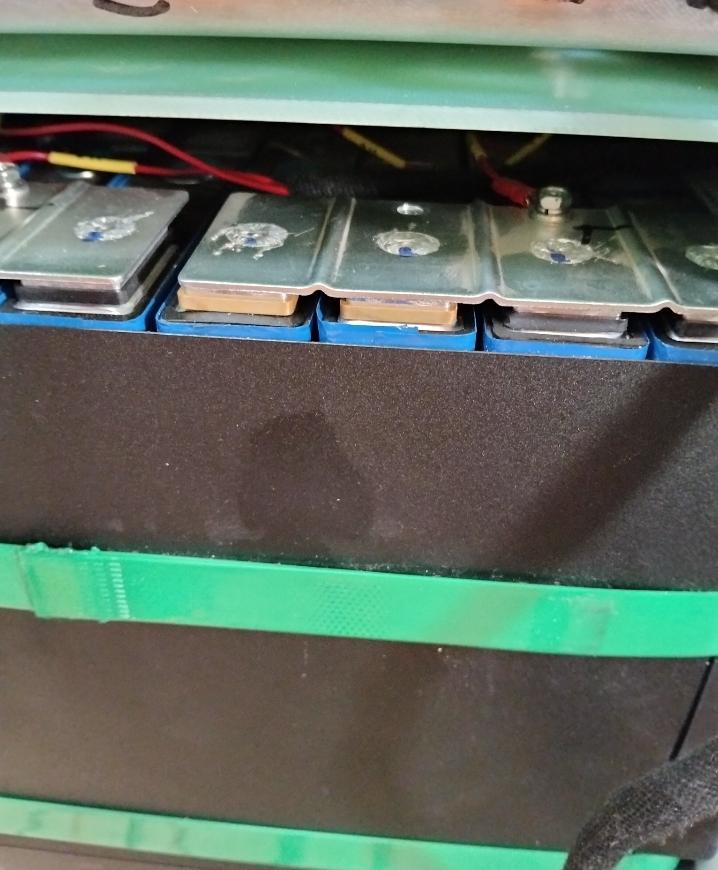
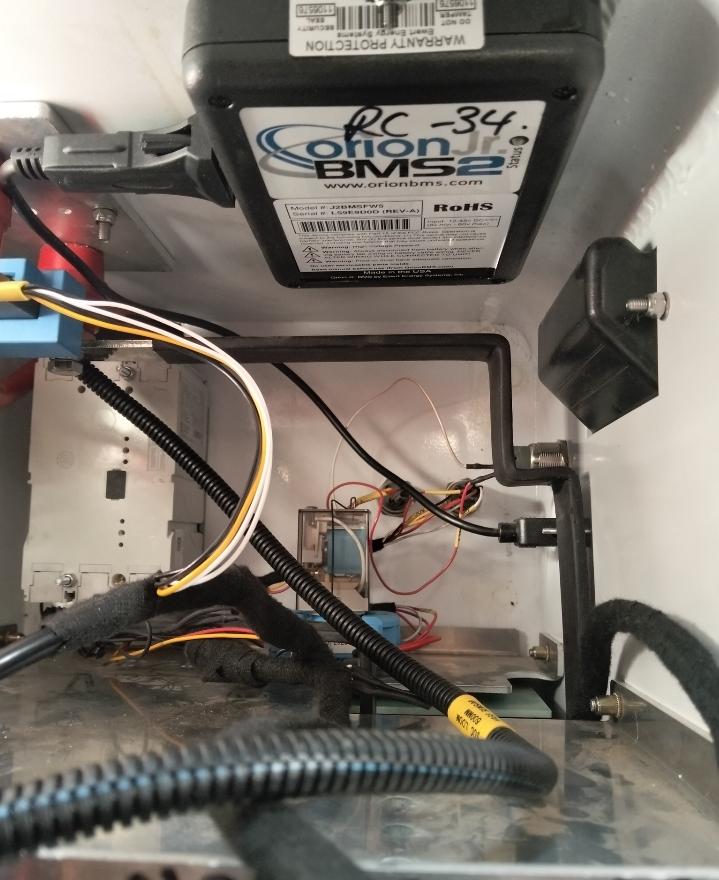
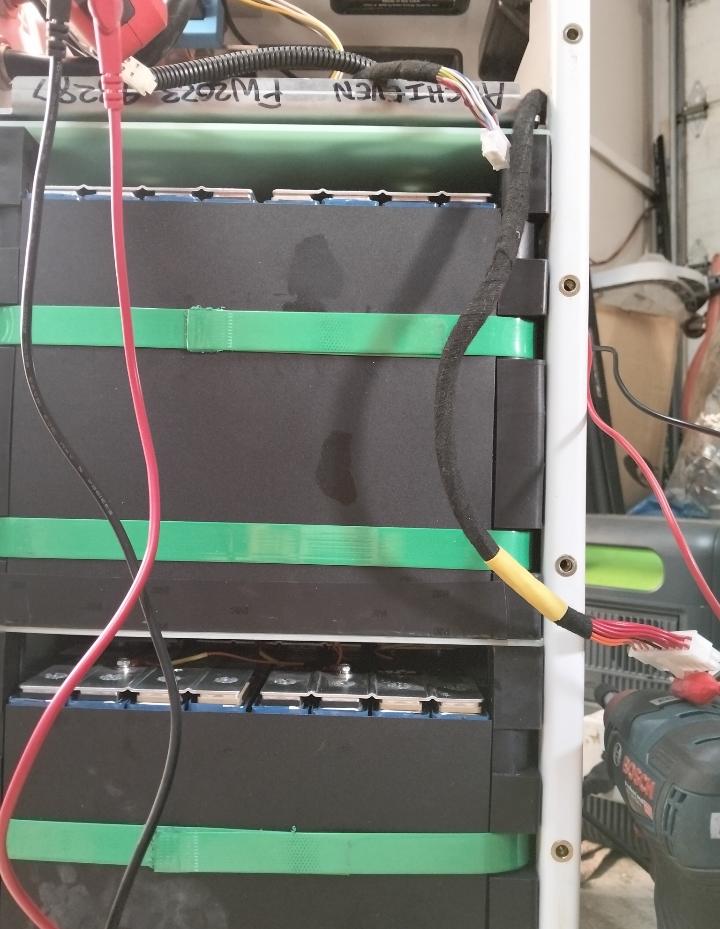
Some pics attached as I needed to balance a cell that was quite far off the others...


-
Good day guys, I haven't posted something for a while and really haven't had the time. A very interesting problem arose on my FreedomWon 10/8 & due to the sheer frustration of trying to get support I made a decision to get intrusive with the unit & I voided the warranty. More on the warranty a little later and in general I hope that this thread opens up a very worthwhile conversation on warranties and what are they really worth. Even more interesting is the South Africa Battery assemblers as I call them. Let's face it, the raw Lithium is processed in China and made into prismatic cells and then shipped away to our shores as either an assembled battery unit or finds itself on the assembly line here in SA via FreedomWon factory or other well known SA battery manufacturers. The Local guys here then have a factory to a build those prismatic cells into a production unit & pair it with a BMS and then sell this finished product. Now here is starts to get interesting: How long will these businesses stay relevant because it's a very tough market. The Chinese have the technology to process lithium, they also have the R & D to produce BMS controllers and let's face it their manufacturing costs are a fraction of what can be done here in SA. We now start to see Lithium batteries starting to reach Lead Acid pricing for the first time and sales on the market in general have dried up. I have evaluated and deployed locally built as well as Chinese LV & HV batteries is mass. I myself used to build batteries. I'm sorry to say the undercut and the affordability of buying a production Chinese imported battery makes this a no brainer. I hope there are more people out there that can add more perspective to this starting thread. Will add more details on the problem I had, the support that was offered and the steps I took to take matters into my own hands to salvage my battery and get it healthy again.
-
@Aartappel your problem is quite a generic one and I have seen a few different solutions that the farming community is deploying...Direct Solar panels on VFDs, some farmers creating micro Grids large in size and then installing their own MV transmission lines and then disconnecting the various Eskom incomer points. I have at least 3 users completed these projects & have done it in a staged approach but the savings and the benefits are there to witness. Those unreliable expensive Eskom points are worth shutting down & pocketing the ongoing costs into your own infrastructure. I have been involved with especially ATESS and more recently over the last 2 yrs Megarevo Transformer based Hybrids and AC coupled Grid ties and DC coupled ATESS topology. The largest plant at 1.5MW carrying a base load of 700kW is in a factory with massive HVAC and high inductive loads. The Atess equipment is really robust and honestly can take a heavy punch with large motors starting and stopping... Its just my personal opinion that the High frequency non transformer based inverters won't last long for the irrigation environment or SAs farming environment because we have harsh conditions and we require equipment that will last the next decade that is serviceable in the field. If you need basic advice and user cases please PM me. I can definitely point you in the right direction as well as share plants with you that have proven themselves in the field. The farming community are ripe to reap the rewards of solar power & with Diesel pricing very volatile id imagine it's going to accelerate...
-
Honestly it doesn't get better than this. Anything else will be a new product from the Factory. Lowest cell at 3.47 is very close to a full cell. This type of top float balancing can even be done once a week. In the high end Commercial installations these batteries carry out 2 Cycles a day due to 2 peaks (morning and evening) and once a week keeps them in good shape.
-
Must say that pack is pretty well balanced. I regard the Felicity battery quite highly. I have only seen good things in the examples I have seen in the field. The situation is exaggerated as @TaliaB has noted. LFP stretches it's legs at the top and the bottom of the charge curve. An active balancer as fitted to Orion's on the FW keeps pack in synch and you don't see this level of delta. But the passive (ghandi) balancer takes time and strategy in keeping it floating slowly towards 100% SoC. Still effective but every OEM has a different strategy. So it takes time to learn what the OEM wants and then to practice it at least once a week to keep things healthy.
-
Very long story about the 5kWh Pace BMS FreedomWon E tower and the rest of the lite family. The E tower is exclusively made and assembled in China. The Lite family is assembled and made under FW factory here in SA. All Lites and Lite 2 have Orion BMS Jr for LV and Orion & Orion 2 for the HV units. The Orion has massive pedigree and is made in the USA. It's a delight to work with because it's in good English and for a skilled operator can allow some pretty radical stuff. There is a password protecting the nitty gritty for good reason. In the wrong hands can cause some harm. Of particular interest the Orion HV is an adaptation from the EV market in the US and hence the price if you are looking to source one can be north of R100k. It's a BMS that can harness individually to all +200s cells and features Active balancing. So pretty special one big monster unit. The Chinese EV market adaptation is slightly different topology. They have a Modular way of BMS control. A BAU in some cases , BCU and BMU. Modular making it significantly cheaper if anything fails. Each can be around R30k to R5k depending on the module. Some useless info but must say very intriguing to be exposed to both topologies and to each their own. I see good benefits on both sides of the fence.
-
Then divide that number by 2 to extract the cycle count FW makes use of...
-
Anyone looking for someone reputable in the Gauteng area, please call Gideon :+27 82 905 0773. I have worked alongside him on quite a few interesting projects. A very good operator.
-
Some other finer points to consider is to make sure you have a Submersible pump that is rated at the depths of water that you trying to pump from. I just needed someone to drill the hole and I opted to size and purchase the pumps myself as I knew there is a lot of bullshittery when it comes to this. My home is double story so I opted for 1.2kW Booster pump. My submersible is a 750W Pump and I opted for Hurricane Pumps as they based in Centurion. Really helpful people and had good knowledge for beginners like me. They even had installers if I required. My Submersible is rated for 100m depth so 60m is not too far a stretch for it's operation. A lot of people will want the Rolls Royce of DAB pumps but that's maybe a Sunsynk Vs Axpert argument. All I can say is that I have a 12month warranty on both pumps and whilst I was there, there was a person that came in with a warranty claim and a brand new pump was exchanged. Pump was in operation for 3 months. They asked a few questions to ascertain if there was an installation issue but there was a willingness to assist rather than refute. My rig has been running for 6months now and hasn't skipped a beat. We use the water for all of our needs not just limited to irrigation and pool. Municipal supply is shut off and for that matter electrical supply too. Good luck guys it's not easy just like the solar industry isn't easy to find competent and reputable people but doing your homework can get good results. Just like solar you spending good money so the same rules apply dedicate some good time to review the subject.
-
Having done this recently in my home...The following points are noteworthy from my limited experience: 1) Take note to use a quality submersible cable and thickness. 2) Rate the size of your submersible pump correctly. 3) Take note when they are drilling to know at what depth you first find water. 4) Try to have margin with how deep you go and take note of the season. In wet season the water table can be higher than in the dryer months so give yourself margin and go to a lower depth if possible. 5) Case the Hole to deeper depths if possible and affordable. Points 1 - 4 can be the causes of the pumps not working. Also make use of quality thick wall Class 16 HDPE pipe it's more heavy duty with thicker Walls and won't perish or cut during installation. I wired and dropped my own pump and wired everything myself without an assistant. My depth is 60m and we had a very poor soil formation of Clay down to 25m. We cased in Metal to 30m and then cased in 8mm Blue PVC to 60m. We discovered water at 18m. Did a yield test and ran for 5 hours at a rate of 4500l per hour and tested recovery. I installed a 3000l per hour Pump and I fill up my 5000l tank in +-50mins. Ok given I had a poor formation forced me to take precautions of casing all the way down to my 60m depth but the hole is very strong and the water quality is amazing. I think the same rules apply here guys, get a good reputable company with some word of mouth reviews that will send an approved person to locate water and do a site survey before they drill. If you in Gauteng and need a competent drilling company call: Top line Borehole Drilling: +27 83 296 5917. I got in touch with them through word of mouth and I did not regret it neither has their former clients that refered me.
-
Hi Brad, you have accessed it well. In order to create a Micro Grid ie. Have Grid tie inverters connected to the load output of Large Hybrid inverters you need an Energy meter to carry out the Measurements of what the Grid ties and or Load is doing. That Energy meter allows us to via Modbus send production throttle commands to the Grid tie inverters. I have used most brands and they operate on the same principles. When the Grid ties produce more than the load, the power is exported into the LOAD port into the inverter. The inverter will suck up that energy into the battery and charge up. When we reach 95% we Throttle the Grid ties to follow the load only (Zero Export). We have successfully added our EMS controller into many of these control scenarios with very good results. Please send me a PM if you want to discuss further or have a project requirement. This is a niche market and there are probably a handful of operators and EMS creators that can achieve this. I'm proud to say my company is one of them. Further to that of the handful only 4 of these companies are local and once again proud to be one of the local EMS producers finding solutions for large Commercial Solar Plants ...
-
Hi @Multiwatt thanks for your post. We have created our own EMS & can control Grid Tie inverters using the help of an energy meter & CTs. We do not frequency shift we merely control the Grid tie via Modbus RTU/ TCP commands based on ESS % SOC.
-
Please share your thoughts would enlighten a lot of us here...
-
If it helps Zola I have a Frankenstein operation at my place. One is the same as yours 10/8 by FreedomWon, another is a repaired Livoltek 5kWh and the last one is 6kWh LFP DIY pack. The SoCs actually stay within 5% of each other and I use comms to the available 10/8 and because they so close its a good indicator for bank SoC. But @Youda speaks wise words they must be the same cell count ie only 51.2V can pair with 51.2v & 48V to 48v anything different and you looking for trouble because the charge settings of these 2 arrangements is widely different.
-
One can add larger panels rated at higher amps but there will big losses. So yes it will work but the panel will never reach its rated wattage quite simply because the MPPT is not designed for such a panel. In the early days of Grid tie inverters they had the same issues with their 11A rated strings into the MPPT. That is one of the reasons the Solis S6 is such a good prospect for the residential market. However, one must note it's the latest addition and new comer so it definitely has to have better technology. If we had a new generation Deye 5kW it would no doubt have the wider voltage band and current specs. I don't see Deye or Sunsynk spending money for that it makes no sense. There are bigger fish to fry...
-
Hi hope I don't qualify as a "bakkie-brigader" however, I think this article may have a good intention but the explanation is a bit inaccurate. I have seen this arguement being had a lot and once again it's a little lack of what is the actual risk. What is risky here ? The MPPTs are a DC driven device. It extracts power by the product of Voltage and Amps. What is the limitation to observe the Volts or the amps and what happens to either if you exceed them?? The MPPT will have a 500V max voltage for example. If you go and connect enough panels in series like 10 in series at 52V per panel (520V) you will exceed the raw voltage input & the MPPT can be damaged. Let's say there is a amperage total expressed as 11A on the MPPT. What happens if I use a 550W JA Mono panel rated at 52V per panel Voc and Imp at 14A. What will happen to a string length of 8 panels?? A lot of ppl and probably the author of that article believes that we ok in the Voltage range because 52V x 8panels = 416V total. So voltage is GOOD. What about the current? They believe the MPPt will blow and get damaged because the panels at Max power current will deliver 14A and fry the MPPT. This is grossly incorrect!! The MPPT will drink 11A from the panels because that's all it needs. It won't kill itself trying to get drunk. If someone including this author feels anything differently let's try to compare logic if not science. You have a 5kWh or 100ah battery attached to this same inverter. It's rated battery max input current draw is 100A. If I attached another 5kWh (100ah) battery to this is parallel what will happen?? Everyone knows the inverter doesn't blow up. However if you connect them in series to get 100V you have a problem and will damage the inverter. Some ppl mock the humble Bakkie Brigader, however, there are some basic fundamentals that need to be understood before we point fingers. Now we can argue further that there will be losses with the 550W panel because it will never reach full rated power and I agree with that. The 460W panel is a better fit because it has 11A Imp rating. But let's just say the message to pass on is that poorly integrated equipment can cause damage and losses in production but the fear mongering of ppl saying the amps will damage the MPPTs is just a camp fire story. Sorry to be a pain but even an electrical engineer at a Multi million rand project wanted me to connect an Atess inverter at 1100V. The max MPPT voltage is 1000V and the MPPT range is 450V to 800V. I was carrying out the commissioning & I refused. So the moral of this story is that Solar is a relatively new technology and a lot of operators/ installers/ electrical engineers/ Bakkie Brigaders and plumbers know what they are doing and a lot don't know. I couldn't care less the title of the person, we don't all know the same things neither do we have the same experience levels.
-
Eish my friend, long time no see 🙈