


SuperCwazy
Members
-
Joined
-
Last visited
-
Your settings seem quite similar to mine. I too prioritise load, before battery Perhaps something along these lines will be ideal for you... 03:00 to 08:00 60% grid charge 08:00 to 12:00 70% grid charge 12:00 to 16:00 80% grid charge 16:00 to 18:30 100% grid charge 18:30 to 21:00 90% grid charge 21:00 to 03:00 80% grid charge I wouldn't grid charge to 100% early in the morning, else you stand to waste the excess solar generation throughout the day. This is why I only grid charge to 100% between 16:00 and 18:30 These times are very calculated, based on the sunset times in both summer and winter. So in this way, I maximise my solar usage during peak sunshine times. This is why I set my time of use settings as 08:00 to 16:00 50% grid charge, so until 16:00 I'm only charging my battery via solar. But the settings I gave you above should strike a decent balance, between grid and solar charging Just giving you a general plan to go by. You can fine tune things according to your specific setup Also not sure what battery you're using, but hubble batteries must be charged to 100% at least once a week, so as not to void the warranty. So if on odd days, my battery only reaches 90 something percent by 18:30, I don't stress. So long as it charges to 100% within the next few days Also the default setting of 40 amp charging isn't recommended. It's too much. I have 4× am5 batteries connected in parallel, and hubble recommended 30 amp charging. If there were less batteries, I'm sure they'd recommend an even slower charging rate So just bear this in mind
-
For me personally, this was never resolved, so I've come to terms with my excess solar generation being wasted during the day. You shouldn't leave your time of use settings at 100% grid charge. The battery needs to cycle, and keeping it at 100% for prolonged periods isn't good. I read somewhere that you should drain the batteries down to at least 65% to keep them healthy. So I allow mine to drain down to 60% overnight. The way I set my time of use settings, is more or less in accordance with how the battery naturally drains, on a hot summer night. By 9pm, my battery is generally around 91% (on a hot summer night), by midnight, its at around 81%, by 3am it's around 71%, by the time solar kicks in properly, it's around 62%. So I set my time of use settings according to this, so my battery generally drains without disturbance in summer. Then I just leave these settings throughout the year, as they work fine for winter too. I found these settings to be ideal: 00:00 to 03:00 70% grid charge 03:00 to 08:00 60% grid charge 08:00 to 16:00 50% grid charge 16:00 to 18:30 100% grid charge 18:30 to 21:00 90% grid charge 21:00 to 00:00 80% grid charge Restart 21% Low batt 20% Shutdown 19% Charging speed 30 amps (hubble recommended this for 4×am5 batteries) So during peak daylight hours, 8am to 4pm, it will only grid charge to 50%. My battery will only drop below this percentage if there was a power outage overnight or in those early hours of the morning, as it generally never drops below 60% If it's a very cloudy day, it can drop below 60% after 8am, but it won't drop below 50%. I just let the sun do it's thing throughout the day. But then I grid charge to 100% from 16.00 to 18.30, as sometimes on a cloudy day, the solar generation wasn't enough to charge the batteries to 100% In this way, I can generally just leave these settings as is, all year round, without needing to stress or change anything I found these settings to be the sweet spot for my setup
-
This is exactly the issue I have. With zero export to CT selected, the non essentials drain the battery. I tested this at night. Switched on the stove, and sure enough, it was draining the battery. Stove and geysers are non essentials. So I'm basically forced to only use zero export to load, and have loads of solar generation wasted each day. Unfortunately the electrician who installed our inverter is an unethical fool who blocked me when I tried explaining the issue to him. Other electricians who looked at my dB board say that the ct coil is correctly installed. But it seems nobody can resolve the issue, and also seems like nobody bothers to try hard enough.
-
-
One more thing... Not sure if I mentioned this previously, but just for the sake of thoroughness... Since lithium ion batteries don't like sitting at 100% for too long, I generally try to get them to charge to just around 90 to 95% SoC. The way to accomplish this is to reduce the max amp charge rate. The sweet spot for me seems to be around 30 amps. So let's say the battery is at 45% SoC at the time of sunrise, when solar kicks in properly, if charging speed is set to 30 amps, it generally reaches around 90% by the end of the day. So you guys can see what's best for you, so you can get your batteries to reach 100% SOC as late as possible, instead of having them reach full charge early in the day, and sitting in a strained, static state, all day. I also set the load to get power first, over the battery. If you set the battery charging to get priority, it's basically the same thing, but you're working your battery harder. It's better to give the load priority, at least in my circumstance. Although I don't see any scenario where the giving the battery charging priority will be better, as the load will still drain the battery anyway, if it has to. Giving the load priority will allow the battery to charge with less interruption. My most recent issue is the excess solar isn't feeding into the non essentials. And when I activate "zero export to CT", it effectively treats my non essentials, as essentials. Basically, they increase the load on the inverter. Let's say it's night time, and there is grid power, and I switch on the stove (my stove and geysers are on non essential), instead of my stove using grid power, it drains my inverter battery. Same goes for when the geysers use power, they drain my battery. So I had to deactivate the "zero export to CT" function. There's another thread which was opened for this exact issue, but I'm just mentioning it here as well. Hope you guys can give me a solution for this. I'm currently in contact with Deye as well, and been doing research. Let's hope I get to the bottom of this. Here's the relevant thread for this issue: Hope you guys will be able to help out. Apologies again for typing long stories. Hope all this is helpful.
-
Hi guys, just wanted to give you an update, for the sake of thoroughness. Hopefully it will be beneficial for others. It's definitely important for Hubble battery users to know. Regarding doing a 100% to 20% SOC discharge, the Hubble technicians made it clear that if one doesn't do this, the warranty will be voided, so it has to be done at some point. They recommend doing it after every 30 charges to ensure longevity, but this is a recommendation, not a hard and fast rule. One day, due to poor solar generation, the battery only reached around 70% SoC or something like that (I can't remember too clearly), so it managed to drain to 22% SOC before solar kicked in. I asked them if this would be good enough. Here's what they said: "The battery has a digital memory so discharging the battery at 22% instead of the recommended 20% the memory of the battery will see the 2% as irrelevant and therefore the battery will not discharge fully. If its not discharged at 20% cell degregation will take place die due to the 2% and this will violate the warrantty of the battery. Kindly read your warrantty." When I asked if it was OK if the battery only charged to 70% SoC, and then Drained to 20% SoC, they said: "Please note it is of utmost importance for the battery to reach 100% SOC and discharge to 20%. There is no alternative way to go about doing this. " The solution to my issue was rather simple. All I needed to do was drop the solar mains, so the battery didn't charge when the sun came up. By around midday, when it reached 19% SoC, I switched the solar mains on again. I set the timer to grid charge the batteries that night, just to reach 70%, so that they could pull us through the night. The battery SoC was only 55% or so (with solar charging), by the time the sun went down. I also upped the charging wattage to 45 amps for that afternoon, but there wasn't very good sunshine, so it mostly charged at a lower corresponding wattage anyway. I set my timer settings to 20% SoC on all time slots, when I did the battery drain. Just remember to change them back when you're done. Hope this info was helpful.
-
Hi Jacques, I'm experiencing exactly the same issue with my Deye 8kw inverter. Have you found a solution for this?
-
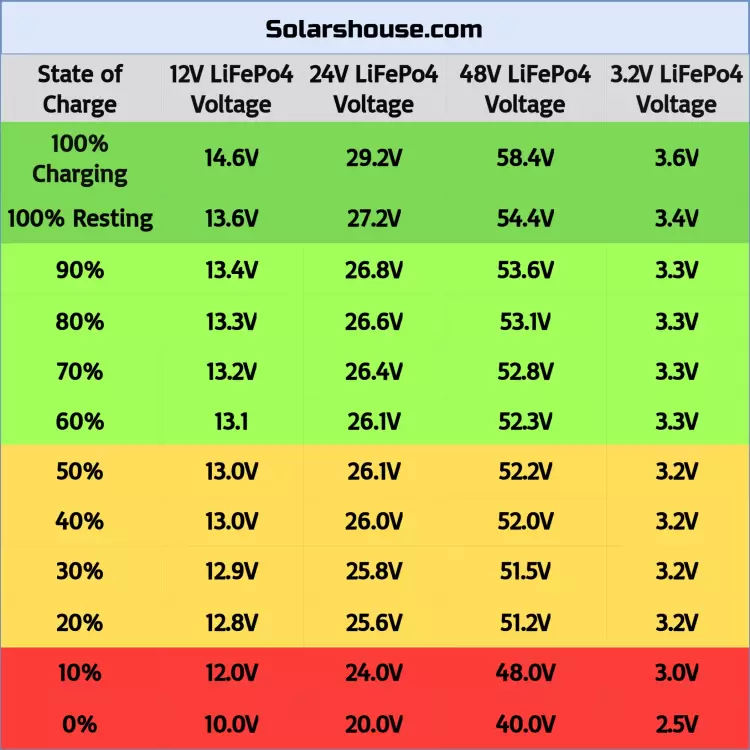
Another interesting article, confirming what the Hubble technicians mentioned, about fully discharging lithium ion batteries, after every 30 charges https://northeastbattery.com/prolong-lithium-battery-life/ Although I'm still uncertain to what percentage I should allow them to discharge. Is 20% SoC a full discharge? Unfortunately, Hubble technicians didn't reply to my question, in this regard. But let's see what happens tonight, since we're having load shedding from 04:00 to 06:30. It's 1:30am right now, and SoC is already 57%. It's likely gonna drop below 40% by the time load shedding ends. We had overcast weather all day yesterday, some rain last night, quite cold too. Solar charged the batteries to less than 85% during the day, plus load shedding, family using heaters, appliances, etc, hence the low SoC at present. It's just over 3 weeks since we've had the inverter, so perhaps it's an opportune time for a full discharge. My timer settings are still exactly as per my last post. Inverter Set to restart at 40%, low battery at 30%, Shutdown at 25%. Let's see how low it drops, by the end of load shedding. Kinda doubt it will reach 25% though. Hoping it will drop to somewhere close to 30% by the time load shedding ends, and that it will qualify as a full discharge. Keen to get your guys thoughts on doing a full discharge after every 30 charges. I'm not sure if this applies to LiFePO4 cells. I'm also aware that technicians are sometimes under the same misconceptions as others, due to reading the same source material, etc. So I prefer to do independent research, as opposed to taking what any 1 person says, as the Gospel, so to speak. As I'm sure you guys can tell, I'm still learning and figuring things out. Just taking you all along on the journey with me. Addition So I just adjusted my timer and battery settings as follows, to cater for tonight's venture 01:00 to 05:00 30% 05:00 to 09:00 20% 09:00 to 13:00 30% 13:00 to 17:00 40% 17:00 to 21:00 50% 21:00 to 01:00 40% Restart 25% Low batt 20% Shutdown 15% At 03:50 battery SoC is 52%. Load shedding to kick in at 04:00. Changed things since I didn't want the inverter to reset while I was away, for my pre dawn prayers. I'm sure the ladies will be using heaters, since it's a cold morning, so there's a chance the batteries will reach 40% SoC while I'm away. It was previously set to restart at 40%, but I changed it to 25% now. Also it's just around 21 days since we installed the inverter. So it's not yet 30 days. I dunno if maybe I should have just waited a full 30 days, before trying the whole discharge thing. Not sure if it makes a difference. The whole purpose of the full discharge, after 30 days, has to do with the BMS and battery calibration, which is software related, so I'm not sure if the 30 day figure, has added significance. Apologies for rambling. It's 3:56 right now, and I've been up all night, lol. Hope this stuff is beneficial, and adds perspective for others. Addition Just to update you guys. So the battery still only ended up being discharged to around 40%, before the solar kicked in. I'll have to probably run the heater for a few hours or so, the day I decide to do a full discharge. For now, reckon I'm just gonna leave the timer and battery settings as they are, and let things be. I was looking at the voltage charts, and the difference between 50% SoC and 40% SoC, is a matter of 0.2V, so I'm not gonna bother about keeping the level above 50%. I think if it sometimes drops to 40% or slightly lower, it might even be a good thing. Of course I still intend to do the full discharge, every 30 charges or so. But I don't think it's something to stress too much about. It was just a recommendation, after all, and I figure, so long I do it, every so often, it should be fine, God willing. Another interesting link I came by: https://revov.co.za/news/the-value-of-a-16-cell-vs-15-cell-lifep04-battery-configuration/ Just a little FYI, the Hubble am5 is a 51.2v 16 cell battery. Latest update As confirmed by Hubble technicians, a full discharge is down to 20% SoC. Apologies for all my ramblings. For what it's worth, hope my posts were beneficial.
-
The percentages in the 09:00 to 13:00, and 13:00 to 17:00 slots, are irrelevant. I could have just put any percentages in there, and it would have made no real difference, since solar is active in those hours, and generally charges it up to 100% anyway. But if it was a really dark, rainy day, and solar was charging slowly, and I put really high percentages in those time slots, like say 95%, then it would probably have used the grid to charge (If I ticked grid charge, for those time slots, but I didn't) So I just kept the percentages low, and let solar do its thing. Thing is, I know that the battery SoC at those times, will be higher than 50% and 60%, respectively. The battery is already at ~100% by midday. Even on a rainy day, it should be over 70% by 13:00. Guess I could have put in lower percentages, to play it safe. Thing is, I can't leave any fields blank. I'm forced to put in some %, so I just put in %'s which gave the fields some symmetry (I'm moderately OCD about symmetry). But you'll notice, I didn't tick "grid charge", during those time slots. I actually amended the times again today. I've been in communication with the technical guys at Hubble, and they told me that I should do a full discharge, at least once every 30 charges, to keep the batteries functioning optimally, and ensure maximum longevity. I asked them if a full discharge meant draining them down to 20%, but I'm still waiting for their reply on that. So I decided not to worry too much about the timer settings, and just let things be for now. If it sometimes drops below 50% SoC, I figure it's not that big a deal. My latest settings are as follows: 01:00 to 05:00 50% 05:00 to 09:00 50% 09:00 to 13:00 50% 13:00 to 17:00 50% 17:00 to 21:00 50% 21:00 to 01:00 50% Restart 40% Low batt 30% Shutdown 25% If you notice, I haven't selected grid charge at all. The only times my batteries will effectively be near the 50% SOC mark, will be around 05:00 to 09:00 As it's currently set, so long as there's no load shedding 04:00 or 06:00, my inverter should maintain the 50% SoC. But if there is load shedding, say at 04:00 to 06:30, its likely my SoC will drop below 50%, by the time load shedding ends (which is generally at around 06:15), in which case, my inverter will just maintain whatever SoC the battery is at, at the time. And I'll just have to wait for solar to charge it up again, since I haven't ticked the "grid charge" checkboxes. Let's see how it goes for a few days, and I'll hopefully try to give them a deep discharge after another week or so, as instructed by Hubble. Although, I'm kinda on the fence about letting them discharge to 20% SOC. I mean, not like 20% is some magic number. Shouldn't draining them to 25% be good enough? I've read many people advising not to discharge below 20%. So why not just give myself a bit of headroom, and discharge to 25% instead? Or 30% maybe? Anyway, let's see what reply Hubble gives me later today. For now, I remain on the fence about this issue. The batteries should equalise, when they reach 100%. I don't see the real need to drain them to 20%, since you can drain them below level that too. I just don't see why 20% is the magic number, to preserve the cells. Why not 15%, or 25%? I know it has to do with the voltages, corresponding to those percentages, but I still don't see what makes 20% the magic number. Sorry for rambling. Hope everything I said was understandable. Addition Just for the sake of thoroughness, here's what the tech guys at Hubble had to say, when I asked about the max charging amps, and whether draining the batteries down to just 50% SoC would increase their longevity: "For the Deye inverter, we recommend a Max Charge Amp of 50A per battery. Below 100A will increase the lifespan of the battery. We recommend 20% SOC discharge on all Hubble Lithium batteries and 100% SOC recharge to reach bottom and top balance." I then asked if it will be a problem if my batteries don't reach 20% SOC, since the most they generally drain to, before solar kicks in, is around 40%, and this is what they had to say: "No it will not negatively impact the battery, provided you do a full discharge at some point. To ensure, battery longevity, It's recommended after every 30 charges, you should allow your lithium based battery to completely discharge before recharging. This preserves the cells and increases its lifespan."
-
 Solarmaxi reacted to a post in a topic:
Sunsynk inverter constantly discharges Hubble battery lower than setting
Solarmaxi reacted to a post in a topic:
Sunsynk inverter constantly discharges Hubble battery lower than setting
-
 Nexuss reacted to a post in a topic:
Sunsynk inverter constantly discharges Hubble battery lower than setting
Nexuss reacted to a post in a topic:
Sunsynk inverter constantly discharges Hubble battery lower than setting
-
MeepMoop reacted to a post in a topic:
Sunsynk inverter constantly discharges Hubble battery lower than setting
-
Hey guys, I found a really interesting article which isn't too technical, makes for rather easy reading, and is perfect for the layman to understand. https://www.solacity.com/how-to-keep-lifepo4-lithium-ion-batteries-happy/
-
abd7 reacted to a post in a topic:
Sunsynk inverter constantly discharges Hubble battery lower than setting
-
Unfortunately, there's no way to limit the SoC, when charging with solar, as far as I know. I was interested in exactly the same thing. Was hoping to let my batteries charge to 90% only. But if you've got multiple batteries, letting them charge to 100% is a good thing, since it keeps them balanced. In SA, as far as I know, we can't sell power back to the grid. At least not here in Joburg. Perhaps Cape Town is an exception? I highly doubt it though. I don't think we have the infrastructure for that. Would be cool if we did though. The bulk of our solar production, for the better part of the afternoon, is totally wasted.
-
Thanks for the link. I was actually just reading up more about this last night, and realised that LiFePO4 batteries are actually quite a game changer, and far less impacted by deep discharges, compared to other lithium ion chemistries. That being said, even with LFP batteries, they still give a much longer cycle life, if not discharged too deeply. If you keep them above 50% SOC, you can effectively triple their cycle life. I came across some interesting info in this regard, on the BSL battery website, but couldn't find it when I searched for it again. But basically, they encouraged shallow discharges, as the cycle life increases exponentially, the shallower the discharge cycles get. At 30% DoD, you get insane longevity, but at the cost of practicality. I think keeping your DoD at around 50%, seems to be striking a good balance. We actually had a power outage today, with no grid power from like 3pm to 9pm, so I keep learning more, what works best, as we go long. These are my amended timer and battery settings. Hopefully I've found the sweet spot now, where I can just let things be, without needing to do any further tweaking. 01:00 to 05:00 50% grid charge 05:00 to 09:00 50% grid charge 09:00 to 13:00 50% 13:00 to 17:00 60% 17:00 to 21:00 70% grid charge 21:00 to 01:00 60% grid charge Restart 35% Low battery 30% Shutdown 25%
-
SuperCwazy reacted to a post in a topic:
Sunsynk inverter constantly discharges Hubble battery lower than setting
-
SuperCwazy reacted to a post in a topic:
Sunsynk inverter constantly discharges Hubble battery lower than setting
-
Scorp007 reacted to a post in a topic:
Sunsynk inverter constantly discharges Hubble battery lower than setting
-
While lithium ion batteries can be consistently drained all the way to 90%, they don't like deep discharges. Frequent charges, keeping them around the 50% capacity mark, is best. I might be new to inverters, but I've got years of experience with lithium ion batteries. To give you a practical, real life example. We got a UPS device, just around 4 months back, to power our WiFi router during load shedding. Initially, we got a solid 3,5 hours out of it. Prior to getting the inverter, we were getting no more than 2 hours out of it. It's a LiPo, and while they're designed for long service life, those stage 6, four hour load shedding cycles, caused it to deteriorate very quickly, since it was being fully drained. I can give you many examples, even with lithium polymer inverter batteries, since I have friends and family who've been using them for some time. Deep discharges cause them to lose capacity very quickly. Please give this a read. https://batteryuniversity.com/article/bu-808-how-to-prolong-lithium-based-batteries
-
SuperCwazy joined the community
-
Hi, I know this is an old thread, but just thought I'd add my 2 cents, hoping it will benefit others. I'm kinda new to solar/inverters. Got my Deye inverter installed just under 3 weeks ago. 8kw inverter, and 4× hubble am5 batteries. Sounds like overkill, but figured I'd just bite the bullet, since it's best for the long run. Deep discharge cycles dramatically reduce the battery's life expectancy. If you can keep the battery between ~50% and 100% charge, it works wonders for longevity. Once you start draining your batteries deeply, it starts a vicious cycle, of needing to continuously deep-drain your batteries, as each deep discharge, will decrease capacity. Just thought I'd put this out there. What I really wanted to mention, is regarding those "grid charge" checkboxes, on the "work mode timer". Let's say your battery is at 81%, and there's no load shedding. When it drops to 80%, the grid will maintain the 80% charge. So long as there's no load shedding, throughout the night, given that you set the state of charge at 80% throughout the night, the inverter will use grid power to maintain that 80% charge. But let's say there's load shedding from 20:00 to midnight, and let's assume that your battery was on 90% before load shedding commenced at 20:00. By the time it's midnight, and load shedding stops, your battery level might be around 65%. So when grid power is back, it will maintain that 65% charge. It won't recharge the battery back to 80%, because the "grid charge" checkbox, isn't ticked. But if the grid charge checkbox was ticked, at the 00:00 to 04:00 time slot, then your battery would have been charged back to 80%, and the inverter would maintain that charge, until either another load shedding session, or your solar panels kick in, in which case, your battery will be charged back to 100%. So it's all a balancing act. I'm still tweaking my timer settings, but I'm getting the hang of what works for my household. When winter sets in, and we start using heaters, that will be the real test, since the ladies don't wanna use gas heaters. But 800w bar heaters, used intermittently, should be manageable enough. Here's how my timer is currently set: 01:00 to 05:00 65% grid charge 05:00 to 09:00 55% grid charge 09:00 to 13:00 60% 13:00 to 17:00 65% 17:00 to 21:00 70% grid charge 21:00 to 01:00 65% grid charge It's set to basically never need to grid charge at all, but if for some reason, the battery percentages do drop below the limits I set, the grid will only need to charge them for a very short while, till we enter the next time slot, and the battery again begins to discharge. Recently, we had a load shedding slot from 04:00 to 06:30, where the battery level dropped to 48%, hence I set the grid charge, for the 05:00 to 09:00 time slot. It's Ramadaan right now, so we wake up before sunrise, use the microwave, kettle, etc. So there's some significant battery drain in those early hours of the morning. Basically, I just need to grid charge to maintain a certain percentage, until sunrise, and the solar kicks in, then I'm generally back to 100% charge by midday, if the sun is shining. My inverter is set to prioritise the load, before charging the battery. It's just around 23:50 as I'm typing this, and the battery level is at 75%. I'm hopeful that there will be no need to grid charge at all, throughout the night, but it's generally a close call, around 6AM. The battery might near the 55% mark around that time, but I'm hoping it will still be above 60%, in which case, I probably won't need to grid charge at all, until the solar kicks in, God willing. Sorry for typing so much. For what it's worth, hope whatever I said is helpful.
