
esmail-kassir
Members
-
Joined
-
Last visited
Everything posted by esmail-kassir
-
💯 true It seems the parallel concept is sometimes misunderstood, and eliminating a single point of failure is underrated.
-
I have a simple question. When someone buys an inverter air conditioner, is the main reason to save electricity, or mainly to avoid the frequent compressor startups of a traditional AC? In other words, should we think of inverter AC primarily as an energy-saving technology, or as a way to eliminate on/off cycling and high starting current? I would be interested to hear opinions
-
Hey In some forums and discussions about photovoltaic systems, I have seen installers and users advising people to manually open the PV DC breaker (disconnect the solar panels from the inverter) when a thunderstorm approaches. The reasoning usually given is that the long DC cables between the PV array and the inverter can act like an antenna and may pick up electromagnetic pulses or induced surges from nearby lightning activity. According to this argument, disconnecting the array could reduce the possibility of a surge entering the inverter. However, I am personally skeptical about this idea. Lightning is capable of traveling through kilometers of air, so it is difficult for me to believe that a small air gap of a few centimeters inside an open DC breaker would meaningfully stop or block such energy if a strong surge actually occurs. From a physical standpoint, it seems unlikely that opening the breaker alone would provide real protection. At the same time, I have seen at least two installers who strongly recommend this practice during storms, claiming that it can help protect the inverter in some cases. Because of this conflicting advice, I am trying to understand whether there is any real technical basis for this recommendation or whether it is simply a precaution that people repeat without clear evidence. So I would really appreciate hearing the opinions and field experience of engineers, installers, and long-term PV system operators:
-
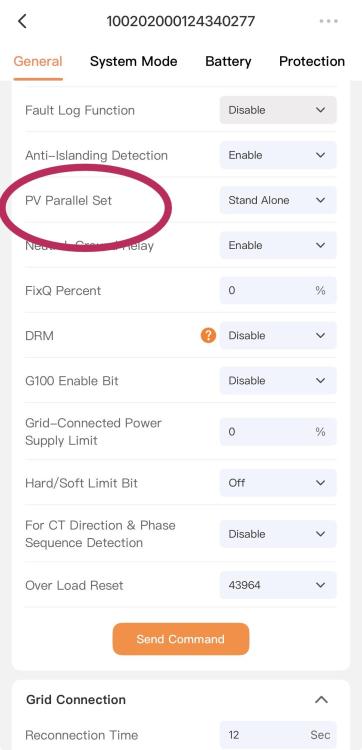
Can this feature make the 2 MPPTs work together for the same string ( load sharing)
-
That what I thought when I chose to install all on one MPPT I assumed that working around the nominal voltage (300 ish) would be better than ( 120) and more efficient
-
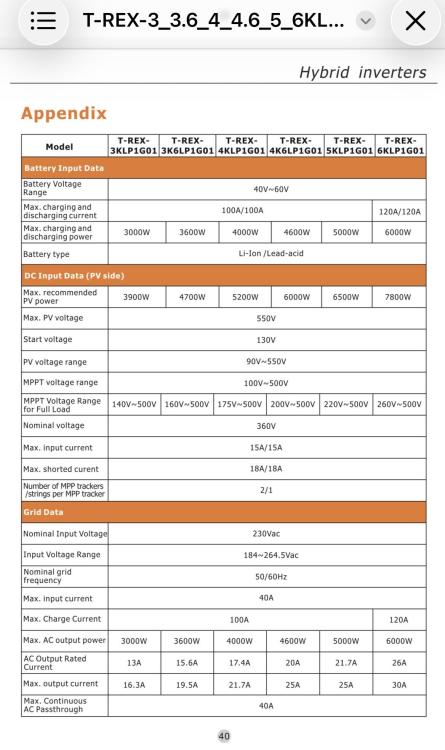
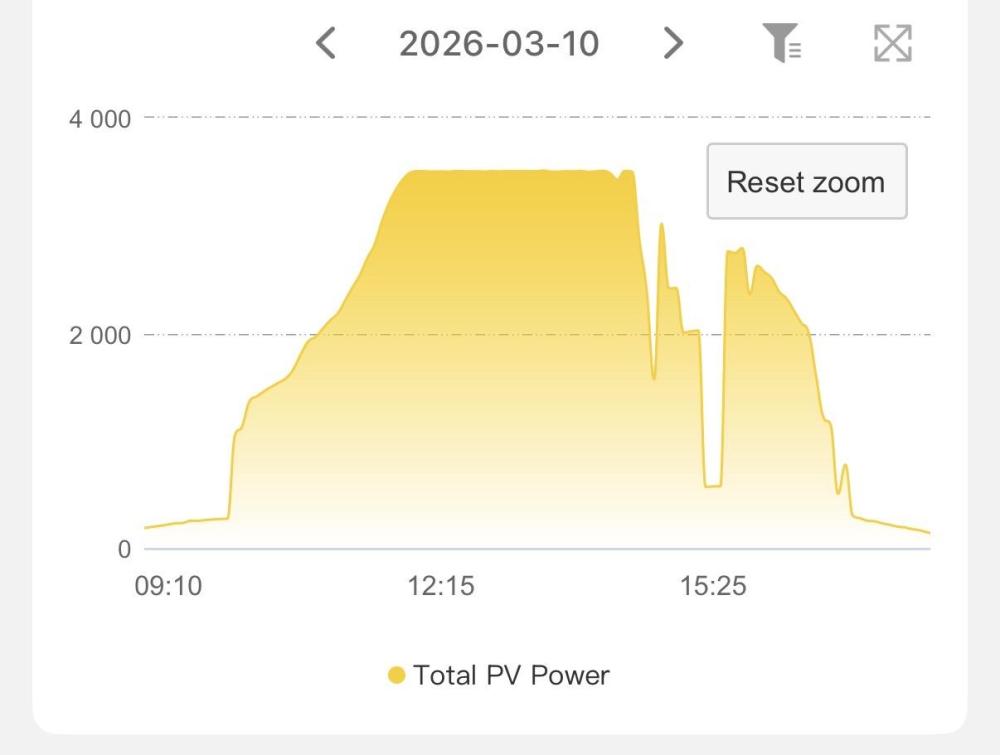
Hi everyone, I’m seeing a flat plateau in my PV production curve during peak hours (as shown in the chart from 2026-03-10), and I’m trying to understand the root cause. My system specs: ∙ Inverter: Felicity 5kW with dual MPPT inputs, each rated at 15A max ∙ Array: 7 panels × 580W = 4,060W total ∙ Measured voltage during plateau: ~300V ∙ Measured current: 11.2A – 11.8A Observations: ∙ Production ramps up normally in the morning, then hits a hard ceiling around 3,500W and stays flat for several hours instead of forming the expected bell curve ∙ pleaee ignore a noticeable dip and spike around 15:25 , it is because the battery almost full+ no load and grid was off ( so can’t export ) My questions: 1. Is this classic inverter clipping caused by the array’s power exceeding the inverter’s rated output? 2. Could the 15A per MPPT limit be the bottleneck here, even though my measured current is only ~11.8A? Any insights would be appreciated. Thanks!
-
Felicity T-REX 5 K inverter With Felicity FLB48100 battery My setup is Felicity T-REX 5 K inverter but with 16 kWh battery
-
it is winter now, so I am testing the worst scenario
-
Thant is the answer that I was looking for , thaaaaaaaaaank you 🤩. maybe operating near nominal voltage increase the MPPT efecincy and reduce thermal stress the looses wont be that much indeed !
-
Assuming the array is just able to start the MPPT , which configuration harvests more energy: two independent strings that each sit exactly at the MPPT lower-limit voltage, or a single string whose Voc is close to the inverter’s nominal MPPT value but is partially shaded?
-
I can't add 8th panel due to the chimney so my options are 7 on one MPPT VS 4/3 2 MPPTs you are correct , It is in Damascus Syria
-
could it be volt drop due to cable R ,
-
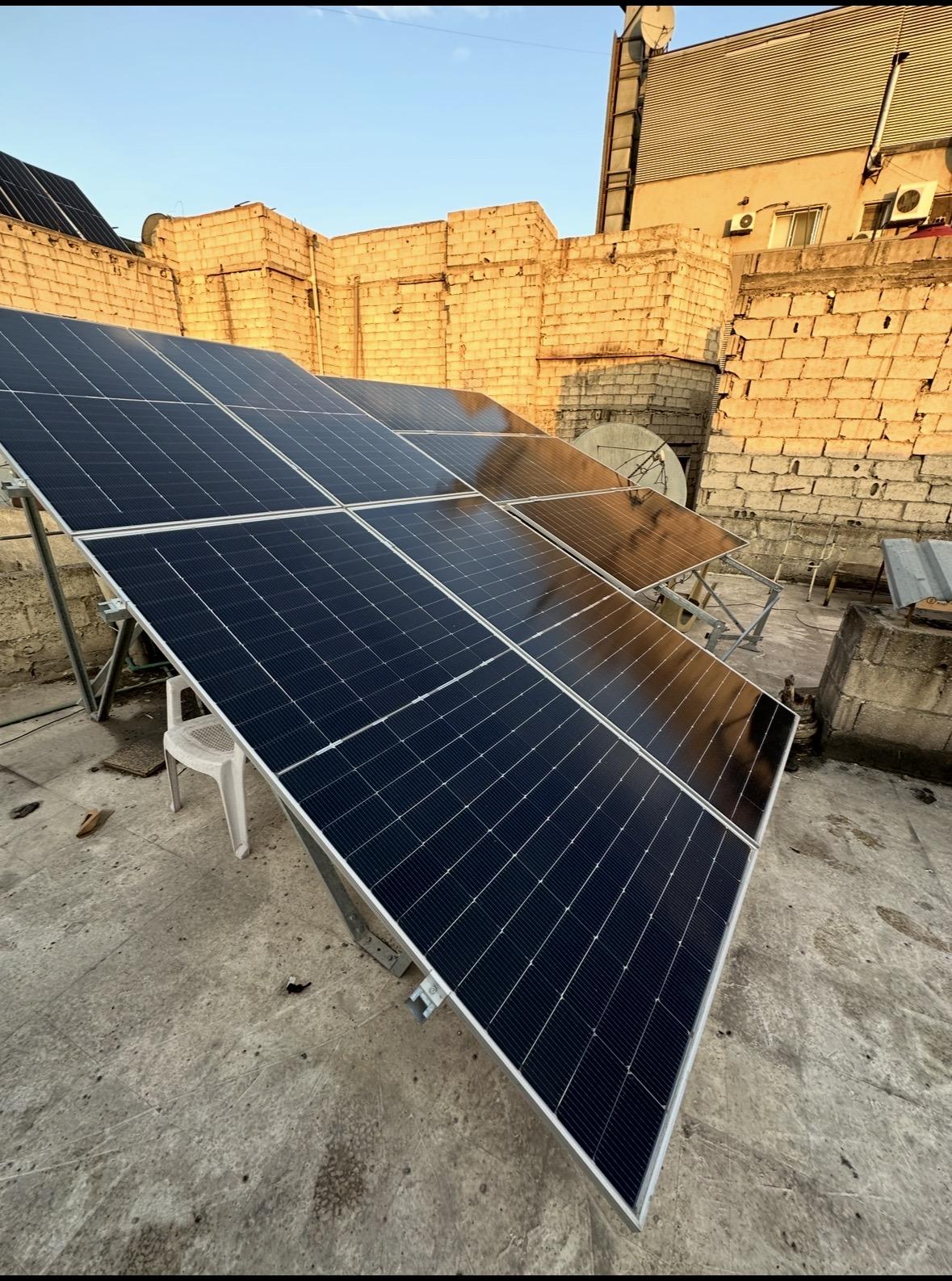
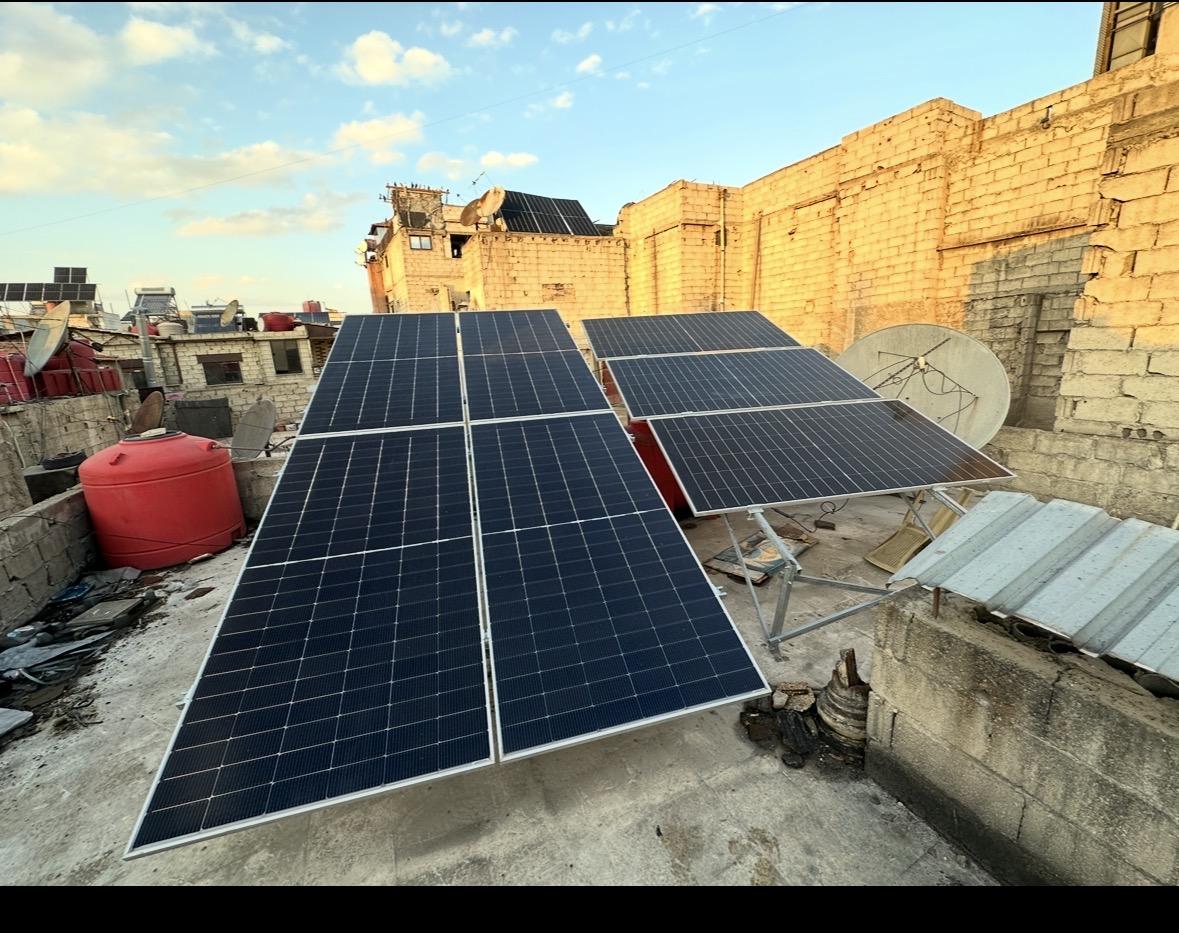
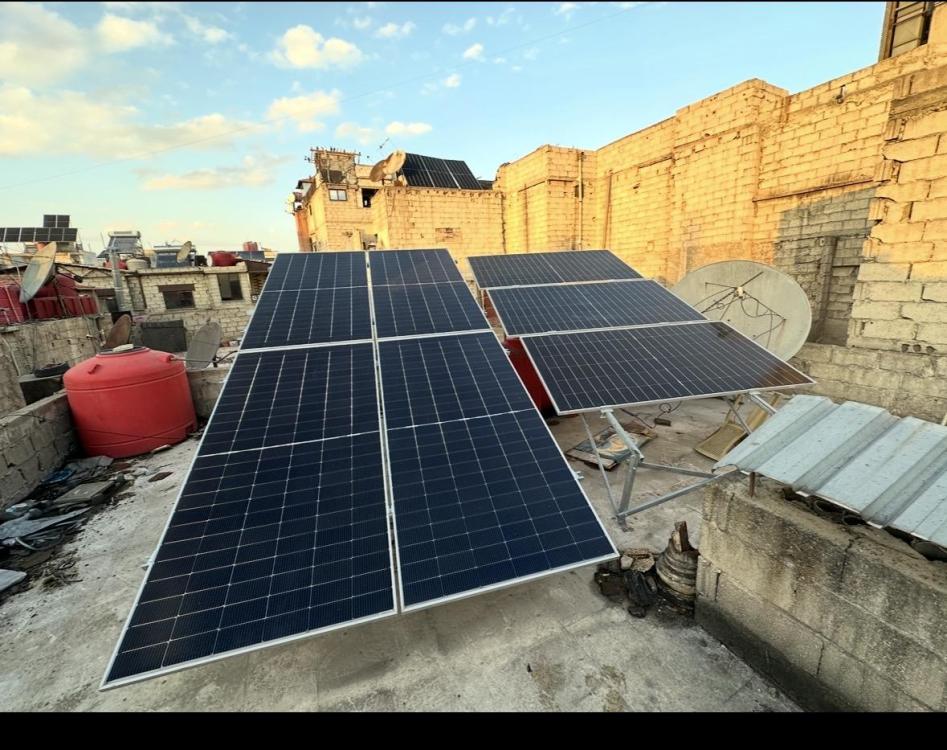
I have a rooftop that is not small, but it is surrounded by walls. There is a slightly higher building on the left side and a very tall building on the eastern side that deleys the sun rise till 08:40 in summer and 09:30 in winter . Because of this, my roof is heavily affected by shading. This situation left me with only a small area where I could install four solar panels that are not affected by shade from 9 a.m. until 4 p.m. Recently, I had to add three more panels. However, sunlight reaches these new panels one to two hours later in the morning compared to the original four panels. In the evening, sunlight disappears from the old panels while it is still available on the new ones. I assumed that the bypass diodes would handle this issue by isolating the shaded panels so they would not affect the illuminated ones. However, it seems that this does not happen in reality: the shaded panels limit the performance of the illuminated ones and pull their output down. Maybe my inverter doesn’t do global sweep/scan I considered connecting the three new panels to a separate MPPT input, but I am concerned that I would lose the advantage of higher voltage achieved by connecting the panels in series. In other words, the performance gain I might achieve in the early morning could be lost during peak production hours. What do you recommend?


-
So is this why there’s an MPPT voltage range, and the PV never starts working before reaching the minimum threshold? I’ve seen some cheap cloned Voltronic models that were modified at dealers’ request to start at 30 V — those exact units produce noise and interfere with TVs and ADSL routers whenever the PV is active ؟
-
the inverter is 5000 W so maximum charge and discharge is 100 A
-
I am using 6 mm for 5000 W input and the cable is 4 floors length = 12 meter , do you think is it ok ? we are talking about Grid AC input here
-
well , It is not smart method to be proud about🤭 I read (inverter screen battery voltage) - (battery screen voltage)
-
I am using 6 mm for 5000 W input and the cable is 4 floors length = 12 meter , do you think is it ok ?
-
✅
-
what is the usual range for cables R ? , I have 35 mm for 48 V 350 Ah battery , and the drop voltage is 0.1 but it goes up to 0.3 when charging or discharging with higher current , I believe the drop voltage is more than ok but the variation worries me
-
could you tell why you think Victron app is good ? , you can’t do time of use , no grid peak shaving features , you can’t choose easly when you want to use the grid and when, many devices and points of truth , you need windows laptops to do some settings then restart the multiplus to apply . I’ve been researching about victron for a while and I am impressed of it as hardware but what holds me from from buying it is the software So I wish you could prove me wrong so I can pull the trigger @stefan44
-
Hey everyone, I’ve noticed some strange behavior on my T-Rex 5k (also known as IVGM 5k) inverter, and I’d like to hear your thoughts or similar experiences. 1️⃣ At very low household load: When my home load is extremely small (around 200 W), the inverter reports 0 W real power but shows about 200 VA apparent power, which matches the actual load. It’s like the load becomes “purely apparent” with almost zero real component. 2️⃣ While charging from grid: When charging the battery at around 5000 W, only about 4500 W actually goes into the battery. The missing ~500 W shows up as increased apparent power on the AC output, almost proportional to the charging current. Example: at 4000 W charge, I get roughly 400 VA extra showing on the load output. 3️⃣ Power Factor setting effect: There’s a PF (Power Factor) parameter in the inverter settings. When it was set to 0.7, the inverter drew about 27 A and couldn’t charge above 3600 W, even with 220 V input. After changing it to 1.0, the readings became much more logical — the inverter could now pull enough current to reach the expected 5 kW charging rate. My theory: It seems the inverter’s apparent power reading includes internal reactive components or phase shifts between voltage and current — especially during heavy charging. Even when the house load is basically zero, it still shows some VA due to inverter-side phase displacement. Has anyone else noticed similar behavior with the T-Rex / IVGM units? Particularly the increase in apparent power on the load output when grid charging? And how does adjusting PF affect your grid sync and charging efficiency?
-
no mine is mono phase https://www.felicityess.com/wp-content/uploads/2024/11/T-REX-3_3.6_4_4.6_5_6KLP1G01-hybrid-inverter-user-guide-English.pdf
-
You’re right that current is the direct stress on the inverter, not just the kW figure. But when I say “2000 W for a moment,” that’s exactly the surge showing on the inverter display — which reflects the high inrush current. The important point is: my appliances haven’t changed. The very same loads (AC + vacuum cleaner) used to start fine on a Voltronic 6 kW HF. Now with the new LF unit, even though it’s smaller in size, it should in theory be stronger in handling inrush — but it actually fails. So I’m really trying to understand this technically. In your opinion, if it were a Voltronic 5 kW instead of 6 kW, do you think it would also fail to handle that startup surge?
-
I realize that my new LF inverter is smaller in physical size compared to my previous HF model, but that’s exactly why I raised the point. Normally, the main advantage of LF designs is supposed to be their ability to handle inrush/surge loads better, even if the continuous rating is similar or slightly lower. In my case, the issue is not continuous overload — the problem shows up only during startup surges (like AC compressor + vacuum cleaner). That’s why I expected the LF unit to cover for this difference, but it doesn’t. I’m genuinely trying to understand this from a technical perspective. If the LF design can’t handle these short inrushes as I thought, then maybe HF brands like Deye or Solis (with higher surge specs) would actually be a better choice for my setup. My goal here is not to justify the new inverter, but to reach the correct technical conclusion, even if it means replacing it. @TaliaB @Denns