NigelL
Members
-
Joined
-
Last visited
Everything posted by NigelL
-
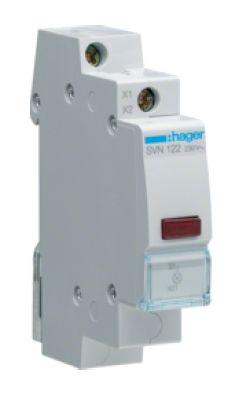
DIN-Rail mounted 230VAC LED indicators are quite useful to show that mains power is connected to a sub-DB or an inverter output is active. My question is - does one need to install a fuse or circuit-breaker in series with this type of LED indicator? An electrician pointed me to Chapter 7.4.6.7 in SANS 10142-1 - which suggests that this is needed. My interpretation of this requirement is that it only applies to temporary DBs at construction sites. I can understand that a fuse/breaker may have been important when using old incandescent bulbs, but these LED indicators should be internally current-limited and inherently safe. They typically just have a Cap and Resistor in series with a back-to-back LED/Diode. The X-Class Cap will only pass a limited current even when directly across mains. The series resistor will instantly fuse if the cap is somehow short circuited. Unfortunately I cannot find any such current-limit/fusible specification on any of these LED indicators (Hager, Schneider, ABB, Siemens etc.). Also, I was hoping to use thinner wire (e.g. 1.5mm^2) to connect the LED indicator to the incoming mains supply (10mm^2). My reasoning, which may well be incorrect, is that one does not need to protect this thinner wire against a high-current short-circuit condition since the Indicator LED effectively includes a fusible element or has a limited fault current. Any thoughts?
-
I have most of my physical installation done, so am now starting to configure things 😀. A big thanks to @The Terrible Triplett for compiling this guide! I have purchased the USB-MK3 adaptor for programming Multigrid-II and the USB-VE-Direct adaptor for programming the MPPT 150/70-Tr. Once programmed and configured, how often is one likely to use these cables/USB adaptors? I was wondering whether it is worthwhile leaving these cables in my overall "installation" so that one can quickly connect the USB end of the adaptors to a Laptop?
-
Agreed! I had an Efergy unit installed next to my "proper" Landis & Gyr meter so could easily compare values - they were typically 10% out, but sometimes up to 20% different. The effergy also cannot compensate for the Power Factor of the load, so will typically give a larger power reading than actual. They are still usefull to get a ball-park idea of power use and specifically power use at different times of day.
-
Hi Andrew I think I saw a similar case at Netram Technologies - but do not see it on their website (www.netram.co.za). Otherwise the PiShop (www.pishop.co.za) usually has most Pi accessories at a good price.
-
I think that I will need to make one of these. I am not sure if you are familiar with the bird called the "Hadeda". It is quite large, loud, and also has a correspondingly large droppings! My house seems to be on the Hadeda and Egyptian Goose flight-path to a nearby water reservoir.... 😀
-
Hi Javi Are you using this to compare your (large) solar panel power production with a small reference panel? I can see this being useful to quickly check if there is a problem, on your main solar panels, without having to climb onto the roof.
-
I'm in much the same position - I started filling in this document a while back and then put it aside after getting part of the way through page 4. The "Electrical parameters of embedded generation 3" at end of page 4. I put Rated Voltage as 187-265 VAC (from Victron Multigrid-II datasheet). I am guessing that the "Maximum Peak Short circuit current" should be the same as the rating of the MCB on the output of the Inverter (in my case this is 40A). I put N/A for all of the remaining items at the very bottom of Page 4 . The "Protection Details section (Page 5)". Method of synchronising: - I was considering entering something like "Automatic - internal electronic synchronisation. Inverter on NRS 097-2-1 approved list. Method of anti-islanding: "Double anti-islanding relay protection. Inverter on NRS 097-2-1 approved list." I have put N/A for the remaining 3 items on page 6. I am also unsure of how to fill in the "List of regulatory approvals, requirements and normative references". If one ticks something that is not applicable, will they ask to you to prove compliance? If you do not tick a required box, will they then reject your application? Tricky, tricky...!
-
Hi Jaco - thanks for confirming! Famous last words 🙂
-
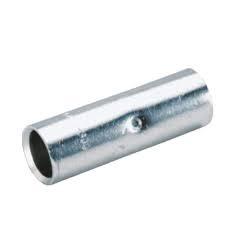
A common method is to join the wires using a barrel-type uninsulated ferrule. I am not an Electrician, so the following are just observations and may not be the proper/legal way to do this 😉 Notes: One must select a Ferrule that is just big enough to fit all of the wires (it should fit snugly before crimping). For crimping multiple wires together, insert all wires from the same end of the Ferrule, with the stripped section going all the way through the barrel. Crimp the ferrule on both sides of the middle notch with a proper crimping tool. Double check that all wires are properly secured and cannot move or be pulled out of the ferrule (give all of them a good tug) Cover the ferrule with a few layers of insulation tape. This connection must be done inside a connector box with a separate compression gland for each cable.
-
Thanks - for the feedback! Was just wondering if there were any other options I had not considered 😉
-
Is there a preferred method of connecting two or three wires to a single terminal of a circuit breaker? I have seen installations where two wires are twisted around each other and then clamped in the terminal, but have also seen comments that this is very bad practice. I see that SANS 10142-1 does not allow more than 3 wires to be connected to a single terminal.
-
Hi Chris I have a similar setup but have not experienced this problem. I think this is due to having a one-way valve installed on the cold-water inlet to the Geyser. The circulation pump gets the cooler water from the "bottom" of the geyser and pumps it through the collector and then back into the geyser - so should only fail if the geyser is almost empty? It may also be worth checking that the mesh strainer/filter is not partly blocked - my filter needs to be cleaned every few months.
-
I often buy components from Digikey - through their local authorised agents in Cape Town. They bring in a consignment once or twice a week, so you do not have to purchase any minimum order value. Speak to Mark or Edith Smith at Nuvision. Edith Smith Internal Sales Administrator NuVision Electronics (Pty) Ltd. Tel: +27 21 554 0038 Email: [email protected]
-
This will need to be quite a large high-power (>10W) diode, with suitable reverse-voltage rating. Heat dissipation becomes an issue and will probably need a heatsink. Alternatively one can make up an "ideal diode" with almost 0V forward voltage-drop using an active circuit and some large Mosfets. No heatsinking needed, but more costly.
-
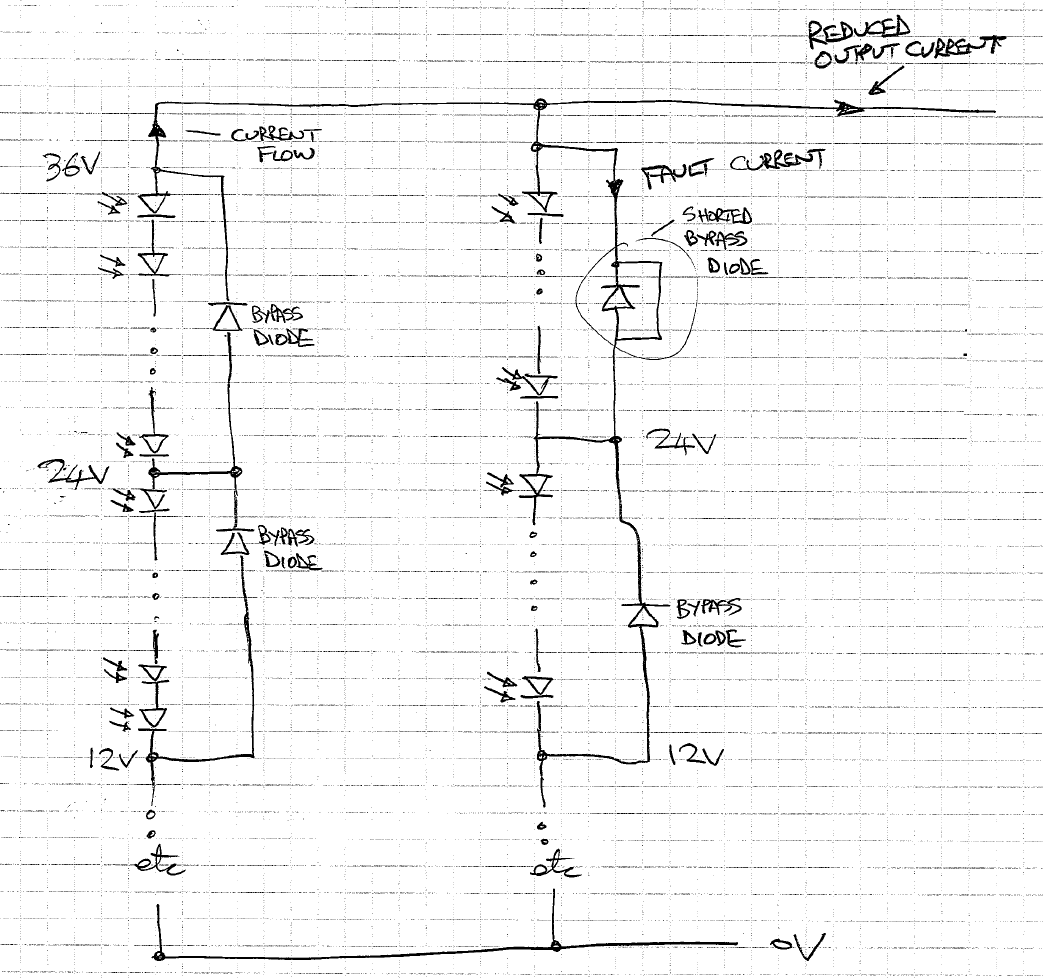
See attached sketch showing what I think is happening in @Javi Martínez paulty panel. A significant portion of the current generated by the good string is being shunted by the string with the shorted bypass diode.

-
Hi @weber, thanks - I skimmed through the responses and mis-ascribed the recommendation 😉 I had heard reports of the "cloud halo" effect from people with solar installations, but never seen it properly described or quantified. This is very useful info!
-
Perfect - thanks!
-
Out of interest, what cable power-loss calulator are you using? I have come across the site http://www.solar-wind.co.uk/cable-sizing-DC-cables.html, but is only confirmes whether a cable run will be within a given loss percentage.
-
Hi Phil Thanks - your suggestion to use a couple of MCBs makes a lot of sense, but does come at a bit of a cost premium. Note that I was not planning on installing any fuses under the panels - only in the DC-DB. This approach is surprisingly effective, even for low-level ESD protection of low-power electronics (my area of expertise). Lighting is somewhat of a rare event in Cape Town, but the induced currents from a strike over 1km away can still damage exposed/unprotected equipment.
-
I was also a bit sceptical about this. My preferred alternative, of routing each string via a pair of 4mm^2 cables, will give far lower losses.
-
A really big thank you to all the feedback! As an electronic engineer I understand the theory, but was not sure about the "best practice" and regulation aspects to this issue. There is still some time before my panels will be installed, so I will request the installer to make some adjustments to their initial "plan". I will give an update on the final implementation in a few weeks.
-
I am planning on having 9 x 330W panels installed as 3 parallel strings of 3 panels in series. I have calculated that this combined array will have a worst-case short-circuit current of 28.6A at max temperature. The solar installer has said that they will use cascaded MC4 "Y" connectors to parallel the strings together under the panels - without any fuses between the strings. The combined array will connect to the DC-DB via two 6mm^2 cables (plus extra earth cable). The DC-DB will then just have a single fuse in each of these PV cables. The cable run is about 16m - 18m. I thought that one must have individual fuses for each string - both for safety reasons and for obtaining a CoC. In this case it would make more sense to route 6 thinner cables (e.g. 4mm^2) to the DC-DB where one would do the combining/fusing and surge protection. Am I just being over-cautious?
-
Thanks for both of your replies! My overall system plan is starting to come together...
-
Thanks! Time for a visit to the Helderberg....
-
Hi Can anyone recommend a supplier in Cape Town that stocks or makes up battery cables (e.g. 35mm^2) with Lugs? I'm also looking for DIN-Rail mountable Fuse holders and fuses (e.g. 100A). Regards...