


mmacleod
Members
-
Joined
-
Last visited
Everything posted by mmacleod
-
I've looked into this in the past but have still not done it, I'm interested in potentially going this route still so curious to see what answers come up. While there is the geyserwise system, it is in my opinion massively overpriced, last I checked (maybe its changed) its around R5000 for the MPPT portion alone and then there are still other parts to the system, an expensive new heating element for a further R2000 and so on. While it maybe works well at almost R10000 to R12000 (or maybe more if you need to install the panels as well) it IMO doesn't really make that much sense from a cost perspective. Other local options include: geyserworx geyserrobot elon 100 There are some good and affordable solutions on the international market, but most of them require a geyser that can take two elements (one for the AC side of things, one for the DC side) unless you have such a geyser they aren't really an option. If you only want it to run on DC and not also AC (like most of the above solutions allow) - or have a geyser that can take two elements, then there are various mppt controllers on the market (international and local) that can do it, some of them aimed specifically at geysers (microcare geyser mppt) and others just configurable in such a way that they can work with a geyser.
-
Ahh curious, they must be introducing some kind of interference/noise then, interested to hear what it ends up being and how it can be worked around.
-
Generally one only uses a hair dryer when their hair is wet, which would be straight after a bath or shower. A geyser also generally only pulls its maximum draw straight after a bath or shower. So the dryer might be 2000w the geyser element is maybe 3000w - at this point you are at almost 5000w excluding other appliances, this is quite close to the size of many inverters (not sure what size your inverter is) - so is probably pushing the inverter near its limits. Try turn the hair dryer on before the bath/shower while geyser is not active and likely you won't experience the same hum. A solution might be to use a geyserwise or similar to control your geyser heating time so that geyser and hairdryer are less likely to happen simultaneously.
-
Exactly this. If installers think they are providing value for what they provide then fine, put that value on the quote and charge for it - nobody is suggesting they shouldn't make a profit. Placing huge markups on things like batteries instead is shady behaviour or comes across as shady behaviour, even if you can justify the end price with "well I have to handle future callouts" or whatever other reasoning - put it on the quote/invoice then. And don't justify this with "the building industry does it" - its just as shady when they do it, and they too should stop.
-
Here are the CT tarrifs. So yes if you are paying less than R2 consider yourself very lucky.


-
There are some interesting systems (from perspective of building a new home instead of putting PV on an existing home) on the international market for integrating PV directly into the roof instead of on top of conventional tiles/shingles/metal sheet roofing. http://www.gseintegration.com/en/InRoof.html# Are there any local companies producing and/or selling products like these? A brief search doesn't turn up much but was wondering whether anyone here might have run into it.
-
I'm considering the possibility of some solar balustrading on the new house I'll be building. If I search for the idea it seems to be quite common now overseas e.g. its easy to find images like If I search in a local/za context I turn up almost nothing however. Has anyone done anything with PV balustrading locally or know of companies doing it etc.? Particularly I guess our architecture code has various standards in terms of balustrade strength and so on which may be different to other countries so I guess its not just a case of buying the same railings as a normal glass balustrade and throwing a panel in instead of glass, or is it that simple?

-
I have the exact same issue, man I hate pigeons so much... The plastic fencing seems like a reasonable enough cheap solution, worried it might be a bit noisy on a metal roof in the CT wind though.
-
Looks like it only stores detailed SOC history going back a month or two, that is a bit disappointing I'd hoped to get the full history for the year I've been operating the battery for. Oh well, still cool to have access to the data, will make a point of saving it going forward now that I can access it.
-
Thanks for the additional info/help. Not really sure what I changed in the end as I fiddled with a few things (possibly just something to do with Virtualbox) or something to do with my linux driver for the usb/rs232 convertor - but I plugged everything in and out again now after trying a few things and suddenly the "BatteryView" software is working inside my windows VM.
-
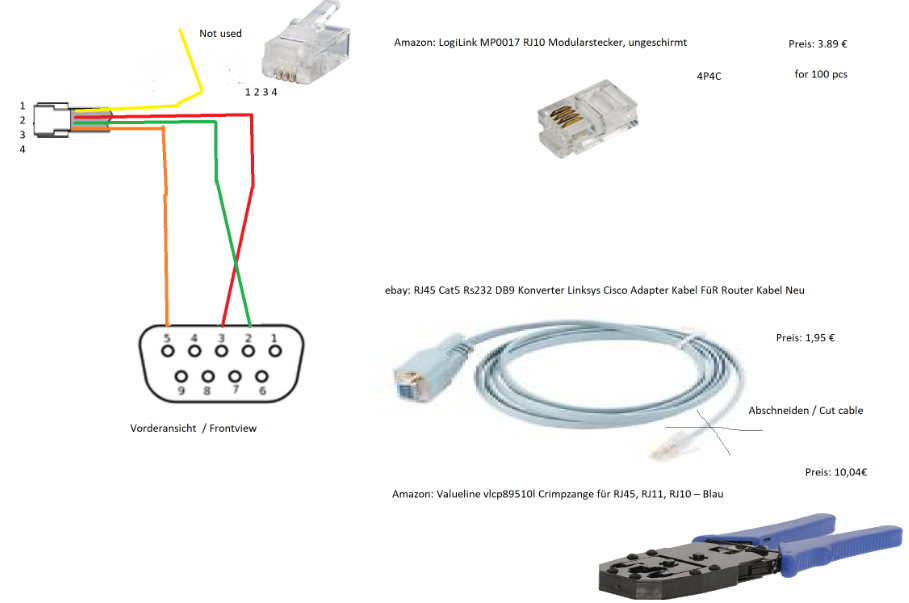
hrm, I've taken an RJ11 cable cut one side off and soldered onto an RS232 as described above (and in the diagram in one of the other threads) and as per this diagram. I plug it into the console port on my pylontech US3000 - and then I check for any data coming over the com port (nothing) - I try the "batteryview" software (also nothing). Perhaps my cable is just faulty - I'll try again, but before I do is there some obvious step I'm missing - do one of the jumpers on the front of the pylontech need to be set before the console port is active or something?
-
Is this just connected directly to the pylontech by an rj45 cable, or is a special cable of some kind required?
-
Do you have any link/info to your DIY version? Not that I'm likely to build one DIY myself for the insurance reasons mentioned (and general anti-DIY climate in the country), but I am always interested to learn new things (all these systems seem to do things slightly differently and its interesting to see) so would love to know the details.
-
I see there is another player now as well , R4000 though... "Elon 100" (http://www.poweroptimal.com/elon-range/)
-
Did anyone ever manage to get some kind of a price on this or the "geyser robot"? Also interested if anyone has some actual technical details on "geyser robot" as their site is very thin on details. The manufacturers of both seem to be hard to get a response from.
-
Actually aluminium is an excellent conductor and at the thicknesses of the average rails for holding panels will do a much better job than some measly thin copper wire.. From what I understand it is more just because 'thats what the panel manufacturers say in the instructions' and because it is difficult to ensure that all the aluminium peices bond to one another electrically. The seperate peices are usually anodised which needs to be peirced to conduct electricity and then further aluminum oxide also forms a non conductive skin. There are special components for this - http://www.we-llc.com/products/weeb-washer - if this link doesn't work google 'weeb washer' to find many hits on it - to me this is a far *better* way of doing it, it makes way more sense. Anyway this brings me to my question, does anyone know somewhere local that has this sort of product available or could make such a thing?
