Don
Members
-
Joined
-
Last visited
Everything posted by Don
-
That is a bargain. Buying an Infini for less than the price an Axpert.
-
Hi @Noobie. If you only have one DB, you can prevent the Infini exporting to grid by setting the settings. If you set it up as per your sketch, the Infini would see your House DB Box as Eskom. Therefore if you had excess power after feeding your Inverter DB box, it would export the excess power to the House DB box. If there is still excess power available after feeding the House DB box, it would go to grid. If there is a shortfall of power, it will draw power from the grid. In this case you cannot prevent feedback to the grid, unless you have a limiter installed (A) as marked on your sketch.
-
That is all you need Mark to keep the the Infini going, should the power go down during the day and prevent it from shutting down.
-
It takes some time to train them. A few days ago I noticed I am drawing 5000 watts from by batteries. My daughter decided to switch on the dishwasher and tumble dryer while making some toast in the kitchen. I have heard of a 3kW infini handling a surge of 8kW. Not sure of the circumstances or for how long?
-
Hi @Mark, without batteries you have a pure GTI. You can always add batteries later when we do load shedding again. As far as I know the surge value is at least double that of the rated power. Maybe someone with an Infini can confirm it for us.
-
The Infini can do exactly that. Feed your essential loads at all times and "Export" excess power to non essential loads instead of the grid.
-
Hi @Noobie. If you want a GTI and a control system that can do all that, buy an Infini. It is a GTI that does not shut down when Grid power goes down. With the settings you can select whether you want to feed back excess power to the grid or not. No fancy expensive control systems required. With Grid Power available, you have a GTI. Without Grid Power, it operates the same as an Axpert.
-
Thanks @Mark. Yes, I think that can work, as long as they don't sit on the string. I will give it a try.
-
I have the same problem with my panels. When the tracker is in the upright position, the top of the panels are probably 10m high, so they like to sit there and use it as a lookout point and crap all over my panels.
-
Yes, it is sad. On Sunday I watched Carte Blanche how a booming wind turbine company was squeezed by Government to bring production to a halt and they would probably be forced to close their doors, as it is not in the best interest of Government. When Zuma decided Nuclear was the way to go, he probably based it on a paper that was written and published in 1956. In South Africa we do exactly the opposite to what other 1st world countries are doing. Unless the Guptas sell their Coal Mines and invest in a Solar Panel Factory, large scale renewable energy will always lag behind in this country.
-
Lol, thanks Silver. I knew they were taking us for a ride.
-
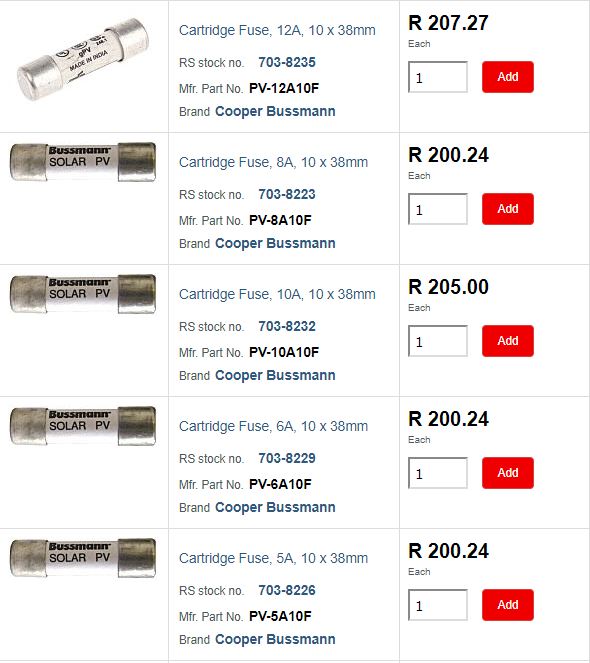
Here is a good example what happens to the price when you buy solar or PV fuses. They think if you can afford to buy an inverter and solar panels, you can afford to pay this price for fuses. So, shop around.
-
Just make sure you get DC fuses. I went to ACDC and bought a few items with a handful of fuses. They had no prices on the rack. I estimated the cost of all the items at around R1 500. Then I got the invoice at the counter to pay - R4 800. The fuses were like R200 each. They said that is the price of PV fuses. Some time later I got Bussmann PV fuses at a Solar shop for about R60 each.
-
Why not? Whether you have one string or 6 strings, I would put a fuse on them all. With DC breakers you have some sort of technology that can fail. Buzz bars arching and getting stuck, springs can break, etc. Very limited technology in a fuse. Not a lot that can go wrong with them. They reach the set amperage, they blow. It is like pulling the trigger on a revolver (the fuse). If there is a bullet in the chamber and the hammer comes down on it, the shot will go off. On a pistol (DC breaker) it depends if loaded the bullets correctly in the magazine, inserted the magazine correctly, you cocked it correctly, excess dirt, etc. Many things that can cause it to jam and not to fire. I would put the fuse close to the panels and the DC breaker close to the inverter. If anything goes wrong with the panels, hopefully the fuse would blow. If anything goes wrong with the cables coming all the way down, through the roof and eventually to the inverter, then the DC breaker would hopefully take care of it. It would also act as a backup, should the fuse not blow for some reason.
-
@Chris Hobson, I agree. I would have 12 Amp fuse on each of the 2 x individual strings and a 25 Amp fuse on the combined string, after combining them in parallel gong to the inverter in this case.
-
@Mark, I think it becomes redundant like a Tesla Model 3 that comes with a petrol engine as a standby when you run out of battery capacity, lol.
-
I agree. The way I calculate the required rating of a fuse is to take the max theoretical value (83 Amps in the case of the Axpert) and add 25%. Therefore 83 Amps + 25% = 104 Amps. Therefore a 105 Amp fuse would be ideal. As the available fuse ratings are 100 Amp, then 125 Amp, I would go to the next available Amp rating which is 125 Amp. That is what I am using at the moment. If you want to be more conservative, you can use the 100 Amp fuse as @Chris Hobson suggested. In my experience I have been running at high very loads in the past and if clouds move in front of the sun, the amps drawn from my batteries would exceed the 100 amps by far for a minute or two. I don't want to blow a fuse every time it happens. On the panels, the same rule applies. Your panels have an Open Circuit Current of 8.71 Amps. Therefore 2 strings in parallel = 17.4 Amps + 25% = 21.8 Amps. Available fuses in the market are 20 and 25 Amps. I would go to the next available fuse and install the 25 Amp fuse. Once again, nothing wrong with taking the conservative route as @Chris Hobson has advised. As Chris has said, just make sure they provide you with DC fuses. I suggest you start off with the conservative option and if you encounter nuisance blowing as @plonkster explained above, increase the fuse amperage slightly to the next available fuse rating, (25% Rule) but do not overdo it.
-
Thanks @plonkster. I don't have an Efergy meter. If I don't come right, I will go buy one.
-
I would prefer it if the lightning hits my water tank, even if it explodes, it will cause less damage than hitting my solar panels or DSTV dish with 2 x decoders and 8 x LED TV's connected to it.
-
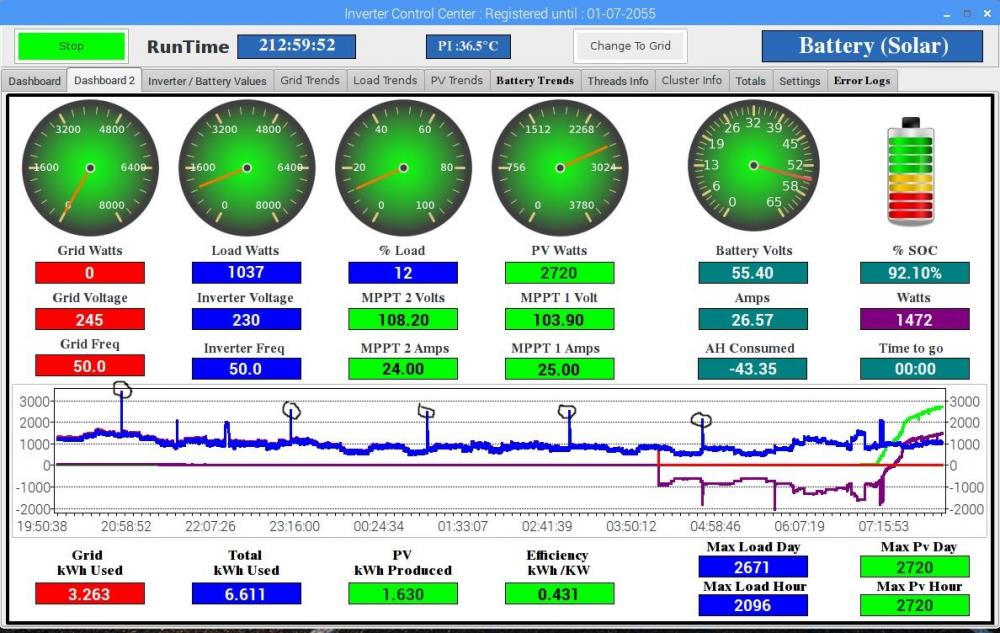
Lately I have noticed some spikes on my graphs that occur about every 2 hours 15/30 minutes. If I zoom in on the spikes, they seem to last about 10 seconds. I have no pumps starting up during this time. I suspect it is one of the fridges kicking in. I can probably switch off one fridge at a time when going to sleep and see if the spikes still occurs. It might be something else? How do I determine what is causing the spikes?
-
Try and install some sort of tank level indicator as well. As I said before, every few months I would shut the inlet to the tank and run the pump until the tank was empty and refill it with fresh water. We were running on the pump and my wife told me we don't have any water. I estimated our daily usage and did a quick calculation - the tank level should be between 25 and 50%. I went to to pump, switched it off and on again. I could hear it pump water for a few seconds, then the pressure gauge would drop right down and the pump would stop. I did the bump test to determine how much water was in the tank. I could hear the water splashing inside the tank and estimated the level to be at 50%. The only other explanation I could think off for the pump not pumping water is that there must be a blockage on the inlet side of the pump. With these installations it is not easy to just unscrew pipes, as they are glued in with PVC cement. So I cut the inlet pipe and unscrewed it from the pump. No filter on the inlet of the pump. Opened the valve going to the tank. Very little water coming from the tank. Unscrewed the connection to the tank and stuck my finger in there. No filter there either. Then I realized, the tank was empty. The water I heard doing the bump test was the 2 inches of water below the outlet of the tank. All that work for nothing, just because I had no level indicator.
-
@gabriel, that is why I opted to extend the Municipal feed to the vicinity of the tank and pump and have a "Common Supply Feed" to the house. All the valves are in one location. You only select where to feed from, Municipal or Tank, the rest stays the same. Otherwise you end up with multiple pipes feeding the house with multiple prv's to cater for all scenarios. When you want to switch from municipal to tank or vice versa, you have to run around the house opening and closing multiple valves. If I run out of water 22h00 on a Saturday night after watching the rugby, had a nice braai and had a few beers, it might become a challenge to open and close all the right valves. My Rottweiler would also think I have came out to play and even confuse me more. Currently for me it is easy, close the one valve, open the other valve and start the pump. It is so simple, even my wife can do it without a manual. In your case, you would have one additional option to select from, Municipal Tank or Rain Water Tank.
-
Thanks @gabriel. No, I have no pressure tank. My pump pressure is set at 5 Bar, which is slightly higher than the Municipal pressure. I therefore have more pressure running off the pump than when on Municipal water. When on the pump, you need to open a tap slowly until the pump kicks in and then open it further. If you just open the tap halfway and the pump kicks in a second later, you have water all over the show and dripping from the ceiling. No, the pump is not noisy at all. You might hear it late at night when it is very quit trying to fall asleep and someone flushes a toilet. Yes, I had a window in our dressing room opening where the tank is standing now. You open the window and you stare at the water tank in front of the window. So I bricked up the window. I installed the water tank and pump about a year ago and works like a dream. Just make sure you don't have any toilets that don't seal properly. Otherwise you have a pump that stop/starts every 5 minutes. running for 5-10 seconds to pressurize the water system.
-
Hi @Marcb. You can oversize your solar panels kw rating up to 30% without a problem, providing, you do not exceed the inverter input volts. There does not seem to be concern with the Danfoss Inverter. They can handle a lot of PV Input volts. The inverter might clip your output to 3900 watt output, but you will gain faster ramp up in the morning and die slower in the afternoon with oversized solar panels. The little power loss due to clipping at peak times will be negligible.
-
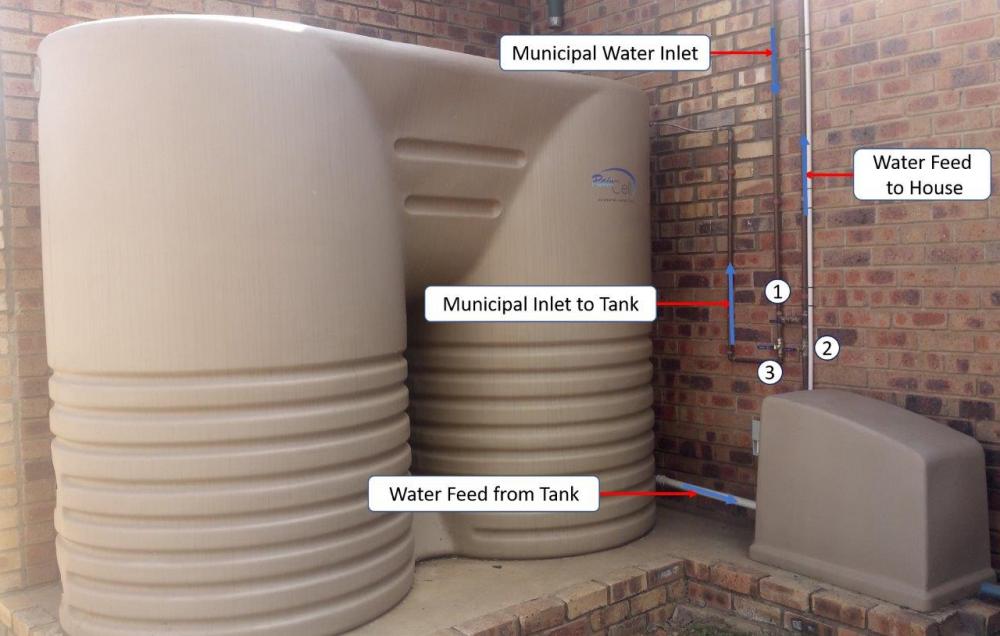
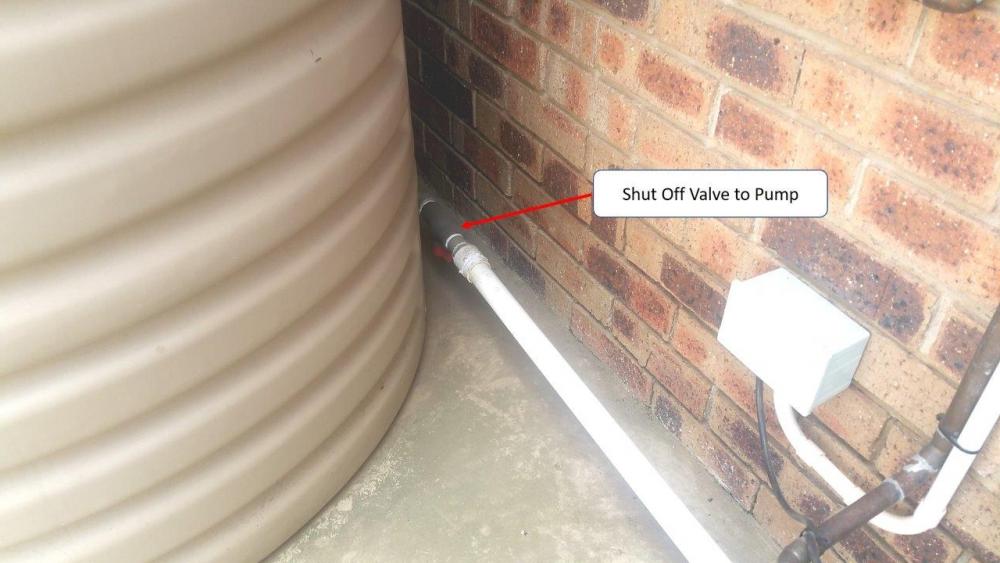
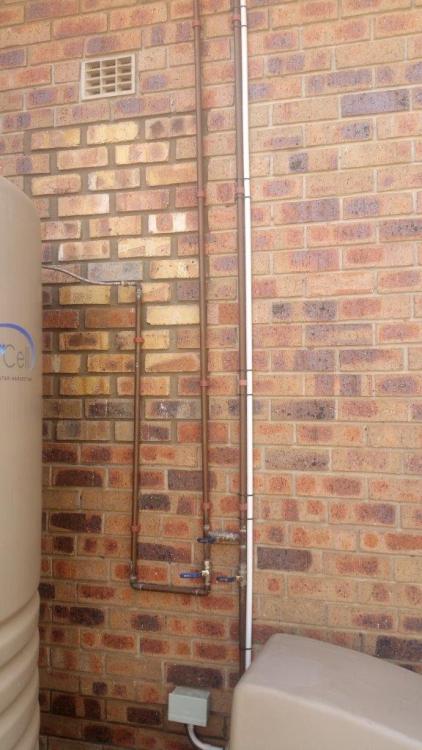
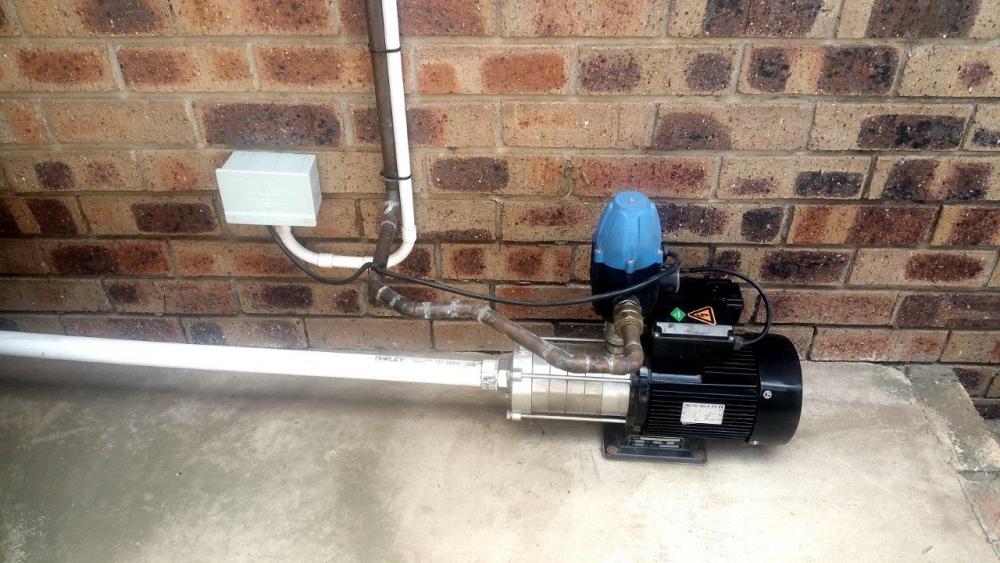
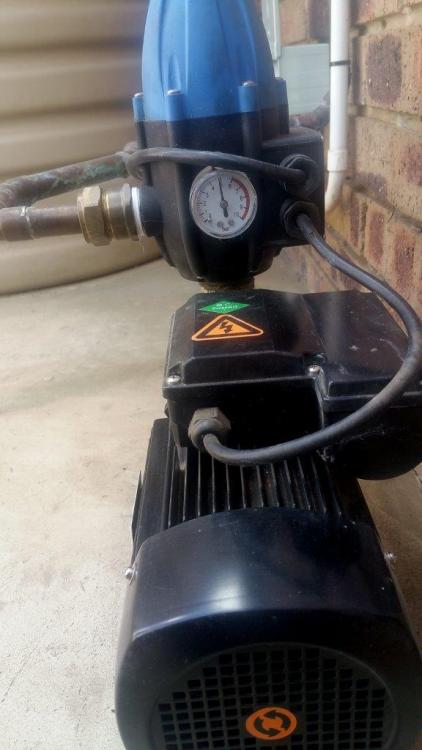
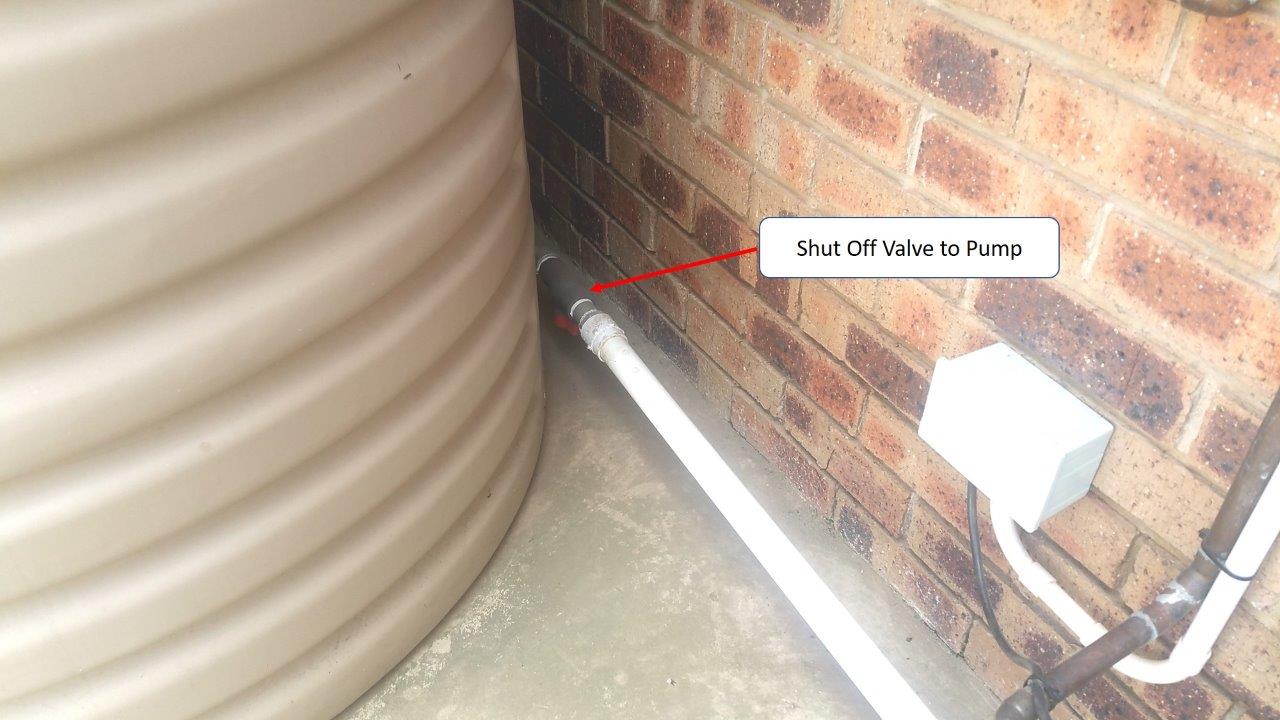
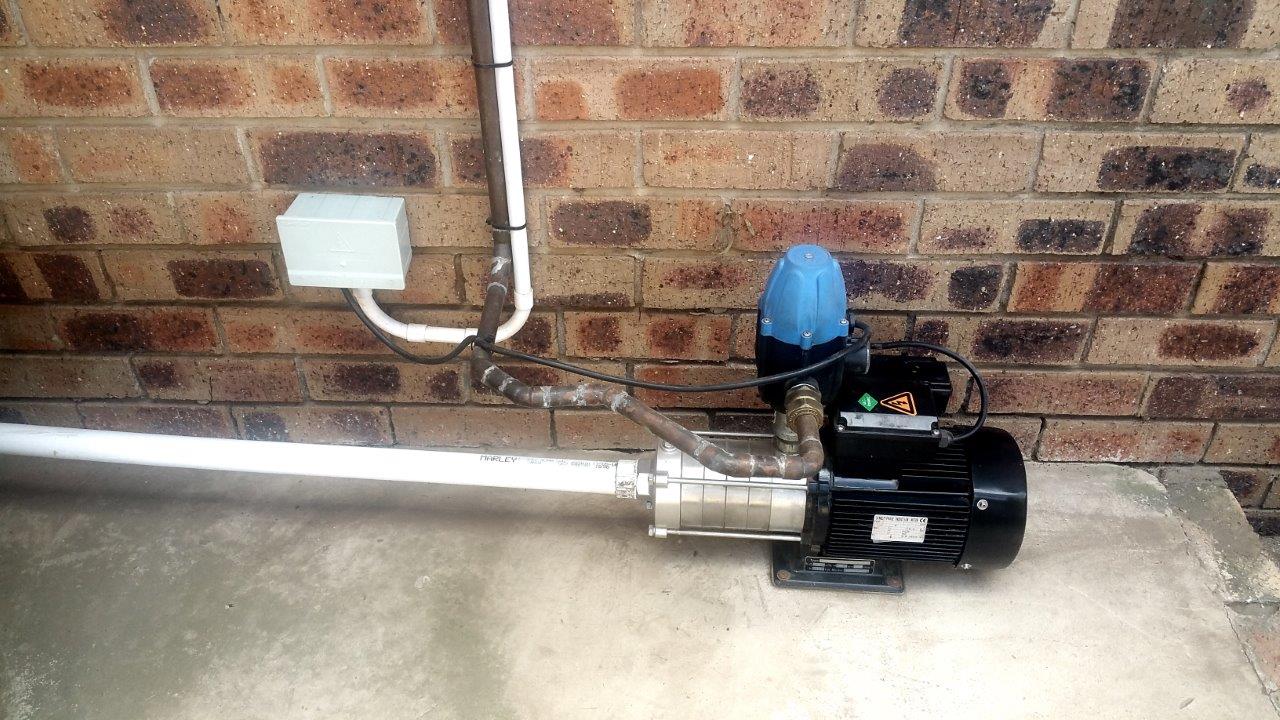
Hi @gabriel. Here are some pics of my setup. I tried to keep it simple. I manage my system with cut off valves only. To start off with, I brought the municipal water input line from the other side of the house to close proximity of the water tank. I brought in a new line and disconnected everything feeding the house in the roof. Now I have a common feed line feeding the house. By opening or closing a valves I switch between feeding from Municipal water or from the Water tank. 1.) Valve 1 Open and Valve 2 Closed - Feed from Municipal water. 2.) Valve 1 Closed and Valve 2 Open - Feed from Water Tank. 3.) Valve 3 gives you the option to fill the tank with Municipal water or shut it down. 4.) I drilled a hole on the side of the water tank at the top and fitted a toilet ball valve on the inlet side. That way you can keep the tank filled at all times without opening or closing valves manually. Every 3-4 months I close the inlet valve to the tank (Valve 3) and switch to Water Tank Mode. Then I run on the pump until the tank is empty and then refill it with fresh water.