


Paul Greeff
Members
-
Joined
-
Last visited
Everything posted by Paul Greeff
-
I can just make it through the night while keeping a bit of battery in reserve for load shedding on bad solar days, but yes, I need more panels, and then one more battery then the system will be where I want it to be. Ultimately, we all want unlimited power! And I have the space for the panels, so I see more in my future.
-
Thanks both of you. This query is for someone else - The person in question is hoping to exchange his utility payment for a monthly solar payment. I agree with both of you, I personally think it is a terrible idea in most circumstances. But if this is the avenue he wants to persue, then I at least want to introduce him to a qualified company that wont do him in. My system was bought cash and works well. And I have no loan repayments to detract from the enjoyment of the system. When there is good sun, I have 'free' electricity. More importantly, when the skies are grey, I don't get that sinking feeling I am paying twice for my electricity.
-
To add to Vassens post, the inverter will power non essential loads on grid side, however, You can specify the discharge or power from the battery in System mode. I've set mine to 1.5 kW, so even if someone were to switch on the oven (yes, the oven needs to go) the inverter will only draw 1.5 kW from the battery, and the rest from the grid.
-
Exactly what branderplank posted. His batteries seem to be full at around 11h00? So there is probably plenty of room to handle more storage. With mine you can see the battery reached full SOC at some time after 15h00. I don't have enough solar for more batteries. In fact, I'm a little bit short for what I have, so the array needs to grow before I can add anything more to storage.

-
The easiest way to see if you could squeeze more power out of the panels is to monitor the production graph. If the batteries are full or close to full the charge will stop or slow down. It is very obvious on the production consumption graph, when solar production falls down and tracks consumption, thats when the batteries are full or close to full. If you're consistently full at lets say 10h00 in the morning, you have a ton of spare solar capacity. However, if your batteries only reach 100% late in the afternoon, for example 15h30, then you probably can't add another battery to your system until you've expanded the solar. Alternatively, monitoring the SOC you can see when you're topped up and if you have spare capacity.
-
I can recommend Aspergo. I bought a couple of Dyness batteries from them. Exceptional service.
-
Any series panels should ideally face the same direction. In a series configuration, the current out of the string is determined by the panel with the lowest output. So if the panels facing one direction are in the shade, or bad light, then power of the whole string will drop. When I laid out my panel configuration I drew a too scale drawing with all the panels. Perhaps consider the same and see if panels with smaller dimenstion might not make better use of the space. There are many ways to orient and position the panels relative to eachother. Perhaps once you have something to scale you will see a better configuration.
-
Any decent rent to own solar companies out there? If possible the type that tries to match the solar install payments to what your municipal payment would have been.
-
Nice install. What kind of information are you not getting from the Solarman app and web site? The only thing I found missing was detailed information regarding power utilisation for UPS, Aux and grid output. Other than that everything the inverter does is logged on the portal.
-
Also, we installed a Bosch gas stove and oven combination. It works a treat, and uses electricity only for the igniter and oven light.
-
We've had the geyser on the timer now for a few weeks. I also added a thermal blanket to assist in reducing losses at night. I am sure the situation will change a little bit in winter. As it is now, the geyser kicks in at 08h30 and shuts down again at 10h00. This is to allow other loads, washing, drier, etc, to get priority. At 12h00 the geyser kicks in again and is disconnected again at 15h30. The geyser was also turned down to 60C. It has dropped consumption to about 5 kWh per day from between roughly 7 and 10 kWh per day. That was a side benefit, the main problem addressed here was the geyser wasting battery at night, and this was successfully addressed. One person has a bath at around 08h00 in the evening. The water is apparently still warm enough for a shower the next morning so its all good. We'll see what happens in winter.
-
I have an API key from solarman for my plant but time has been a bit elusive the last few weeks. The plan is to use the additional information from the inverter, such as state of charge and production to determine when I switch on and the geyser. The pool pump will also be scheduled according to how much power is available on the day.
-
Thats exactly what I want to do, lower the power draw in the early morning, and late afternoon when the sun is no longer at its peak. The total power used will be almost the same, the only difference is I wont be using the battery along with solar for that first 30 to 60 min in the morning and later afternoon geyser top ups.
-
Did you happen to take note of the change in voltage between warm and cold panels? Here you get almost 15% more power, so presumably this gain is split between voltage and current increase. It will be interesting to see how much this can increase the Voc so we get an idea of how much room we need to leave so we never hit the inverters max voltage.
-
1. So far the system works very well. I still want to change the geyser element for a smaller one, if only to reduce the current draw when it comes on at 08h30 so the little bit of solar is enough to cover the geyser element. Even though a heatpump can save a few kWh per day, it works well enough as it is that we will reevaluate this winter to see if we need to improve on it. 2. The electric stove / oven combo was replaced with an all gas Bosch. My mother is very happy with the new unit and the savings are awesome. And I am very impressed with the temperature control of the gas oven, something I was a bit worried about. 3. For the night time draw, considering we're two houses, and six people, I am happy to accept I needed the extra batteries. I'll add one more once the additional panels are done, but we're at the point where we can use 0 kWh from Eksom as long as it is a clear sunny day. Just a few more panels then we'll be good to go. @Richard Mackay, the Aux output would have been very useful for the geyser, were it not for the fact the geyser is in the one house, and the inverter is in the other on the property. So the geyser is under time control. For our installation, the Aux output is a bit redundant. I'd rather repurpose it as a genny input later.
-
Inverter: I run two houses on my 8 kW Sunsynk and between the two, now that we've shifted loads and reduced consumption where we can we use between 20 and 25 kWh per day, or 600 to 700 kWh per month. Except for days where the geyser, tumble drier and my ancient dishwasher (not referring to myself here, the actual machine) are drawing current at the same time we could even get away with the 5 kW unit. 7.2 kW for you application sounds like plenty, especially if you manage your loads appropriately. Battery bank: We have a 14.4 kWh battery bank which is just barely enough to get through the night. We have too many fridges and freezers, our cinema, although reasonably efficient runs well into the night, and we have quite a number of laptops that draw power until everyone is asleep. I can't see how you would run out with the almost 10 kWh battery bank with your usage. We're six people all using electronics till about midnight, so consumption is very high till then. Solar panels: Lastly, I have 15x 300W solar panels. This is just barely enough for us, but consider again, I am powering two houses, including the geyser (on a timer) for the one house. So your panels should be ok. The only concern is what you're going to do on cloudy and rainy days. With thick cloud cover, solar dies almost completely. You can significantly oversize your array to squeeze a bit of power out of the little bit of energy that reaches us when it rains, but it might just be cheaper to add a generator to the system for those days. The last week or so here in Gauteng we used a lot of grid power due to the rain. Looking at our production, I would need to tripple the size of my solar array (at least) if I wanted to be able to get through the last week. However, this wasn't a particularly bad rainy week. So to that end I will be adding another 8 or 9 panels as that is all I can fit on the roof before moving to the other house. After that I'd rather just add a genny for those rainy weeks with load shedding. My two cents.
-
Thanks bud, no offense taken or meant.
-
I have a few Dyness 3.6 kW batteries in my setup. All of then charge and discharge at the same time so what you're experiencing doesn't sound right. Are you using CAN to communicate between the Axpert and the master battery and is there a network cable between the master and slave? Also check that the second battery is actually switched on. I didn't realise initially, just flicking the power button to on doesn't mean the battery is active. I had to hold the SW button down before some of the slaves came on and started to charge.
-
@Taruq, in your attempt to contradict my post you've pretty much confirmed what I just said. When the grid is not there, a single small cloud will overcurrent your battery and drop all power to the house. When the grid is up there is no problem.
-
Contact Solarman on [email protected]. They have an API that you can use with the wireless dongle and their portal. I've received my API key and the API documentation, so I just need to allocate a bit of time to implement on my side and see exactly what they offer on the API. And also, if you search around a bit on this forum, there are people playing with Raspberry Pi's connected to the Sunsynk.
-
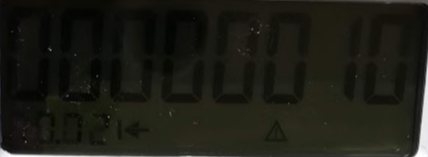
On Wednesday morning I was very disappointed and also pleased to find a brand new meter installed. Unfortunately, this means I cannot confirm the previous meter was out by 60% (yes, that is what my inverter said) potentially overbilling me for months, even years. The Hexing HXE12-DL meter seems to agree with my UPS, so the previous one was most likely very inaccurate but it is too late to do anything about that. 1. Regardless, that is not the reason for this post. I want to know, what happens if I feed back into the grid with the new meter. The Hexing datasheet says it records forward and backwards power and the meter reading shows forward - reverse. However, that is only useful if they scan the meter with the IR scanner. Will it offend Tshwane if I feed back and their meter picks it up? I.e., do they scan the power with the IR scanner or just take the meter reading? And, alternatively, if I do want permission to feed back, is it easily granted? I know they only give .10 to the unit, and there is possibly even a fee for this if approval is granted. 2. The meter very frequently shows the following alert: Apologies about how dark it is. The display reads 10 (not 10 kWh) with a small triangle with an exclamation mark. The manual from another model indicates, 10: STS test connection, whatever that means. Perhaps someone can shed some light on this. I don't think it is an issue, I am just curious. Regards Paul

-
Here you appear to be using 1124W from Eskom which is correct as you've now limited the inverter power to the inverter outputs, not the grid side. Whats on your grid side using 1124W? Pool pump perhaps or heat pump? As a test I quickly did the same on my inverter and ticked the limit to load. Immediately I saw 34W on the CT coil which is the expected power consumed by my electric fence which is on the grid side. As far as I can tell your system is working exactly as it should. Untick limit to load if you want the grid side to be fed from solar and battery as well. Power should not push back further than the CT coil.
-
There are two current coils. The one is internal, and is reflected by the value LD. The CT coil is the one in your DB. That should read 0W when you're not pulling or exporting, which here looks fine. I assume you have a load on the grid side, between the CT coil and the inverter pulling 1104W. Adding the power consumption together we have 627W+1104W which adds up to the 1721W output of the inverter. Either way, you want 0W on CT when your solar is covering all your utilisation, and that is what I see above.
-
There are pro's and cons. I do like the idea of two inverters, but I didn't want the additional expense. But if you can do it, definitely. It will max out at 8.8 kW with all sources blended. I am in the same situation, two houses (cottage for my parents). The 8 kW Sunsynk if more than adequate to run our loads. The one remaining electric geyer runs on a timer on solar and it works fine. On cloudy days the inverter blends Eskom with the solar. As long as the Voc on the solar strings don't exceed the interter rating it should be fine. Current will be clipped if it exceeds the inverter rating. We only have 4.5 kW of panels, and thats perfect for clear days, but we do fall short on partly cloudy days. My next upgrade will be another few panels. I think with more than 10 kW you should be good to go. The solar system only produces as much as the load you can put on it. So if the batteries are full and you don't have load, the energy goes to waste. Also, the batteries will charge at their max rate, in the case of my Dyness I am limited to 7 kW on the four batteries. You can do that, or in my case I just used a CBI Astute wifi timer to time the geyers. It is probably better to run it on the Aux output so the inverter can power down the geysers if your charge gets too low on a cloudy day. However, the Inverter will keep Aux load on while the battery has sufficient charge, so I still suggest adding a timer. You do not want the electric geysers to ever take charge from the battery. The same with the oven. I have limited the battery discharge in the evening so when the oven is in use a little bit of battery is blended with Eskom to feed the oven. The oven is on the grid side, so if Eskom fails, the oven stops working. The above is my work in progress. More panels are in the works, from 4.5 kW to 6.9 kW, and perhaps one more battery, 14.4 kW to 18 kW, then I think my system will be sufficient for my needs.
-
As much as I love the Sunsynk, could you not get away with something like the 7.2 kW Kodak? It comes in at a third of the price of the Sunsynk, and it doesn't seem like your need the features that make the Sunsynk so ideal in a mixed environment.

