Scorp007
Members
-
Joined
-
Last visited
Everything posted by Scorp007
-
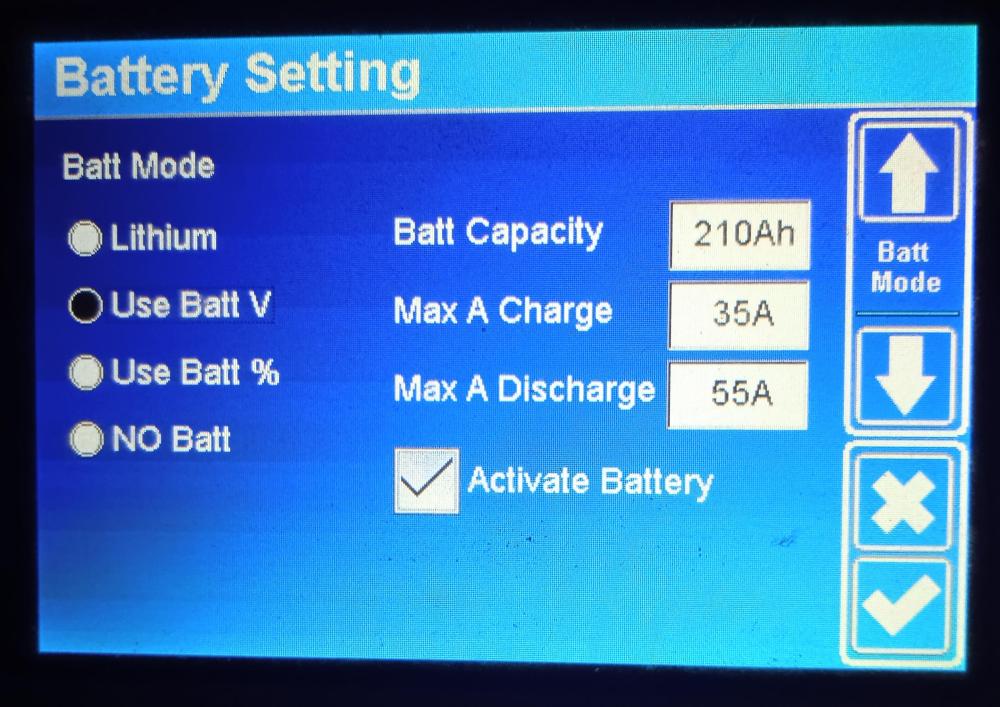
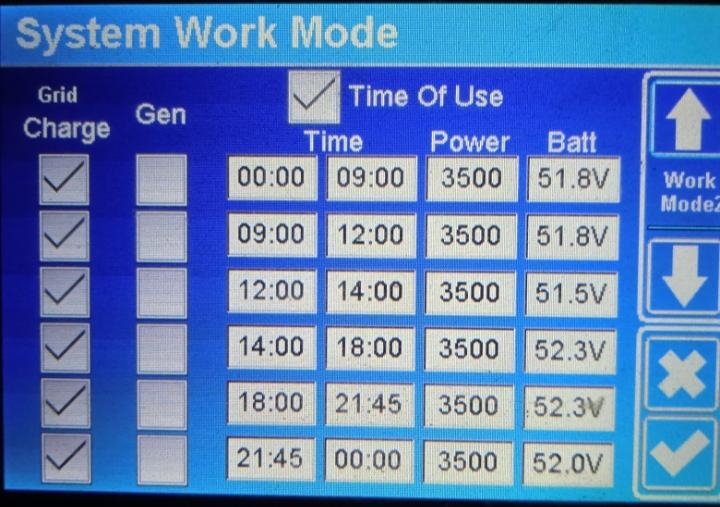
The change to voltage control is real quick. Ensure the battery values are filled in under battery setting. The decide on levels to use grid under the system menu and press the down arrow. Then tick the right arrow after setting and then out of the menus I am off grid 95% of the time. Even with the rain today I might only switch on my Grid via remote if my SOC drops to 35%. We have a stable grid so power outage is never a major consideration but I do keep some battery in reserve. Today I a very bad day for me. Lots of cloud and rain 😀 but I forgot to switch off a stove plate so drawing 1000W every about 15min.😊
-
As the OP has a end state of 40kwh of batteries from a 5kw inverter then sag will ever be a problem. Each battery will only be supplying about 13A on average. If there is sag then batteries are no longer in good health.
-
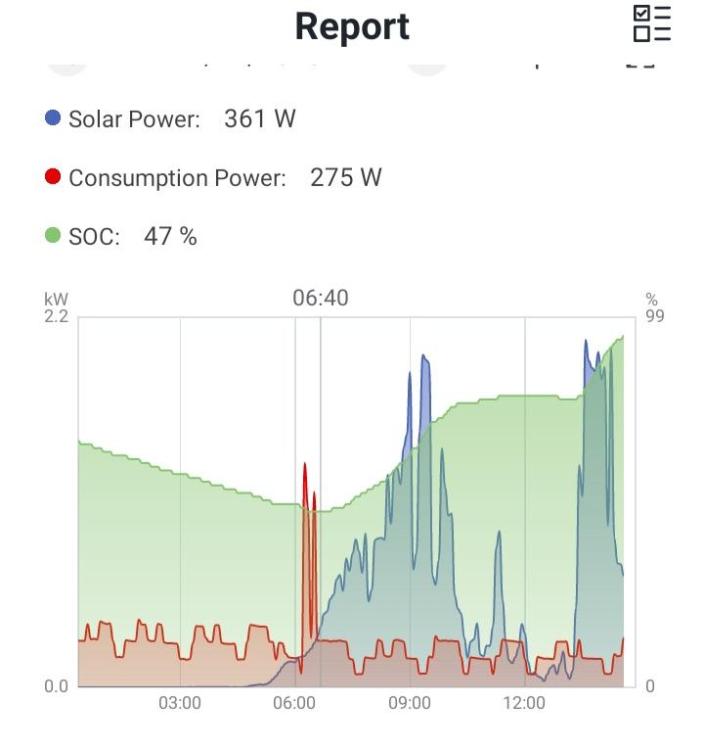
Before you ditch the current battery if the new and old have the same cell count you can always 1st try using voltage control instead of the 100% solution using comms. Here is my graph where I use 3 totally different makes and vintage on my Deye 5kW.
-
One thing I can think of the high voltage from the PV is still coming in and you suddenly interrupt the path where this power went. Just me TOL 😀
-
I'd rather not go into the detail apart from following manufacturers sequence. Just like on a basic inverter you 1st connect the battery and then the PV. The solar controller needs to know what the battery voltage is 12/24/36/48V before it can start charging.
-
The thing is with AC loads disconnect the PV is still charging the battery. The PV is disconnected before the battery. Battery is last.
-
My 2c is that without the isolating device it is not compliant as the fuse carries the warning of not to be operated under load. A switch disconnector should be safe to operate if needs be under load. @TaliaB to confirm the answer.
-
Instead of using the 3rd party Solar an APP you can also try Deyes own APP called Deye Cloud. It can use the dongle together with the Solar an App. The Deye App allows a lot of extra futures but I prefer the Solar Man graphs and their APP is quicker to respond on touch points to view the values.
-
Never heard of the IP address needed. Normally only the serial numbers needs to be provided. Also the password for the dongle as printed on the dongle.
-
Yes I have used the smart units on a MPPT and the APP is basically the same. You get the graphs, capacity, can change any setting all via the APP via Bluetooth. It's really so good not having to hook up multimeters to get the readings. This is is the go to method used by most mobile installs of PV and charging Lithiums. I have never heard of anyone having a problem around the remote functions. Costly but worth it. Great to have one APP and talk to most Victron gadgets.
-
Thanks for the detail tip. We have to learn from our installers as far as equipment goes. You guys are on top of all the newer products. Keep it up informing us.
-
Thanks this is a good find. Cannot belief the price is so low. 😀
-
Thanks for the detail figures provided. You have one of the most effective systems from a ROI point of view around. Most have a pay back term around 7 years for a battery system. Performance is remarkable.
-
Thanks for clarifying and the basic description. The rotary type is great but not the frame size that would normally be used in a PV combiner box as per residential installations where one needs the isolation function.
-
A circuit breaker is meant for opening/closing under load. An isolator should just isolate during no load. I cannot agree on the arc statement as a circuit breaker has a snap action and isolators normally not. I am not implying one should not use an isolator but the way of operating is to use it under no load.
-
Yes the Victron is a good charger and the smart comes with handy Bluetooth to see all the stats remotely.
-
Yes you can use a 60W filament bulb in series or a 5W resistor of around 39-56 ohm. Say you connect the negative pole of the battery to the inverter you connect the resistor/bulb between the pos from battery and the pos on the inverter. Keep it like this for 10sec and then remove the resistor/bulb and quickly connect the pos cable to the inverter. This should prevent the trip. You only need to do if for the 1st battery to charge the caps in the inverter,
-
Yes the proposed battery is also 15 cell. SVolt give a 51.2V description if it is a 16 cell and also the capacity is indicated higher than 5.09 kWh adding the 16th cell.
-
You will have to get the answer from Svolt or their suppliers. It all has to do with the comms. If on the other hand you work with voltage settings instead of the much more accurate measurements via comms you can still run different marks of batteries in parallel. A few of us are using voltage control with success. I have 2 DIY banks and I branded battery running in parallel. Each DIY with own BMS and branded battery without comms on my Deye. Another option would be to try and buy another 5.09 kWh in the classifieds.
-
Lets wait for our trusted member @TaliaB to comment on tapping from the point where power enters the building from the utility.
-
If the lower capacity 120Ah worked well then you could keep the settings. Alway try the lowest charge current that works for you. Around 15% of Ah is a good starting point to allow a longish life. With lithium so much cheaper now they remain the 1st choice as you know.
-
Change 14 to SNU if you have this setting. See if you have a SUB on setting 1. I would rather not guess 13 as it seems like Growatt use letters to describe the function and I am not sure. Take these as a starting point. May be @zsde can help you out.
-
I cannot say these cheap hybrids can switch on without a battery as they are meant to provide power when there is no grid or PV. The figures provided was using a grid tied=string inverter. The Solis 4g mini in my case. This unit needs grid to operate and then can use PV to generate 230V on top of the grid but power generated is used 1st and the remaining bit of the load comes from grid.
-
You can easily get 6kwh per day from 3 x 545W panels provided you have any loads that need power during the sunshine period. Excluding harsh winters in the Cape. My table I placed yesterday was using 3 x 270W panels in Gauteng and that was using all the PV power generated without batteries.
-
Just remember you can also add an external MPPT like the EPEVER which I like due to lower price than a Victron to add more panels and charge the batteries directly together with the MPPT of your current 24V inverter. A few of us on the forum have done so before we went to higher spec inverters. I would rather go for a Luxpower if you want to upgrade due to the 2 x MPPTs.