root
Members
-
Joined
-
Last visited
Everything posted by root
-
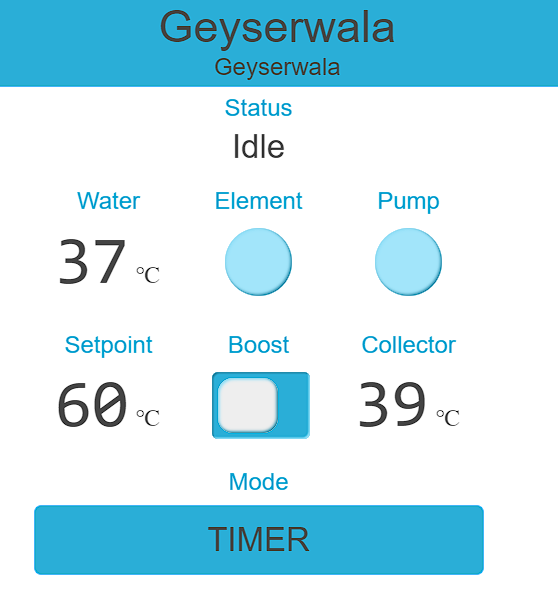
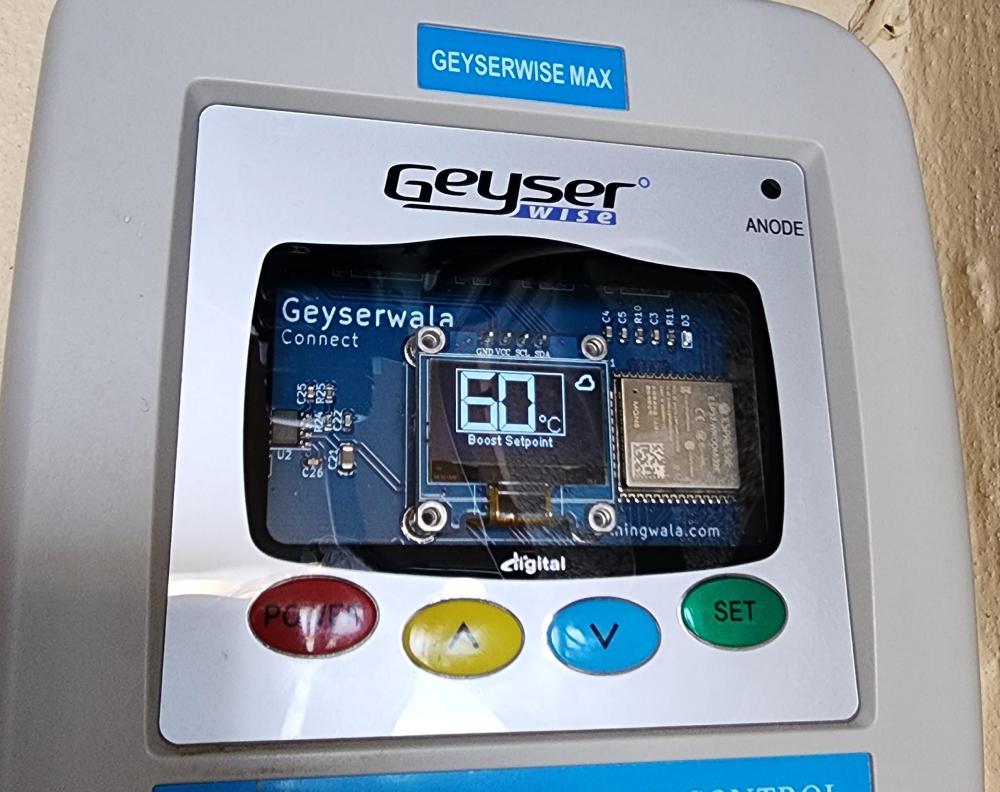
1) Set the temperature on the geyser thermostat to max. If there is surplus PV, then I push the geyser as far as it can go. Using HA that pulls data from my Victron Cerbo I can with the help of automations in HA change the GW setpoint to a higher value than my normal 55C/60C. This happens when my batteries are 98% full for longer than 8min (time value to prevent Hysteresis). By this point (98% SOC) the BMS is already throtteling the MPPT controllers down since it doesn't want too much current. Time to dump energy into hot water. Set value of the setpoint to 65C and start heating. When it falls below 97%, change setpoint back to 60C in case wife pressed the boost button and wastes power. My thermostat is only rated to 65C so it should not be set higher. It currently can't be set higher than 65C via the local browser based user interface. This I believe should not be too difficult to change to 75C with a firmware update. A suggestion to the geyserwala guys would be to add a field on the settings pages that allows the user to set their thermostat max value instead of having it hardcoded in the firmware. http://geyserwala.local/


-
So instead of going the seperate thread route I'm just going to do my review/experience with the geyserwala here. It will keep things a bit more concise. This thread started by @suds7162 with the following requirements: 1) Set the temperature on the geyser thermostat to max. If there is surplus PV, then I push the geyser as far as it can go. 2) Set the temperature on the Geyserwise to a safe minimum, say 40C. So that if the temperature drops below this, the grid kicks in to boost the temperature. 3) Some way to connect the Geyserwise element relay directly to my grid source, but still keep the keypad powered by the inverter, so that I always have my temperature display, even when there is loadshedding or when the Inverter AUX port is off. I want to get the connected version of the Geyserwise, as I'm interested in plotting geyser temperature over time so that I can better understand usage patterns and whatnot. 4) The ability to set an independent max temperature for each power source: 30C for grid, 75C for PV. 5) If your entire house/load is on the essential side of the Inverter, do not allow geyser to deplete batteries during extended power outages/loadshedding. The geyeserwala unit with HA allows me to meet all 5 requirements above. I'll post how the it does each on in a seperate post below.





-
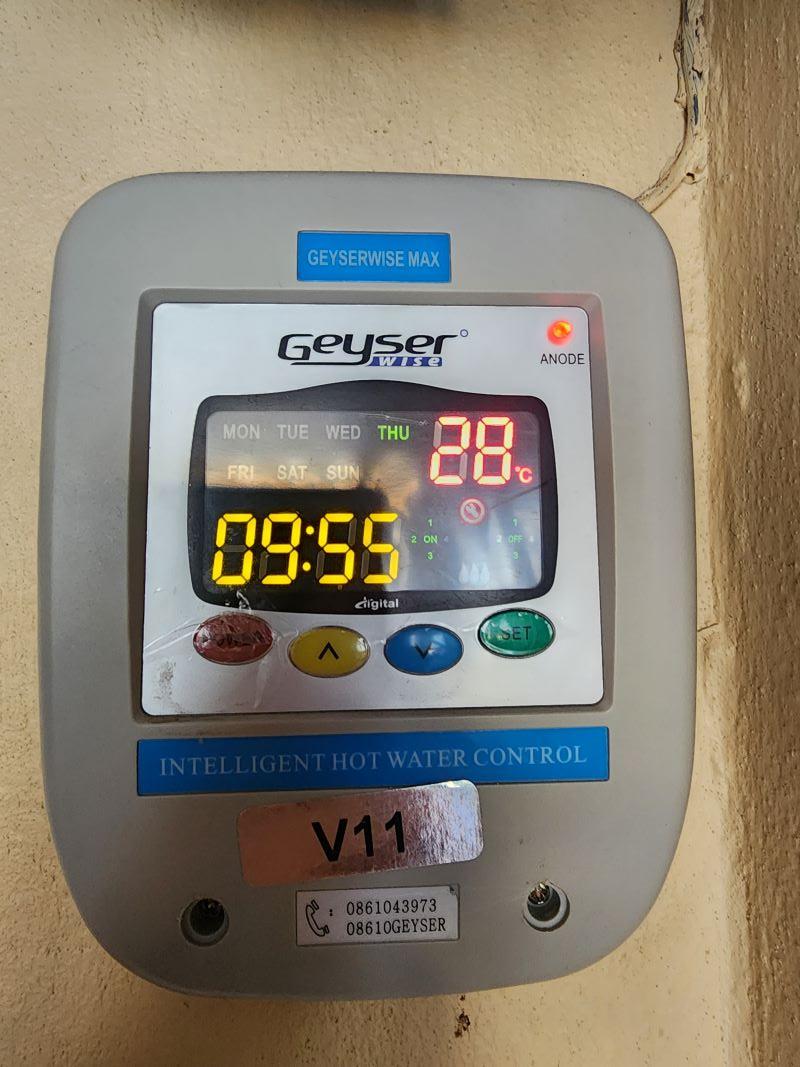
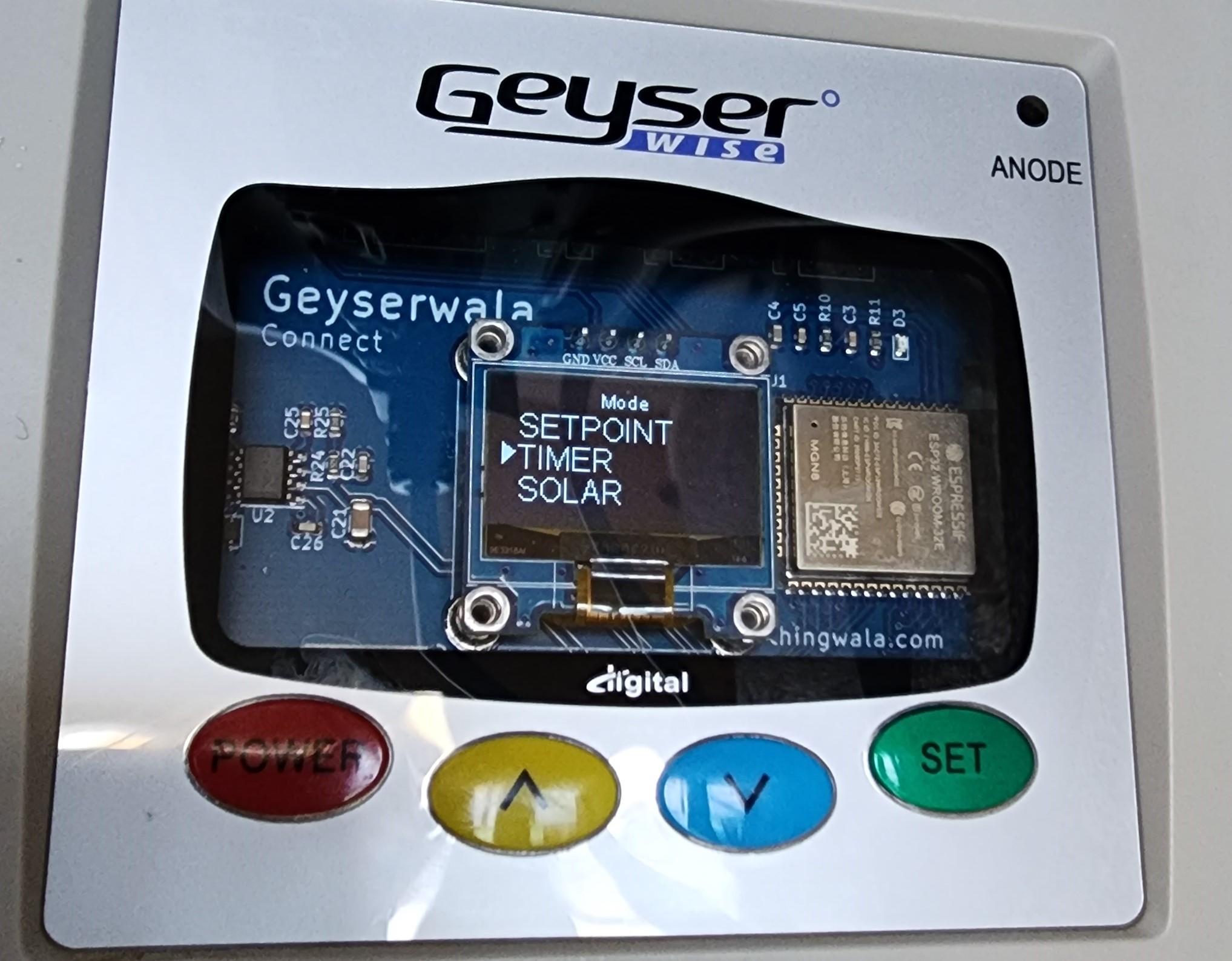
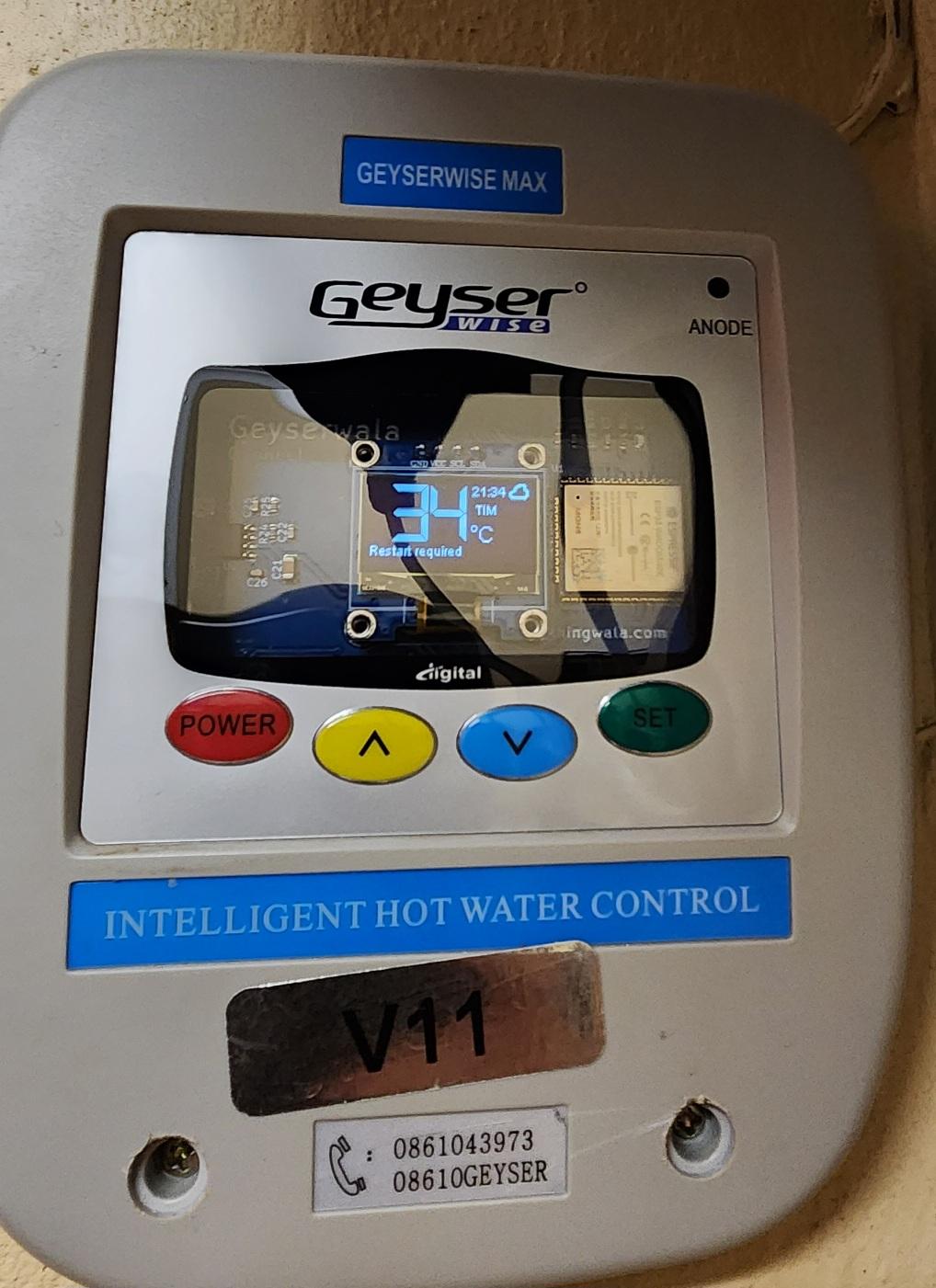
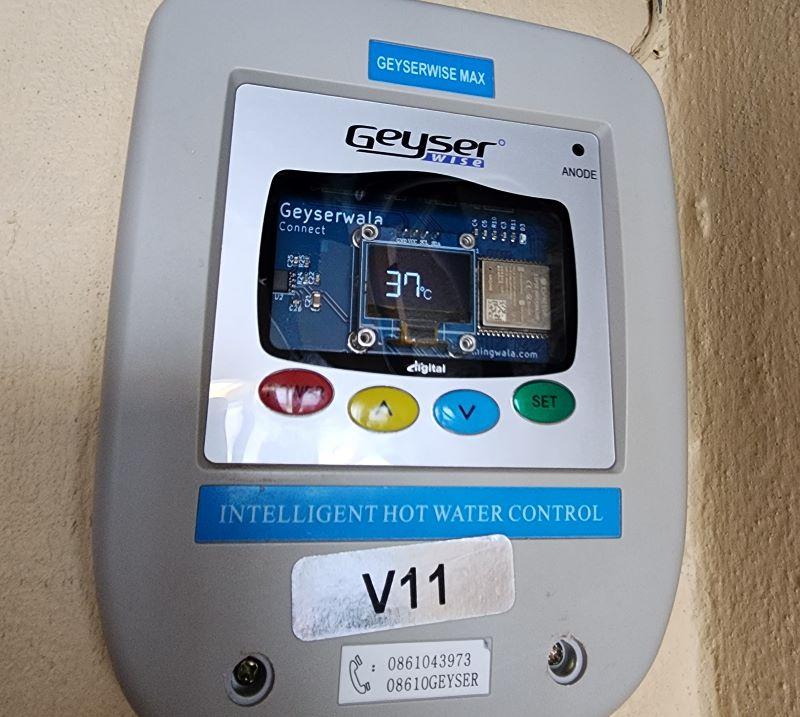
Aux port? The geyserwala unit is a drop in replacement of the old geyserwise screen/interface. It even uses the original button placement and housing. I'll do a complete write up on a separate thread at some point. Here is the short version. It is (insert expletive) fantastic. Just buy one. Less than a 1000 bucks currently. Takes 5min to fit with one Phillips/star screwdriver. The geyserwala is a completely standalone unit. You don't need HA or anything else for it to work. It does however integrate seamlessly with HA. The guys already wrote the integration you simply pull from GitHub. Copy, paste, restart. It also retains the manual functions. My wife can still go and press the red button to instantly turn on the geyser like I trained her to do. My geyserwise is old. More than 13 years old. The guys from geyserwala confirmed beforehand that it will work with my geyserwise max v11 and it does. I can now do everything I wanted to do in the start of this thread. In the seperate write-up or thread I'll go over some of the things I think can be improved on and what my experience with it has been so far. I'm very happy with the geyserwala unit.

-
Ordered one and looking forward to installing it next week. Was great chatting to the guys and they seem to know what they are doing and will even support rather old geyserwise units.
-
Here we go again....

-
I have a mix of US3000C and US3000 batteries. Always make the newest battery the master. It usually has the latest firmware. The new firmware is backward compatible (to a degree, there are always exceptions). The older pylons link up and continue going as normal. No need to upgrade the firmware on the older units. Its a risky operation in my opinion and there aren't a lot of installers that even know how to upgrade pylon firmware.I run a Linergy 100AH in the back of my Land Cruiser. Its got some 10mm closed cell foam padding the enclosure its in. Its still early days for it but it seems to be holding up well. My parents run a bank of conventional Prismatic LiFePO4 Battery Cells to make up a 24V battery bank in their RV (motorhome). The RV has a 24V Victron multiplus 2 3kW that runs on the bank without issues. Been in operation for a little more than 2 years and have done more than 15k km on European roads (its based in France). My suggestion would be to build a custom bank from prismatic cells and pad the enclosure. These cells seem to be very hardy and also work in marine environments (yachts and sailboats).Float is 13.5V for most* LiFePo4. So 13.5v x2 = 27v.In this case its a current limiting device to ensure that the total amount of current drawn is minimized. It was probably fitted along with the ripple control geyser controller. Back in the day the municipalities tried to lower loads during peak times. 18:00 -21:00, so this device would turn off the geyser when the oven was running. Your main breaker has the capacity to run both the geyser and stove simultaneously. I incorrectly stated that it was to limit current in overload situations in this scenario. It can function in that capacity but P1000 has the correct description of its function.If you replace the old slow circuit breakers with modern ones that have better response times to overload conditions those old thermal trips can be discarded.Thermal (Inverse Time) Trip Mechanism. The thermal trip mechanism operates in response to overload conditions. The mechanism includes a bimetal element located behind the trip bar. The bimetal element is part of the current carrying path. When there is an overload, the increased current flow heats the bimetal and causes it to bend. As the bimetal bends, it touches and rotates the trip bar causing the circuit breaker to trip. The time needed for the bimetal to bend and trip the circuit breaker varies inversely with the current.Ah I misread, I thought it was dropping by 80V.Here is a picture. Notice how the blue (voltage from panels) goes down as the current (orange) increases. By midday my 15kWh battery bank is fully charged. The voltage shoots up by nearly 30V as the current falls to zero. The spikes later in the day is the geysers and the pool pump and other loads turning on and getting powered by the panels. Consequently voltage gets pulled down and current goes up again.
 There is no setting for this. This is the basic function of the MPPT controller (hardware). Meaning this is what it is designed and built to do. ItInitially it measures the open circuit voltage. This is without any load on the panels. Once turned on it will pull the voltage down by allowing current to flow. The MPPT controller will dictate this voltage set point to maximise current flowing given the amount of light hitting the panels.That is exactly how it is supposed to work.That bit is done with scheduling. I want more though. I have a system (HA) in place to intelligently with rules and conditions optimise my usage. Like @suds7162 correctly pointed out, you can have a billion watt of panels on the roof and still end up relying on the grid on a rainy day. My pool pump is automated to only run when the batteries are above 98% SOC and turn off as soon as its not. I want the same for the geyser but with additional conditions and without the cloud. @mzezman LocalTuya is a cloud interface that emulates local control. @suds7162 I think I'll have to buy a replacement geyserwise max tuya controller and experiment reflashing it. If not I'll also have to build a custom unit... I do have all the components for it. But time to build and debug a critical household system is the problem. The missus does not like a cold shower.Subscribed. I'm also looking to manage my geyserwise system a bit better. I have a Victron setup that talks to my HA via MQTT. Grid state, Batt SOC and more is already being pulled in by HA and used as conditions. My entire house is on the essential side and like you I don't want the geysers to drain the batteries. I would also like to manage geyser temp and load (power pulled by the geyser) intelligently. A easy way woud be to simply switch the geyser on and off via a sonoff pow or similar. But then I lose the circulation pump during those times. I would also like to bump up the geyser temp and use it for additional energy storage when the batteries are full. I'm a DevOps/Systems engineer by day. So I don't want any cloud based control I don't have oversight over. So all my Sonoff bits have been reflashed with tasmota. Can the same be done with the Geyserwise Tuya?Mine is on the way from LiveStainable. Its going in the back of my Cruiser and gets charged by a Victron Orion-Tr 30A. They unfortunately sent me the non-bluetooth unit last week but it was promptly collected and swapped out. 100AH unit. Will provide some feedback once its in the vehicle. By the way, here is the APP for the bluetooth enabled units. https://play.google.com/store/apps/details?id=com.jiabaida.little_elephanthttps://community.victronenergy.com/questions/85652/pylontech-high-voltage-alarm.html https://community.victronenergy.com/questions/42781/pylontech-alarm.html Some light reading.SONOFF ENERGY MONITOR POW R3 or SONOFF ENERGY MONITOR POWR320D bonus points for flashing tasmota to it.Location location location. I live by the coast. Galvanised iron life expectancy is 10years max over here. Inland you could get the same 10y with no coating whatsoever. So be careful with blanket statements like that. A important and often overlooked problem is galvanic corrosion. Dissimilar metals corrode each other when mixed. There is a galvanic scale for this reason.3) Try and optimise as much as possible. The gains are small, but over the life of the system (20y+) those gains add up to a significant amount. 4) Anecdotal evidence watching and accidently shutting down my system and my fathers system. Both Victron systems. I have 5x us3000c batteries, he has 8x us2000c. Both shutdown at around 10% SOC.1) The inverter determines how much it wants to pull from a possible max 200A. So no problem here. Cable sizes should be your determining factor not the supplier(battery) or the consumer(inverter). 2) yes 3) No, most pylontech batteries will shutdown at around 10%. Even if it advertises 95%. Cell imbalances will trip the BMS and it will shutdown. Set to 15% and forget. 4) 20% is fine With regards to your projected generation figures. Be careful. Winter is coming and there is lower solar irradiance and this simply can't match the yields you get in summer.