
Power Punk
Members
-
Joined
-
Last visited
Reputation Activity
-
 Power Punk got a reaction from Gabriël in BYD 10kWh Lithium 48V QuoteHi Khan
You are correct, I have confirmed that the batteries are fully warranted by the local supplier Revov and not by BYD.
-
Power Punk got a reaction from Gabriël in BYD 10kWh Lithium 48V QuoteI may be able to shed some light on this...
These are BYD 2nd Life batteries, not counterfeits.
Herholds are not the importers, they are a distributor. The batteries are imported by Revov, who are official agents of these batteries in South Africa (I think they may hold distribution rights for the continent). They are currently only on their 3rd or 4th container and have been supplying to order, so supply & demand is delicate right now. They expect to be in a stock-holding position by the end of Q1-2019.
BYD do not want these batteries marketed up der the BYD brand. I assume this is through fear of canabalising their B-Box product line. Herholds have subsequently revised their online description to replace the name BYD with REVOV. Oddly, BYD are still shipping the batteries in BYD-branded boxes.
I have done some testing on an early “pre-commercial” 7.6kWh bank, with impressive results. Whilst Pylon was previously our LiFePO4 of choice, we now offer the Revov pretty much as standard, except where smaller (<10kWh) batteries are required. Our Revov sales have now overtaken my Pylon sales.
Revov had an issue with a shipment of batteries, where the BYD BMSs were unavailable. They supplied SolarMD BMSs with these batteries, which was very problematic, due to lack of documentation, and some design / specification issues. Revov stepped up and are resolving this.
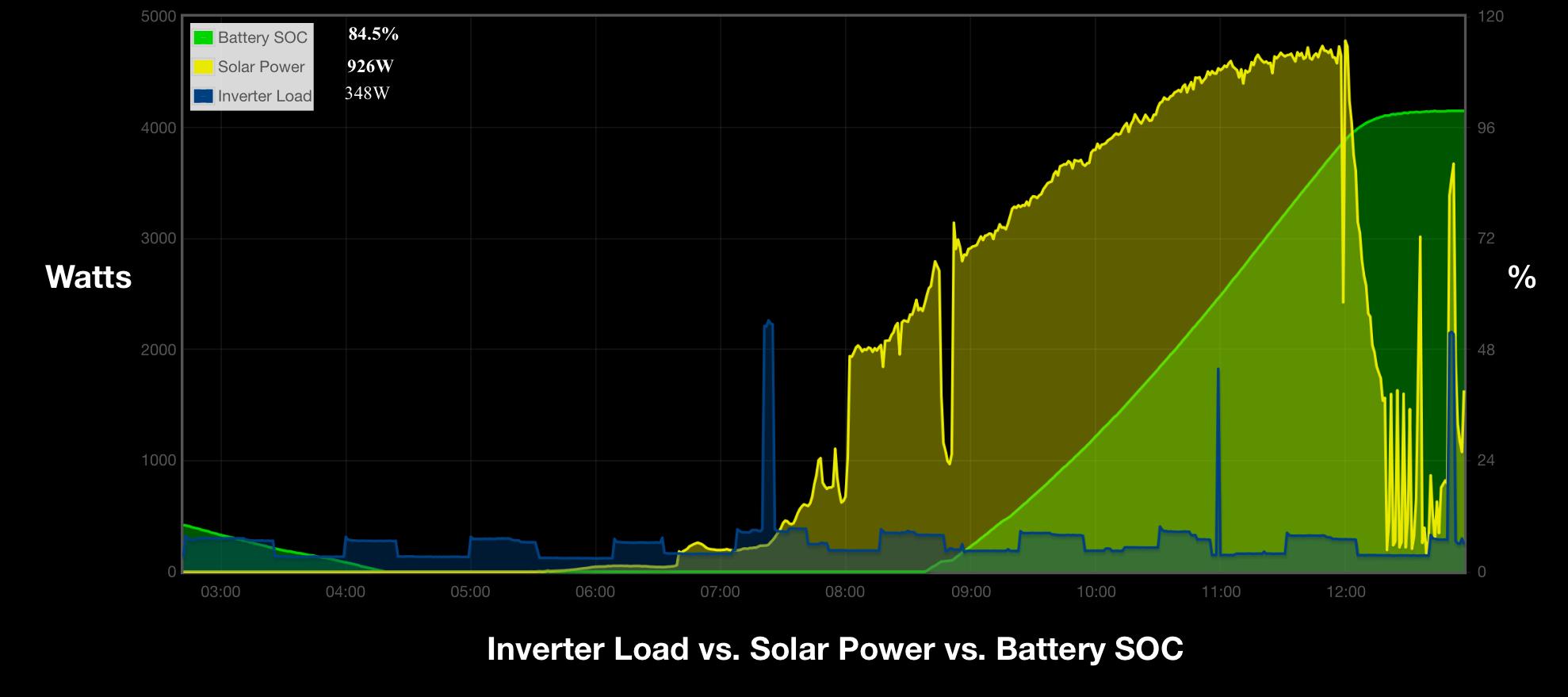
I run a 10.2kWh Revov battery in my own system, with a self-consumption optimized setup. I cycle my battery fully (100%-0%-100%) on a daily basis, weather and load permitting. I am currently using the SolarMD BMS, but I will probably end up replacing it with the BYD unit.
BYD warrants the batteries for 5 years. Revov are self-warranting the batteries for a further 5 years, for a total 10-year / 3000 cycle warranty.
Tests performed by a (IIRC) Shenzhen university yield a little over 80% remaining capacity after 3000 cycles, with C0.33 charge and C0.50 discharge rates. This improves dramatically at lower charge and discharge rates which are typical in a self-consumption application.
GreenHouse Energy Consulting assists Revov with local testing and some technical support. They are currently expanding the inverter application list to cater for inverters without Canbus comms, in a similar fashion to that adopted by Pylon.
In summary, the Revov battery is our first taste of the deployment of 2nd Life lithium batteries into the South African stationary storage market. The value proposition is exceptional, and I for one am well impressed and excited at the prospects.
-
 Power Punk got a reaction from Juokorow in Lithium or AGM batteriesI think there are a few points deserving comment here:
1. It is not good practice to add new lead acid batteries to an existing used bank. Batteries age both with time as well as with discharge cycles, and as they do, they take, hold and deliver energy at a decreasing rate. Adding a bank of fresh batteries in parallel with your existing ones will result in disparate charging between the two. This can be managed to a degree, but is not ideal. Top quality flooded batteries like Trojans are apparently less susceptible to this than your typical SLA or AGM block. This, incidentally, is one of lithium's great advantages - you can pretty-much add capacity whenever you like, as the BMSs manage the batteries at cell-level.
2. For a backup application, you need to pay attention to the "C" rating of your battery - this tells you how much energy you will get out of the battery at a particular rate of discharge. Most lead acid batteries are rated at C10, some at C20 - in other words, a 100Ah (C10) battery will be able to give you 100Ah of energy when discharges over 10 hours WHEN NEW. For a power backup application, and in particular load shedding, we are typically looking at a 2-3 hour backup requirement. A typical 100Ah AGM battery would have a C3 rating of 80Ah. Most lithium batteries are rated at C1, but warranty requirements may limit use to C2, which is still fine.
3. Whilst the economics of total energy of Lithium is a clear winner, you need to be aware of your maximum power requirements. The greater discharge depth of lithium allow a smaller battery to be utilised, but there is a limit to the continuous maximum power that can be drawn. For example, the Pylon 3.5kWh battery coupled to an Axpert inverter (no communication) must be limited to a 37A (1.75kW) continuous discharge rate, to comply with warranty conditions. If you have a larger capacity inverter you can control this by installing a suitably rated circuit breaker on the inverter output (effectively de-rating the inverter), which can be increased at a later stage if you decide to add more battery.
3.As @DaveSA indicated, you need to decide whether you intend to cycle your batteries. In brief, if you want to make use of your solar panels, you need to cycle the batteries. If you intend to cycle, you need to go lithium. It's as simple as that, if you have grid power. There is no lead acid battery which offers a warranted cost/kWh which is cheaper than grid power.
In summary, I would recommend lithium over lead acid in all but the most basic backup setups, assuming budget allows, the inverter is compatible, and you are sure of your energy and power requirements. Its also useful to remember that you will be comparing capacities of the various batteries when new, but due to the significantly longer cycle life of lithium, the difference in usable energy after a year or two can become increasing disparate in lithium's favour.
Enjoy!
-
Power Punk reacted to vandyh in Lithium or AGM batteriesIf you can afford to go the Lithium-ion route, you will never use lead-acid again. I've started out by building my own packs with only using recycled 18650 laptop cells and the result is totally different.
-
Power Punk got a reaction from pspspeed in Lithium or AGM batteriesI think there are a few points deserving comment here:
1. It is not good practice to add new lead acid batteries to an existing used bank. Batteries age both with time as well as with discharge cycles, and as they do, they take, hold and deliver energy at a decreasing rate. Adding a bank of fresh batteries in parallel with your existing ones will result in disparate charging between the two. This can be managed to a degree, but is not ideal. Top quality flooded batteries like Trojans are apparently less susceptible to this than your typical SLA or AGM block. This, incidentally, is one of lithium's great advantages - you can pretty-much add capacity whenever you like, as the BMSs manage the batteries at cell-level.
2. For a backup application, you need to pay attention to the "C" rating of your battery - this tells you how much energy you will get out of the battery at a particular rate of discharge. Most lead acid batteries are rated at C10, some at C20 - in other words, a 100Ah (C10) battery will be able to give you 100Ah of energy when discharges over 10 hours WHEN NEW. For a power backup application, and in particular load shedding, we are typically looking at a 2-3 hour backup requirement. A typical 100Ah AGM battery would have a C3 rating of 80Ah. Most lithium batteries are rated at C1, but warranty requirements may limit use to C2, which is still fine.
3. Whilst the economics of total energy of Lithium is a clear winner, you need to be aware of your maximum power requirements. The greater discharge depth of lithium allow a smaller battery to be utilised, but there is a limit to the continuous maximum power that can be drawn. For example, the Pylon 3.5kWh battery coupled to an Axpert inverter (no communication) must be limited to a 37A (1.75kW) continuous discharge rate, to comply with warranty conditions. If you have a larger capacity inverter you can control this by installing a suitably rated circuit breaker on the inverter output (effectively de-rating the inverter), which can be increased at a later stage if you decide to add more battery.
3.As @DaveSA indicated, you need to decide whether you intend to cycle your batteries. In brief, if you want to make use of your solar panels, you need to cycle the batteries. If you intend to cycle, you need to go lithium. It's as simple as that, if you have grid power. There is no lead acid battery which offers a warranted cost/kWh which is cheaper than grid power.
In summary, I would recommend lithium over lead acid in all but the most basic backup setups, assuming budget allows, the inverter is compatible, and you are sure of your energy and power requirements. Its also useful to remember that you will be comparing capacities of the various batteries when new, but due to the significantly longer cycle life of lithium, the difference in usable energy after a year or two can become increasing disparate in lithium's favour.
Enjoy!
-
Power Punk got a reaction from pilotfish in Lithium or AGM batteriesI think there are a few points deserving comment here:
1. It is not good practice to add new lead acid batteries to an existing used bank. Batteries age both with time as well as with discharge cycles, and as they do, they take, hold and deliver energy at a decreasing rate. Adding a bank of fresh batteries in parallel with your existing ones will result in disparate charging between the two. This can be managed to a degree, but is not ideal. Top quality flooded batteries like Trojans are apparently less susceptible to this than your typical SLA or AGM block. This, incidentally, is one of lithium's great advantages - you can pretty-much add capacity whenever you like, as the BMSs manage the batteries at cell-level.
2. For a backup application, you need to pay attention to the "C" rating of your battery - this tells you how much energy you will get out of the battery at a particular rate of discharge. Most lead acid batteries are rated at C10, some at C20 - in other words, a 100Ah (C10) battery will be able to give you 100Ah of energy when discharges over 10 hours WHEN NEW. For a power backup application, and in particular load shedding, we are typically looking at a 2-3 hour backup requirement. A typical 100Ah AGM battery would have a C3 rating of 80Ah. Most lithium batteries are rated at C1, but warranty requirements may limit use to C2, which is still fine.
3. Whilst the economics of total energy of Lithium is a clear winner, you need to be aware of your maximum power requirements. The greater discharge depth of lithium allow a smaller battery to be utilised, but there is a limit to the continuous maximum power that can be drawn. For example, the Pylon 3.5kWh battery coupled to an Axpert inverter (no communication) must be limited to a 37A (1.75kW) continuous discharge rate, to comply with warranty conditions. If you have a larger capacity inverter you can control this by installing a suitably rated circuit breaker on the inverter output (effectively de-rating the inverter), which can be increased at a later stage if you decide to add more battery.
3.As @DaveSA indicated, you need to decide whether you intend to cycle your batteries. In brief, if you want to make use of your solar panels, you need to cycle the batteries. If you intend to cycle, you need to go lithium. It's as simple as that, if you have grid power. There is no lead acid battery which offers a warranted cost/kWh which is cheaper than grid power.
In summary, I would recommend lithium over lead acid in all but the most basic backup setups, assuming budget allows, the inverter is compatible, and you are sure of your energy and power requirements. Its also useful to remember that you will be comparing capacities of the various batteries when new, but due to the significantly longer cycle life of lithium, the difference in usable energy after a year or two can become increasing disparate in lithium's favour.
Enjoy!
-
The new development from Voltronic with regards to communication with PylonTech lithium batteries will take two forms; an RS485 Card (to be plugged into the Intelligent slot of the inverter) and an RS485 external box (to be plugged into the inverter RS232 port, I believe). Either of the devices will then be connected to the RJ45 port of the PylonTech battery to complete the connection.
The RS485 external box allows the operator to maintain usage of other Voltronic Infinisolar accessories typically plugged into the intelligent slot (e.g. Modbus Card, SNMP Card, GSM/GPRS Card and WiFi Card). This is an important consideration by the manufacturer because many applications will require more than 1 of the Voltronic Infinisolar accessories to be used in order to achieve the desired operating mode (e.g. A Modbus Card and Eastron SDM630M to control export power to the Grid as well as an RS485 box to control charge/discharge between the inverter and PylonTech battery bank).
The PylonTech communication accessories should be available in Q1 of 2019.
-
Power Punk got a reaction from ___ in BYD 10kWh Lithium 48V QuoteAs this is a "new kid on the block", there is very little history to speak of. What I can say is that I had issues with 2 batteries, both of which were immediately replaced without question. I have had feedback that the one was tested and the problem traced to a bad BMS, the second is yet to be analysed.
They don't have a reputation - they're a startup.
The word "@nd Life" appears in their logo and on the home page menu bar. The phrase "2nd Life energy storage products" is emblazoned across the middle of the home screen page??
The word "refurbished" has no place here. Please familiarise yourself with the plentiful information available on second life lithium batteries - you will find this is not some fledgling flea-market industry, but rather the beginnings of a market which is set to revolutionise stationary energy storage.
https://thinkprogress.org/how-used-electric-car-batteries-will-turbocharge-the-renewables-revolution-4baf33d4b15f/?fbclid=IwAR1qep145TMcyxmPZUsJUB7g8I7X_-VghJGI5_iWNSllIecanJMjkWPksds
https://thinkprogress.org/how-used-electric-car-batteries-will-turbocharge-the-renewables-revolution-4baf33d4b15f/?fbclid=IwAR1qep145TMcyxmPZUsJUB7g8I7X_-VghJGI5_iWNSllIecanJMjkWPksds
https://www.japantimes.co.jp/news/2018/07/04/business/retired-electric-vehicle-batteries-find-second-life-chilling-beer-grilling-sausages/?fbclid=IwAR3atFLQxSjvP26ohj7iLwro0JcLuQDhoDP1FBtlkk7KMjhKWBleFRkam3A#.W-_uGGmxWyU
Absolutely agree. Caveat emptor - do your homework 😎
Can you provide examples of this?
-
Power Punk reacted to Jaws in Lithium or AGM batteriesVery good post Power Punk
-
Power Punk got a reaction from Jaws in Lithium or AGM batteriesI think there are a few points deserving comment here:
1. It is not good practice to add new lead acid batteries to an existing used bank. Batteries age both with time as well as with discharge cycles, and as they do, they take, hold and deliver energy at a decreasing rate. Adding a bank of fresh batteries in parallel with your existing ones will result in disparate charging between the two. This can be managed to a degree, but is not ideal. Top quality flooded batteries like Trojans are apparently less susceptible to this than your typical SLA or AGM block. This, incidentally, is one of lithium's great advantages - you can pretty-much add capacity whenever you like, as the BMSs manage the batteries at cell-level.
2. For a backup application, you need to pay attention to the "C" rating of your battery - this tells you how much energy you will get out of the battery at a particular rate of discharge. Most lead acid batteries are rated at C10, some at C20 - in other words, a 100Ah (C10) battery will be able to give you 100Ah of energy when discharges over 10 hours WHEN NEW. For a power backup application, and in particular load shedding, we are typically looking at a 2-3 hour backup requirement. A typical 100Ah AGM battery would have a C3 rating of 80Ah. Most lithium batteries are rated at C1, but warranty requirements may limit use to C2, which is still fine.
3. Whilst the economics of total energy of Lithium is a clear winner, you need to be aware of your maximum power requirements. The greater discharge depth of lithium allow a smaller battery to be utilised, but there is a limit to the continuous maximum power that can be drawn. For example, the Pylon 3.5kWh battery coupled to an Axpert inverter (no communication) must be limited to a 37A (1.75kW) continuous discharge rate, to comply with warranty conditions. If you have a larger capacity inverter you can control this by installing a suitably rated circuit breaker on the inverter output (effectively de-rating the inverter), which can be increased at a later stage if you decide to add more battery.
3.As @DaveSA indicated, you need to decide whether you intend to cycle your batteries. In brief, if you want to make use of your solar panels, you need to cycle the batteries. If you intend to cycle, you need to go lithium. It's as simple as that, if you have grid power. There is no lead acid battery which offers a warranted cost/kWh which is cheaper than grid power.
In summary, I would recommend lithium over lead acid in all but the most basic backup setups, assuming budget allows, the inverter is compatible, and you are sure of your energy and power requirements. Its also useful to remember that you will be comparing capacities of the various batteries when new, but due to the significantly longer cycle life of lithium, the difference in usable energy after a year or two can become increasing disparate in lithium's favour.
Enjoy!
-
Power Punk got a reaction from ___ in BYD 10kWh Lithium 48V QuoteI may be able to shed some light on this...
These are BYD 2nd Life batteries, not counterfeits.
Herholds are not the importers, they are a distributor. The batteries are imported by Revov, who are official agents of these batteries in South Africa (I think they may hold distribution rights for the continent). They are currently only on their 3rd or 4th container and have been supplying to order, so supply & demand is delicate right now. They expect to be in a stock-holding position by the end of Q1-2019.
BYD do not want these batteries marketed up der the BYD brand. I assume this is through fear of canabalising their B-Box product line. Herholds have subsequently revised their online description to replace the name BYD with REVOV. Oddly, BYD are still shipping the batteries in BYD-branded boxes.
I have done some testing on an early “pre-commercial” 7.6kWh bank, with impressive results. Whilst Pylon was previously our LiFePO4 of choice, we now offer the Revov pretty much as standard, except where smaller (<10kWh) batteries are required. Our Revov sales have now overtaken my Pylon sales.
Revov had an issue with a shipment of batteries, where the BYD BMSs were unavailable. They supplied SolarMD BMSs with these batteries, which was very problematic, due to lack of documentation, and some design / specification issues. Revov stepped up and are resolving this.
I run a 10.2kWh Revov battery in my own system, with a self-consumption optimized setup. I cycle my battery fully (100%-0%-100%) on a daily basis, weather and load permitting. I am currently using the SolarMD BMS, but I will probably end up replacing it with the BYD unit.
BYD warrants the batteries for 5 years. Revov are self-warranting the batteries for a further 5 years, for a total 10-year / 3000 cycle warranty.
Tests performed by a (IIRC) Shenzhen university yield a little over 80% remaining capacity after 3000 cycles, with C0.33 charge and C0.50 discharge rates. This improves dramatically at lower charge and discharge rates which are typical in a self-consumption application.
GreenHouse Energy Consulting assists Revov with local testing and some technical support. They are currently expanding the inverter application list to cater for inverters without Canbus comms, in a similar fashion to that adopted by Pylon.
In summary, the Revov battery is our first taste of the deployment of 2nd Life lithium batteries into the South African stationary storage market. The value proposition is exceptional, and I for one am well impressed and excited at the prospects.
-
Power Punk got a reaction from pilotfish in "Feed in tariffs" in South Africa???@Pilotfish, CoJ's piddly tariff is about as good as it gets. In march 2017 Tshwane's Mayor Solly Msimang got up on his soap box and waxed lyrical about Tshwane becoming the "solar capital of South Africa" - this from a municipality that it unable to even publish its electricity tariffs until midway through the financial year. NERSA has subsequently approved a 10c/kWh FIT ("Credit reverse energy charge") for Tshwane (yes, that's not a typo, 10 cents per kWh), so once you have parted with the necessary "Access Charge" it is simply impossible for residential-scale rooftop PV to break even. http://www.nersa.org.za/Admin/Document/Editor/file/Electricity/PricingandTariffs/201819/Gauteng Province - Approved tariffs.pdf
Our electricity supply bodies are by-and-large a disgrace. They are unable to get the basics right (billing, maintenance, tariff design) - we should not hold our breath waiting for meaningful FITs to improve the economics of rooftop solar.
I believe we may see yet another technology leap-frog in this regard: the improving economics of energy storage present an opportunity to focus solar system designs around self-consumption optimisation (with inherent power security benefits in the face of unreliable electricity supply).
-
Power Punk got a reaction from ___ in "Feed in tariffs" in South Africa???In the context of residential rooftop, this scenario does not arise. Regulations limit the size of a grid-tied PV system to 25% of the incoming supply CB rating, so even with pretty extensive uptake, there is very little probability of reverse energy through a sub-station. In principle the only effect is a reduction in load on the substation and reticulation network, which should be a good thing. The only potential issue is reactive energy, as a small power factor displacement on the load side can become a far bigger issue if a significant portion of that load is being supplied on site.
-
Power Punk reacted to shanghailoz in "Feed in tariffs" in South Africa???Compared to Oz, SA is vehemently anti-solar.
This is fairly obvious from the tariff's. So, most people are going under the radar, and feeding back with older meters that roll backwards.
Cape Town (probably the only muni which is run semi decently) has finally cottoned onto this and is mandating everyone register their solar or get fined, even offgrid people like me.
They actually don't need to do that, what they need to do is install pre-paid meters everywhere like they were supposed to in 2007, as mandated by NERSA.
Here there is no carrot /stick, its just a stick.
Eskom is threatening to raise prices 15% yearly for the next 3 years; we're already at the point where storage + solar is cheaper than grid, so that may just be the tipping point.
The paying customers are gatvol of getting charged while the majority don't pay. Eskom hasn't really planned for this either. Death spiral is coming whether they like it or not.
I could write pages and pages about this (I have done on other forums like mybb), but suffice to say, the future isn't bright. No maintenance, no money for maintenance, a far too large inefficient labour force thats overpaid at Eksom, and a (paying) customer base thats rapidly emigrating or going offgrid. The World Bank should be fucking shot too for loaning a questionable amount of money for two monstrous coal stations in a region that has insufficient water. Corruption all the way...
-
Power Punk got a reaction from Johandup in "Feed in tariffs" in South Africa???You Aussies are really onto a good thing😄. Those who had the foresight to capitalize on incentivised solar feed-in contracts are reaping a fine reward.
As the cost of grid-tied PV has reduced well into the space of “no-brained” economic viability, the need (and the appetite) for incentivised or even attractive FITs has evaporated. On the contrary, Munics and Utilities are without answers to the Utility Death Spiral, and rooftop solar is a massive contributor to this. For those looking to invest in residential solar, my advice is to build a solution around optimized self-consumption.
-
Power Punk got a reaction from Chris Hobson in US2000B behaviour with my Replus/InfinisolarVoltronic has just completed development of a comms solution for Pylon, which will allow the battery to control the Infini charge & discharge rates. It will communicate via a new RS485 card.
-
Power Punk got a reaction from Fuenkli in "Feed in tariffs" in South Africa???@Pilotfish, CoJ's piddly tariff is about as good as it gets. In march 2017 Tshwane's Mayor Solly Msimang got up on his soap box and waxed lyrical about Tshwane becoming the "solar capital of South Africa" - this from a municipality that it unable to even publish its electricity tariffs until midway through the financial year. NERSA has subsequently approved a 10c/kWh FIT ("Credit reverse energy charge") for Tshwane (yes, that's not a typo, 10 cents per kWh), so once you have parted with the necessary "Access Charge" it is simply impossible for residential-scale rooftop PV to break even. http://www.nersa.org.za/Admin/Document/Editor/file/Electricity/PricingandTariffs/201819/Gauteng Province - Approved tariffs.pdf
Our electricity supply bodies are by-and-large a disgrace. They are unable to get the basics right (billing, maintenance, tariff design) - we should not hold our breath waiting for meaningful FITs to improve the economics of rooftop solar.
I believe we may see yet another technology leap-frog in this regard: the improving economics of energy storage present an opportunity to focus solar system designs around self-consumption optimisation (with inherent power security benefits in the face of unreliable electricity supply).