


Psy
Moderators
-
Joined
-
Last visited
Everything posted by Psy
-
Yeah, I just checked with an installer and apparently there is a bit of regulation regarding this. The installer says that most people won't CoC if you are wiring in from the bottom, it looks like it has something to do with making it safer for other sparkies that work on the DB moving forward. Just wire in from the top...
-
Lol, if you have some hanging and you want to secure it you can use really big saddles (They make ones specifically for sprigging)
-
I think this is just a convention, I have walked into a a DB that was wired the other way around (DIY project). I am not aware of anything that forces you to wire in from the top. However, I would advise keeping to the convention... since most installers are aware of the convention you could end up causing issues if someone comes to work on the board. Most people will just check to make sure but also I didn't check on that site and got zapped. Learned a lesson the hard way that day xD Although, I will say I am not an installer or electrician. I have helped friends before but I would still get a pro to come in an CoC everything so there may be a regulation regarding this that I am not aware of.
-
So it looks like the site was only allocated 80A breakers on the incoming line, so they spec'ed the DB and wired the rest of the building accordingly. Their site tech wanted to use 3 of these to monitor the phases, set off alarms if it starts heading into the 75A range and use these to dynamically balance loads. I assume it's only a thing now because they have Aircons running for the heat and when they are all running along with other loads the incoming breaker trips... This was my thinking as well, however they already have a bunch of contactors on site that can be used. The only reason I'm not using relays is because they already have these so it reduces the costs. A couple small 25-40A breakers should work fine and shouldn't cause any issues as far as I know, but if it'll be an issue I would really appreciate any feedback.
-
OK, so you will find someone that will just install what you got. If you buy all the equipment and ask for an install most installers are happy to work with what you got, unless its an inverter they aren't familiar with and you will have to ask another. Many will DIY if they can but installers aren't completely unreasonable. Just make sure you stay on top of that stuff yourself. Whomever you end up buying the system from will have a warranty and RMA process that you will have to handle yourself if necessary. Just make sure you get a CoC for the installation since most suppliers are going to need this for any warranty claims. There is often additional surge protection, changeover and a sub-DB for the inverter you will need to look into. System with solar will also need a PV-DB with DC fuses and a switch, batteries also need a DC fuse. These kinds of little things will make the endeavor a little more expensive... I would recommend battery first... Having panels can save you a little on power but you will get a lot more by having a battery installed, having backup when power goes down is a little more important and a few inverters become painful if there isn't a battery installed. Personally, batteries first makes the most sense. Just know that your power usage will go up the smallest amount for charging, add panels as soon as you can.
-
Howdy folks, got a bit of an arb question here. So a business got 10 of these Sonoff POW3s and want to get them all installed where applicable. It is a factory with solar and a generator, so my only thoughts were to use them in tandem with contactors to: Automatically turning factory lights on in the morning and off at night Timing geysers to reduce load in the morning when solar is weakest Starting the Generator remotely Phase monitoring I would call upon the collective creativity of this community to offer any other uses for something like this in a distribution business?
-
If you have any 3 phase equipment, may as well look into a 12kW 3phase unit with a 10kWh battery. Even if they do not need all that capacity, phase syncing is pain with coms. Even if it is over spec by a lot, for businesses you want to have quite a bit of leeway to make sure the inverter never has to max out. I assume they must have a 3-phase line coming in and then have the loads balanced across the 3 phases, thus installing a 3-phase inverter would be much easier and won't need you to do any rewiring etc
-
Not a Vicron person... In this case, I have only seen one person with that kind of setup and ended up convincing them to swap to a unit with MPPT built-in. If you have a separate solar charger any excess solar goes to waste, but his wasn't a Victron so they may have a method of sending excess energy to grid rather than going to waste. Maybe someone with more practical experience with the units can clarify but I didn't see anything about it in the manual (Took a quick glance at the manual and looks like there isn't a way for their Blue Power MPPT to send excess to an inverter)
-
Yes, but built-in BMS doesn't always work with AGM charging parameters. We are going through this stuff on this thread: Balancing and charging will be a headache, the BMS might not like the voltages used for charging and lead to incomplete charging cycles etc which isn't great for your battery life. To be fair, I haven't had time to play with these kinds of drop-in lithiums yet (I mostly deal with Pylontech type batteries) so this is mostly theoretical.
-
Yeah, I have had a few people ask me to fix old-school inverters like this. I often get asked about Lithium upgrades and I will say it can be done with a balancer or BMS to manage the charging, but the unit was designed for a specific type of battery and you'll have a much better time keeping the same type of battery. Check the model on the trolley and check the spec-sheet, it should state the float/bulk charging voltages. Take those figures with you if you are going to get new batteries and ask for batteries with similar voltages etc. It's the best way to make sure the money spent on new batteries doesn't get wasted by bad charging cycles.
-
I haven't had a chance to play with them yet but a lot of people swear by Hubbles. I am currently talking on another thread about balancing issues when connecting lithiums like this so a balancer may be in order... The real issue here is that inverters that are designed to run AGM/SAL/Flooded batteries not only have a different bulk voltage but the float tends to change as well. Because of this, the batteries often end up charging incompletely which isn't great for the battery cycle life. If your trolley says explicitly that it supports lithium charging or if it lets you change these settings you will be fine, but if not you will need to add some hardware to make the charging work... If you can offer the model of the trolley I'll be happy to look into it and check if it'll work for you?
-
The Axpert ESS 8kw is an off grid unit that works fantastically. It comes with a dedicated battery that integrates seamlessly so no need to worry about battery communication etc. Additionally, you can parallel up to 3 of them. So you can get up to 24kW of power or 3 phases that are 8kW each. As far as I am concerned they are way easier to install since they come with ESS batteries and you can use a mobile/PC app to monitor and control the system. Honestly, at this point most inverters have all the bells and whistles its just about personal preference. I only recommend these since I have gotten a lot of Voltronics back for repairs but I have never been asked to repair an ESS and the installation is super basic.
-
This is also a great point, there are ways to make the 2 BMS' sync up and auto-balance or you can "make" a "Master BMS" that'll treat each battery as it's own cell
-
What @mzezmansaid... Just to clarify, were they just data farming or where they offering online sales and not delivery/send out bad replicas?
-
Yeah @PsyWulf is dead on the money in my opinion. You have losses all over the place and batteries can self-consume capacity in higher temps. Plus, I do not know about Dyness monitoring but because charging involves pushing more energy into the battery than the rating until it cannot take any more. If the Dyness monitoring software doesn't account for this it would look a little like this...
-
Well I've seen it before and it's what I advise people do when they don't want to get a BMS or Balancer for gels. So if there is something arb about lithiums that I am missing, I really apologize but its the best advice I can offer... Could you perhaps clarify? I know the Axperts do that, where the battery on one end charges faster than the other but if there is something I'm missing I really would appreciate some advice on that? Charging isn't going to be the greatest idea... yes you could disconnect the battery and charge it up separately but the reality is that you aren't going to charge that battery after every use. Running constantly with one battery not being fully charged with reduce the expected lifespan of the battery. There is loads of info regarding charging/discharging cycles and behavior for lithiums that will help explain but basically rather go with a balancer or make one (Which is cheaper if you are handy with a soldering iron). I was looking into the new lithium gate motor drop-ins and they advise against putting a lithium with BMS on AGM charging since it will only charge up about 90% before the BMS stops the charging, sources below: https://www.power-sonic.com/blog/lithium-vs-lead-acid-batteries/ https://www.challengebatteries.com.au/wp-content/uploads/2021/06/Charging-Lithium-Batteries-using-Lead-Acid-Chargers.pdf https://enerdrive.com.au/2017/11/29/can-i-charge-my-lithium-battery-with-a-lead-acid-charger/#:~:text=You%20can%20use%20a%20lead,cannot%20be%20permanently%20turned%20off
-
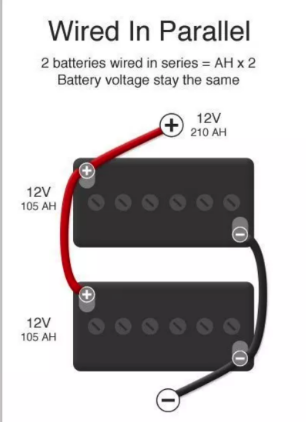
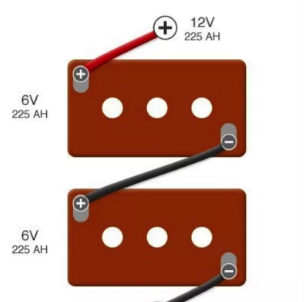
Well, There are a few things that could cause it... but there is an easy test. If they are in series, just try swinging the batteries around. In most series setups the battery on the negative end tends to charge faster, or visa versa I cannot remember too well right now, and swapping the battery around is a great way to test if this is what's happening. You can swap them around and if you see that it's the order that's causing one to stop at 90%, you will need to get a balancer to make sure you don't run one battery into the ground. You can find a lot of DIY balancing projects out there and there are easy ways to do it. For anyone with the same problem on a set of parallel batteries, make sure you have positive from one battery and negative from another. This tends to help with balancing, but you may see the same charging behavior even with this wiring. If you are still seeing that issue, there is likely an issue with the battery that means it isn't able to recover any more SOC.
-
I don't know of any settings in Solar Power or Watch Power that would cause that. It could be something arb that I've never run into, but sadly I do not have an answer for that one... Do yourself a favour and get Solar Power to record and monitor the system over the weekend. Since you know what time it happens the best bet is to see if there's a current draw spike or a voltage drop that'll help narrow down the issue. If you leave solar power running the whole weekend it should record fault codes etc with time stamps. I haven't done it myself yet but AFAIK there is a way to do it, hopefully there will be some kind of clue in there?
-
I'm with @P1000, there must be something majorly wrong with the system if your getting 13, 14 and 16... (To Quote myself from earlier today) If the battery is old, it could be a sign of deterioration... When batteries get older, they can sometimes see exponential SOC loss once below a certain level. It is very possible that there is an issue with the battery, but the only way to test it is with a bank load tester that will draw like 20A over a couple hours and then track the voltage for big jumps like this. Does it happen at the same/similar SOC every time? You can test this by running the inverter during the day, turn off the PV and grid in, and see if you get the same issue at the same battery level.

-
So I have been wanting to do something similar at my place but it's not that practical. If your balcony is east or west facing, you won't really get enough sunlight to make it worth doing. If you already have the panel, might as well put it up. Otherwise, if you are buying the panel, keep expectations low as it will take quite some time to for the panel to pay itself off.
-
So, if you have all the fuses etc in place fire is unlikely. Most units that actually "burn" usually do so because the panels were struck by lightning or something along those lines, without a fuse the cables turn into elements and start fires. Fuses that'll disconnect everything and surge arrestors should stop that kind of stuff. However, it is impossible to 100% guarantee it'll never happen so having a smoke/fire detector near the unit is still super important. Ventilation is already mentioned in the manuals, you need to leave some space around the inverter for temperature control. This isn't something you need to worry about unless she is the kind of person who keeps their house at like 30°C, because all inverters need to run as cool as possible... The real issue is going to be noise, a lot of inverters are going to make quite a bit of noise while running. Installing in or near bedrooms can be super annoying and will wake you up with beeps or fans in the middle of the night when loadshedding kick in. Lastly, if you look into inverters that support a WIFI-Mod or online controls, you can sync some inverters with an app on your phone. That way you can monito and adjust the system where needed. You will also get notified as soon as something goes wrong and can hopefully help without going all the way out there. Just make sure the inverter has online controls and not just online reporting.
-
Well I can do installs but I mostly do repairs and system specing, does that mean I qualify? I've had to work with these Alphas and they really are great, you can also get some amazing vinyl's made so it fits into any space. These have been the easiest to work with and customize, just no where near abundant enough as far as I am concerned
-
So the BMS will still perform a couple functions, even without coms. So the over voltage, over current, short circuit and balancing should be handled anyway. It does depend on the battery and how they setup the BMS. I am not familiar with the ESS LV2600 at all, so I cannot really confirm that but I do know thats how a couple other brands do things. Oh and just use the specs offered by the battery manual/spec-sheet. The manufacturer should give you the Bulk and float voltages along with the recommended charging currents. (As long as your cables etc support it) Well that's annoying... The only thing that I can think of is what @P1000mentioned. If the battery is old, it could be a sign of deterioration... When batteries get older, they can sometimes see exponential SOC loss once below a certain level. It is very possible that there is an issue with the battery, but the only way to test it is with a bank load tester that will draw like 20A over a couple hours and then track the voltage for big jumps like this. Does it happen at the same/similar SOC every time?
-
Yeah, I have become an advocate for using "User-Defined" battery parameters just because coms can be a little hit or miss... I prefer setting the parameters myself so I know exactly what the battery is doing. To be fair, someone else may be better suited to help with some of the more programming/coms side stuff... Otherwise, is it possible the sudden SOC drop has something to do with the PV dropping out? Is it possible that the PV was propping up/charging the batteries, causing them to read with a higher voltage and as soon as it dropped so did the SOC/voltage?
-
I'm super excited, hoping I'll finally get a chance to play with some Sonoff goodies! Always wanted to try playing with IoT integrations, will have my paws crossed


