Marv
Members
-
Joined
-
Last visited
-
-
-
-
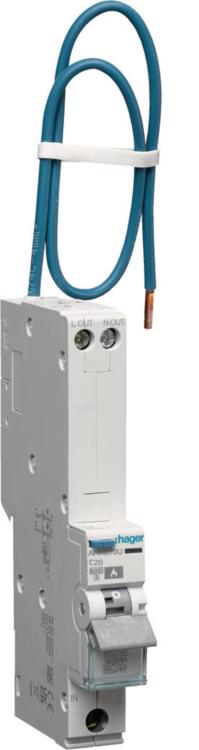
The arc fault detection devices are there to protect the final circuits in the house such as lighting circuits, socket circuits etc, they will also protect the DB to some extent as well. They don't detect light or smoke or any environmental factors, they have a built in computer/PIC that monitors the waveform on that circuit they're supplying for characteristics or a waveform footprint that might indicate an arc fault. They're extremely technical devices with a test button like an earth leakage breaker but unlike an earth leakage breaker there's no way for a normal electrician to actually test if they work or not. There's often one or two small led indicator lamps built into the front of them that flash in numerous complicated sequences to indicate some info about the fault that caused them to trip. They look like a normal DIN mount circuit breaker but they're usually single pole + N configuration contacts. They can be prone to nuisance tripping with appliances that spark during their normal operation such as cooking appliance with a bi-metallic thermostat or even a drill with a brush motor. The way many manufacturers seem to be approaching the nuisance trip problem is to include a 'white list' in the internal program of the AFDD that has specific examples of waveforms from appliances that have been known to cause nuisance tripping in the past even though they are perfectly safe and functional. Many of the AFDD's are wi-fi connected and automatically get firmware updates supposedly to improve their performance over time. Some AFDD's are not Wi-Fi connected and need to be manually 'flashed' to update their firmware which would need a visit from an electrician. These devices are standard fitment in new installations in places like the UK, being driven by the requirements of the latest electrical regs.
-
Arc fault circuit breakers are now standard requirement in domestic installations in parts of the USA and also the UK. We usually follow about 5-8 years later so expect them to be required here eventually. Hopefully they come down in price before then.... at present an AFDD / RCBO, single pole, type A is about 110 UK pounds each.
-
If your incoming supply is low or high voltage you'll just have to pester the supplier until they sort it out. There's probably an auto tap changer faulty somewhere on their network or maybe there's a poor neutral CNE connection and the neutral is floating causing high voltage on one or two phases and low voltage on the other. I've seen cases where instead of fixing the neutral fault they move some loads off the lower voltage phases and put more load onto the higher voltage phases to try to bring the voltages back into spec. This never works but they look like they're working on it which buys them some time until they can get the one guy who knows what he's doing to fix it properly.
-
If the pump runs fine on normal Eskom power but overheats on your inverter it's probably due to the non-sinusoidal shape or the PWM nature of the inverter power waveform. Fast voltage rise times play havoc with the efficiency of motors, especially single phase motors with capacitors. With small single phase motors usually there's usually no way to tell how they'll perform on an inverter supply without simply trying them and finding out the hard way.
-
Is it a mesh filter or sponge or a fibre mat? Try to stay with whatever material was used by the manufacturer because different filter materials can have a profound effect on the amount of air flowing. If it's a mesh or open cell sponge for example and you replace it with a fibre mat filter material you could cause overheating. You can buy fan filter sponge and fibre by the meter off a 1.2m roll from some HVAC suppliers but it's way too large for what you need. Medium sized quantities are available from RS Components who deliver to your door with orders over a certain amount such as this https://za.rs-online.com/web/p/fan-filters/7569884 where you get 5x 1 foot square pieces for about a grand. Finally there's these https://acdc.co.za/fans-heaters-bug-killers-water-coolers-hygiene-products/41648-filter-kit-for-120x120-fan.html?srsltid=AfmBOop-GZlliWSoliAPIuNP3EjPszH2GBnb7ejRRL6amuqKe7KpZknZ from ACDC Dynamics. They're 120mm square and at around 30 bucks each you can afford to buy the complete frame assembly, just use and cut the filter sponge to the size you need and throw the rest of it in the recycling bin.
-
I know you say the water tastes fine before the pump but I'd still check the pH level of the water first, it's a very cheap test and it would be good to rule that out before looking at more involved and expensive remedies. You can use the swimming pool test kit or test strips that are available at supermarkets, agrishops or Takealot, they're cheap.. maybe 50 test strips for a hundred bucks. There's also aquarium 6 in 1 test strips that also indicate nitrate levels and hardness at around 160 bucks and there's 16 in 1 water quality test strips available that test for metals as well for around R350.00
-
-
-
8.1.3 NOTE In South Africa, it is a statutory requirement that every user or lessor of an electrical installation shall have a valid Certificate of Compliance (CoC) for every such installation. A CoC will only be valid when it is accompanied by a test report in the format of the test report in 8.7. From the definitions in SANS10142; 3.33 electrical installation machinery, in or on any premises, that is used for the transmission of electrical energy from a point of control (see 3.56) to a point of consumption (see 3.55) anywhere on the premises, including any article that forms part of such an installation, irrespective of whether or not it is part of the electrical circuit, but excluding a) any machinery of the supplier that is related to the supply of electricity on the premises, b) any machinery that is used for the transmission of electricity of which the voltage does not exceed 50 V, where such electricity is not derived from the main supply of a supplier, and c) any machinery that transmits electrical energy in telecommunication, television or radio circuits So if you have an off grid house and the voltage generated or distributed within the premises is 50v or less then you would be exempt from a CoC because it would no longer fulfil the definition of an 'electrical installation' under the exception provided in the definitions 3.33 paragraph b. In short regardless of whether you have an Eskom supply connection or not your house will require a CoC and all the electrical installation standards will still apply to any 230v electrical installation you have.
-
Have you got an analogue voltmeter (old fashioned type with a needle) or a tester with a low-Z voltage range? If so redo the test and see if you get a different voltage reading.
-
 JayMardern reacted to a post in a topic:
Be Careful of bulb type that could cause hazardous conditions
JayMardern reacted to a post in a topic:
Be Careful of bulb type that could cause hazardous conditions
-
If your supply is single phase an increase in supply voltage could also indicate a failing neutral-earth bond somewhere in the supply cabling before it arrives at your property. When this happens the voltage between neutral and live as well as neutral and earth can rise dangerously high and destroy appliances. The easiest way to test for this is to use a multimeter and test the voltage difference between the incoming neutral and live and also between the incoming neutral and a known good earth with the main breaker switched off. Then put your DB under load ie switch on several high current appliances and make the same tests again. If the difference in results is more than a few volts there's a high liklihood of a supply issue that should be reported.
-
 esmail-kassir reacted to a post in a topic:
Be Careful of bulb type that could cause hazardous conditions
esmail-kassir reacted to a post in a topic:
Be Careful of bulb type that could cause hazardous conditions
-
-
-
Single or 3-phase is a tricky one. What equipment and appliances are you running? There's some things that are better 3-phase like motors/pumps/compressors, the single phase versions have much higher and prolonged start currents which can cause inverters to trip. Inverter air conditioning is a good way to reduce start currents. I'd suggest a full load audit where you list every single electrical appliance along with its kwh consumption, start/run currents etc. Then as Calvin suggests look at the low hanging fruit such as air con, hot water geysers, cooking stoves, halogen lighting, fridges/freezers sitting in a hot outhouse etc and see which appliances are worth replacing with gas for example or maybe even worth buying a newer version that's more efficient. Then plan your solar requirements after that.
-
GreenFields reacted to a post in a topic:
Is it illegal to share your electricity with your neighbor?
-
I'm all for energy conservation but LED lamps are relatively unreliable. I've still got some compact fluorescent lamps in my house and linear fluorescent tubes in my workshop which are over 10 years old and a few of them over 15 years. Even with with the epidemic of loadshedding followed by low voltage surges and generally appalling power quality these fluorescent lamps are still working fine. I wish I could say the same for LED lamps but alas they're very unreliable and it's generally down to poor design, poor build quality and built-in obsolescence. You kinda expect it if you order lamps on Amazon or AliExpress but the majority of the LED lamps available over the counter from electrical wholesalers are equally as bad and they should be ashamed of themselves. Don't get me wrong, there are well designed LED lamps with stable driver circuitry, good internal thermal management, decent power factor, good colour rendering but they're the exception rather than the rule and they're usually double if not triple the price of the rubbish options. When I was involved in relamping projects we installed hundreds of dimmable GU10 lamps in some premises and there were zero failures in the first 5 years so I know they can be reliable, it's just social, political and financial obsticles causing or allowing them to be generally unreliable. I wish they would introduce not just electrical regs to ensure good power factor, low inrush currents and built in surge protection etc but also consumer protection legislation that it's illegal to sell LED lamps that don't last at least 3 years regardless of their usage pattern. Should any LED lamp fail within 3 years the vendor / electrical wholesaler / importer that supplied it should be financially on the hook not just for a replacement lamp but also for the item return costs and any labour costs including crane or cherry picker rental if required. It should also be legislated that they're not allowed to dictate warranty validity on whether or not external surge protection is installed. What a load of horseshit. If the internal circuits of an LED lamp are well designed the risk of surge damage from supply instabilities can be adequately mitigated by decoupling control components and using stable power rails. Problem is when an electrical wholesaler attends the Beijing LED trade show and orders 100k of the cheapest LED lamps they can find the design they get means astronomically high failure rates and leaves them looking for any excuse they can find not to have to deal with the flood of warranty claims they get. Next thing you know there's small print somewhere on their website stating you're shit outta luck if your LED lamps only last 3 months because you didnt install 3 grands worth of class AB surge arrestors. Anyway, apologies in advance because not sure how much of this will be tolerated by the forum bad word filters but rant over for now.
-
Apologies, this reply is a bit late, I'm guessing you may have already finished your installation. Cabtyre (I assume standard PVC and not HO5/HO7) is not great as an installation cable. It's not rated for below ground use, it's often not UV stable and as you pointed out it's fine stranded conductors so you need to ferrule the wires before any types of termination and it's also relatively expensive compared to flat twin + earth. Cabtyre current ratings are usually for trailing in free-air and often they won't give a current rating for different installation methods like in conduit because its not really meant to be used that way. That doesn't mean it contradictory to the regs however, in recent years SANS10142 has become more tolerant of this kind of cable being used in installations as long as the manufacturers instructions allows it. Just for future planning, it would be a lot cheaper and probably easier to use 1,0mm flat twin +e cable in conduit from a 6A or 10A circuit breaker. That would have been more than sufficient for the circuit you were installing which had a running current requirement of maybe 0.5-1 Amp.
-
The Axpert inverters are pretty good considering their low price point but I'd say they're not worth fixing unless you do that kinda thing already as a hobby and fancy a challenge to keep you out of the pubs for a while. What happened to you is exactly the same issue that prompted me to join this forum (hence my profile pic) and whilst eventually I managed to repair my inverter it it was a learning curve that took enormous amounts of time and resulted in several new grey hairs a pile of blown AliExpress replacement componentss before I had sucess. I was fortunate in that I have a repair bench with an oscilloscope and test equipment, I have experience with component level board repairs and a library of information and datasheets I've collected over the decades. Even so, with hindsight it was a job I wouldn't take on again and I wouldn't recommend others attempt themselves. I can almost 100% guarantee you it won't just be the MOSFET that's failed in isolation.
-
Don't run an electrical circuit outside of the boundaries of the ERF it's supplied from, it's in violation of the electrical regs and also in violation of the terms and conditions of the Eskom supply. Theres good safety resaons not to do this which without getting too technical you can cause a shock hazard by connecting adjacent equipotential earthing zones together or even having them too close to each other. It all depends what the earthing arrangements are at the properties where the circuits originate but the answer in short is no, do not run more than one circuit from different properties to supply the pump. As already mentioned you could meter the power the pump is using and just divide the cost amicably or you could pump the water into a holding tank then run 3 water pipes from there to supply the 3 properties and meter the volume of water each property uses and divide the bill up that way. Just incidentally I'd suggest you come up with an arrangement where everyone pays double what the power cost is every month and save the excess payments in an account so when the pump goes tits-up a year or two from now there's already money available towards repairs or replacing.
-
Regs are generally about broader principles rather then individual examples, there's so many ways it would be unsafe to install fuses and holders that you couldn't list them all individually in one book. The regs state that you must follow manufacturers instructions so your answer may lay in the documentation that came with the fuse holders. I would say there will be regs in the sans10142 book that also exclude this as a possible mounting location as well although I don't have a copy with me so I can't quote them off hand.