Calvin
Members
-
Joined
-
Last visited
Everything posted by Calvin
-
Price reduced: R6000 each, R36k for all 7
-
Yes I do. Please PM me for more details.
-
Item: Pylontech US3000 batteries (7 available) Age: 5 years, 730 to 780 cycles (93% SOH) Price: R6000 each, R36k for all 7 Payment Method Accepted: EFT Warranty: Remainder of 10 year factory guarantee Packaging: Could be arranged Condition: These batteries have been babied: never discharged or charged at more than 0.25C, never discharged below 28% SOC, kept between 20 and 30C (air-conditioned enclosure), never kept at 100 SOC for more than a few minutes. Full history and logs available. Location: Stellenbosch Reason: Upgrading to 16S system. Shipping: At buyer's expense. Collection: Preferred. Link:
-
They did not - the US3000 is 74Ah, the US2000 is 50Ah. BatteryView states the model ("Device Name") - does it say US3000 or US2000? If US2000, perhaps somebody replaced the BMS with that of a US2000. If US3000, perhaps the BMS got reflashed at some point with an incorrect version.
-
You need to be a bit careful with Pylontech cycle count/SOH: there is a simple console command that resets it! There is a built-in BQ34z100 chip that also calculates and stores the cycle count and cannot (to my knowledge) be reset, but few know about it. You can use command socsh to read it - result is in hex. Note: the BQ34z100 data is correct on US2000 series, but not for US3000 (due to being scaled for a 50Ah battery).
-
Yet the label shows manufactured Feb 2019. Yet the label shows manufactured Dec 2022.
-
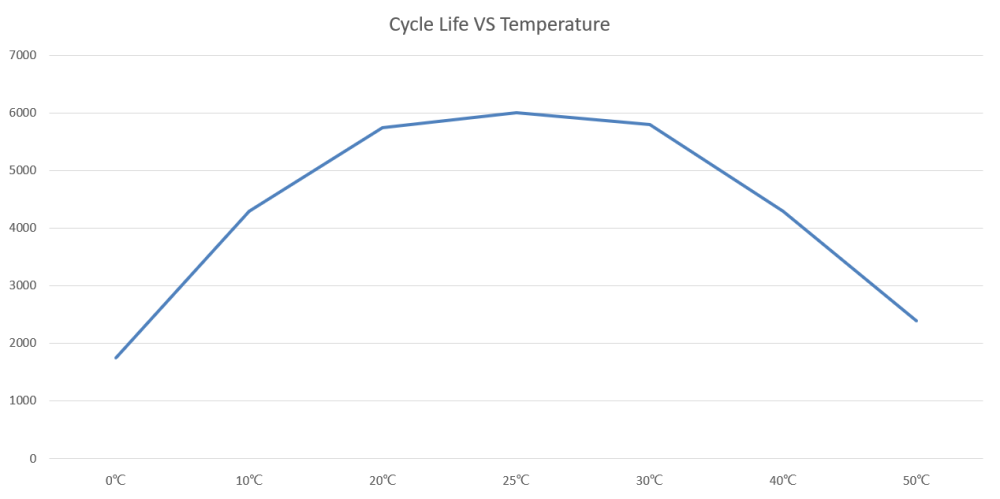
I do exactly the same as @HennieL even though I live in a more temperate climate (Stellenbosch). I use a box insulated with 50mm Isoboard and heated with 2 28W heating pads (Adjustable Heating Pad With Plug 28W | Shop Today. Get it Tomorrow! | takealot.com). In summer the box gets cooled with a small air conditioner when the batteries approach 30C. I always keep the cell temperatures between 20 and 30C. The motivation is simple: Pylontech's own research shows the huge impact of temperature on cycle life.
-
Correct. Only problem: they do not give the model number anywhere on the product page. Quite right, I missed it. Balance current 0-2000mA (adjustable) Only problem is, when I queried it, this is the reply I got: "The bms's are the 1A versions. " Quite right. The only issue is that the older ones will get no future firmware updates. If that is not important to you, no problem. It is to me.
-
One thing to be aware of: Their EVE cells are B-grade. They do not specify them as A-grade, but they also do not tell you that they are B-grade. Similarly, they do not specify the balancing current of the JK BMS they sell, but on enquiry it is the cheaper 1A version rather than the 2A version. It is also the older version 15, not the new version 19.
-
It is a Mac Afric 5kW Silent Diesel. It does not have auto-start. See https://www.adendorff.co.za/mac-afric-6-5-kva-5-kw-standby-enclosed-type-diesel-generator-220v-single-phase Note that this is a 3000rpm backup generator, fine for occasional use. (Mine runs less than 20 hours per year). If you expect frequent use you should consider a 1500rpm standby generator.
-
@JK84 has a Deye, which allow the inverter to limit the power it takes from the generator. That means that the old rule of needing a generator with double the inverter capacity does not apply. I use a 5kW diesel generator limited to 3kW with my 16kW Deye and it works beautifully. When my loads are under 3kW the excess generator power goes to the batteries. When the loads exceed 3kW the batteries supplement the generator.
-
On these Pylons SOH is a very crude, hard-coded estimate. For the first 1000 cycles: for each 100 completed cycles the SOH is decreased by 1%. Thereafter, for each 167 completed cycles the SOH is decreased by 1%. SOC is calculated based on Coulomb counting (from full) using the current SOH. The exception to this is when charging above 89%, or discharging below 11%, SOC is based on a lookup table using the lowest cell voltage. That is why, when charging, the SOC seems stuck at 89% and then suddenly shoots up. A further exception is that, when discharging, if any cell voltage gets into the values contained in the lookup table, the SOC reported for the pack is that value. This is why SOC will suddenly drop very quickly if there is a weak cell in the pack. I have the full set of voltages and corresponding SOC values available if anybody is interested.
-
Please tell me that you are joking. If not, do you really think that it is a good idea to pollute this forum with far-right political conspiracy theories?
-
The OP has a Sunsynk and batteries. That allows him to limit the power drawn from the generator. Not all inverters have that ability.
-
That seems excessive (and VERY expensive). I have a 5kW generator supplying a 16kW Deye (set to draw a maximum of 3kW) and it all works perfectly, obviously as long as your average loads do not exceed the 3kW.
-
I used proportional control on my geysers for several years and it worked fine. At first I used a 40A SSR from Alibaba - when that blew up I found that it had a 20A triac inside. After that I built my own circuit with a proper 40A triac and heatsink and all worked well. I controlled geyser power in 1% increments using phase control with a microcontroller. There are some who say that this is not a good idea, especially if the geyser load is a significant portion of the inverter capacity. Lots of information can be found here: Choosing an Energy Diverter — OpenEnergyMonitor 0.0.1 documentation
-
I have some US2000, US2000C and US3000B. For all those, the SOH and cycle count are calculated with a simple formula (by the BMS) Cycle count goes up by 1 for every 50Ah discharged on US2000 (74Ah for US3000) SOH goes down by 1% for each 100 completed cycles. For a stack of Pylons the same logic applies - simply use total capacity and discharge. So, @Youda , your 8 x US3000B had a total of 3890 cycles on 30 Jan. Expect the SOH to drop to 95 any day now when the stack total gets to 4000 cycles. A note of caution: this is based on observations on my batteries, all of which have been treated very gently. They are all at about 700 cycles. I have one data point from an older US2000 that leads me to believe that the formula changes at 1000 cycles/90% SOH. The slope thereafter seems to be 0.6% SOH per 100 cycles (or 1% for each 166.7 cycles)- that will nicely get it to 60% at 6000 cycles that Pylon claims. The bad news from all of this: the Pylon's SOH is not an indication of how well the battery has been treated. It is simply an estimate of remaining capacity based purely on total cycles. This is very disappointing given that they have a very sophisticated chip (TI BQ34z100) in the BMS whose sole purpose is to accurately estimate SOH and SOC based on real measurements.
-
The label in the picture shows manufactured in 2020, but you still say age is 2 years? A mistake I assume, as the US3000B was discontinued in 2021. Also, has it been topped up in the meantime? Leaving a battery without charging for 5 years may well ruin the cells due to self-discharge...
-
Some confusion here? Any idea what the cycle count and SOH are?
-
All depends on what the logs say - if there are many overvoltage events (the sort of thing that might Pylontech refuse warranty claims) it will adversely affect the value. Your price might be OK if the batteries are in perfect condition. That is why I suggested you publish the logs - you will need them to get your price. Anyway, good luck!
-
Pylons are notoriously sensitive to how well they are treated - you will make your life a lot easier selling these if you connect a PC to the console port and extract exact cycle data and logs via BatteryView. That way people will know what they are buying, and you will be able to get a fair price. Failing that, I suspect that potential buyers would assume the worst. 2 other points: The picture you show is a US3000B, not a US3000C. They are significantly different. These are now available brand new for R15k. Pylon US3000C 3.5kWh Li-Ion Solar Battery (excl. brackets)
-
@Coulomb You are right - I should have qualified my statement better. It was meant in the context of the conversation, not as a generalisation. All true, but not pertinent: we are talking about almost fully charged LFP with negligible current. (The voltage increased by 0.8V in 5 minutes.)
-
I was not referring to any question you had. My apologies if that was not clear enough for you. The question that was asked by @Demo was "What is CB in electronic?". The question that I assume @Demo meant to ask was "What is CB in electric?". Assuming that you are talking about Google, I guess it all depends on how you use it. If you are going to use "electronic" in a query when you mean "electric", I think that it is a bit harsh to blame the tool when it returns an answer based on the actual question asked.
-
Actually, if you just change the search from "What is CB in electronic?" to "What is CB in electric?" Google and it's AI answers perfectly. Even AI is not clever enough to answer the question you had meant to ask....
-
At a very fundamental level this is clearly impossible - the battery voltage will not go up as it is discharging. Yet, at e.g. 13:52 to 13:56, this is exactly what your data shows. Which means we need to be suspicious of the data, specifically the current measurement. If you are using Watchpower as the source of your data then that may explain it. If I remember correctly (from one of @Coulomb's many posts) the Axpert King does not actually have a current sensor and performs a fairly crude calculation to estimate it.