Achmat
Members
-
Joined
-
Last visited
Everything posted by Achmat
-
I get that and you might be misunderstanding what I'm saying. Adding a new US2000 to an existing bank of US3000 batteries. From the conclusion the bigger battery will always be the master even if the smaller battery is newer. Unless the price of the new US2000 are significantly less per kwh, I would stick with US3000 batteries or bigger to add to the existing bank of US3000 batteries.
-
The newer C models can be stacked with up to 16 batteries before needing the LV hub. Most additions I've seen is that the new battery is either the same size or bigger. Don't think the pylontech manual indicates what to do if the new battery is smaller than any of the existing batteries in the bank. I've already read that new batteries must be set to the master and that the biggest battery in the bank should also be the master. US3000 added to bank of US3000 or UP5000 added to US3000 or US2000. Never seen any mention of US2000 added to US3000.
-
If its set to limit to home or will use batteries if you use the timer setting. On the sunsynk you cannot set it to only use pv for limit to home or loads before the inverter in use timer is activated. Limit to home will try to zero your meter from solar or batteries Limit to load wil only supply pv and battery to loads directly on the inverter. Not sure if you are using the aux but you could put the rest of the house on the aux output and set it to not use batteries if SOC is less than 95% for aux loads. If the grid is available the aux load will still get power.
-
Efficiency losses. Energy going into the battery would also be more than energy or if the batteries adding to the inefficiency. Pv DC to battery DC losses Pv DC to AC losses Battery DC to AC losses These together could make up 5% to 10% losses from your pv generation. I'm assuming you don't have batteries as you would have then included energy to and from batteries for the day.
-
Share your system mode screen. CT is only needed if you want to supply loads before the inverter and not needed if you only using it for the essential load.
-
Hrs the most useless support tech I've come across. Sent him a WhatsApp immediately after you posted and he still has not responded to my query. Edit Quoted the wrong post.
-
How would they know? Is it from a particular batch or series of serial numbers? Would love to know if mine is included in this list.
-
-
@Saul You could also leave the battery at 100% till after sunset and then start using the battery to 50% over a few hours and see on the inverter display what the discharge value is. Ideally you want this test to have no battery usage at all during the day or morning.
-
The newer C models can be stacked with up to 16 batteries without needing the LV hub even with some of the batteries in my stack being the B models.
-
It's still very close to the actual capacity of the battery. Two 2.4kWh batteries should give you a total of 4.8kWh so every 10% used should be about 0.48kWh.
-
You need to click on device and select the inverter. Under parameters you can Al ecstacy SOC, daily battery discharge. Select two points, one at 100% SOC and another at 90% SOC. The difference in daily discharge would be the kWh used from 100% to 90%.
-
@leshenis the resident sunsynk/Hubble combo installer and could maybe get more stats from a few of his installations. This is actually a good exercise in comparing different battery setups.
-
@Vassen @Tariq How much kWh do you get out of 10% from your batteries?
-
I've already pushed more than 2MWh through my batteries so it doesn't give enough decimals in the cumulative graphs. From 100% to 90% SOC I used 1.4kWh for 10% from a 14kWh pylontech battery bank so its within the expected range.


-
This is my stats from Solarman using the 8kw sunsynk and 4 x US3000 pylontech batteries. Total capacity of 14kWh and running them down to 15% SOC overnight. If you look at 24 April I put in 14.3kWh. You can't really take the total discharge as it spans the morning and night and not a continuous discharge amount.


-
First thing you should do is request a software update. On the system mode screen you can select priory load or batteries.
-
I do something similar. Batteries will degrade over time even if not used so why spend so much money on a lithium battery if you are not going to use them. The only time I turn off battery use during the night is when Eskom announces load shedding. Also running 4 x US3000 batteries that I plan to add to every 8 months until I have sufficient to last me through the night.
-
Hi I see that you have not yet received any feedback regarding this question. Yes. The inverter can push back excess pv to loads before the inverter. On the system mode screen you should tick zero export and remove the tick in limit to load. This will allow the inverter to send any excess solar to loads before the inverter. On my phone now but you can find time this further to even allow to to run these loads from battery if you wanted to.
-
This is a serious flaw as the inverter will send power back if Eskom switches off the supply to work on the line, potentially shocking a technician working on the line. Edit. No matter the settings, if the grid is down it should never send anything back.
-
Yes. Those are the software versions.
-
It uses the regular plumbing. I have it running from my jet pump feeding the whole property from my well point. I just had to run a pipe from the built in pressure release valve through the wall which does drip but not very often. The same geyser of also feeding hot water to their kitchen but that's only another 3 metres away.
-
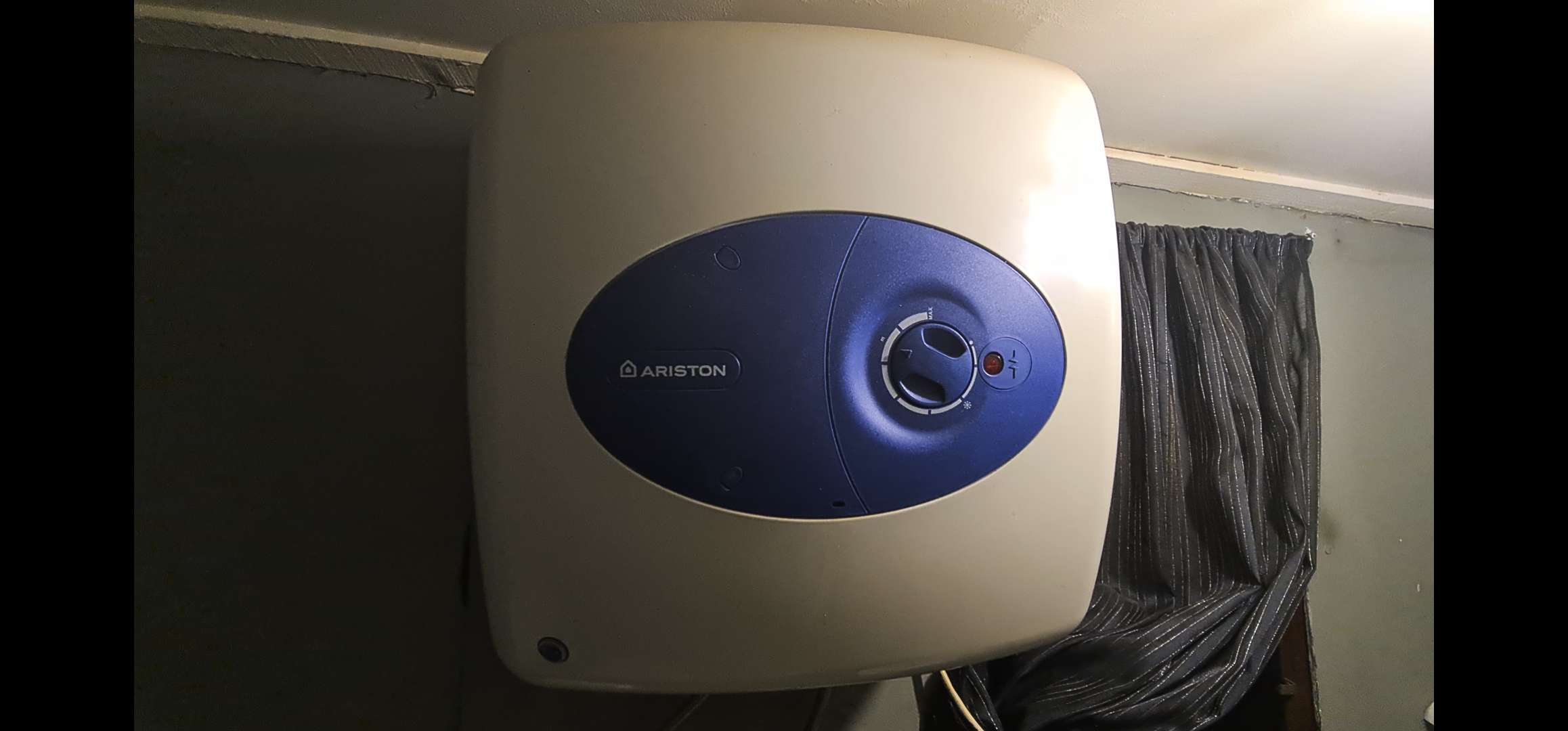
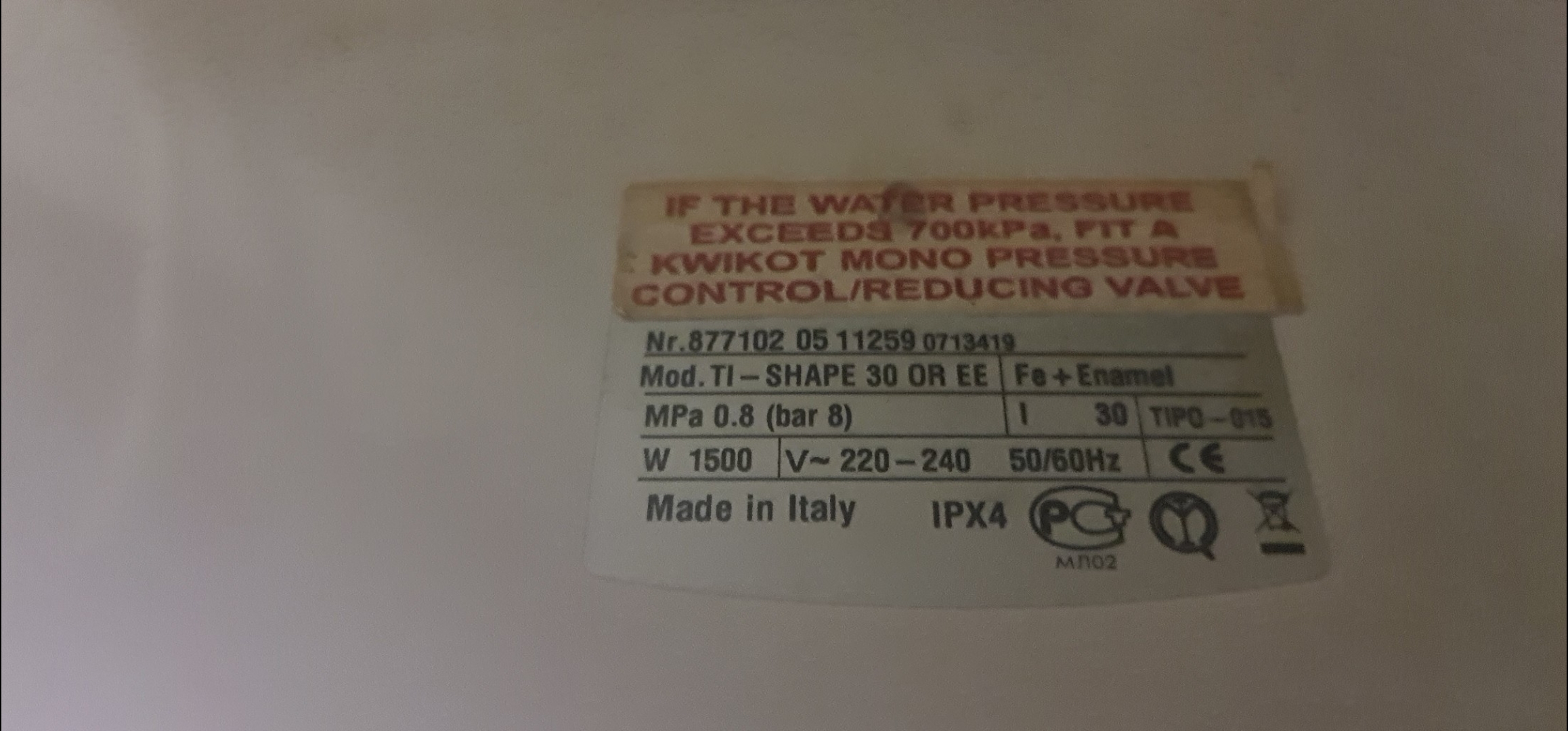
Just spoke to them now. It works perfectly for them. It takes 15 minutes to heat up. There is a temperature dial. In summer it's enough for two showers as they tend to use less hot water. They also only put it on when they need hot water which is normally 30 minutes in the morning and another 30 minutes in the evening as it takes quick to heat up. It's an Ariston 1.5kw 30l geyser. It was installed 5 years ago but only started being used 2 years ago when I got tenants in. It's installed in the bathroom against the wall.


-
So why the need for a separate line for network access and administration if the 35% markup is meant to cover those costs. I understand for the need to cover costs but if its already included in the 35% then there is no need for an additional charge. The DA in Gauteng is opposing this fee but are quite happy with it in CoCT.
-
If they are only paying Eskom 65% of electricity tariffs, what are they doing with the other 35% and why do they need an additional connection charge?