Jaws
Members
-
Joined
-
Last visited
Everything posted by Jaws
-
As I dont have a 220 V plug close to my inverter to power the module so it was a bit of an issue. I ended up simply powering up the unit straigh of the inverter. I bough a R30 DSub 9 cable from Geewiz and found 12V between pin 9 and the outer ground of the connector (serial port were the wifi dongle usually connects It has been working perfectly. I dont use my wifi dongle so this works for me.
-
Came right - seems like I missed an email with all the required info
-
I managed to connected the module now that I have an enclosure But when I try and connect as per your Youtube tutorial its asking for a WIFI password, . The Configure DeyeInverterMaster AP is encrypted with a password ?
-
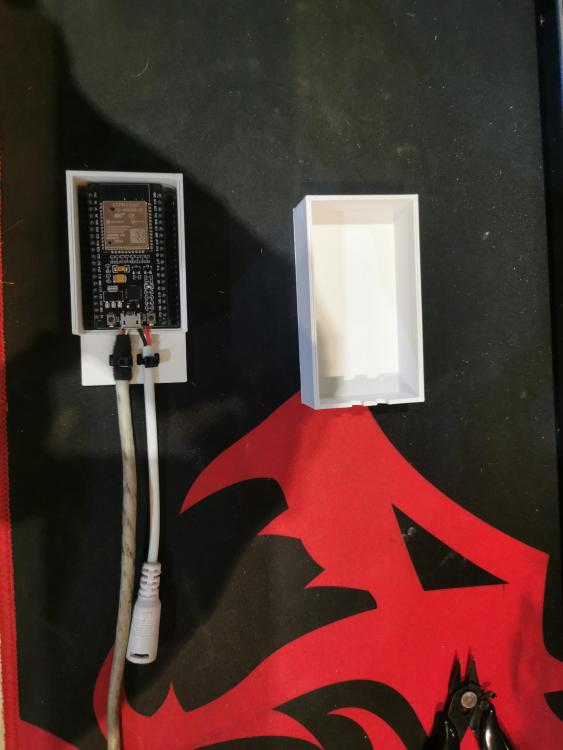
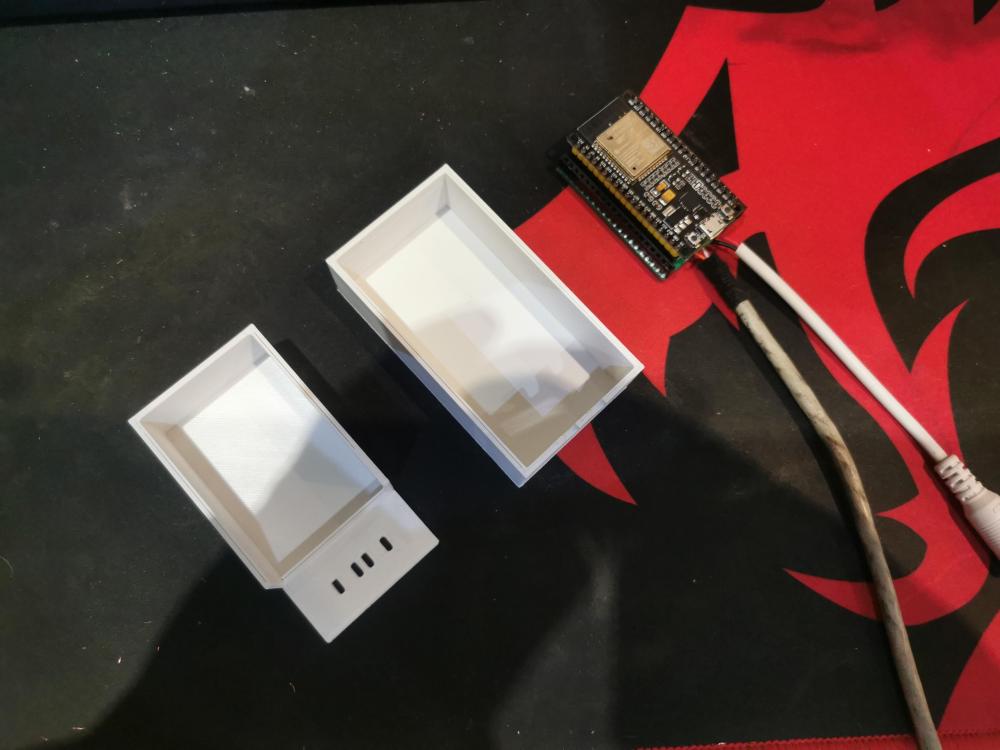
https://cad.onshape.com/documents/103030e2eca3ada69e400db3/w/586a90b4aaa4edff7b31a60d/e/68c1384c802ba5f205098b56 For those that want to 3D print a box Pretty simple, with holes for small cable ties to keep the cables secured
-
I received mine thank you , can you please assist with a diagram for the connection of the RJ45 cable. I see you marked you power input with Black and Red mark.
-
Please can I call dibs on one Firm as well
-
If you have the space I prefer to use a seperate overload + E/L because if the combined unit does fail you pay a lot more to replace it . With the seperate units the E/L is actually not that expensive.
-
Wow what a surprise - Goodwe support not helping. Good luck with that. They are utterly useless don't waste any more energy on them. The guys are here are way more clued up than any person I have dealt with working for Goodwe.
-
Hi P1000 The advice I have given is based on the latest National Standards for South Africa. 1. The Main Switch may be an E/L device if it has an isolator function. But funnily enough I did say add a 40 A Double pole circuit breaker before the E/L which can function as an point of isolation for the inverter supply. Now you say that he needs a miniature circuit breaker to meet code - can you please educate me on the specific code that you are referring to, I'm always grateful when I can learn from others. 2. An inverter is metal enclosure (that is bonded granted ) but still a metal enclosure with live power inside. A person will come into contact with the conductive piece of equipment at certain times. Now this my personal opinion and advice that if some stranger on the internet would ask me - Supply the inverter from an E/L In the latest revision of SANS 10142 its clear that the intent is that every single appliance should be protected by an E/L as it saves lives. Even geysers that were excluded in past revisions must now be supplied by E/L device. Now you can speculate that an Inverter will cause an E/L to trip , but in my limited experience - using a dedicated E/L to supply an inverter takes cares of nuisance trips. Please look at SANS 10142-1 :2020 edition 3 (latest revision) Annex P. Can you please tell me why in every single example for alternative supplies with an UPS the UPS is supplied with an E/L ? Now I cannot say that not using an E/L is not to code as you state because Annex P is only informative. But I do agree with this Annexure personally.
-
Personally I will advice to add another EL to feed the inverter with another double pole circuit breaker (instead a "inverter switch" as you named it - ie dont use a double pole isolator. - Then everything is fed off an EL device and you have overload protection to the inverter. You could feed the Inverter from the EL protecting your non-essential loads - but from personal experience its better to have the inverter supplied from a dedicated EL as nuisance tripping could be an issue and they are not that expensive considering the potential frustrations. For a 5kW inverter I use a 40 A , C Curve breaker to supply the Inverter and then another 40 A circuit breaker after the inverter and 16 mm2 cabling. Surge arrestors just after the main switch will also be a good idea ( I couldn't add it to my main DB due to space constraints)
-
Firstly Tinuva and Bobster thank you for taking your time to give such detailed responses. I really appreciate it. The inverter was working perfectly up to the point where it stopped. I have had so many firmware updates done and the remote support guys have tried every combination of settings under the sun ( so have I). Not that there are that many. The inverter is faulty I can promise you that. But they are blaming the battery bank ,( Pylonteck UP5000 ) the same back working flawlessly on my new Inverter. All I wanted was to be able to drop it somewhere so that I could get an assessment of how much a repair would be. No I have expensive paper weight. Luckily I'm over it now. Just wanted to warn others not to make the same mistake I made.
-
The Grid light flashes. It doesnt charge the battery from the grid or discharge from the battery. The solar input works perfectly. But obviously with loadshedding I'm sitting in the dark. I bought a Deye last week and working a charm. All I needed from Goodwe was a go ahead to be able to drop it off at Segen. Even if they say uneconomical to repair. But even up to today . Obsoletly nothing from Goodwe. Great kit when it works but I would never again spend a considerable amount of money on a product with know I have some assistance should something go wrong.
-
Im not one for airing my dirty laundry in public- But I feel its my civil duty to let others know that if you do buy a Goodwe you will be left with no support - other than someone in China emailing you every second day with new questions, or a new firmware revision or a copy of the T&C. With Sunsynk and Dye on the market you will have to be crazy to even consider a Goodwe but maybe at some stage retailers will try and get rid of old stock at reduced pricing - DONT do it - shoud the unit fail you can basically scrap it . After a month of trying my upmost best to get my inverter sorted I realised I'm just wasting my time and effort and its time to cut my losses, the frustration and disappointment is not worth it. I just bought a brand new Dye . R20k that could have been used for something else. I really feel guilty and responsible as I recommended Goodwe to a number of my friends and family who went with Goodwe two years ago. Lets hope and pray theirs hold up a bit longer. If required Im more than willing to post my email trail here with the support in China. Locally I spoke to some lady in Cape Town who promised that my tickets gets escalated every week. Seems like there is only a single person I think Andre who must give the go ahead before I can hand the inverter at Segen Solar ( online retailer is not interested to assist). But seems like he is very busy ( or too busy to assist a once off customer - maybe installers and retailers gets preference. Its pretty sad because I think its a quality product but without any real support should you have a hardware failure its basically a piece of expense aluminum.
-
The number of panels in a string does not change the current. A two panel string will deliver the same current as a ten panel string.
-
Australia removes much-criticized DC isolator mandate – pv magazine International (pv-magazine.com)
-
Quality DC breakers and Isolators are very expensive . Your issue is probably not the fuses but the DC breaker.
-
He is wrong. Single core GP wire like that can only be used within a wire way. That means conduit or truncking or racking. An open space in a ceiling is NOT a wireway.

-
Solar panel output does not "leak" to earth . It can only "jump" from plus to minus unless you connect minus to earth.
-
That would depend on how your DB is wired. Older installations only has the plugs on the Earth leakge. Modern installations has all the loads on the Earth leakge
-
Side note to your side note. V=I x R When referring to losses the typical formula use is P = V x I , replace the V with I x R then you get P = (I x R ) x I P = I2 R The energy is lost in the form of heat due to the resistance of that cable and current flowing trough it. The formula P = V x I for losses does not make that relationship evident. Whereas with P = I2 x R , you can clearly see for an increase in resistance there is an increase in Power losses, but even worse in the increase in current where the relationship is a square. That's why a 48 V system is way more efficient than a 24 V system . Although current of a 48 V is only 1/2 of the current of comparable 24 V system , the losses across the cables is 1/4 less. __________ As for the OP , in a single inverter , single battery bank system the difference in length between the positive and negative cable are irrelevant as is a simple series circuit and Kirschoff`s 2nd Law applies. Obviously when a parallel inverter or parallel battery bank is connected this does not hold true anymore.
-
Yes Provided that: 6.1.7 If conductors that operate at different voltages run in the same wireway, the insulation of each conductor shall be able to withstand the highest conductor voltage in the wireway. Alternatively, the conductors shall be separated by a continuous barrier of insulating material or earthed metal.
-
Gerrie is correct. Standalone soft starters and Variable speed variable frequency drives are for 3 phase induction motors. Unless you have a pretty big fridge or aircon it won't have a three phase motor 🙂 If don't already have A+ appliances have a look they generally pay for themselves in the long run. Modern appliances come inverter supplied motors. That will have a reduced startup current. But it probably won't be feasible to retrofit to an existing appliance. As a cheap fix you could have them all on their own timers. Staggering their running times. A fridge that stays closed won't lose that much during the night
-
I have noticed the same. A fuse on both the positive and negative wires right by the battery There is no technical reasons to so. You only want to have a fuse as close to the source as practical possible. A fuse only on the positive would provide the required protection. I guess one reason is that the fuse isolators that is commonly used is also used in AC applications where you want to disconnect both the Live and Neutral. But even there you can use a fuse on the live and a link in the neutral.
-
Where will the joint be located ? Inside the conduit pipe? Get the correct sizes ferrules and a crimping tool. You can use heat shrink with insulation tape . To seal it all up
-
what energy meter is that ?